• Features
  • Videos
  • Podcasts
  • Specials
  • Articles
  • Shorts
Donate
  • English
  • Español (Spanish)
  • Français (French)
  • Bahasa Indonesia (Indonesian)
  • Brasil (Portuguese)
  • India (English)
  • हिंदी (Hindi)
  • বাংলা (Bengali)
  • Swahili
  • Videos
  • Podcasts
  • Articles
  • Short News
  • Feature Stories
  • The Latest
  • Explore All
  • About
  • Team
  • Contact
  • Donate
  • Subscribe page
  • Submissions
  • Privacy Policy
  • Terms of Use
  • Advertising
  • Wild Madagascar
  • For Kids
  • Mongabay.org
  • Reforestation App
  • Planetary Health Check
  • Conservation Effectiveness
  • Mongabay Data Studio

Latest

White-rumped vulture returns to a Cambodian sanctuary after a decade’s absence

Naina Rao 20 Jul 2026

America’s retreat from wildlife protection will be felt far beyond its borders

Rhett Ayers Butler 20 Jul 2026

Conservationists urge caution over Bangladesh’s plan to plant 250 million trees

Abu Siddique 20 Jul 2026

Félix Guillermo Moncada Gavilán helped move Cuba from sea turtle fishing to protection

Rhett Ayers Butler 20 Jul 2026
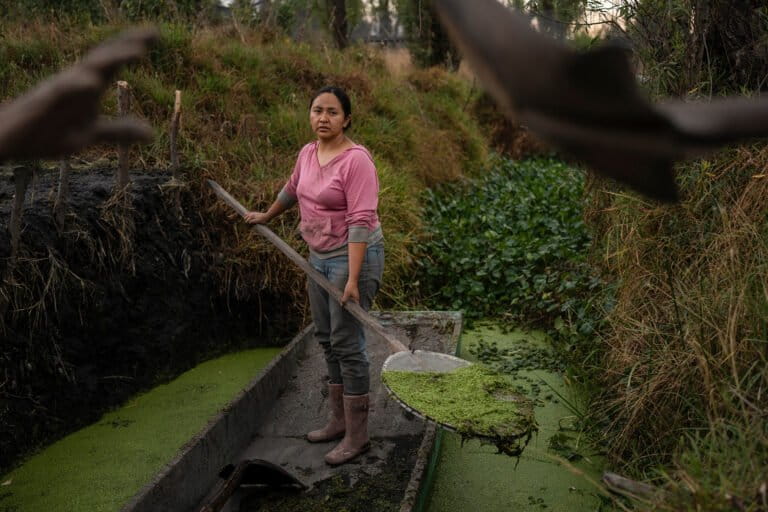
Can ‘fog harvesting’ help solve water scarcity in Chile’s Atacama Desert?

Maxwell Radwin 17 Jul 2026

US government announces plans to lease deep-sea mining rights in American Samoa

Elizabeth Claire Alberts 17 Jul 2026
All news

Top stories

A collage featuring Ashoka Mukpo, a Mongabay reporter, and a cocoa bean

Why are forests vanishing in southeastern Liberia?

Can harpy eagles attack humans? Amazon case rekindles scientific debate

Tiago Mota e Silva 17 Jul 2026
Packaging cocoa beans in Grand Gedeh, Liberia. Photo by Ashoka Mukpo for Mongabay.

The vanishing forests on Liberia’s cocoa frontier

Ashoka Mukpo 16 Jul 2026

From Mardi Gras to marsh: Glass Half Full turns party glass into Louisiana coastline

Liz Kimbrough 16 Jul 2026
Screen shot documentary: Sound Guardians

Mongabay, Scientific American, and Project Multatuli release a documentary on Indonesia’s new capital

Leah Varjacques, Rizky Rahad, Sandy Watt 15 Jul 2026

Subscribe

Stay informed with news and inspiration from nature’s frontline.
Newsletter

We’re a nonprofit

Help us tell impactful stories of biodiversity loss, climate change, and more
Donate

News and Inspiration from Nature's Frontline.

A collage featuring Ashoka Mukpo, a Mongabay reporter, and a cocoa bean
Videos
Florida Manatee. Photo credit: Robert Bonde / USGS
Articles
Mediterranean coast.
Podcasts

Special issues connect the dots between stories

Women Defenders of the Colombian Amazon

Putumayo’s women guardians defend land and culture amid Colombia’s deforestation

Putumayo’s women guardians defend land and culture amid Colombia’s deforestation

Natalia Arbelaez 15 Oct 2025
The Putumayo is a long Amazonian river that begins in Colombia and flows into the Brazilian Amazon. Photo courtesy of Michelle Carrere.

Women in Putumayo turn to fish farming and away from the coca industry

Iñigo Alexander 28 Nov 2024

Etelvina Ramos: From coca farmer to opponent of the illegal crop

Diana María Pachón 26 Apr 2024
Alis Ramírez: The defender of the Colombian Amazon now living as a refugee in New Zealand

Alis Ramírez: A defender of the Colombian Amazon now living as a refugee in New Zealand

Laila Abu Shihab Vergara 8 Apr 2024

Colombia is among the most dangerous countries for environmental defenders. Yet here, women stand as frontline defenders of both nature and culture. Mongabay is documenting the women protecting forests, rivers and ancestral territories by strengthening traditional governance and reviving ancestral stewardship while confronting coca traffickers and illegal miners. In this Special Issue, meet the women […]

Women Defenders of the Colombian Amazon series

More specials

7 stories

The Ideas Shaping Environmental Action

13 stories

The Future of Suriname’s Rainforests

The blue shark is one of the widest-ranging sharks in the world, and its meat is the most commonly traded in commercial markets. Image courtesy of Prochym/Adobe Stock.
6 stories

Shark Meat Nation

Free and open access to credible information

Learn more

Listen to Nature with thought-provoking podcasts

Mediterranean coast.

The unsung biodiversity of the Mediterranean Sea needs urgent protection

Mike DiGirolamo 15 Jul 2026

Watch unique videos that cut through the noise

A collage featuring Ashoka Mukpo, a Mongabay reporter, and a cocoa bean

Why are forests vanishing in southeastern Liberia?

Screen shot documentary: Sound Guardians

Mongabay, Scientific American, and Project Multatuli release a documentary on Indonesia’s new capital

Leah Varjacques, Rizky Rahad, Sandy Watt 15 Jul 2026
Collage, Fritz Pinnow, contributor, and a soldier

Honduras taps armed forces to eliminate deforestation by 2029. Is it working?

Fritz Pinnow 27 Jun 2026
Yo Yaj at Songkhla Lake, Thailand

What is happening to Thailand’s famous giant nets

Lucia Torres 30 May 2026
Collage, Giant African Harvester Ant

Why are people buying pet ants?

Abhishyant Kidangoor 23 May 2026

We’re a nonprofit

Help us tell impactful stories of biodiversity loss, climate change, and more
Donate

In-depth feature stories reveal context and insight

A red ruffed lemur in Madagascar.
Feature story

Official tied to commercial breeding to represent US at global wildlife trade meeting

Spoorthy Raman 11 Jul 2026
48758842257_1f2ee7e507_k.jpg Drug-resistant infections remain a top global public health threat, leading to around 5 million deaths worldwide each year. Recent research suggests that microplastic pollution is accelerating the development of resistant bacteria. Image by DFID – UK Department for International Development via Flickr (CC BY 2.0).
Feature story

Microplastic pollution can fuel rise in antibiotic resistance, studies find

Claire Asher 8 Jul 2026
Feature story

The women leading a quiet conservation revolution in a Nigerian gorilla sanctuary

Orji Sunday 6 Jul 2026
A leopard in Pendjari NP, in 2022. Camera traps were placed along likely travel routes and positioned to photograph both sides of the leopards to aid with identification. The researchers were able to identify 30 individual leopards from their unique spot patterns. Image courtesy of ZSL-CCI/Panthera/APN-Pendjari National Park.
Feature story

Endangered West African leopards show signs of recovery, despite odds. ‘It’s a win’

Ruth Kamnitzer 2 Jul 2026

Quickly stay updated with our news shorts

White-rumped vulture returns to a Cambodian sanctuary after a decade’s absence

Naina Rao 20 Jul 2026

For the first time in 10 years, a critically endangered white-rumped vulture has been spotted in Cambodia’s Lomphat Wildlife Sanctuary. However, this conservation milestone is unfolding just as the sanctuary stares down new threats from mining operations and hydropower dams.

During a June 2026 census, surveyors recorded the white-rumped vulture (Gyps bengalensis) at a supplementary feeding station, known as a “vulture restaurant,” operated by the NGO NatureLife Cambodia. The census also confirmed the presence of five red-headed vultures (Sarcogyps calvus), including two juveniles — a sign of successful breeding in the sanctuary.

“The return of the white-rumped Vulture shows that our conservation efforts are making a difference by improving habitat conditions and ensuring reliable food source,” Bou Vorsak, CEO of NatureLife Cambodia, said as reported by local media.

Yet the sanctuary’s Veal Kambor Community Protected Area (CPA), a zone designed to balance local livelihoods with forest management, is simultaneously being dismantled by industrial interests. Mongabay previously reported that since 2020, the Cambodian government has granted at least five companies mining concessions in designated community-protected areas adjoining the Lomphat sanctuary.

Satellite imagery and on-the-ground reports indicate that firms such as CHHC Investment Co. have continued quarrying marble in conservation zones, despite licenses for the work reportedly expiring in 2022. Local residents were granted rights to manage these resources for 15 years, but have reported losing fallow rice fields and forest access with little to no compensation.

Beyond the quarries, an even larger threat looms: the proposed 376-megawatt Lower Srepok 3 hydropower dam in northeastern Cambodia. If the development advances, the resulting reservoir would flood a core zone of the sanctuary, submerge the Veal Kambor CPA, and inundate areas currently protected under a carbon credit REDD+ project, severely threatening this fragile ecosystem.

Beyond mining operations and hydropower dams, the 356,087-hectare sanctuary has long faced threats due to its relatively lowland forest being easily accessible to loggers and in the 2010s, the government awarded at least six land concessions inside the protected area spanning more than 47,500 hectares to rubber and palm oil plantations, accelerating the habitat degradation.

Banner image of a critically endangered white-rumped Vulture recorded in Lomphat Wildlife Sanctuary for the first time in 10 years, courtesy of Him Khunny/NatureLife Cambodia.

Félix Guillermo Moncada Gavilán helped move Cuba from sea turtle fishing to protection

Rhett Ayers Butler 20 Jul 2026

Founders briefs box

For much of the 20th century, Cuba’s sea turtles were treated as a fishery. Green turtles were taken for meat, and hawksbills for the patterned shell used in jewelry and ornaments. In the 1980s, legal fisheries landed an average of 836 metric tons a year. Research focused in part on how the catch might be sustained.

The catch was later reduced. From 1994, legal capture was confined to two traditional fishing communities, Nuevitas and Cocodrilo. Minimum sizes and quotas followed. By the time Cuba closed the fishery in 2008, the annual legal catch had fallen below 15 metric tons. A further regulation in 2011 prohibited the capture, use, or trade of sea turtles except for research and conservation.

Félix Guillermo Moncada Gavilán spent his career through much of this shift. The Cuban marine biologist, who died in Havana on June 28th, had worked for more than 40 years at the country’s Fisheries Research Center (Centro de Investigaciones Pesqueras). He led its sea turtle program and served as Cuba’s coordinator for WIDECAST, the regional conservation network.

He had entered turtle research, he once said, with more enthusiasm than certainty. He had little time to prepare and many demands to meet. None of that discouraged him. Colleagues recalled that any mention of marine turtles made him smile and begin explaining them.

His early work was closely tied to fisheries. As Cuba moved towards protection, he studied nesting grounds, migrations, population trends, illegal hunting, and accidental capture. He helped recommend the successive restrictions that preceded the indefinite ban. When describing the policy, he laid out the sequence plainly: first minimum capture sizes, then quotas, and finally a complete closure.

He also stressed that national rules could protect only part of a migratory animal’s range. A turtle might nest on one country’s beach and feed in the waters of another. Regional co-operation was therefore essential, he said. His tagging and monitoring work connected Cuban nesting populations with the wider Caribbean, while his role in WIDECAST linked Cuban researchers with colleagues elsewhere in the region.

Cuba’s turtle research expanded beyond the Fisheries Research Center during the 1990s and early 2000s. The University of Havana, protected-area authorities, volunteers, and other institutions joined the work. Moncada trained students and field workers, led workshops, and co-authored national assessments. A review of Cuban sea turtle research between 1994 and 2021 identified him as its most prolific author, with contributions to 40 of the 78 publications examined.

The ban did not stop all killing. Poaching continued, as did accidental capture in fishing gear. Enforcement varied among protected areas, and a black market still offered turtle meat and shell. Moncada’s later research examined those problems. His work had moved from regulating a legal catch to documenting what continued outside the law.

In later years he spent less time at the bow of a boat and more in an office. Yet the response described by colleagues had not changed. Someone would mention turtles, his face would brighten, and he would begin talking.

Banner image: Gavilán. Courtesy of CIP

Félix Guillermo Moncada Gavilán

US government announces plans to lease deep-sea mining rights in American Samoa

Elizabeth Claire Alberts 17 Jul 2026

The U.S. government has taken another definitive step toward launching a deep-sea mining industry, starting in the waters of American Samoa, despite public opposition.

On July 17, the Marine Minerals Administration (MMA), a new U.S. agency formed by merging the Bureau of Ocean Energy Management and the Bureau of Safety and Environmental Enforcement, announced intentions to hold a lease sale for seabed mining on Nov. 19 in Camarillo, California.

The MMA also stated that the proposed lease “does not guarantee that a lease sale will be held” or that “exploration or collection activities will occur should MMA move forward with a sale.” Still, opponents see the proposal as a major step toward commercial deep-sea mining — an industry that has drawn widespread criticism over its potential impacts on marine ecosystems.

If the lease sale moves forward, the proposal indicates that companies will be able to secure 20-year leases across nearly 127,500 square kilometers (approximately 49,000 square miles) of seabed in the ocean surrounding American Samoa, a U.S. territory in the Pacific. The minimum bid for each of the two lease areas will be $3 million, and royalties in year 11 of the lease will be $1.25 per acre and increase over time.

The lease sale itself won’t be open to the public, but will be live streamed, according to the announcement.

The MMA indicated that the governor of American Samoa will have 60 days to comment on the proposed lease sale.

“Advancing this notice is an important step toward building a secure domestic critical minerals supply chain, strengthening U.S. economic and national security, and ensuring America can compete and win in the 21st century,” Matt Giacona, the acting director of MMA, said in a statement.

The proposed mining area is adjacent to the Rose Atoll Marine National Monument, a marine protected area that serves as a nesting ground and refuge for many threatened and endangered species.

Critics accuse the U.S. government of disregarding the concerns of many American Samoans, as well as members of the broader public, who have voiced opposition to the proposal.

“Pacific people have made our position clear: we do not want deep sea mining in our waters,” Sabrina Suluai-Mahuka, founder of Finafinau Foundation, an environmental organization in American Samoa that opposes deep-sea mining, said in a statement. “Yet the Trump administration is forcing this industry on our communities — imposing decisions that could affect us permanently without consulting us. Our ocean is our home, our food, our culture, and our future, and we are calling on the Administration to stop this reckless lease sale before irreversible harm is done.”

The U.S. government led by President Donald Trump has also indicated that it intends to auction off blocks of the seabed for deep-sea mining in the waters of the Commonwealth of the Northern Mariana Islands, Alaska and Virginia.

Banner image: A deep-sea frogfish in the deep waters of National Marine Sanctuary of American Samoa. Image by NOAA Okeanos.

Beavers flourish in tidal habitats in the Pacific Northwest, study finds

David Brown 17 Jul 2026

Beavers are well-known residents of rivers, lakes and streams across North America.  New research finds they are also far more common in estuaries and tidal wetlands than was previously understood. The study suggests the rodents are critical ecosystem engineers in a habitat where twice-daily tides raise and lower water levels, bringing saltwater inland from the sea.

Estuarine ecologist and self-described “accidental beaver biologist” Greg Hood surveyed estuaries and tidal wetlands across coastal British Columbia and the U.S. states of Washington and Oregon. He found beavers (Castor canadensis) in those ecosystems by surveying places other scientists tend to overlook.

“Estuarine scientists and beaver biologists are generally working in other areas — the beaver biologist in normal streams and lakes where they expect to find beavers; the estuarine ecologists typically in herbaceous tidal marshes or even in eelgrass,” Hood told Mongabay in an email. Adding that scientists rarely work in “tidal shrub and forest habitats (tidal swamps) where beaver are most likely, because tidal swamps are very hard to move around in.”

Hood found that beavers are widespread in tidal habitats across the Pacific Northwest. In some tidal channels of the Snohomish and Skagit rivers, he found beaver dams at twice the density of such dams on non-tidal rivers.

Beaver dams in tidal habitats are shorter than those on non-tidal rivers, according to Hood’s research. He hypothesizes that since these dams are flooded at high tide, that their main function is to trap water at low tides, which allows beavers to continue moving freely through the river system even when the tide is out.

Hood found that tidal beaver dams likely provide important low tide refuges for many fish species, possibly including endangered salmon species like Puget Sound Chinook salmon (Oncorhynchus tshawytscha) and Oregon Coast coho salmon (O. kisutch).

To continue the research, Hood and beaver biologists from the Tulalip Tribes put a GPS tag on one tidal beaver to follow it in otherwise impenetrable habitat; they hope to tag 20 more.

“Tagging data will tell us what kind of habitat they use in tidal wetlands; how much habitat they need (territory size); how their movements relate to tides; perhaps what kinds of tidal channels they most often frequent; perhaps how they partition time between multiple lodges; and perhaps things that we haven’t even thought about (surprises!),” Hood said.

Environmental journalist Ben Goldfarb has written extensively about beavers and their role as a freshwater keystone species. “Hood’s research suggests beavers are equally indispensable along the coast, engineering deep pools for fish, including juvenile salmon, in estuaries plagued by habitat loss,” Goldfarb wrote in 2019 of Hood’s previous work on tidal river beavers.  “Acknowledging the importance — indeed the existence — of coastal beavers might just be vital to re-creating a lost intertidal world: an ecosystem sculpted by rodent teeth, undone by human hands.”

Banner image: North American beaver. Image by Chuck Szmurlo via Wikimedia (CC BY-SA 3.0)

India launches first hydrogen-powered train built in the country to expand clean energy on railways

Associated Press 17 Jul 2026

NEW DELHI (AP) — India rolled out its first domestically built, hydrogen-powered train on Friday, a move aimed at expanding the use of clean energy in its vast rail network.

The train made up of two hydrogen-powered driving cars and eight passenger coaches will operate in the northern state of Haryana. It can run at speeds of up to 75 kph (47 mph) and carry a maximum of about 2,600 passengers, railway officials said.

Prime Minister Narendra Modi inaugurated the “NaMo Green Rail” at Haryana’s Jind railway station on Friday. “NaMo” is a common abbreviation of Modi’s first and last names.

“This is a very significant day in the direction of self-reliant India and sustainable development,” Modi said in a post on X.

The pilot project includes hydrogen storage and refueling infrastructure to test the use of the technology in India’s rail network, according to officials.

Hydrogen fuel cells generate electricity by combining hydrogen and oxygen, producing water vapor as the only direct emission. Several other countries have introduced hydrogen-powered trains as an alternative to diesel on routes that are not fully electrified.

The launch is part of India’s broader efforts to develop green hydrogen and reduce carbon emissions. India has set a target of reaching net-zero emissions by 2070, with Indian Railways exploring hydrogen as an alternative to diesel on some routes.

By Associated Press

Banner image: India Prime Minister Narendra Modi flags off India’s first indigenously built hydrogen-powered train named the “NaMo Green Rail,” at Jind, in the Indian state of Haryana, Friday, July 17, 2026. Image courtesy of Indian Prime Minister’s Office via Associated Press. 

Nepal’s birdwatchers can fill gaps in conservation data

Mongabay.com 17 Jul 2026

Nepal’s expanding birdwatching community offers a vital lifeline for both biodiversity monitoring and ecotourism, reports contributor Bibek Bhandari for Mongabay.

According to a recent study, a growing interest in birdwatching, particularly among younger generations, is helping bridge gaps in ecological data while promoting Nepal as a birdwatching destination.

Nepal is home to more than 900 bird species, including the endemic spiny babbler (Turdoides nipalensis). Of these, 172 species are nationally threatened owing to urbanization, infrastructure development and climate change.

The study surveyed 135 birdwatchers and found that only 37% shared their observations on citizen science platforms, such as eBird, or with bird conservation organizations, while 46% kept their records private. This lack of participation limits the overall impact of citizen science on regional conservation efforts, the study said.

Hem Bahadur Katuwal, study co-author and an assistant professor at China’s Xishuangbanna Tropical Botanical Garden, said  birdwatchers should record their observations of the species they spot, the number of individuals seen and where they saw the birds. These data are helpful in conservation, he said.

“This helps in fulfilling the data gaps related to bird population and habitat,” Katuwal said. He added that the records also help researchers like him in assessing species’ risk levels for Nepal’s national Red Data List.

Beyond science, birdwatching presents an untapped economic opportunity for the country. While some birdwatchers spend up to 40,000 rupees ($260) per trip, according to the study, the travel sector remains dominated by trekking and religious tourism, said Ishana Thapa, CEO of Bird Conservation Nepal.

Thapa argued that proactive government promotion of Nepal as a birdwatching destination is essential. “This is a low investment that can bring great benefits to our tourism sector,” Thapa said.

A former hunter turned birdwatching guide and tourism leader, Shankar Tiwari now holds a top ranking for unique bird sightings in Nepal on eBird. Tiwari, who said he recently documented three species for the first time in Nepal, said he views his work for bird conservation as a form of restitution for his past.

“It also feels like I am paying my debt in some ways,” he said. “As kids, we didn’t know, so we killed birds. I’m very remorseful. So now I’m involved in bird conservation, raising awareness and getting more people to see and know about birds.”

Read the full story by Bibek Bhandari here.

Banner image: Bird enthusiasts look for birds in Suryabinayak, Kathmandu. Image courtesy of Prasan Shrestha.

Share Short Read Full Article

Share this short

If you liked this story, share it with other people.

Facebook Linkedin Threads Whatsapp Reddit Email

Subscribe

Stay informed with news and inspiration from nature’s frontline.
Newsletter

News formats

  • Videos
  • Podcasts
  • Articles
  • Specials
  • Shorts
  • Features
  • The Latest

About

  • About
  • Contact
  • Donate
  • Impacts
  • Newsletters
  • Submissions
  • Terms of Use

External links

  • Wild Madagascar
  • For Kids
  • Mongabay.org
  • Reforestation App
  • Planetary Health Check
  • Conservation Effectiveness
  • Mongabay Data Studio

Social media

  • LinkedIn
  • Instagram
  • Youtube
  • X
  • Facebook
  • Tiktok
  • Reddit
  • BlueSky
  • Mastodon
  • Android App
  • Apple News
  • RSS / XML

© 2026 Copyright Conservation news. Mongabay is a U.S.-based non-profit conservation and environmental science news platform. Our EIN or tax ID is 45-3714703.

you're currently offline