What ideas are shaping responses to the environmental crisis? The Mongabay Newscast picks the brains of authors, researchers, activists and storytellers exploring the systems behind biodiversity loss and climate change. From economic inequality and governance to Indigenous knowledge and climate fiction, this podcast series examines how ideas about change take shape, gain influence and tackle […]
Once endangered, Australia’s numbat is making a hopeful recovery
Shreya Dasgupta10 Jul 2026
The animal emblem of Western Australia, the numbat, is recovering after decades of conservation efforts, according to the IUCN, the global wildlife conservation authority.
For decades, the numbat or banded anteater (Myrmecobius fasciatus) was listed as endangered on the IUCN Red List. It has now been moved to the lower threat category of near threatened.
“The ‘downlisting’ of the numbat on the IUCN Red List from Endangered to Near Threatened is what we have been working for over the last 40 years!” Tony Friend, research associate at the Western Australian department of biodiversity, conservation and attractions (DBCA), told Mongabay via email. “Consequently, I feel very elated that the more secure status we’ve been able to achieve with the numbat has been recognised by IUCN.”
The striped, ant-and-termite-eating marsupial with reddish-brown fur was once on the verge of extinction. By the late 1970s, around just 300 individuals remained. Their decline was primarily driven by the introduction of predators, such as the red fox (Vulpes vulpes) and domestic cats (Felis catus), alongside threats including habitat destruction and changes in the intensity and frequency of fires.
In 2026, numbat numbers have grown to about 2,000-3,000 individuals thanks to more than 40 years of conservation actions taken by wildlife scientists, the DBCA, Perth Zoo, conservation organizations and community volunteers.
Conservationists have, for example, baited and removed foxes and cats from certain areas. This has “caused spectacular increases in numbat numbers in the two original populations, both located in Western Australia: one of these has been shown to number up to 2000 now,” said Friend, who is a member of the IUCN SSC Australasian Marsupial and Monotreme Specialist Group.
Conservation teams also created fenced areas to keep non-native predators out and established new populations using translocated wild and zoo-bred numbats.
The additional populations have now persisted for at least 10 years, with the oldest established more than 30 years ago, Friend said, “The new populations vary in size, between 20-30 up to 150-200 and are spread across southern Australia, with three in Western Australia, one in South Australia and one in New South Wales.”
Friend added that for the species’ security, it’s important that both overall numbers and the geographic spread of the populations increase. This will help protect the species from pressures such as drought, disease or an increase in predation, he said.
Despite the numbat’s promising recovery, Friend urged caution. Its overall numbers, at around 3,000 “are still very low for an entire species,” he said, “[T]his success has only been achieved by a huge sustained effort in controlling introduced predators (fox and feral cat), the effort must continue or the numbat will quickly fall back to low levels or into extinction.”
Desert rain frogs threatened with extinction in southern Africa
Victoria Schneider10 Jul 2026
The survival of a unique frog species that lives in the coastal sand dunes of South Africa and Namibia is under threat from diamond mining, the proposed Boegoebaai Green Hydrogen Projectand climate change.
The change in the frog’s conservation status is based on assessments carried out by scientists from various Southern African universities and organizations.
“[The species] has already experienced loss of its habitat from strip mining and these projected impacts don’t bode well for the species and the other unique biodiversity that occurs only in these coastal dune systems,” Jeanne Tarrant, executive director of Anura Africa, which supports amphibian conservation, and regional co-chair of the IUCN Amphibian Specialist Group for Southern Africa, told Mongabay via email.
The desert rain frog grows to just 4 to 6 centimeters (1.6 to 2.4 inches) in length. It’s range is also very small, limited to the white coastal sand dunes of northern South Africa and southern Namibia within 10 to 12 kilometers (6 to 7 miles) of the coast. It survives without a permanent source of freshwater by absorbing moisture from coastal fog and spends most of its life buried beneath moist sand, emerging when conditions are just right.
Scientists identified six distinct habitat locations of the frogwithin the Succulent Karoo biome, a recognized hotspot for biodiversity, all threatened with mining, energy and infrastructure development.
“The proposed green hydrogen development and its associated infrastructure are most worrying as these will directly impact the desert rain frog’s habitat – it spends most of its life burrowed underground,” Tarrant said.
Opencast diamond mining, which extracts minerals from an open pit in the ground, in the South African part of the frog’s range has already reduced large areas of suitable habitat by removing sand dunes and vegetation that the frogs depend on. Mining companies replace the sand after extraction, but research suggests the vegetation doesn’t naturally recover well enough for the frogs to recolonize the areas.
In the future, climate change and rising temperatures will likely put more pressure on the species by drying out their habitat, Tarrant said.
The IUCN assessors project that over the next 20 years, up to one-third of the frog’s habitat in South Africa and about two-thirds of its habitat in Namibia could be compromised, resulting in a projected population decline of around 20% over the next decade.
Currently, there are no coordinated conservation efforts in place.
“There really needs to be a consolidated effort now, based on this change in status to more threatened, to drive conservation and research action for this species,” Tarrant said.
Researchers have initiated a Green Status assessment of the frog for the IUCN, which evaluates a species’ recovery potential and identifies priority research and conservation actions, she added.
Banner image: The desert rain frog. Image courtesy of Bob Steele via iNaturalist (CC BY-NC 4.0).
Nepal’s Rhino translocation success in numbers masks habitat struggles
Mongabay.com10 Jul 2026
While Nepal’s efforts to revive its rhinoceros population is hailed as a conservation success, habitat degradation is forcing translocated rhinos to wander far beyond their designated release zones, according to a new study, reports contributor Bibek Bhandari for Mongabay.
The population of the vulnerable greater one-horned rhinoceros (Rhinoceros unicornis) in Nepal grew by 16.6% between 2015 and 2021, reaching a total of 752 individuals. To expand the range of rhinos, authorities also established new rhino populations in Bardiya and Shuklaphanta national parks. Bardiya, which had no surviving rhinos until the early 1980s, now has about 38 rhinos, according to the last census in 2021.
To see how the reintroduced rhinos use habitat in Bardiya, researchers attached GPS collars on five rhinos moved from Chitwan National Park to Bardiya in 2016-17. Their tracking showed that the rhinos maintain unusually large home ranges in the park’s Babai Valley. The study authors said that the behavior is likely due to fragmented riverine forests, limited grassland and seasonal water scarcity.
Study co-author Babu Ram Lamichhane, currently associated with the nonprofit Wild Care Nepal, said that massive floods in 2015 and 2017 inundated the Babai Valley, reducing the grassland patches and wallowing sites rhinos require for thermoregulation and skin maintenance.
Lamichhane said during the dry season, a lack of water in the Babai River forces rhinos to travel long distances, sometimes even crossing into India.
“The rhino habitat is not at an optimal level in Babai Valley,” Lamichhane said.
As rhinos seek resources outside the core park area, they are increasingly being sighted in community forests and farmlands, where locals said the animals are involved in sporadic incidents of human-wildlife conflict and destruction of crops.
Manju Mahatara, a wildlife guide with eight years of experience, said that rhinos were once easy to spot in the park’s core.
“Before, we used to spot six to seven rhinos within the core park area, but these days we hardly sight one,” she said. “Many rhinos were released in the Babai Valley, but it’s difficult to spot them these days.”
With new evidence of habitat degradation in Babai, Lamichanne recommended that authorities prioritize other areas such as the Karnali floodplain, adjacent to Baridya National Park, that may be a better alternative for establishing a viable population of more than 50 rhinos.
Rhino researcher Balram Awasthi said that while rhino reintroduction through relocation can be successful, continued habitat restoration and management will be critical to support a truly self-sustaining rhino population.
“Conservation success should not be measured only by population numbers, but also by the health and resilience of the habitats that support them,” Awasthi said.
Banner image: A greater one-horned rhino in Chitwan, Nepal. Image by Aditya Pal via Wikimedia Commons (CC BY-SA 4.0).
How effective are canopy bridges really?
Bobby Bascomb9 Jul 2026
When roads cut through forests, they can become a death trap for wildlife. Canopy bridges, structures that connect trees on either side of roads, are considered a crucial lifeline for tree-dwelling animals, but few researchers have examined their long-term effectiveness.
A recently published study did just that, by analyzing three years of videos from camera traps installed on bridges in Costa Rica. Researchers found that wildlife use of the bridges increased steadily with time, and animals showed preferences for certain bridge designs and length.
Previously, most arboreal bridges had only been monitored for about a year at most, according to study lead author Marion Fischer, a Ph.D. student with the University of French Guiana. Without long-term data, it’s hard to know how useful bridges really are or what type works best, she told Mongabay in a video call.
So, Fischer worked with the Costa Rican NGO Osa Conservation to analyze thousands of videos recorded by camera traps that the organization installed on either side of 17 bridges across the Osa Peninsula, a biodiversity hotspot.
The team documented 2,231 animal crossings from December 2020 to June 2023. These included at least 13 species of arboreal mammals, including two species that are highly vulnerable to collisions with cars: The common opossum (Didelphis marsupialis) and the Mexican hairy dwarf porcupine (Coendou mexicanus).
White faced capuchin monkeys (Cebus imitator) and squirrel monkeys (Saimiri oerstedii) frequented the bridges as well. However, larger-bodied howler (Alouatta spp.) and spider monkeys (Ateles geoffroyi) were not documented using them. Lizards, small rodents and one snake were also seen in the camera traps. Birds used the bridges for perching.
The team looked at five different bridge designs, three made of rope and two plastic mesh ones, and found wildlife preferred the rope bridges.
The animals also seemed to prefer longer bridges over short ones, likely because many animals, including monkeys, could simply jump across the space connected by a short bridge, Fischer told Mongabay.
The study found that bridge use steadily increased over the three-year study period. Some of the bridges have been in place for a total of six years now, and just last year Fisher saw the first spider monkey using one of them.
“We always saw them [spider monkeys] around the bridges, we had some videos of them touching the ropes and interacting with the bridge, but never crossing,” she said. “And now, finally, after some time they use them. So, I think they needed time to trust the new structure.”
Costa Rica is advancing new legislation that will require wildlife crossings in ecologically sensitive areas. Fischer said it’s important that such wildlife infrastructure also come with long-term monitoring, “because then you can really see the long-term impact on the connectivity.”
Banner image: Screenshot of a capuchin monkey using an arboreal bridge in the Osa Peninsula. Image courtesy of Marion Fischer.
Bangladesh relocates refugees after landslide kills at least 5 children
Associated Press9 Jul 2026
DHAKA, Bangladesh (AP) — Authorities in Rohingya refugee camps in Bangladesh used loudspeakers and a network of volunteers and community leaders to relocate people from risky areas to safety Thursday after landslides killed at least 13 refugees in the past few days.
At least five children died Wednesday when a landslide caused by monsoon rains swept through an Islamic school at a camp in Cox’s Bazar, where more than1 million Rohingya refugeesfrom neighboring Myanmar live.
A teacher at the Islamic school described the scene from the landslide as chaotic, saying girls at the school were preparing for lessons when part of the building collapsed. “Those of us who were on the western side managed to get out, but everyone on the eastern side was buried under the debris,” said Begum Jahan, who teaches the Quran, Islam’s holy book.
“Some suffered broken arms, and some of the girls lost their lives,” she said.
People in the refugee camp started rescue operations before emergency services reached the scene, Dollar Tripura, head of the local fire service and civil defense, said Thursday. He added that emergency personnel later rescued the injured and recovered the bodies. The rescue operation was called off Wednesday evening.
Jamal Hossain, a Rohingya volunteer who helped in the rescue effort, said people rescued at the scene were sent to hospital and those that died were all women.
“However, we do not know whether there are any more bodies buried underneath,” he said.
Authorities in Cox’s Bazar said they were relocating refugees from at-risk hilly areas and that more than 1,000 people were already evacuated. They said the refugees are often reluctant to leave their makeshift homes despite warnings.
The Bangladesh weather office is forecasting more rain in the coming days.
Sunday night into Monday,landslides killedat least eight people at Rohingya camps in the area.
Local media reported at least 22 people died in the delta nation of 170 million people in landslides and wall collapses over the last three days. The death toll included the casualties at Rohingya camps in Cox’s Bazar, the country’s leading Bengali-language Prothom Alo daily reported.
Bangladesh has urged the international community for years to help the country beginrepatriation of the refugeesto Myanmar, but the process is stalled.
Banner image: Rescuers work at the site of a landslide at a Rohingya refugee camp in Cox’s Bazar, Bangladesh, Wednesday, July 8, 2026. Image by Shamimul Islam Faisal via Associated Press.
Ethiopia’s iconic Walia ibex is critically endangered once again
Shreya Dasgupta9 Jul 2026
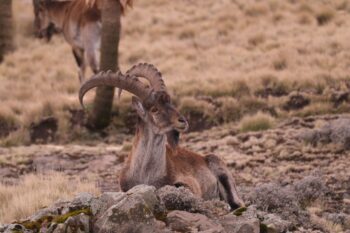
The Walia ibex, a rare species of wild goat found only in northern Ethiopia, is once again considered critically endangered, after recent population estimates showed a sustained decline below a key threshold.
The iconic species, largely confined to the remote, steep cliffs of Simien Mountains National Park, was previous listed as vulnerable on the Red List of the IUCN, the global wildlife conservation authority.
The conservation status of the Walia ibex (Capra walie) has oscillated over the years. In 1986, it was listed as endangered, then reclassified as critically endangered in 1996, before being moved back to endangered in 2008.
Between 2009 and 2012, surveys found the Walia ibex population had increased from 680 individuals to 850. Based on this trend, researchers estimated that by 2020 there would be more than 975 individuals. Concluding that the species was doing better, they reclassified the ibex as vulnerable.
The 2020 assessment noted that in 2019, only 619 ibex had been counted, but concluded that this single record didn’t change the overall increasing trend.
“With today’s knowledge this conclusion was not justified,” Paul Scholte, senior adviser to the Ethiopian Wildlife Conservation Authority and lead assessor of the IUCN Walia Ibex Assessment, told Mongabay by email.
A study published last year by Scholte and his colleagues found that Walia ibex numbers have been steadily declining from a high of 865 individuals in 2015 to just 306 by May 2024.
Most importantly, there were fewer than 250 mature individuals (those that can reproduce) in 2023 and 2024, thereby falling under the IUCN criterion for listing the species as critically endangered, Scholte said.
An additional count in November 2024, not included in the 2025 study, found just 289 ibex, including 228 mature individuals, Scholte added. Another count in December 2025, found only 271 individuals. “In other words another 18 individuals lost within a year,” he said.
For their study, Scholte and his colleagues also interviewed nearly 200 people, including park personnel, local authorities and village residents, to understand why ibex populations have been declining. The interviewees identified poaching as a major threat to the ibex, possibly for food and traditional medicine, followed by human encroachment and habitat degradation. The situation was made worse by the COVID-19 pandemic in combination with the 2021-2022 war between the Ethiopian government and the Tigray People’s Liberation Front.
According to the interviewees, the instability from the war opened the door for poaching, while COVID-19 “obstructed tourist flows, decreased revenues and halted patrolling activities and awareness,” the authors wrote in the paper.
Scholte said poaching continues to be a threat. “In April 2025, four poachers were apprehended, with the remains of two Walia ibexes that were confiscated, showing the continuing pressure on this species during a period of prolonged insecurity reigning in this part of Ethiopia,” he said.
A Wialia ibex, subadult female. Image by Paul Scholte.
Banner imageof a male Walia ibex in Ethiopia, courtesy of Paul Scholte.
Subscribe
Stay informed with news and inspiration from nature’s frontline.