• Features
  • Videos
  • Podcasts
  • Specials
  • Articles
  • Shorts
Donate
  • English
  • Español (Spanish)
  • Français (French)
  • Bahasa Indonesia (Indonesian)
  • Brasil (Portuguese)
  • India (English)
  • हिंदी (Hindi)
  • বাংলা (Bengali)
  • Swahili
  • Videos
  • Podcasts
  • Articles
  • Short News
  • Feature Stories
  • The Latest
  • Explore All
  • About
  • Team
  • Contact
  • Donate
  • Subscribe page
  • Submissions
  • Privacy Policy
  • Terms of Use
  • Advertising
  • Wild Madagascar
  • For Kids
  • Mongabay.org
  • Reforestation App
  • Planetary Health Check
  • Conservation Effectiveness
  • Mongabay Data Studio

Latest

Commuters wade through heavy floodwater after a downpour in Lagos. Image courtesy of Folakemi Olaoni.

Rapid wetland loss and ‘real estate boom’ increasing flood risk in Lagos

Kingsley Charles 2 Sep 2026

Damselfish-assisted repair of wounded corals surprises scientists

Shradha Triveni 2 Sep 2026

Displaced by a typhoon, Taiwan’s Bunun people fear for the future of their culture

Aylin Ho 2 Sep 2026

The race to document Indigenous knowledge to protect Philippines’ birds

Mongabay.com 2 Sep 2026

Southeast Asia’s oak trees highly threatened as report warns of lack of protection

Mongabay.com 2 Sep 2026
Feature story

Logging operations uncovered at Cambodian senator’s dam in the Cardamoms

Gerald Flynn 2 Sep 2026
All news

Top stories

Smooth-coated otters (Lutrogale perspicillata) have a midday snack at Jurong Eco Garden, Singapore. Image by JJ Harrison via Wikimedia Commons (CC BY-SA 4.0)

Logging operations uncovered at Cambodian senator’s dam in the Cardamoms

The number of cuttings this Hive Ecosystem team manages to plant in a day is dizzying. This project is halfway toward its original goal of planting spekboom across nearly 5,500 hectares (nearly 13,000 acres). Image by Leonie Joubert for Mongabay.

South Africa’s new gold rush: Spekboom restoration speeds up, but it’s a bumpy road, insiders report

Leonie Joubert 1 Sep 2026
Woodland caribou live in the boreal rainforests across Canada and parts of the U.S., surviving on lichens growing on centuries-old trees.

As British Columbia mulls continued wolf-killing to save caribou, critics say habitat loss is the real threat

Spoorthy Raman 1 Sep 2026
The Georgia Aquarium in Atlanta has taken in more than 500 illegally trafficked coral species confiscated by U.S. Fish and Wildlife Service and remain at the aquarium. This confiscated Euphyllia sp. coral became part of the aquarium’s collection. Image courtesy of the Georgia Aquarium.

The world’s reefs are disappearing. Coral trafficking is booming

Cherry Salazar 31 Aug 2026
Around 2,000 people gathered for the “Maju for the people” rally on Aug. 16. Image by Ada Cheong.

Singapore spending billions to adapt to climate change, but deforestation continues

Robin Hicks 31 Aug 2026

Subscribe

Stay informed with news and inspiration from nature’s frontline.
Newsletter

We’re a nonprofit

Help us tell impactful stories of biodiversity loss, climate change, and more
Donate

News and Inspiration from Nature's Frontline.

Lionfish hunted
Videos
A yellowtail dascyllus
Articles
Sunrise over the Amazon rainforest. Photo by Rhett A. Butler.
Podcasts

Special issues connect the dots between stories

Pastoralists in a Changing World

In Kyrgyzstan, a climate-ready corridor gives snow leopards and herders room to roam

Liz Kimbrough 22 May 2026
The only water left for human and livestock to share in Berano Wereda, Homay Kebele of Ethiopia's Somali region. Image by © FAO/Michael Tewelde.

‘Sharing is off the table’ as drought reshapes the culture of Ethiopia’s pastoralists

Kaleab Girma 1 Apr 2026
Youngdung with a cross-bred yak calf in Vijer (Tra) village in Dolpo. Image by Youngdung Jhama Lama.

Climate change tests Nepal’s wild and domesticated yaks 

Sonam Lama Hyolmo 27 Mar 2026
A lion in Africa.

Botswana shows how smarter cattle herding can save lions, reopen ancient wildlife pathways

Gloria Dickie 24 Feb 2026

Pastoralism is one of humanity’s oldest ways of life. Moving livestock across vast landscapes in rhythm with seasonal change and environmental conditions, pastoralist cultures rely on freedom of movement and shared arrangements over how to graze rangelands. Today, pastoralists are navigating profound environmental changes to the lands that have sustained their communities for generations. This […]

Pastoralists in a Changing World series

More specials

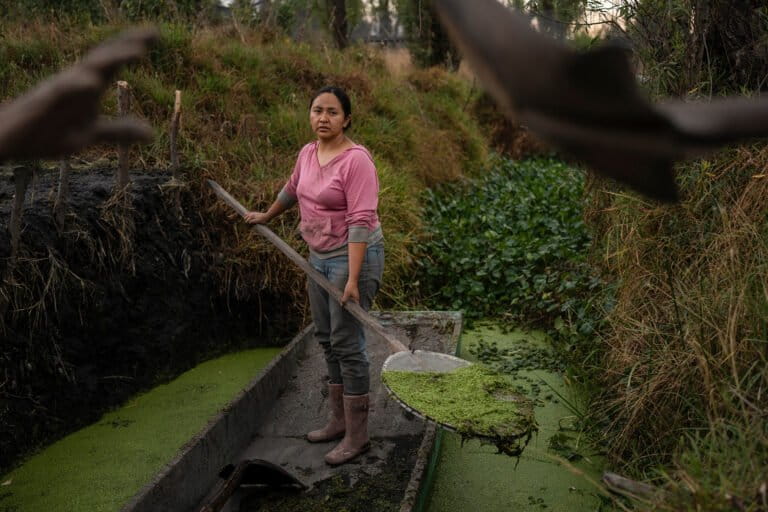
Cassandra Garduño in a wooden boat.
4 stories

Hands On: Stories that build change

16 stories

Forest Restoration Solutions

8 stories

Finning the High Seas

Free and open access to credible information

Learn more

Listen to Nature with thought-provoking podcasts

Sunrise over the Amazon rainforest. Photo by Rhett A. Butler.

Christiana Figueres & Garik Israelian on Jane Goodall’s legacy and the search for truth

Mike DiGirolamo 1 Sep 2026

Watch unique videos that cut through the noise

Lionfish hunted

Turning the tables on invasive lionfish: How Honduran divers are fighting back

Anden Condor

The king of the Andes: How a village learned to coexist with condors

Christina Noriega, Monica Wise Robles, Julia Lima 15 Aug 2026

How rescued orangutans are rebuilding a new wild population in Sumatra

Nanang Sujana, Sandy Watt 3 Aug 2026
A collage featuring Ashoka Mukpo, a Mongabay reporter, and a cocoa bean

Why are forests vanishing in southeastern Liberia?

Juan Maza, Ashoka Mukpo 18 Jul 2026

Mongabay, Scientific American, and Project Multatuli release a documentary on Indonesia’s new capital

Leah Varjacques, Rizky Rahad, Sandy Watt 15 Jul 2026

We’re a nonprofit

Help us tell impactful stories of biodiversity loss, climate change, and more
Donate

In-depth feature stories reveal context and insight

A Sumatran orangutan.
Feature story

Gold miners breach a crucial refuge for rescued Sumatran orangutans

Junaidi Hanafiah 31 Aug 2026
Feature story

For 50 years, Philip Fearnside has calculated the costs of losing the Amazon

Rhett Ayers Butler 31 Aug 2026
Angora goats, which produce mohair. Image © Samantha Reinders.
Feature story

South Africa’s new gold rush: Big money, high stakes in emerging spekboom restoration sector

Leonie Joubert 27 Aug 2026
A representative image of heavy sand mining site off the coast of Mozambique. Image courtesy of Estacio Valoi.
Feature story

A ‘leading’ Chinese miner of Mozambique’s heavy sands linked to environmental destruction

Malavika Vyawahare 27 Aug 2026

Quickly stay updated with our news shorts

Rapid wetland loss and ‘real estate boom’ increasing flood risk in Lagos

Kingsley Charles 2 Sep 2026

In July, following relentless bursts of rainfall, flash floods covered pockets of Lagos, disrupting commerce and traffic in Nigeria’s commercial capital. Experts have found that the city now faces increased flood risk due to human-induced climate change. Other recent studies have identified another common factor exacerbating flooding risk in Lagos: rapid urbanization.

In a study published in June, for example, a team of researchers examined satellite images of Lekki, a densely populated Lagos district, from 2015 to 2025. Their analysis showed that vegetation cover in the neighborhood had decreased by 13% in the last 10 years, while water bodies had reduced by 6%. Meanwhile, within the same timeline, settlements had risen by 10% on natural land cover, which was “causing an increase in flooding events in the area,” the authors concluded.  

The study is the latest in a series of investigations linking worsening flooding across Nigeria’s coastal cities to eroding wetlands.

A study published in February found that between 1984 and 2023, areas with buildings and infrastructure in Lagos expanded by 38%. Meanwhile, forest cover had declined by 32% and water bodies reduced by 11%, “reducing the natural flood buffering capacity of Lagos Megacity,” the authors wrote. With the persisting loss of vegetation and wetlands, the authors predicted, more than 60% of Lagos’ urban areas will be affected by extreme flooding by 2050.

Mark Ofua, the West Africa representative for Wild Africa, a conservation nonprofit, said that a real estate boom was to blame for the increasing ecological loss. “Lagos was historically surrounded by extensive wetlands and mangroves, but everywhere you turn now, especially around the suburbs, there’s land reclamation and construction going on.”  

Meanwhile, a recent analysis by World Weather Attribution, a network of global scientists who analyze extreme weather events, concluded that the sprawling expansion of housing and development on wetlands, which soak up excess rainwater, puts low-lying coastal cities like Lagos at a high risk of flooding.

In May, Nigeria’s National Emergency Management Agency issued a flood alert for 15 Lagos communities likely to face flash floods between July and September, typically the peak of Nigeria’s rainy season.

While the impacts of floods on the people living in Lagos are well documented, far less understood is how flooding affects the city’s biodiversity.

There have been some sporadic reports of wildlife deaths. In 2024, for instance, more than 80% of wildlife, including snakes and birds, reportedly fled from a zoo in northern Nigeria after heavy flooding. The zoo managers were later alerted to an ostrich seen strutting around a neighborhood in a viral clip.

To control future flooding, Ofua said tougher enforcement on wetland encroachment is crucial.

“The government has to declare these areas as protected and stop more companies from land reclamation. We have to move from lip service to action,” he said.  

Banner image: Commuters wade through heavy floodwater after a downpour in Lagos. Image courtesy of Folakemi Olaoni.

Commuters wade through heavy floodwater after a downpour in Lagos. Image courtesy of Folakemi Olaoni.

The race to document Indigenous knowledge to protect Philippines’ birds

Mongabay.com 2 Sep 2026

In the forests of the Philippines’ Mindoro Island, an urgent effort is underway to record the vanishing ecological knowledge of the Indigenous Iraya Mangyan community.

As elders age and fewer young people learn beside then, and deforestation and infrastructure development threaten the island’s endemic wildlife, traditional knowledge holders are partnering with conservationists to document wildlife, medicinal plants, and culturally important places, reports contributor Keith Anthony Fabro for Mongabay.

The community’s roughly 40,000-hectare (100,000-acre) ancestral domain overlaps with the UNESCO-designated Puerto Galera Biosphere Reserve, a protected ecological region on the northern tip of the island. There, the Center for Conservation Innovations Philippines (CCIPH), an NGO, is helping record the community’s oral heritage under the Mindoro Forest and Biodiversity Programme.

The environmental information gathered from the community becomes part of the Iraya’s Ancestral Domain Sustainable Development and Protection Plan, said Rey Luna, CCIPH project management adviser and former provincial officer of the National Commission on Indigenous Peoples.

Among the knowledge being documented is how local birds guide the Iraya’s daily lives and forest protection. These include three endemic birds deemed culturally important by the CCIPH: the turis, or Mindoro racket-tail (Prioniturus mindorensis); the siruk, or Mindoro boobook (Ninox mindorensis); and the sulit, or Mindoro scops owl (Otus mindorensis). The IUCN Red List classifies the turis and siruk as vulnerable, and the sulit as near threatened.

These birds carry deep spiritual and practical significance for the community. For instance, the sulit is associated with departed relatives, while the siruk’s calls are said to warn of malevolent spirits.

The turis is said to be a storm forecaster. Bernito Pampilo, an Iraya forest patroller, recalled how a noisy gathering of these parrots in a single tree saved his family from a destructive typhoon when he was 9. “When I see them gather like that, I prepare,” he said.

Ronet Santos, senior program operations manager of the D’Aboville Foundation, a nonprofit environmental organization working in Mindoro, said the three birds are also indicators of forest health. “Long-term indigenous observations can complement scientific knowledge and conservation initiatives by providing a complete temporal picture of these species’ behavior,” Santos said.

“When the turis, siruk and sulit are still here, it means our forest is still beautiful,” Lenito Pampilo, an Iraya community leader and eco-trail guide, told Mongabay. “If they disappear, our forest will disappear with them.”

Read the full story by Keith Anthony Fabro here.

Banner image: For the Iraya, the forest is a largely unwritten living archive. Image courtesy of the Center for Conservation Innovations PH Inc.

For the Iraya, the forest is a largely unwritten living archive.

Southeast Asia’s oak trees highly threatened as report warns of lack of protection

Mongabay.com 2 Sep 2026

Many of Southeast Asia’s native oak species are under high stress from human pressures and lack protection, according to a recent report, reports contributor Sean Mowbray for Mongabay.

Of the 430 known oak species in the world, 172 are native to Southeast and East Asia. The report, produced by the Morton Arboretum, a nonprofit that studies plants globally, evaluated 54 oak species across Southeast and East Asia listed as threatened or data-deficient by the IUCN. The analysis found that 46 species experienced “very high” or “high” human pressure across more than half of their native ranges in 2024.

“While it may not be the region that first comes to mind when we think of oaks, it’s a really important region for oak biodiversity and as a result, oak conservation,” study author Kate Good, a research manager at the Morton Arboretum, told Mongabay in an interview.

“Many of these species are under dire threat,” added Good.

The researchers found that agricultural expansion, specifically rubber, oil palm, and wood and pulp plantations, were the major threats to two-thirds of the analyzed species.

The report identified Vietnam as the center of Southeast Asian oak biodiversity, hosting 33 threatened or data deficient species, 15 of which are found nowhere else.

Furthermore, three of Southeast Asia’s four designated oak biodiversity hotspots lie within the Annamite mountain range, which spans Vietnam, Laos and Cambodia, while the fourth is located in Doi Inthanon National Park in Thailand.

“Vietnam is an important country for the conservation of Asian oaks, but the new report shows how vulnerable many of these species are,” Lam Van Hoang, country director for Vietnam at conservation charity Fauna & Flora International, who was not involved in the study, told Mongabay via email. “The findings reinforce the need to combine effective protection of remaining natural forests with targeted surveys, restoration and propagation.”

All of the 54 species surveyed had 40% of less of their native range within protected areas; 10 species had less than 10% coverage, the report found.

According to the study, only 14 of the 54 surveyed  species are preserved in ex situ collections such as botanic gardens, which can serve as an insurance policy against extinction. Among the region’s 16 critically endangered oaks, only a single species – Quercus camusiae, housed in a botanic garden in China – is held in an ex situ collection.

Huang supported the need for increasing ex situ populations, but said that “collections should be strategic, prioritizing the most threatened species and ensuring sufficient genetic diversity and well-documented wild provenance.”

Read the full story by Sean Mowbray here.

Banner image: Quercus rex oak trees in a forest in China. Asia is home to the largest number of threatened oak species in the world. Image by Min Deng.

Togo cosponsors proposal to review commercial whaling ban

Victoria Schneider 1 Sep 2026

Togo is cosponsoring a proposal to review commercial whaling quotas, drawing criticism from whale conservation groups. The draft resolution was submitted for discussion at the upcoming 70th meeting of the International Whaling Commission (IWC), which will be held Sept. 27 to Oct. 2.

Togo was the only African nation to support the proposal, which was spearheaded by the Caribbean island nation Antigua and Barbuda. Neither of these countries conduct commercial whaling themselves.

In response, the West and Central African Coalition for Whales which facilitates dialogue about whaling among African nations, issued a public statement calling on governments to remove support initiatives that weaken international whale protections or revive commercial whaling.

The resolution “is hard to reconcile with West and Central African priorities, where no country conducts commercial whaling and where the urgent issues are bycatch, habitat degradation and the protection of marine ecosystems,” Colonel Abba Sonko, a Senegalese wildlife conservation expert and representative of Senegal’s CITES Management Authority, told Mongabay via email.

In 1986, the IWC global moratorium on the exploitation of whales went into effect and set catch limits for all whales to zero. However, a few countries, including Japan, Norway and Iceland, continue whaling.

Togo’s support of the recent proposal is not the first time an African nation has backed a review of whaling. Countries such as Senegal, Guinea and Côte d’Ivoire have endorsed similar proposals before and played a key role in blocking the creation of a South Atlantic Whale Sanctuary between Latin America and Africa, which was first evaluated 25 years ago.

According to Sonko, West African countries do not hunt whales, nor do their populations rely on whale meat for food security.

“On the contrary, whales are increasingly valuable alive: they support marine tourism and associated coastal livelihoods, while also playing important ecological roles that contribute to the productivity and resilience of healthy ocean ecosystems,” he said, adding that protecting whales would better serve the long-term interests of coastal communities in West Africa.

Mongabay contacted the Togolese government to better understand their position but did not receive a response by the time this article was published. However, in the past, Japan has admitted to using aid money to persuade developing countries to support commercial whaling within the IWC.

Domestically, Togo recently listed several whales and other cetaceans as nationally recognized threatened species, including Antarctic minke whales (Balaenoptera bonaerensis) and Bryde’s whales (Balaenoptera brydei), which are currently still commercially hunted, mostly by Japan and Norway.

The Togolese government’s position has raised concerns among members of civil society and the scientific community, several of whom have signed the West and Central African Coalition for Whales public statement.

Sonko said the coalition has formally asked the Togolese government to clarify its position, “urging them to reconsider the co-sponsorship before IWC70.”

Banner Image: A whale captured by a Japanese harpoon vessel in 2008. Image by Customs and Border Protection Service, Commonwealth of Australia via Wikimedia Commons (CC BY 3.0 AU).

Biomass cooking fuels raise toxic metal exposure risks in Bangladesh, study finds

Usraat Fahmidah 1 Sep 2026

Burning biomass fuels like dry wood and rice husk for cooking can produce air pollution and contribute to toxic heavy metals buildup inside rural kitchens in Bangladesh, a new study finds.

Md. Badiuzzaman Khan, an environmental science professor at Bangladesh Agricultural University and the study’s lead author, said the research addresses a gap in understanding indoor pollution in rural communities.

“Local people use various kinds of fuels like cowdung, or branches of wood or agricultural byproducts like rice straw or jute sticks,” Khan said in an email to Mongabay. “Heavy metals may come to rice straw or jute sticks from the fertilizers used in the crop field. Heavy metals may also come from natural sources like soil.”

For this study, researchers collected dust samples from the walls and ceilings of 63 households in Bangladesh’s Haor and Charland regions, which both heavily rely on biomass fuel. They also analyzed 11 composite samples of biomass fuels used for cooking and examined their elemental composition. The study ran from November 2022 to March 2023.

Many low-income rural households use biomass, potentially exposing people to heavy metals and the health consequences associated with them. However, most pollution research in Bangladesh has largely focused on cities; little is known about rural exposure.

The study found that the heavy metals in household dust likely come from both human activities, such as farming and burning fuel, and natural sources such as soil and sediments carried by floods.

The types of metals found also differed between the two regions. In Haor, iron, manganese and zinc were particularly abundant, while Charland households had relatively higher levels of cobalt, chromium, copper, selenium and vanadium. The researchers suggest these differences could be related to the types of fuels people burn and how they cook, as well as metals already present in the local environment. In Haor, for example, households commonly burn cow dung cakes mixed with straw, which can release trace metals when burned.

The findings raise concerns about long-term exposure to metal-contaminated household dust and potential health impacts.

The study found that children faced higher noncancerous health risks from manganese in Haor compared with Charland. They also found levels of nickel, chromium and arsenic that “exceeded negligible levels,” suggest precautionary measures should be taken. Children are particularly vulnerable, as they frequently touch dusty surfaces and put their hands in their mouths.

The researchers recommend better kitchen ventilation, reduced reliance on high-emission biomass fuels, long-term monitoring and studies of health effects.

“Addressing these high-emission sources through national clean energy initiatives is not just an environmental goal but a critical public health necessity,” Ahmad Kamruzzaman Majumder, a professor of environmental science at Stamford University Bangladesh who was not involved in the study, told Mongabay.

Banner image: A woman in Bangladesh cooks rice over a traditional earthen oven using biomass. Image by Zaheed Sarwer Khan via Wikimedia Commons (CC BY 4.0).

Drones helped find people after Nepal floods but the search inside hydropower tunnels is a challenge

Associated Press 1 Sep 2026

KATHMANDU, Nepal (AP) — Drone pilot Manish Maharjan has helped rescue teams in Nepal find people missing after last week’s catastrophic floods, sometimes using speakers mounted on the devices to call out to or play music for those stranded on hillsides.

But the search for hundreds of workers believed to be trapped in power plant tunnels — now a major focus of rescue operations — presents an entirely different challenge, he said.

“We found tunnels were filled with mud like toothpaste in a tube,” Maharjan said. “There was no hollow or empty space inside.”

Maharjan, who is also a filmmaker, joined the Nepal Army’s rescue efforts a day after the Aug. 26 flash floods, which have killed more than 1,000 people and left thousands missing in Nepal and Tibet.

“We used microphone speakers to call out to them. In some places, we even played songs and then waited for a response,” Maharjan said. “That worked in a few cases and helped us locate people.”

The torrent of water unleashed after a glacial collapse in the Himalayan region caused widespread damage to critical infrastructure, including roads, buildings, bridges — and hydropower plants. At least 900 workers are still missing from 12 hydropower projects buried under mud and debris. About 500 of them are believed to be trapped inside power plant tunnels.

Some workers in the tunnels managed to call for help when the disaster struck, according to Mohan Kumar Dangi, president of the Independent Power Producers’ Association. But it was unclear whether rescuers have had any contact with the trapped workers since the initial calls for help.

As time slips away, rescuers are finding it increasingly difficult to locate these missing people.

Maharjan, who has been operating thermal drones in the tunnels, said the searches were challenging because of their difficult access and the absence of any empty space.

“I can only fly drones in tunnels that are long and straight,” he said. “Once there are bends, turns or zigzags, it becomes much harder to operate and search effectively.”

At the Rasuwagadhi hydropower project on Monday, Maharjan managed to send a drone to search deep inside and all the way to the end of the tunnel but found no sign of any life.

“We checked repeatedly but it was filled with mud and debris,” he said. “Looking at it, I could only imagine the force of the flood.”

By Shristi Kafle and Aijaz Hussain, Associated Press

Banner image: This photo provided by the Nepal Army, shows Nepal army soldiers undertake rescue operation at the site of a hydropower project in Upper Trishuli, Nepal, Monday, Aug. 31, 2026. Image courtesy of Nepal Army via Associated Press.

Share Short Read Full Article

Share this short

If you liked this story, share it with other people.

Facebook Linkedin Threads Whatsapp Reddit Email

Subscribe

Stay informed with news and inspiration from nature’s frontline.
Newsletter

News formats

  • Videos
  • Podcasts
  • Articles
  • Specials
  • Shorts
  • Features
  • The Latest

About

  • About
  • Contact
  • Donate
  • Impacts
  • Newsletters
  • Submissions
  • Terms of Use

External links

  • Wild Madagascar
  • For Kids
  • Mongabay.org
  • Reforestation App
  • Planetary Health Check
  • Conservation Effectiveness
  • Mongabay Data Studio

Social media

  • LinkedIn
  • Instagram
  • Youtube
  • X
  • Facebook
  • Tiktok
  • Reddit
  • BlueSky
  • Mastodon
  • Android App
  • Apple News
  • RSS / XML

© 2026 Copyright Conservation news. Mongabay is a U.S.-based non-profit conservation and environmental science news platform. Our EIN or tax ID is 45-3714703.

you're currently offline