• Features
  • Videos
  • Podcasts
  • Specials
  • Articles
  • Shorts
Donate
  • English
  • Español (Spanish)
  • Français (French)
  • Bahasa Indonesia (Indonesian)
  • Brasil (Portuguese)
  • India (English)
  • हिंदी (Hindi)
  • বাংলা (Bengali)
  • Swahili
  • Videos
  • Podcasts
  • Articles
  • Short News
  • Feature Stories
  • The Latest
  • Explore All
  • About
  • Team
  • Contact
  • Donate
  • Subscribe page
  • Submissions
  • Privacy Policy
  • Terms of Use
  • Advertising
  • Wild Madagascar
  • For Kids
  • Mongabay.org
  • Reforestation App
  • Planetary Health Check
  • Conservation Effectiveness
  • Mongabay Data Studio

Latest

A Sumatran orangutan in Bukit Lawang, North Sumatra.

Indonesia threatens prison time for unauthorized downloads of forest data

Dyna Rochmyaningsih, Philip Jacobson 6 Oct 2026

Sabine Schoppe who built a refuge for Palawan’s forest turtles has died

Rhett Ayers Butler 5 Oct 2026

Brazil far-right presidential candidate wins most votes in deforestation hotspots

Shanna Hanbury 5 Oct 2026

Uncertainty mounts as Suriname struggles to evict illegal settlers in the Amazon

Maxwell Radwin 5 Oct 2026

Thailand braces for more rain as death toll from recent flooding hits 31

Associated Press 5 Oct 2026

‘There could be local extinction’: The fight to protect Indonesia’s orangutans as El Niño fuels fires

Hans Nicholas Jong 5 Oct 2026
All news

Top stories

Viernamese fishers in a boat.

Vietnam’s fishers face rising costs, declining catches and a contested sea

Two Spix’s macaws

Vantara in talks with Brazil on ‘strategic cooperation’ on threatened species, FOIA documents reveal

Fernanda Wenzel, Spoorthy Raman 1 Oct 2026
Mineral traders watch on as antimony ore is transferred from Myanmar trucks to Thai trucks at the Pheung Khleung border crossing. Image by Gerald Flynn / Mongabay.

Myanmar’s polluting mines selling to China through Thai companies

Gerald Flynn 1 Oct 2026
An earless monitor lizard, endemic to Borneo.

Illegal wildlife continues to slip through Canada’s borders. Experts explain how

Alex Megerle 30 Sep 2026
A logger carries his chainsaw through the forest of the Cardamom Mountains in Cambodia. He will sell the timber to garment factories.

Despite a drop in deforestation in 2025, forest losses pile up in the Mekong

Gerald Flynn 29 Sep 2026

Subscribe

Stay informed with news and inspiration from nature’s frontline.
Newsletter

We’re a nonprofit

Help us tell impactful stories of biodiversity loss, climate change, and more
Donate

News and Inspiration from Nature's Frontline.

Thumbnail Firefly
Videos
A Sumatran orangutan in Bukit Lawang, North Sumatra.
Articles
Podcasts

Special issues connect the dots between stories

Guinea’s Iron Frontier

The Nimba mountain range as seen from southern Guinea. Image by Maarten van der Bent via Flickr (CC BY-SA 2.0).

In the Nimba Mountains, a film examines the paradox of mining-funded conservation

Ashoka Mukpo 8 May 2026
Loading a barge with iron ore from Simandou. Image by Paul Kagame via Flickr (CC BY-NC-ND 4.0)

Hopes and fears as Guinea exports iron ore from Simandou mines

Ashoka Mukpo 16 Jan 2026
Myotis nimbaensis, shown here, is a new species of bat named for the mountain range in which it is found, the Nimba Mountains in West Africa. Photo © Kendra Snyder / Bat Conservation International.

Rare bats at risk as iron ore mine advances in Guinea’s Nimba Mountains

Victoria Schneider 30 Dec 2025
a western chimpanzee in a tree

Setback for Guinea mine that threatens World Heritage chimp reserve

Ashoka Mukpo 15 May 2024

What does it take to turn one of the world’s richest iron deposits into a global export hub? Eastern Guinea has become a focal point in the global race for high-grade iron ore. Mongabay has traced the rapid expansion of two of Guinea’s largest iron ore projects in the Simandou range and the Nimba Mountains, […]

Guinea’s Iron Frontier series

More specials

Samburu pastoralists walking with their herd.
10 stories

Pastoralists in a Changing World

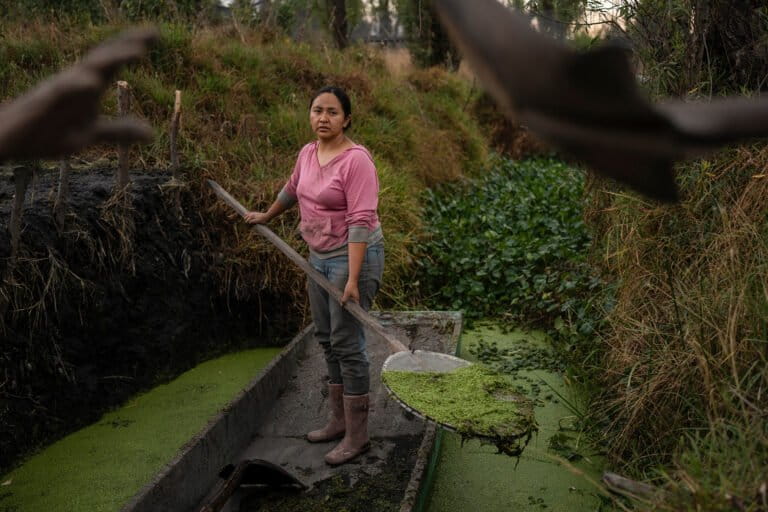
Cassandra Garduño in a wooden boat.
4 stories

Hands On: Stories that build change

16 stories

Forest Restoration Solutions

Free and open access to credible information

Learn more

Listen to Nature with thought-provoking podcasts

Iwi and community-led effort return kiwi to Wellington for first time in over a century

Mike DiGirolamo 29 Sep 2026

Watch unique videos that cut through the noise

Thumbnail Firefly

A plan to save Bali’s lost fireflies

Gold nugget

The push for a sustainable artisanal mining in the Peruvian Amazon

Felipe Esparza 12 Sep 2026
Lionfish hunted

Turning the tables on invasive lionfish: How Honduran divers are fighting back

Fritz Pinnow, Sandy Watt 29 Aug 2026
Anden Condor

The king of the Andes: How a village learned to coexist with condors

Christina Noriega, Monica Wise Robles, Julia Lima 15 Aug 2026

How rescued orangutans are rebuilding a new wild population in Sumatra

Nanang Sujana, Sandy Watt 3 Aug 2026

We’re a nonprofit

Help us tell impactful stories of biodiversity loss, climate change, and more
Donate

In-depth feature stories reveal context and insight

A bluespotted ribbontail ray (Taeniura lymma) on a reef bed by Pulau Hantu
Feature story

Singapore’s plan to merge several islands could wipe out coral reefs

Robin Hicks 28 Sep 2026
Anant Ambani with elephants
Feature story

NGOs call on Vantara to end all wild animal imports permanently

Spoorthy Raman 25 Sep 2026
A Landscape Alliance staffer kneels beside a coppicing stump of a wild loquat tree
Feature story

Scientists clone Southern Africa’s wild fruit trees as forests disappear

Ryan Truscott 25 Sep 2026
A Ghana cuckooshrike in Côte d’Ivoire.
Feature story

‘Lost’ bird reappears in West Africa’s forests after more than a decade

John Cannon 24 Sep 2026

Quickly stay updated with our news shorts

Sabine Schoppe who built a refuge for Palawan’s forest turtles has died

Rhett Ayers Butler 5 Oct 2026

Founders briefs box

On June 17, 2015, Philippine officials confiscated thousands of turtles in cement tanks from a warehouse in Palawan, an island province in the Philippines. More than 3,800 of them were endangered Palawan forest turtles (Siebenrockiella leytensis), piled as many as a dozen deep, awaiting export. Some had ulcers on the undersides of their shells or open wounds on their feet; others had been bitten by turtles crowded in alongside them.

Sabine Schoppe organized the response. No facility was equipped to deal with thousands of turtles so students built shade and shelters. A former crocodile enclosure was turned into an emergency pond. Schoppe and her colleagues worked around the clock, joined by veterinarians and turtle specialists who came from abroad. “Yesterday by sadness and work, now by hope,” she wrote after help began arriving.

Schoppe had arrived in the Philippines from Germany in 1995 after completing a doctorate in biology. She began with bird surveys and coastal resource management in the Visayas before moving to the State Polytechnic College of Palawan, now Western Philippines University, where she was a guest professor of aquatic and marine biology. She also became an associate editor of The Palawan Scientist.

The bakoko, as the Palawan forest turtle is known locally, was first described scientifically from specimens said to have come from the Philippine island of Leyte. Those specimens were later destroyed during the bombing of Manila in World War II. For decades scientists didn’t know where the turtles lived until they were eventually found in Palawan.

The species lives in burrows alongside creeks and small rivers where collectors can dig them out making them relatively easy targets. Keeping them healthy as pets is another matter. The animals are solitary and prone to stress, skin problems and shell rot in captivity. Crowded together, they can attack one another.

Schoppe was a co-founder of the Philippines-based nonprofit Katala Foundation. She began its freshwater turtle program in 2007 and its pangolin program the following year. Under her leadership, the foundation built a turtle rescue facility and established the first protected area specifically for the Palawan forest turtle. They successfully bred the species for conservation.

That preparation was critical after the 2015 confiscation. Some 2,200 turtles from the warehouse were released, but more than 1,000 remained in care, suffering from ailments that included bone infections, eye problems, dehydration and emaciation. More than 300 died in the first weeks. Schoppe and her colleagues monitored released animals, building one of Asia’s few large-scale post-release monitoring programs for freshwater turtles.

Schoppe received the Andrew Sabin Award for Excellence in Chelonian Conservation in 2015. In 2026, she was named the recipient of the  Behler Turtle Conservation Award, the field’s highest honor. She was too ill to travel to Mexico to receive it; a longtime colleague from Palawan accepted it for her. She died less than six weeks later on Sept. 13. She was 63.

Banner image: of Sabine Schoppe. Image courtesy of Katala Foundation.

Brazil far-right presidential candidate wins most votes in deforestation hotspots

Shanna Hanbury 5 Oct 2026

In Brazil’s general election on Oct. 4, incumbent leftist President Luiz Inácio Lula da Silva finished second to far-right Flávio Bolsonaro, a senator and son of former President Jair Bolsonaro, who was barred from public office after being convicted of planning a coup d’état. The two candidates will face each other in a second-round vote on Oct. 25 as neither candidate won more than 50% of the vote needed for a first-round victory.

Flávio Bolsonaro won the majority of votes in eight of the 10 Amazon municipalities that cleared the most rainforest over the last decade, according to an analysis by Sumaúma, an Amazon-based publication. Sumaúma compared official results from the first-round votes with satellite deforestation data from Brazil’s National Institute for Space Research.

Jair Bolsonaro’s presidency coincided with a historic spike in deforestation. Lula took office in 2023. Starting in August 2025, Amazon deforestation fell to the lowest level in more than a decade.

Novo Progresso in Pará state was the site of the 2019 “Day of Fire” when local residents, many Jair Bolsonaro supporters, purposely set hundreds of forest fires. Flávio Bolsonaro won 84% of the vote in Novo Progresso.

In the municipality of Altamira, where the Lula administration blacklisted more than 500 farms for illegal deforestation last year, Flávio Bolsonaro won 63% of the vote.

Nestled between Altamira and Novo Progresso is the site of the largest land grab in Brazilian Amazon history.

Lula won the vote in two of the 10 most deforested municipalities. He won 57% of the vote in Lábrea near the controversial highway BR-319, which cuts through the Amazon. Both candidates promise to pave the road, raising concerns for more deforestation. And in Portel, an açaí production hub in Pará state, Lula claimed 62% of the vote. 

Several municipalities with the most deforestation are also home to Indigenous territories facing invasions by land grabbers, loggers and illegal miners. More than 287,000 Indigenous citizens were apt to vote in this election, an increase of 84% over the last election in 2024, but are a small minority in every state.

In Colniza, in northwestern Mato Grosso state, where Bolsonaro won 77% of the vote, federal agents recently marked the boundaries of the Kawahiva do Rio Pardo Indigenous Territory, home to an isolated Indigenous group, Mongabay has reported. The Piripkura Indigenous Territory, also in Colniza, is still waiting after 40 years for its demarcation, according to Survival International.

In Itaituba, along the Tapajós River in western Pará federal forces have been removing illegal gold miners from the Munduruku Indigenous Territory since November 2024. More than 69% of Itaituba citizens voted for Bolsonaro, and 26.5% for Lula. 

Experts warn that if Bolsonaro wins the presidential election, 95% of the Amazon rainforest will be under right-wing governments by 2027.

Banner image: Flávio Bolsonaro campaigns in Bélem, Pará, in September 2026. Image courtesy of Vittor Sales.

Flávio Bolsonaro campaigns in Bélem, Pará, in September 2026. Image courtesy of Vittor Sales.

Thailand braces for more rain as death toll from recent flooding hits 31

Associated Press 5 Oct 2026

BANGKOK (AP) — Thai authorities on Monday warned of more rain and flash flooding as the death toll from floods across the country since mid-September rose to 31.

Thunderstorms, strong winds and heavy rain are expected across much of upper Thailand from Monday through Wednesday, increasing the risk of flash flooding, particularly in low-lying areas, the Thailand Meteorological Department said.

Very heavy to heavy rains are also forecast in some areas in the central, eastern and southern regions, including the capital, Bangkok, over the weekend.

Many areas in Bangkok were inundated last week after days of torrential rain, forcing thousands to evacuate and causing severe disruptions. The city’s conditions have largely improved, although floodwaters remain in some lower-lying areas.

Bangkok authorities said they were taking measures to reduce the risk of further flooding, including draining more water from the city’s main canals to increase their capacity to absorb rain and deploying more water pumps in high-risk areas.

More than 3.5 million people remained affected by flooding nationwide as of Monday, according to the Department of Disaster Prevention and Mitigation. The 31 deaths were reported across eight provinces, including four in Bangkok.

The extensive damage from flooding prompted the Thai government to approve emergency funds of more than 4.1 billion baht (about $122 million) last week for flood recovery.

By Associated Press
Banner image: People wade through a flooded street after heavy rain in Bangkok, Thailand, Monday, Sept. 28, 2026. Image courtesy of Sakchai Lalit, Associated Press

Rare Southern African succulent listed as critically endangered amid mining threat

Victoria Schneider 5 Oct 2026

The brown clockfig, an extremely rare succulent growing in the hot, arid border region of Namibia and South Africa, was recently assessed as critically endangered by the IUCN, the global wildlife conservation authority.

The western Gariep Valley is a vast landscape spanning the southern part of Tsau ǁKhaeb National Park in Namibia and the Richtersveld region of Northern Cape province in South Africa. It’s in this harsh environment, shaped by extreme heat and dryness, that the brown clockfig (Cheiridopsis brownii) grows on quartz ridges, shale, gravel, and sandy soils, and in cracks and fissures in desert mountains.

The IUCN estimates the species, with thick leaves and daisy-like yellow flowers, has a total range of 424 square kilometers (164 square miles) in the valley, but occupies only around 60 km2 (23 mi2) of this area.

Habitat loss due to overgrazing is among its major threats. Another is the demand for mineral resources such as diamonds, with mining permits being issued across the region. That’s placed more of the species’ already limited habitat under pressure in both South Africa and Namibia.

“The vast desertification of the Aniesvlakte [plain in South Africa’s Richtersveld region] as a direct result of severe overgrazing, as well as the mass desertification caused by sand moving from the coast due to unrehabilitated mines, are threatening to swallow most of the remaining population in South Africa,” Pieter van Wyk, a botanist with South African National Parks (SANParks), who carried out the most recent assessment, told Mongabay via email.

Another threat comes from new green-energy developments — massive-scale green hydrogen projects — planned over vast sections of where this species occurs, van Wyk said.

Additionally, a prolonged drought from 2012-202, combined with other factors, resulted in a decline in the species’ population of 50-90% since 1992. Climate change is expected to intensify these pressures, bringing higher temperatures and declining rainfall to the region.

By 2052, the IUCN assessment projects that another 80-100% of the population could be lost. It adds that targeted conservation activities are not currently being conducted for the plant.

Van Wyk said it’s crucial to protect all the brown clockfigs in the extremely dry, low-lying areas of the Gariep Desert adjacent to the Oranje River, since they support insects that in turn sustain the region’s highly arid- and heat-adapted spiders and reptiles.

However, the species’ population has reached levels so concerning that the Richtersveld Desert Botanical Garden, founded and curated by van Wyk, has started collecting specimens for conservation. This includes seeds that van Wyk collected in 2021 from an area where populations were designated to be destroyed for diamond mines.

Van Wyk said it “remains shocking” that a highly resilient species like the brown clockfig can easily grow in circumstances where no human can survive, yet “simply cannot survive the land use practices” wrought by humans.

Banner image: A brown clockfig in South Africa’s Gariep Valley. Image © pietermier via iNaturalist (CC BY-NC 4.0).

A brown clockfig in South Africa’s Gariep Valley. Image © pietermier via iNaturalist (CC BY-NC 4.0).

More Latin American species are surfacing at a Bangkok wildlife market

Mongabay.com 5 Oct 2026

More Amazonian species, in larger numbers, are appearing for sale on the other side of the planet in Southeast Asia’s exotic pet trade, reports contributor Gloria Dickie for Mongabay.

Over the past two years, Scott Roberton, who leads the countertrafficking program for U.S.-based nonprofit Wildlife Conservation Society, has observed a rise in Latin American species, including marmosets, capuchin monkeys, tamarins, capybaras, matamata turtles, and rare Amazonian fish, crammed into small enclosures alongside domestic pets in Thai markets.

“It’s changed a lot in the past two years. The volume is greater. The diversity of species is great,” said Roberton. “Every time we come, there is a new species here.”

The supply chain can originate deep in the rainforest, often centered around hubs like Iquitos in Peru, Dickie reports. Animals poached from Colombia, Brazil, and neighboring nations are ferried along Amazonian rivers into Peru, where corruption and illegal trafficking, including fraudulent documentation, allow wild-caught specimens to be laundered as captive-bred stock that can be legally traded.

“Iquitos is a city where a lot of illegal commodities move freely within the Amazon,” said Renata Cao, Latin America project lead with the wildlife trade monitoring network TRAFFIC. “A lot of products from different countries get to Iquitos, and then in Peru it’s easier to launder.”

From South America, the animals endure stressful multi-leg flights lasting more than 25 hours to reach Asian markets. The trade is further fueled by social media platforms that connect buyers and sellers globally, according to Neil D’Cruze, a wildlife researcher.

“The market stall is really just the visible part of a much longer supply chain,” D’Cruze said. “And increasingly, that physical supply chain is intersecting with a global digital marketplace capable of connecting sellers and buyers thousands of miles apart.”

Roberto Vieto, animal welfare adviser with U.K.-based World Animal Protection, said the trade inflicts pain and suffering on the animals, with many dying during transit due to extreme stress and confinement.

“There are no direct flights, so it will be a super-long journey with several stops,” Vieto said. “That is only causing extreme stress for the animals, and the level of mortality is super high.”

While it’s unknown exactly how many animals die in transit, a report from the European Union on wildlife trafficking found that 70% of wild animals die within six weeks of capture.

In Bangkok’s Chatuchak Market, overcrowded conditions, high heat, and proximity to food stalls also elevate biosecurity and zoonotic disease risks. Despite international criticism and a 2024 fire that killed more than 1,000 animals, such market operations continue.

Read the full story by Gloria Dickie here.

Banner image: A shopper walks through Chatuchak Market carrying her pet raccoon. Image by Gloria Dickie.

A shopper walks through Chatuchak Market carrying her pet raccoon.

Weak prosecution leaves Southeast Asia’s tigers vulnerable to trafficking: Report

Mongabay.com 5 Oct 2026

Fewer than half of tiger poaching and trafficking arrests in Southeast Asia result in convictions or legal penalties, providing little deterrent to an illegal black market that is driving wild tigers towards extinction, reports contributor Sean Mowbray for Mongabay.

Researchers analyzed 259 tiger seizure cases recorded between 2019 and 2024 across seven range countries: Indonesia, Vietnam, Thailand, Malaysia, Cambodia, Myanmar and Laos.

Of those 259 cases, only 110 resulted in prison sentences or fines, according to the report published by Canadian conservation think tank the GuArdean Centre for Conservation Research, wildlife trade watchdog TRAFFIC, and WWF International.

Another 35 cases ended in suspended sentences, while 63 arrests lacked a clear outcome and 48 had no available public data.

The report reveals that law enforcement efforts overwhelmingly target low and mid-level poachers, couriers and local traders, rather than the high-level organizers financing transnational syndicates.

“We’re talking about serious organized crime,” Heather Sohl, tiger trade lead at WWF and report co-author, told Mongabay. “These are criminal networks that are involved in other organized crime, such as human trafficking and money laundering.”

Sohl added that arrests alone are insufficient, “Investigation and case-building is needed to build support for strong prosecutions, and only by looking across the whole criminal justice response can we look to really disrupt these wildlife trafficking networks.”

Vietnam and Indonesia logged the highest conviction numbers, with 51 cases in each country carrying jail time or fines. However, Vietnam also accounted for 33 of the region’s 35 suspended sentences.

Thailand recorded 36 arrests and Malaysia 35, but these yielded just five and nine imprisonments respectively.

Cambodia and Laos documented just one successful prosecution each, while Myanmar reported none.

“It’s really difficult to develop a clear picture of what’s happening in some of the other countries because there’s just no transparency with regards to prosecutions,” report lead author Rachel Boratto, executive director of the GuArdean Centre for Conservation Research, told Mongabay. Boratto said that without follow-through, wildlife laws become “just laws on paper.”

For Vincent Nijman, a wildlife trade researcher and director of U.K.-based EcoVerde Global Consulting, who wasn’t involved in the analysis, the report gives a great overview of illegal wildlife trade, but has some limitations. “The rate of successful prosecution, while high compared to other protected wildlife, remains rather low,” he told Mongabay by email. He acknowledged that limited data is a “major barrier” to understanding the full picture.

Chas Barnes, counter-trafficking lead at wildcat conservation nonprofit Panthera, said that failing to prosecute kingpins undermines overall conservation goals. “Weak law enforcement or weak punishment undermines other important [conservation] interventions,” Barnes stated. “Targeting the low- and medium-level offenders isn’t always the way to go for the maximum disruption”. 

Read the full story by Sean Mowbray here.

Banner image: A Sumatran tiger (Panthera tigris sondaica) in Indonesia. Only a few hundred of the critically endangered species remain in the wild, with numbers dwindling due to poaching and habitat destruction. Image by Rhett A. Butler/Mongabay.

Sumatran tiger

Share Short Read Full Article

Share this short

If you liked this story, share it with other people.

Facebook Linkedin Threads Whatsapp Reddit Email

Subscribe

Stay informed with news and inspiration from nature’s frontline.
Newsletter

News formats

  • Videos
  • Podcasts
  • Articles
  • Specials
  • Shorts
  • Features
  • The Latest

About

  • About
  • Contact
  • Donate
  • Impacts
  • Newsletters
  • Submissions
  • Terms of Use

External links

  • Wild Madagascar
  • For Kids
  • Mongabay.org
  • Reforestation App
  • Planetary Health Check
  • Conservation Effectiveness
  • Mongabay Data Studio

Social media

  • LinkedIn
  • Instagram
  • Youtube
  • X
  • Facebook
  • Tiktok
  • Reddit
  • BlueSky
  • Mastodon
  • Android App
  • Apple News
  • RSS / XML

© 2026 Copyright Conservation news. Mongabay is a U.S.-based non-profit conservation and environmental science news platform. Our EIN or tax ID is 45-3714703.

you're currently offline