- Aimable Twahirwa is a Central and West Africa staff writer at Mongabay, based in Kigali, Rwanda.
- He has worked as a journalist for 25 years, reporting on development, climate change, biodiversity and conservation across Africa and beyond.
- His work has appeared in major outlets including Nature Publishing Group, Inter Press Service, Thomson Reuters Foundation, SciDev.Net and AllAfrica.
- This interview is part of Inside Mongabay, a series that spotlights the people who bring environmental and conservation stories to life across our global newsroom.
As Mongabay deepens its reporting across Africa’s biodiversity and climate challenges, award-winning senior science journalist Aimable Twahirwa is bringing his decades of experience to ensure the region’s stories reach international audiences. For Twahirwa, journalism serves as a tool to not only report on facts, but strengthen general audiences and the media’s resilience. “Countering misinformation and science denial is critical to bolster public trust and fortify the news ecosystem against manipulation,” Twahirwa says.
Based in Kigali, Rwanda, Twahirwa draws on 25 years of science and environmental journalism experience for his role as a Central and West Africa staff writer at Mongabay. In that time, he’s covered a wide range of development-related issues in Rwanda, Central Africa and East Africa, with a growing interest in wildlife, biodiversity and nature. At its core, his day-to-day reporting is inspired by the potential to drive change. “I like telling impact stories covering topics that call for action, which can then be shared with those who are in a position to do something about it,” he says.
Before joining Mongabay in September 2024, Twahirwa published in-depth feature stories for regional and international media outlets and global news agencies. His work has appeared in Nature, Inter Press Service, AllAfrica, Thomson Reuters Foundation (formerly known as AlertNet), SciDev.Net and many other platforms, where he has contributed to long-term reporting projects across multimedia formats.
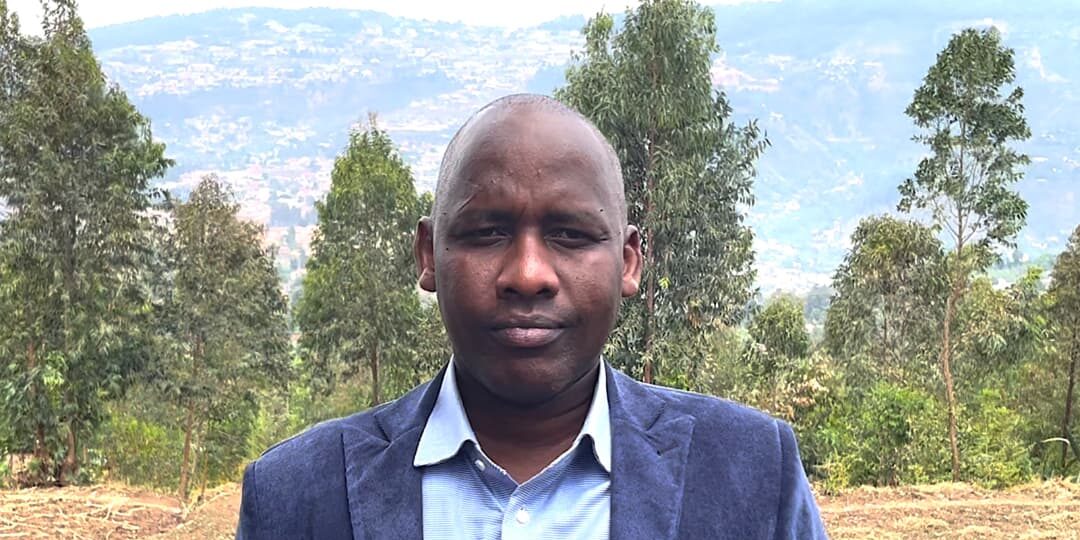
Twahirwa has also reported widely from Africa, East Asia, Latin America and Europe, bringing a truly global perspective to his work on climate change and biodiversity conservation. This is due to his experience as a grantee of the International Center for Journalists and the Louise Behan Reporting fellowship by the World Federation of Science Journalists, and a 2022 Excellence in Journalism Climate Change fellowship at the Graduate School of Media and Communications of the Aga Khan University, Kenya.
In addition to his reporting, he has also served as a media trainer and mentor for initiatives such as the International Women’s Media Foundation’s Global Health Reporting Initiative, the African Climate Change and Environment Reporting Academy, and the Solutions Journalism Network, helping to equip new generations of reporters to cover nature.
In this conversation with Twahirwa about his career at Mongabay, we look at the stories he’s most proud of, his passion in shaping journalism across Central and West Africa, and what it takes to be a good journalist. This interview is part of Inside Mongabay, a series that spotlights the people who bring environmental and conservation stories to life across our global newsroom.
Mongabay: What inspired your interest in the work you do for Mongabay?
Aimable Twahirwa: Reporting on the environment and conservation is really important to me and it inspires me to see the difference that sustainable choices make in the world. I’m really motivated by opportunities offered by Mongabay to cover impact stories to strengthen communities, advance equity, build trust and increase civic engagement.
What excites me is the opportunity to delve into the world of conservation journalism and its impact on society. I am especially drawn to Mongabay’s editorial line for telling impact stories about this particular field, which aligns perfectly with my own journalistic values and experience.
I’m also driven by the chance to learn and grow as a science and environmental journalist. Working for Mongabay has allowed me to collaborate with experienced colleagues and contribute to a strong team that produces tangible results.
Mongabay: What do you most enjoy about your work?
Aimable Twahirwa: I like telling impact stories covering topics that call for action, which can then be shared with those who are in a position to do something about it. The experience of working in this challenging role at Mongabay has helped me to interact with various senior experts from prominent global organizations and research institutions. I particularly enjoy teamwork under the coordination of various editors. I enjoy mostly field reporting where I try to combine scientific evidence with compelling storytelling.
Mongabay: How does the region you work in shape the way you report on environmental issues?
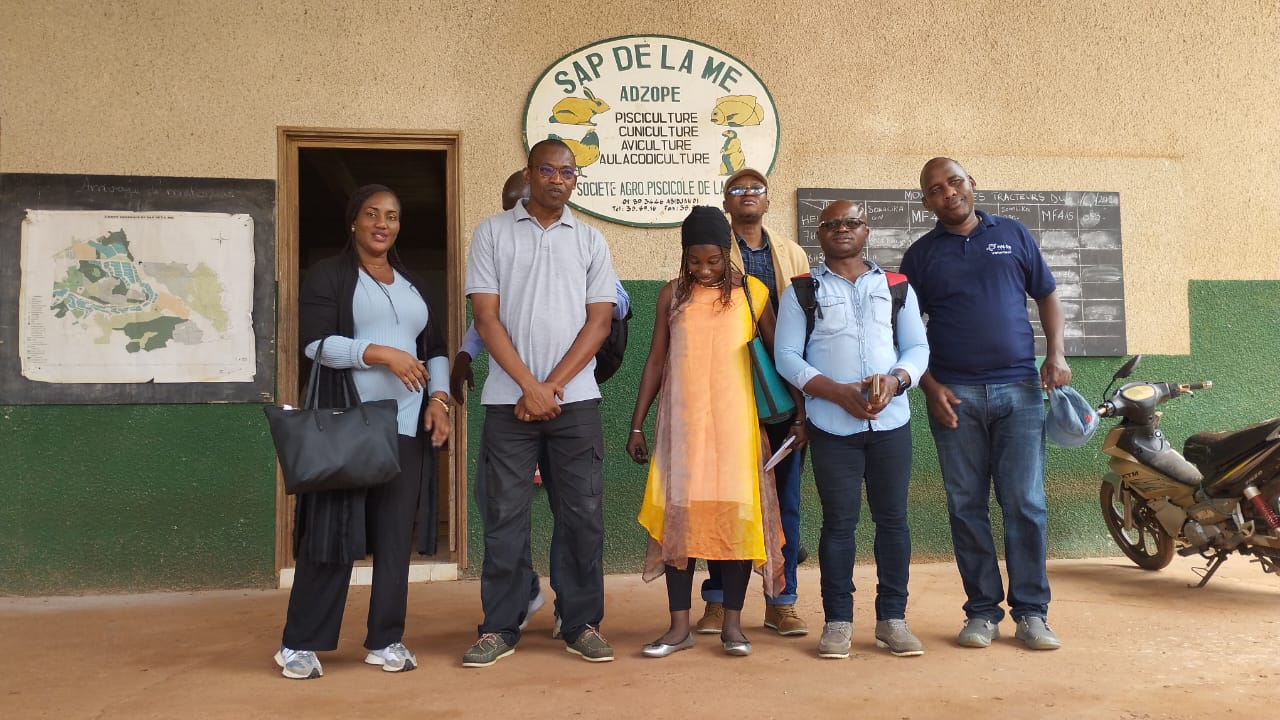
Aimable Twahirwa: Covering West and Central Africa, and the Congo Basin in particular, has been rewarding, especially with fresh stories and angles that are new, unexpected, and relevant to share with a global audience. As an investigative journalist, I traveled to several countries across Central Africa to report on the role of Indigenous peoples in forest governance and conservation, as well as the issue of wildlife trafficking. Using rigorous investigative reporting and compelling narratives, I was able to investigate and map illegal wildlife trade routes.
As a science journalist, I have developed a solid network of key contacts from research institutions, conservation organizations, community workers, and nonprofits in Central and West Africa, which has always been crucial in uncovering exclusive stories.
Mongabay: What project are you most proud of and why?
Aimable Twahirwa: The Congo Basin and Sahel region. There are so many story ideas on solutions that highlight and humanize current efforts to mitigate problems in the area of conservation in Central and West Africa. Some of these stories consistently attract attention and interest from Mongabay’s audience. I’m particularly proud of my multimedia reporting from this region.
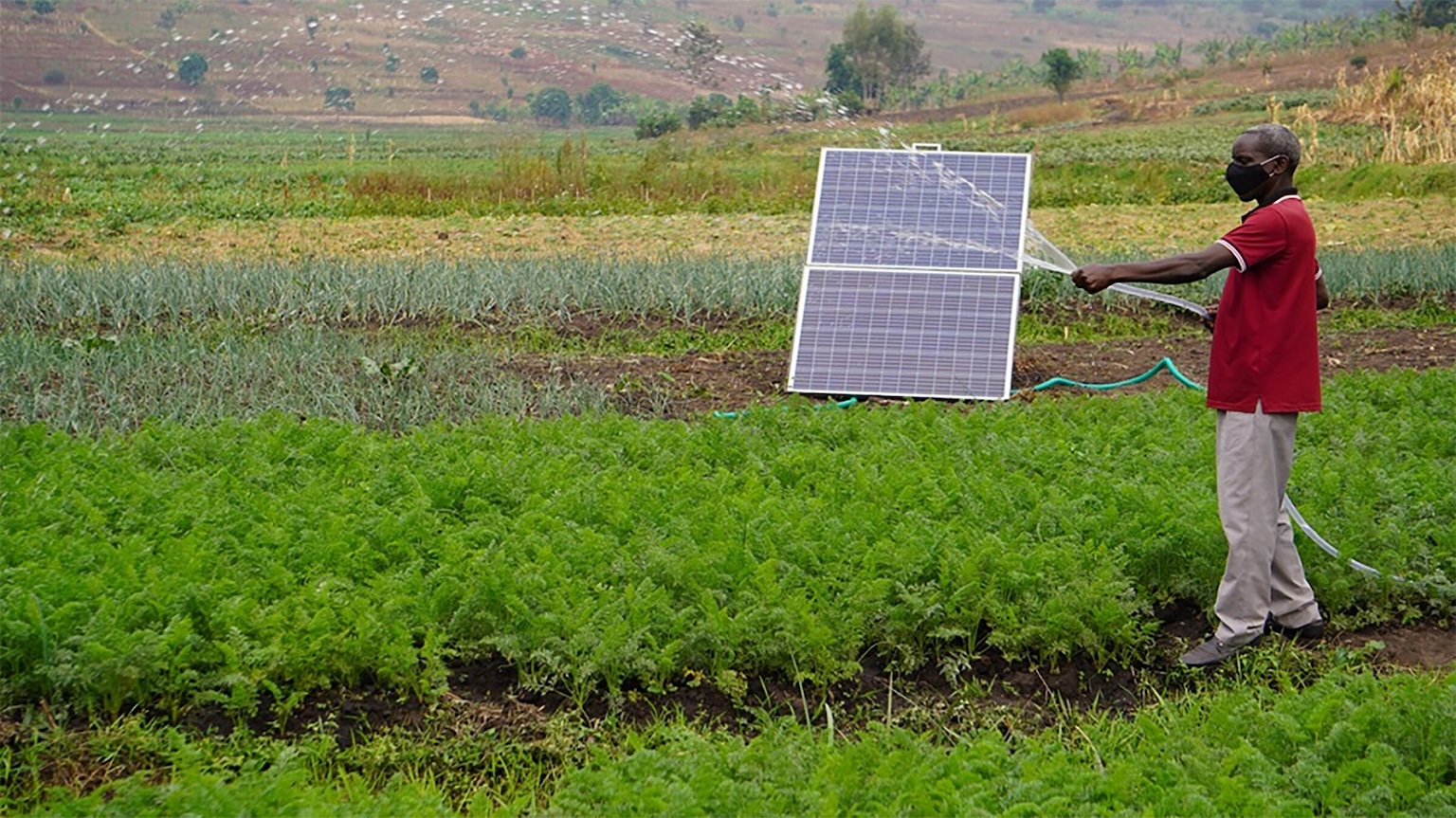
One of my recent favorites focuses on solar-powered irrigation as a solution to boost agricultural productivity in Rwanda. As a science journalist specializing in renewable energy and daily energy news coverage, this story helped me to get hands-on information on the impact of green energies in boosting resilience for smallholders farmers in Rwanda and Africa. Following publication, I continue to receive feedback from different organizations engaged in the agricultural sector in Africa to discuss more on insights and limitations to these solutions on solar-powered irrigation and how they can be replicated in other farming communities across Africa.
Mongabay: What are three interesting takeaways from this story?
Aimable Twahirwa: First, smallholder farmers, many from subsistence, women-headed households, are adopting solar-powered irrigation to boost productivity in Rwanda. Second, different stakeholders, including government agencies and partners, are providing technical support to assist with the transition. And lastly, while renewable-powered irrigation is still quite expensive in Africa, farmers and other stakeholders are exploring alternatives to make it more affordable.
Mongabay: Do you have a behind-the-scenes moment that stands out from working on this story?
Aimable Twahirwa: I got requests from the audience to do a follow-up story on aspects related to the issues covered in my previous report. Beyond this, a good number of stakeholders in conservation were interested to share more insight on some stories I covered on Indigenous peoples and land use and on forest conservation.
Mongabay: What do you want to achieve as an environmental journalist?
Aimable Twahirwa: I’d like to craft many investigative reports on biodiversity conservation through rigorous fact-checking on the Congo Basin and the Sahel region. Countering misinformation and science denial is critical to bolster public trust and fortify the news ecosystem against manipulation. Environmental issues in these regions are sometimes multifaceted, so it’s important to report on them accurately.
Mongabay: What advice would you give to someone following your footsteps?
Aimable Twahirwa: Apart from working hard and maintaining objectivity throughout every report, it’s also important to know where to focus. However, I believe the most important thing is to trust yourself and your abilities. A good journalist should learn how to utilize various digital tools and platforms to enhance storytelling and engage readers. Distilling complex scientific information into clear and engaging articles is critical to tell a compelling impact story.
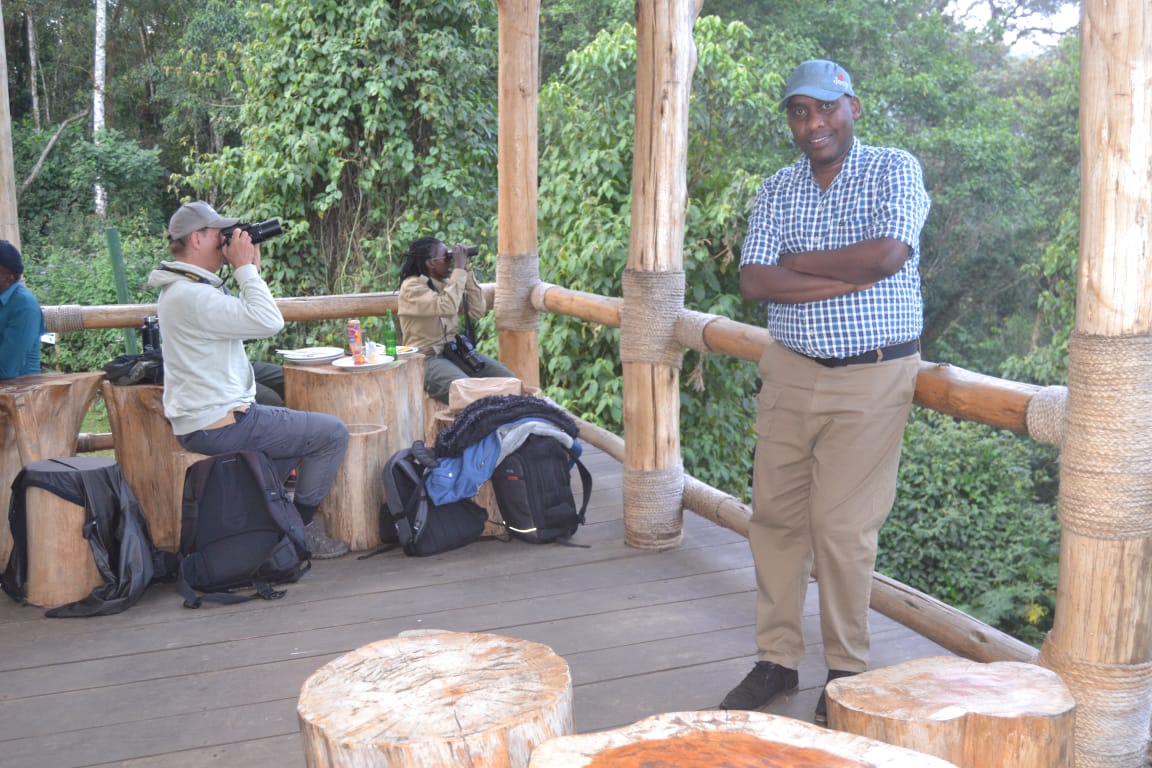
Banner image: Twahirwa at Rwanda’s flagship Gorilla Naming Ceremony, at the foothills of Volcanoes National Park in the village of Kinigi in northern Rwanda. Image courtesy of Jean Leonald Karuranga.
Credits