• Features
  • Videos
  • Podcasts
  • Specials
  • Articles
  • Shorts
Donate
  • English
  • Español (Spanish)
  • Français (French)
  • Bahasa Indonesia (Indonesian)
  • Brasil (Portuguese)
  • India (English)
  • हिंदी (Hindi)
  • বাংলা (Bengali)
  • Swahili
  • Videos
  • Podcasts
  • Articles
  • Short News
  • Feature Stories
  • The Latest
  • Explore All
  • About
  • Team
  • Contact
  • Donate
  • Subscribe page
  • Submissions
  • Privacy Policy
  • Terms of Use
  • Advertising
  • Wild Madagascar
  • For Kids
  • Mongabay.org
  • Reforestation App
  • Planetary Health Check
  • Conservation Effectiveness
  • Mongabay Data Studio

Latest

Gimlett's reed snake (Calamaria lovii gimletti), rediscovered in Singapore in 2017 after an absence of 84 years. Photo credit: the Law Brothers

Can Singapore rewild its lost reptiles?

Rhett Ayers Butler 10 Mar 2026

Cambodian market survey a snapshot of a resilient — but stressed — Mekong

Stefan Lovgren 10 Mar 2026

Indigenous knowledge helps guide conservation of Australia’s endangered northern quoll

Nick Rodway 9 Mar 2026

Ecuador’s new ecological corridor connects Andes and Amazon ecosystems

Maxwell Radwin 9 Mar 2026
Feature story

Mining rush for critical minerals threatens Amazon land reform settlements

Sam Cowie, Cícero Pedrosa Neto, Isabel Harari 9 Mar 2026
Feature story

In Malawi, farmers rebuild soil and livelihoods through agroecology

Kelvin Tembo 9 Mar 2026
All news

Top stories

With striking orange and black streaks on their wings, painted woolly bats are one of the most colorful bats in the world.

U.S.’ hunger for Halloween trinkets is killing Vietnam’s painted woolly bats

A pack of lions in Botswana.

DNA fingerprinting convicts Zimbabwe lion poachers in landmark case

Spoorthy Raman 5 Mar 2026

Across South America, canopy bridges evolve as a lifeline for tree-dwelling wildlife

Luís Patriani 4 Mar 2026

Cameroon’s decade of conflict leaves apes and conservationists in peril

Orji Sunday 3 Mar 2026
A fisherman is silhouetted as he casts his net into the Tapajos River in Santarem, Para state, 2020.

Concern among Indigenous leaders, relief for a few, as Amazon Soy Moratorium falters

Rubens Valente 3 Mar 2026

Subscribe

Stay informed with news and inspiration from nature’s frontline.
Newsletter

We’re a nonprofit

Help us tell impactful stories of biodiversity loss, climate change, and more
Donate

News and Inspiration from Nature's Frontline.

Collage featuring cockfighting and a largetooth sawfish
Videos
Gimlett's reed snake (Calamaria lovii gimletti), rediscovered in Singapore in 2017 after an absence of 84 years. Photo credit: the Law Brothers
Articles
Mt. Taranaki, New Zealand, captured March 16, 2022. Image courtesy of Planet Labs PBC.
Podcasts

Special issues connect the dots between stories

Mongabay Explains

Moo Deng meme collage

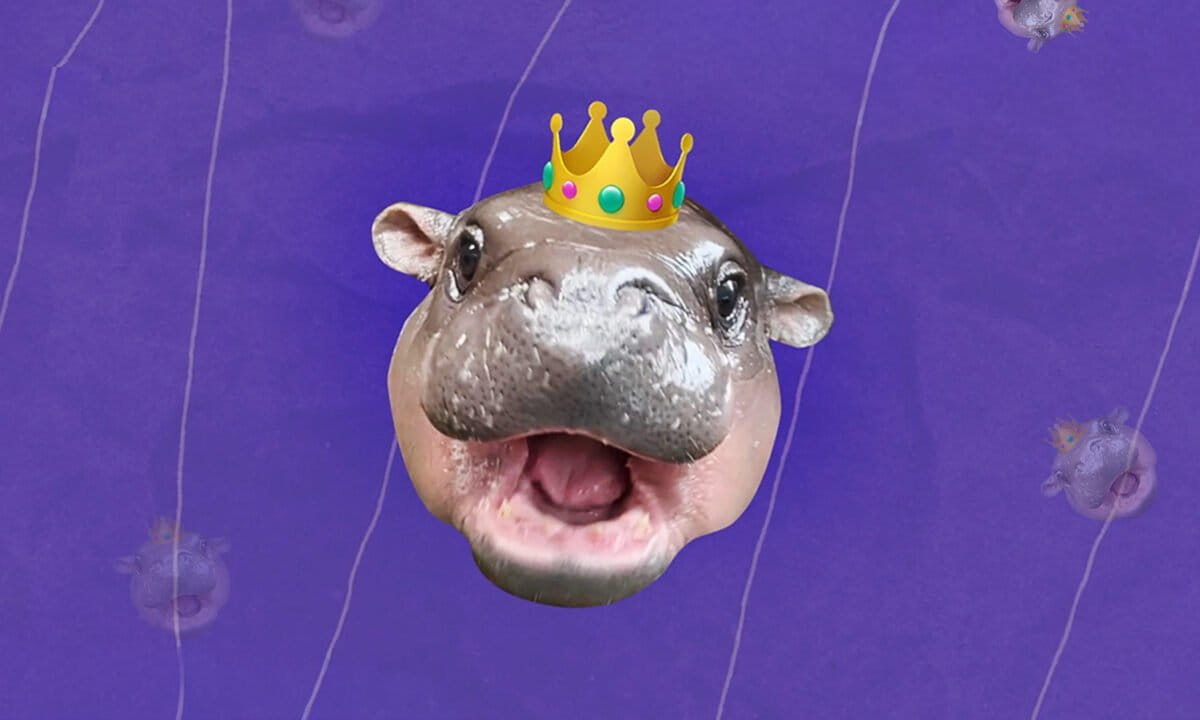
Small hippo, big dreams: Can Moo Deng, the viral pygmy hippo, save her species? 

Sam Lee 14 Jan 2026
Collage: Elise Paietta, postdoctoral research scholar during fieldwork, with tropical forest

How do we stop the next pandemic?

Abhishyant Kidangoor 26 Nov 2025
What singing lemurs can tell us about the origin of music

What singing lemurs can tell us about the origin of music

Sam Lee 8 Jan 2025

What are the High Seas (and why should we care?)

Abhishyant Kidangoor 23 Oct 2024

Join Mongabay’s reporters as we unpack some of the most urgent and intriguing issues in climate, the environment and biodiversity today. In this multimedia Special Issue, we go beyond the headlines to examine how science, policy and human activity intersect with Nature. We try to answer questions you might not have known to ask, with […]

Mongabay Explains series

More specials

Trekking through the Cardamom Tented Camp concession in Botum Sakor National Park Photo by Gerald Flynn
12 stories

Carving up the Cardamoms

9 stories

Can anyone save the Sumatran rhino?

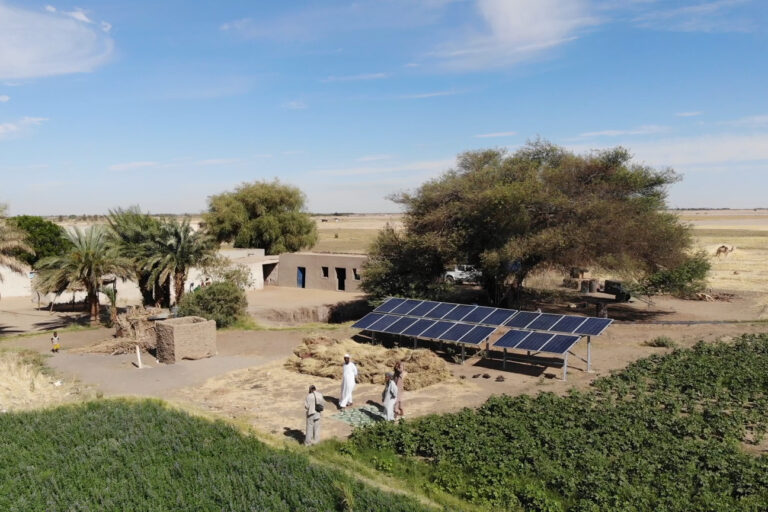
Solar panels in an arid part of Sudan.
9 stories

Negotiating Africa’s Energy Future

Free and open access to credible information

Learn more

Listen to Nature with thought-provoking podcasts

Mt. Taranaki, New Zealand, captured March 16, 2022. Image courtesy of Planet Labs PBC.

How the ‘wrong story’ ends up harming nature, and how we can change it

Mike DiGirolamo 3 Mar 2026

Watch unique videos that cut through the noise

Collage featuring cockfighting and a largetooth sawfish

Why is cockfighting a risk to Peru’s rarest fish?

Collage featuring a white-rumped shama (Copsychus malabaricus) and a poacher

The most desirable songbird in Indonesia is disappearing from the wild

Rizky Maulana Yanuar, Sandy Watt 18 Feb 2026
Collage featuring Jeffrey Lendrum

The man who risked everything to steal bird eggs

Sandy Watt 11 Feb 2026
Collage featuring a puma and Ida Isabel Auris Arango, shepherd and Quechua woman

Women secure a future with pumas in the Andes

Romi Castagnino 28 Jan 2026
Moo Deng meme collage

Small hippo, big dreams: Can Moo Deng, the viral pygmy hippo, save her species? 

Sam Lee 14 Jan 2026

We’re a nonprofit

Help us tell impactful stories of biodiversity loss, climate change, and more
Donate

In-depth feature stories reveal context and insight

Turnbull NWR - Waterfowl Surveys.
Feature story

‘An epidemic of suffering’: Why are conservationists breaking down?

Jeremy Hance 2 Mar 2026
Photos from Macron's official visit to Lula in 2024 sparked memes for their resemblance to a “pre-wedding photo shoot.”
Feature story

Brazil wanted more protections for its endangered national tree. Then France called

Fernanda Wenzel, Spoorthy Raman, Emmanuelle Picaud 27 Feb 2026
UC Santa Cruz researcher in Hazmat suit taking nasal sample from elephant seal pup, Ano Nuevo State Park, California, USA.
Feature story

Avian flu strikes California’s northern elephant seals; area quarantined

Christine Heinrichs 27 Feb 2026
A lion in Africa.
Feature story

Botswana shows how smarter cattle herding can save lions, reopen ancient wildlife pathways

Gloria Dickie 24 Feb 2026

Quickly stay updated with our news shorts

David Chivers, student of the singing apes

Rhett Ayers Butler 9 Mar 2026

Founders briefs box
 
Field primatology expanded rapidly in the late 20th century as biologists began to study apes and monkeys where they lived rather than only in museums or laboratories. Southeast Asia’s rainforests became an important setting for that shift. Among the researchers who helped shape the discipline there was David Chivers, a British primatologist whose work on gibbons and other forest apes combined long stretches of field observation with a commitment to conservation. He died on March 5th, aged 81.

Chivers arrived at the University of Cambridge in 1963 and, in practice, remained there for the rest of his career. After studying medical sciences and physical anthropology, he turned away from clinical veterinary training to pursue research on primates. His doctoral work, completed in 1972, was based on field studies of siamangs in Peninsular Malaysia. At the time such projects demanded patience: weeks spent tracking animals through dense forest and learning their habits by steady observation.

That work produced The Siamang in Malaya, a monograph published in 1974 that became a reference point for later studies of primate ecology. Chivers was interested both in behavior and in how primates fit into forest systems. Feeding patterns, fruit availability, and the role of animals in dispersing seeds all became part of the picture.

David Chivers in 1970.

His later research extended across Southeast Asia and beyond. In the mid-1980s he helped establish Project Barito Ulu in Central Kalimantan, Indonesia, examining how fruit-eating wildlife contributed to forest regeneration. The project brought together international researchers and Indonesian institutions, and it anchored a large share of his later supervision of doctoral students. Over his career he guided around fifty PhD projects, many of them focused on gibbons or orangutans.

At Cambridge he held posts in veterinary anatomy and biological anthropology, eventually becoming Professor in Primate Biology and Conservation and Director of Studies in Veterinary Medicine at Selwyn College. Students there came to know him as a determined advocate for the veterinary course. He referred to them simply as “my vets,” and defended their interests with enthusiasm that could spill into college committees and meetings.

His attachment to gibbons was well known. They fascinated him for their territorial songs, which carry across forests at dawn. Chivers could reproduce the calls himself with surprising accuracy, a party piece that circulated widely among students and colleagues.

Late in his career his attention turned increasingly to conservation questions, particularly the fate of orangutans and other apes as Southeast Asian forests declined. He supported work on rehabilitation and reintroduction while continuing to argue that protecting habitat remained the central task.

Chivers spent much of his professional life explaining that gibbons were not monkeys but apes. The correction came quickly when needed, and usually with good humor. For someone who had devoted decades to listening to their songs in the forest canopy, the distinction mattered.

Banner image: David Chivers. Courtesy of Selwyn College

David Chivers. Courtesy of Selwyn College

Critically endangered kākāpō parrot has standout breeding season

Shanna Hanbury 9 Mar 2026

A total of 59 healthy kākāpō chicks have hatched over the last few weeks, according to the latest tally by Aotearoa New Zealand’s Department of Conservation. This marks one of the most successful recent breeding seasons for this critically endangered bird, whose last breeding season was four years ago.

The kākāpō (Strigops habroptilus), a flightless bird in the parrot family endemic to Aotearoa New Zealand, has a total population of 236 adults, up from a low of just 51 individuals in the 1990s. Around the same period, the surviving birds were relocated to three predator-free Aotearoa New Zealand islands — Whenua Hou, Pukenui and Te Kākahu-o-Tamatea — but they’ve still struggled with low reproduction rates.

“Every new chick brings the species further from the brink of extinction,” Deidre Vercoe, the Department of Conservation’s operations manager for kākāpō, told Mongabay by email. “There’s always a sense of hope and optimism for the future.”

Kākāpō only breed in years when the native rimu (Dacrydium cupressinum) tree produces a heavy crop of fruits, which happens every 2-4 years.

A chick named Tīwhiri-A1-2026, born on Feb. 14, was the first kākāpō to hatch in four years. Image courtesy of Lydia Uddstrom/New Zealand Department of Conservation.

So far this year, 140 fertile eggs have been identified and 52 healthy chicks were born, with an extra seven chicks assumed via remote technology. The data are shared with the public every Friday, with an uploaded photo of the tally written in marker on the department’s refrigerator.

Though more chicks may hatch over the next days and months, they likely won’t all survive. The breeding season record was in 2019, with 73 fledglings.

“Success is not just about the number of new chicks. We want to create healthy, self-sustaining populations of kākāpō that are thriving, not just surviving,” Vercoe wrote.

“Kākāpō are among the most intensively monitored species on the planet, and while numbers are so low, intervention to ensure the best chance of success has been critical,” she added. “As the population grows, we will begin to step back on some of the more hands-on management so we can begin to understand what a more natural level of survival looks like.”

The long-term goal is to restore the species to parts of its former range across New Zealand. Rakiura, an island in southern New Zealand, was once home to kākāpō and is considered one of the most promising sites for reintroduction. However, invasive species would need to be removed before the birds can be safely returned.

“One of our future aspirations through Predator Free Rakiura is to return the kākāpō back to its original home,” Tāne Davis, a representative with the Kākāpō Recovery Group for Te Rūnanga o Ngāi Tahu, the governing Māori body in the region, said on social media.

Banner image: An adult kākāpō named Alice and her chick Rupi. Image courtesy of Jake Osborne/New Zealand Department of Conservation.

An adult kākāpō named Alice and her chick Rupi. Image courtesy of Jake Osborne/New Zealand Department of Conservation.

Thailand tightens embrace of fossil fuels amid Middle East conflict

Naina Rao 9 Mar 2026

On March 4, Thailand’s government ordered the Ministry of Energy to secure new energy sources within a week to reduce the nation’s reliance on Middle Eastern oil.

The directive follows the closure of the Strait of Hormuz, between the Persian Gulf and the Arabian Sea, after the Feb. 28 bombing of Iran by the U.S. and Israel. Iran closed the strategic waterway as a direct response to the military strikes, blocking a major chokepoint that handles roughly 20% of the world’s oil and liquefied natural gas (LNG). Approximately 30% of Thailand’s LNG and 50% of its crude oil passes through this strait.

Officials initially said Thailand had a 61-day fuel reserve, but Deputy Prime Minister Phiphat Ratchakitprakarn clarified that total reserves can last 90 days when including supplies that don’t come via the strait. To bridge the immediate gap, the Energy Regulatory Commission (ERC) has approved an urgent purchase of three additional one-time LNG shipments for March and April.

To manage the energy crisis, the government has also ordered coal-fired power plants to operate at full capacity. In addition, it has instructed PTT Exploration and Production Public Company Limited (PTTEP), a subsidiary of state-owned oil and gas company PTT, to maximize domestic gas production in the Gulf of Thailand. Experts warn these measures threaten Thailand’s updated emissions reduction pledge under the Paris climate agreement, which commits to a 47% reduction in net greenhouse gas emissions by 2035.

“They can say that this is a temporary measure that’s [being used] for this crisis,” Jamas Kositvichaya, Asia communications associate for the Global Strategic Communications Council (GSCC), told Mongabay by phone. She noted that Thailand’s climate strategy tends to rely on emission cuts in the agriculture sector while largely ignoring the energy sector’s continued reliance on fossil fuels.

Thailand is looking toward partners including Malaysia and the United States to help stabilize its energy grid, but Kositvachaya said LNG imported from the U.S. is more expensive than Middle Eastern supplies. Independent energy expert Tara Buakamsri said the shift to these new energy sources can carry a heavy economic price. In an op-ed for Climate Connectors, he wrote that “having enough fuel” is not the same as “having stable prices.”

Buakamsri said these higher procurement costs are expected to be passed on to consumers, potentially driving household electricity bills back to the record highs last seen in late 2024.

As the one-week deadline for new supply contracts approaches, the crisis highlights what Buakamsri called a “structural vulnerability.” Rather than transitioning to resilient domestic sources of renewable energy, he wrote, Thailand’s current strategy remains focused on chasing “molecules — crude oil, liquefied petroleum gas (LPG), and liquefied fossil gas (LNG) — across oceans whenever global geopolitics shift.”

Banner image: The large Mae Moh coal burning power plant releasing smoke from its stacks in the early morning. The power plant turns off the smoke in the morning then starts again at night. ©️ Luke Duggleby / Greenpeace, shot in 2013 of the coal power plant in Mae Moh district, Lampang province, North of Thailand.

200 dead, more missing in another DRC mine collapse

Mongabay Africa 6 Mar 2026

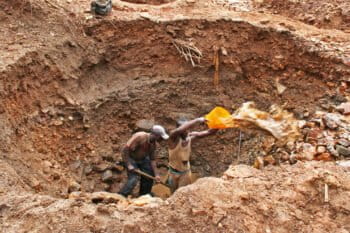
More than 200 people have died and dozens are missing after a landslide on March 3 at the Kasasa site in the Rubaya mining area in Masisi territory, North Kivu, in the eastern Democratic Republic of Congo.

“I saw the ground collapse and [bury] many people who were there. I can’t say exactly how many, but there were several people involved in the incident. The mine was busy as usual,” a witness who requested anonymity told Mongabay by phone.

Amateur videos that have gone viral (but could not be independently verified by Mongabay) show bodies lying on the ground, with witnesses reporting that people had lost their lives and been pulled from the rubble.

Since February 2025, parts of the eastern DRC, including Rubaya, have been under the control of M23, an armed group allegedly backed by Rwanda. This represented a major escalation of a long-simmering conflict in the politically volatile region.

The local M23 Congo River Alliance authorities in Rubaya, including the mayor of Rubaya and his deputy, confirmed that the landslide took place but did not provide any figures about the casualties.

Congolese Minister of Mines Louis Watum Kabamba, a member of President Felix Tshisekedi’s government, announced that more than 200 people, including children, had died in the disaster, which occurred on March 3 at around 3 p.m.

A miner speaking on condition of anonymity, contacted by Mongabay by telephone, confirmed having seen a dozen bodies by Wednesday morning, noting that the number of victims could rise as rescue operations continue.

On Jan. 28, a landslide at the same mining site, attributed to heavy rain, also killed more than 200 people, according to M23 authorities controlling Rubaya.

Mines in this area produce around 15% of the global supply of coltan, a mineral used in the manufacture of many electronic devices.

A former coltan trader in Rubaya, contacted by Mongabay, estimated there have been thousands of casualties in recent years at the mines and that solutions must be found to limit the loss of human life.

“The Rubaya mine is already old. There are several holes here and there, which have made the ground fragile and vulnerable to deadly landslides. The mine should be industrialized or semi-industrialized to save human lives from these disasters,” she said, speaking on condition of anonymity for security and political reasons.

She pointed a finger at “unregulated” mining. The AFC political-military group currently controls the area.

Banner image: Artisanal miners in Rubaya area, DRC. Image courtesy of Global Witness.

Artisanal miners in Rubaya area, DRC.

The rate of global warming is accelerating, study finds

Bobby Bascomb 6 Mar 2026

Earth has been steadily warming since the start of the Industrial Revolution, when humans began emitting greenhouse gases at scale. And while the rate of warming has been largely constant for the past half-century, a recent study finds it has accelerated over the last decade — an alarming trend for Earth systems, biodiversity and human health.

Since the 1970s, the average global temperature has increased by roughly 0.2° Celsius (0.36° Fahrenheit) per decade. “That was pretty constant, but in recent years there have been some really record-breaking hot years globally,” study co-author Stefan Rahmstorf, a professor of physics of the ocean at Potsdam University in Germany, told Mongabay in a video call.

The last three years are the three warmest on record – as are all ten of the years since 2015. That sudden spike prompted a debate among climate scientists, Rahmstorf said. They questioned if the sudden warming was indeed an acceleration, or natural variation that could be explained by three other factors — El Niño, volcanic eruptions, or solar flares — which can all affect global temperatures.

To find out, Rahmstorf and study co-author Grant Foster, a statistician, applied statistical analysis to global temperature data to weed out the influence of those three factors.

“We filter out known natural influences in the observational data, so that the ‘noise’ is reduced, making the underlying long-term warming signal more clearly visible,” Foster said in a press release.

What remained was predominantly the human-caused warming signal. The results were dramatic: since 2015, the warming rate has nearly doubled to between 0.35 and 0.4°C (0.63 and 0.72°F) per decade.

This study didn’t investigate why warming has accelerated, but Rahmstorf said the likeliest explanation is stricter regulations on shipping emissions.

Ocean-going vessels emit pollutants that contribute to more than 260,000 premature deaths annually. However, those same emissions also help form clouds over the oceans, which reflect sunlight back out to space, providing a modest cooling effect. The new shipping regulations, in force since 2020, dramatically improved air quality, saving lives, but likely also contributed to the spike in warming observed in the study.

If this hypothesis holds, Rahmstorf said, that spike is likely temporary. “This high warming rate may not continue in the next decade, because no similar big reduction in aerosols would be expected there,” he said.

If the current pace were to continue, by the end of the century Earth would be looking at roughly 4°C (7.2°F) of additional warming, which has been projected by some climate models. That much additional heat would be catastrophic for life as we know it, with dramatic sea level rise, ocean acidification, more extreme weather events, mass extinctions, and myriad human health consequences.

Rahmstorf said the amount of long-term warming will still be determined by human activity. “How quickly the Earth continues to warm ultimately depends on how rapidly we reduce global CO₂ emissions from fossil fuels to zero.”

Banner image: Glacial melt water flowing through snow in Himalayas. Photo courtesy of Sharada Prasad via Wikimedia (CC BY 2.0)

This bird is disappearing from Indonesia’s forests for its song

Mongabay.com 6 Mar 2026

The rising popularity of songbird singing competitions in Indonesia has led to the dramatic decline of the white-rumped shama, a bird known locally as murai batu.

Mongabay Indonesia video contributor Rizky Maulana Yanuar recently reported that keeping such birds is deeply rooted in local culture. In Javanese society, a man is considered to be successful when he has a job, a house, a vehicle, a wife and a bird, Yanuar reported.

Murai batu (Copsychus malabaricus) are highly coveted for their melodic voice and beauty. In contests, the birds are judged on the duration of their song, volume, rhythm, showmanship and physical presentation.

Winning these prestigious contests significantly increases a bird’s market value. Champion birds can sell for tens of thousands of dollars, and prizes for the owners can even include cars.

While there are plenty of facilities breeding the birds in captivity, buyers say wild-caught birds are superior. This high demand has created a financial lifeline for rural residents facing economic uncertainty. “As a farmer, harvests are very uncertain. Sometimes I have work, sometimes I don’t,” says Peni Mak Lajang, a Sumatran native who turned to poaching murai batu because of the high prices.

Peni sold his first murai batu for 800,000 rupiah ($48), back when he could capture five birds in a week. Now, he considers it a “blessing” if he can catch even one in a month.

Constant pressure to collect wild murai batu for singing contests has caused them to vanish from most forests across Java and Sumatra.

The crisis was exacerbated by a 2018 decision to remove the black and chestnut bird from Indonesia’s protected species list, following lobbying from breeder associations. Conservationists argue this makes enforcement more challenging at a time when murai batu were already facing peak pressure from poaching and habitat loss.

Captive breeding has surged to fill demand, but caged birds don’t help wild populations. Markets are full of captive-bred birds; none are released back into the wild.

Ethnobiologist Johan Iskandar from Padjadjaran University told Mongabay that poaching is deeply rooted in “social, economic, cultural, power and political aspects of society.”

“What needs protection is the people, not the birds,” he said.

Watch the full story by Rizky Maulana Yanuar here. 

Banner image: Researchers have built the first model to map supply and demand in Indonesia’s songbird trade, showing that species traits, not just species identity, drive market dynamics. Image courtesy of Ganjar Cahyadi.

Share Short Read Full Article

Share this short

If you liked this story, share it with other people.

Facebook Linkedin Threads Whatsapp Reddit Email

Subscribe

Stay informed with news and inspiration from nature’s frontline.
Newsletter

News formats

  • Videos
  • Podcasts
  • Articles
  • Specials
  • Shorts
  • Features
  • The Latest

About

  • About
  • Contact
  • Donate
  • Impacts
  • Newsletters
  • Submissions
  • Terms of Use

External links

  • Wild Madagascar
  • For Kids
  • Mongabay.org
  • Reforestation App
  • Planetary Health Check
  • Conservation Effectiveness
  • Mongabay Data Studio

Social media

  • LinkedIn
  • Instagram
  • Youtube
  • X
  • Facebook
  • Tiktok
  • Reddit
  • BlueSky
  • Mastodon
  • Android App
  • Apple News
  • RSS / XML

© 2026 Copyright Conservation news. Mongabay is a U.S.-based non-profit conservation and environmental science news platform. Our EIN or tax ID is 45-3714703.

you're currently offline