• Features
  • Videos
  • Podcasts
  • Specials
  • Articles
  • Shorts
Donate
  • English
  • Español (Spanish)
  • Français (French)
  • Bahasa Indonesia (Indonesian)
  • Brasil (Portuguese)
  • India (English)
  • हिंदी (Hindi)
  • বাংলা (Bengali)
  • Swahili
  • Videos
  • Podcasts
  • Articles
  • Short News
  • Feature Stories
  • The Latest
  • Explore All
  • About
  • Team
  • Contact
  • Donate
  • Subscribe page
  • Submissions
  • Privacy Policy
  • Terms of Use
  • Advertising
  • Wild Madagascar
  • For Kids
  • Mongabay.org
  • Reforestation App
  • Planetary Health Check
  • Conservation Effectiveness
  • Mongabay Data Studio

Latest

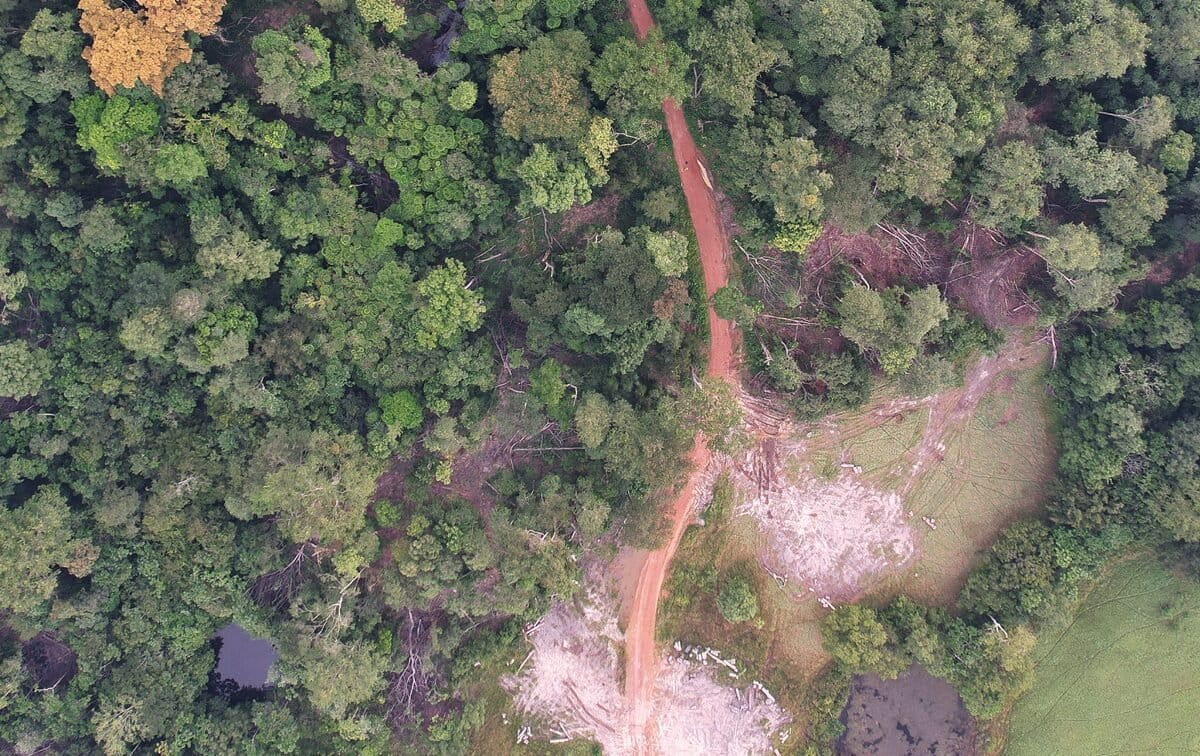
Drone photo of a river meandering through the Alto Mayo landscape. The diversity of rivers and wetlands in the region contribute to the extraordinary variety of plants and animals found there, and are critical for sustaining local Indigenous communities. Image by Trond Larsen courtesy of Conservation International.

When abandoned conservation projects are counted as progress, what are we protecting? (commentary)

Ajay Sawant 18 Dec 2025

New study splits giraffe experts on future wild captures for zoos

Shradha Triveni 18 Dec 2025
Feature story

Marine heat waves and raw sewage combine to put human health at risk

Sean Mowbray 18 Dec 2025

In Brazil, a new label gives more visibility to deforestation-free beef

Constance Malleret 18 Dec 2025
Feature story

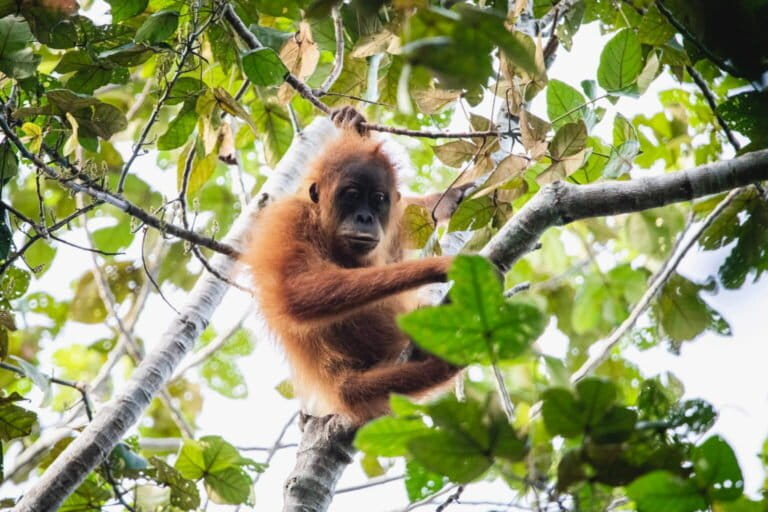
Tapanuli orangutan, devastated by cyclone, now faces habitat loss under zoning plans

Hans Nicholas Jong, Achmad Rizki Muazam 18 Dec 2025

Kenyan woman hugs tree for 72 hours in protest against loss of beloved trees

Lynet Otieno 18 Dec 2025
All news

Top stories

Tapanuli orangutan, devastated by cyclone, now faces habitat loss under zoning plans

The lab-in-a-backpack busting illegal shark fins: Interview with Diego Cardeñosa

Philip Jacobson 18 Dec 2025
Izzy Sasada and orangutan

Orangutans rescued from the wildlife trade undergo intensive re-training to return to the wild

Izzy Sasada, Sam Lee 17 Dec 2025
Previously undetected in other protected areas, a tigress known as SWT001F was the first individual tiger captured on camera in Thailand's Sisawat Non-Hunting Area in 2024. Panthera, Thailand's DNP and other partners are working to monitor and protect Indochinese tigers and their prey in this region where camera traps have shown tigers are using Sisawat forest as a corridor. Currently plans exist to propose the adjoining forest area to the east as an extension of Sisawat.

Hope for tigers grows as Thailand safeguards a key link in their habitat

Gloria Dickie 16 Dec 2025
Ruyumbu Musango, head of law enforcement at Nyungwe National Park, with members of the park’s ranger detachment. Photo by Ashoka Mukpo for Mongabay.

A Thin Green Line: The 2,000-strong ranger force of African Parks

Ashoka Mukpo 16 Dec 2025

Subscribe

Stay informed with news and inspiration from nature’s frontline.
Newsletter

We’re a nonprofit

Help us tell impactful stories of biodiversity loss, climate change, and more
Donate

News and Inspiration from Nature's Frontline.

Izzy Sasada and orangutan
Videos
Drone photo of a river meandering through the Alto Mayo landscape. The diversity of rivers and wetlands in the region contribute to the extraordinary variety of plants and animals found there, and are critical for sustaining local Indigenous communities. Image by Trond Larsen courtesy of Conservation International.
Articles
A double-hooked blue shark.
Podcasts

Special issues connect the dots between stories

Negotiating Africa's Energy Future

Logging concession near Ndolou, Gabon

Norway’s multibillion-dollar bet on forests: An interview with Minister Eriksen

David Akana 25 Nov 2025
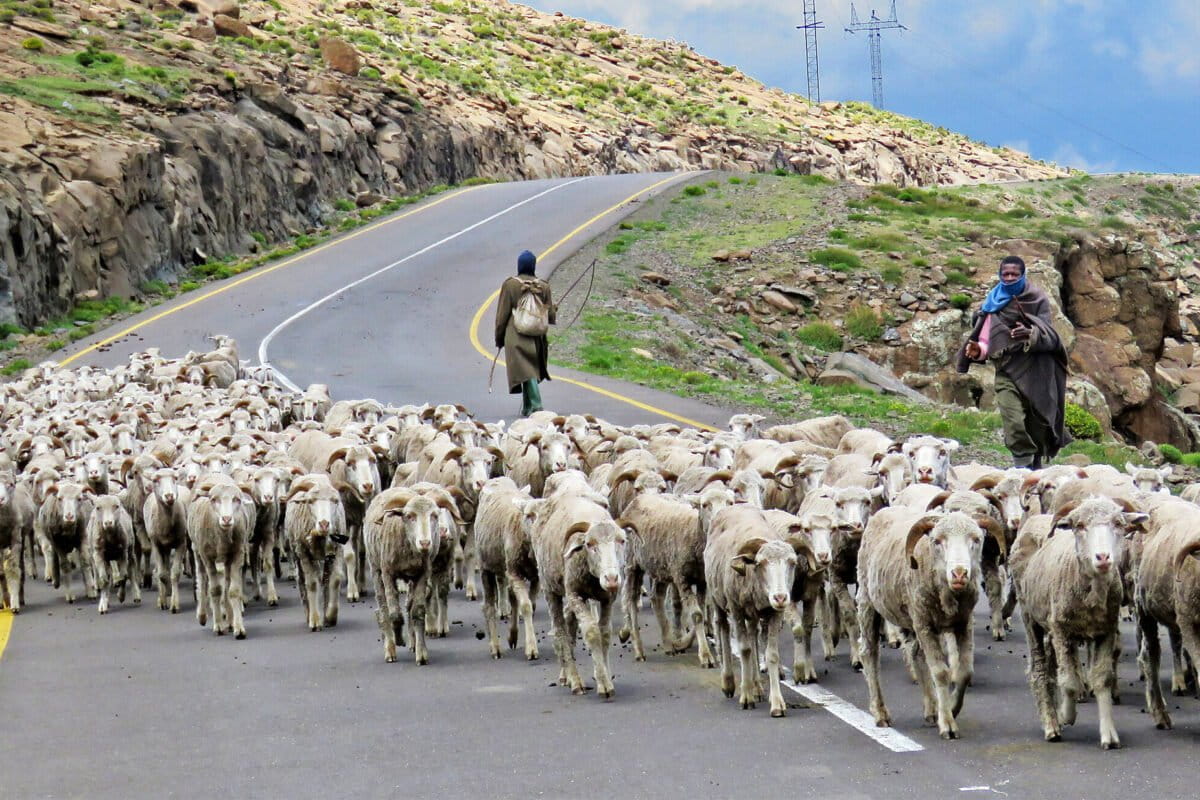
Pastoralists in Lesotho.

Lesotho communities allege greenwashing by project transferring water to South Africa

Malavika Vyawahare 21 Nov 2025
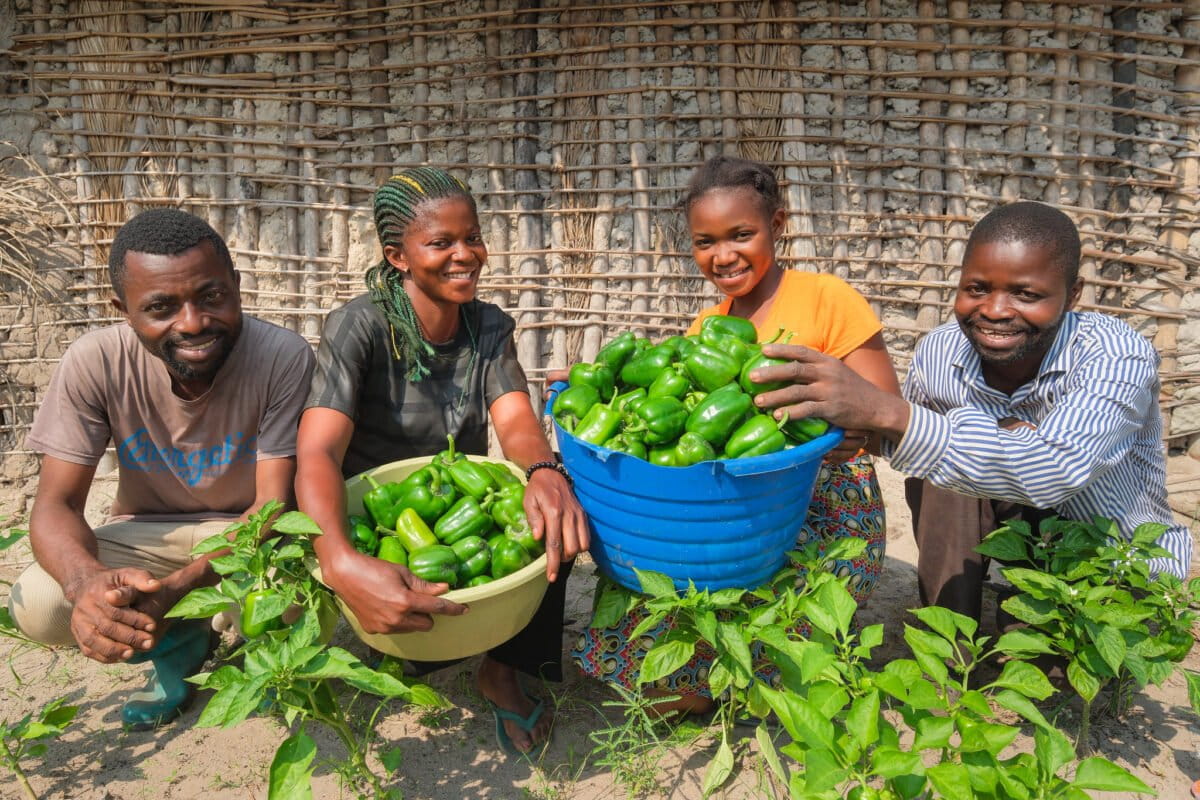
Farmers at Yangambi, Democratic Republic of Congo. Image by Axel Fassio/CIFOR via Flickr (CC BY-NC-ND 2.0)

Fighting for food sovereignty at COP30: Interview with GRAIN’s Ange-David Baïmey

Yannick Kenné 20 Nov 2025
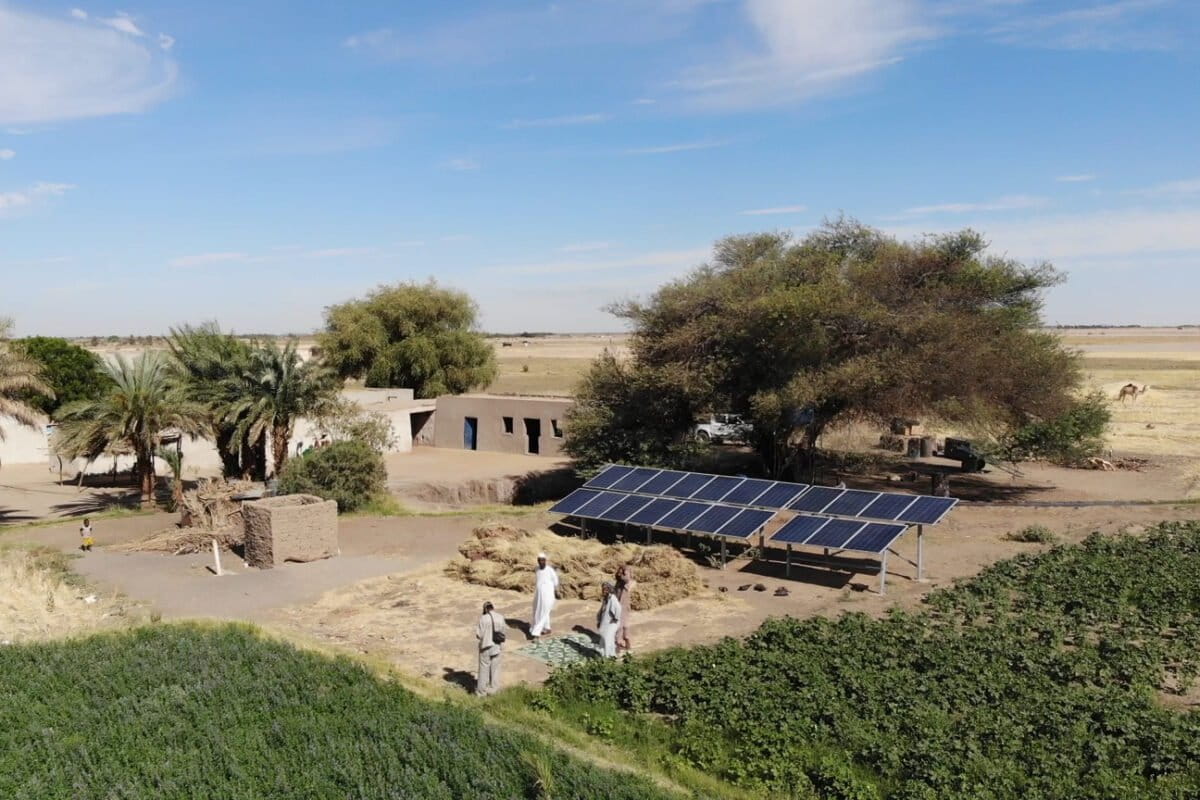
Solar panels in an arid part of Sudan.

‘The perfect ingredients’: WRI Africa deputy director shares vision for the continent’s energy transition

John Cannon 19 Nov 2025

A decade after countries agreed to the Paris climate agreement, Mongabay reports on an idea often invoked when discussing Africa’s path toward a low-carbon future: a just energy transition. Reporters from across the continent explore what “just” and “clean” energy mean for Africans.  These stories show African countries are pursuing their own journeys toward more […]

Negotiating Africa's Energy Future series

More specials

6 stories

Letters to the Future

Natural forests, like this one in Indonesia, contain hundreds of native species that all contribute to the ecosystem services they provide. Protecting standing forests is quicker and cheaper than replanting lost ones. Many forests can regenerate on their own with a little assistance, but where tree planting is needed, it must aim to restore natural diversity and support local communities. Image by Rhett A. Butler/Mongabay.
5 stories

Tech for the Trees

Trawlers docked outside Sihanoukville. Screenshot from ‘Illegal fishing and land grabs push Cambodian coastal communities to the brink’ by Andy Ball / Mongabay.
4 stories

Chaos on Cambodia’s Coast

Free and open access to credible information

Learn more

Listen to Nature with thought-provoking podcasts

A double-hooked blue shark.

Brazilian government serves shark to infants, prisoners and more: How Mongabay broke the story

Mike DiGirolamo 16 Dec 2025

Watch unique videos that cut through the noise

Izzy Sasada and orangutan

Orangutans rescued from the wildlife trade undergo intensive re-training to return to the wild

South Greenlanders speak out on rare earths interests

Arina Kleist, Julia Rignot, Sandy Watt 11 Dec 2025
Collage: Elise Paietta, postdoctoral research scholar during fieldwork, with tropical forest

How do we stop the next pandemic?

Abhishyant Kidangoor 26 Nov 2025
Collage: A group of security guards preventing people from crossing a checkpoint and Fernanda Wenzel Mongabay reporter

On the frontline of the Amazon land war

Julia Lima, Fernanda Wenzel, Fernando Martinho 13 Nov 2025
Soldiers from the PROLANSATE Foundation on patrol

Why is protecting this Honduran lagoon so dangerous? 

Fritz Pinnow, Sam Lee 22 Oct 2025

We’re a nonprofit

Help us tell impactful stories of biodiversity loss, climate change, and more
Donate

In-depth feature stories reveal context and insight

A herd of elephants crosses the M10 highway en route to the Zambezi River, Zambia.
Feature story

Corridors, not culls, offer solution to Southern Africa’s growing elephant population

Ryan Truscott 11 Dec 2025
A diver swimming close to a female sperm whale pod.
Feature story

Unregulated tourism risks disrupting Timor-Leste’s whale migration

Robin Hicks 11 Dec 2025
A woman gathers plants along the banks of the Mekong River while a child plays in the background. Water levels of the mighty Mekong River have dropped drastically due to drought-like conditions and damming upstream. The drop disrupts the region’s water supply, transport routes, and the livelihood of communities in Thailand, Laos, Cambodia and Vietnam. The UN Intergovernmental Panel on Climate Change (IPCC) predicts that more than one billion people will face water shortages due to climate change. Credit: © Greenpeace / Vinai Dithajohn
Feature story

New mapping reveals hidden mining boom in Laos that threatens the Mekong

Andy Ball, Gerald Flynn, Konlaphat Siri 10 Dec 2025
Feature story

Stricter rules adopted to protect sloths from pet trade and selfie tourism

Fernanda Wenzel 9 Dec 2025

Quickly stay updated with our news shorts

Tiny Caribbean island brings hope for critically endangered iguana

Shreya Dasgupta 18 Dec 2025

Over the past decade, Prickly Pear East, a small, privately owned island in the Caribbean, has become a beacon of hope for a critically endangered lizard.

The islet, near the main island of Anguilla, a British territory, is one of just five locations where the lesser Antillean iguana (Iguana delicatissima) is breeding and thriving, protected from invasive iguanas and human disturbances, conservationists say.

The latest surveys, from July, show the species’ population on Prickly Pear East has grown to more than 300 adults and adolescents — up from just 23 individuals that were moved there from Anguilla starting in 2016.

“This is a wonderful reward after having invested several years of work to plan this reintroduction, engage with their local communities, eradicate the non-native rats, and survey and protect the precious iguana population,” Jenny Daltry, Caribbean alliance director of the NGOs Fauna & Flora and Re:wild, which are supporting the NGO Anguilla National Trust in the iguana’s conservation, told Mongabay by email.

The lesser Antillean iguana was once widespread across the Caribbean, but habitat destruction, hunting, and the introduction of invasive species, including the common green iguana (I. iguana), led to its extinction across several islands.

It was also on the verge of being wiped out from Anguilla mainland. So, between 2016 and 2021, conservationists translocated Anguilla’s remaining 23 individuals to the uninhabited Prickly Pear East. The islet had a suitable habitat for the native iguana; it also lacked invasive iguanas, and conservationists had eradicated all invasive brown rats by 2018, Daltry said.

But there was a problem: the small population could suffer from inbreeding. So the conservationists reached out to the government of Dominica, one of the last strongholds of the lesser Antillean iguana. The government permitted 10 individuals to be moved from its island to Prickly Pear East.

A lesser Antillean iguana from Dominica receiving a health screening before being translocated to Prickly Pear East, an islet off mainland Anguilla. Photo by Farah Mukhida/Anguilla National Trust.
A lesser Antillean iguana from Dominica receiving a health screening before being translocated to Prickly Pear East, an islet off mainland Anguilla. Image by Farah Mukhida/Anguilla National Trust.

Four years later, population surveys show the iguanas are breeding on Prickly Pear East, with their numbers increasing almost tenfold since the translocations. Conservationists have also collected DNA samples to monitor the genetic makeup of the rising population, Daltry said.

The conservation teams are now preparing to reestablish a secure population of lesser Antillean iguanas on Anguilla. For this, they’ve fully encircled Fountain National Park with a fence “designed to exclude cats, rodents, goats, green iguanas and other harmful non-native animals, to create a sanctuary for native wildlife,” Daltry said.

This new population will be important “not only to avoid Anguilla having all its eggs in one basket (Prickly Pear East), but to restore the iguanas’ place and role in their natural ecosystem. The iguanas are the top native herbivores and help to germinate and disperse seeds,” Daltry said.

She added the case of the lesser Antillean iguana shows how a group of dedicated individuals can achieve their dream of saving a species, given inter-regional collaboration and international support. “What greater legacy can there be?”

Banner image: A critically endangered lesser Antillean iguana in Dominica. Image courtesy of Andrew Snyder/Re:wild.

A critically endangered lesser Antillean iguana in Dominica. Image courtesy of Andrew Snyder/Re:wild.

‘Neither appropriate nor fair’: Ecuador ordered to pay oil giant Chevron $220m

Shanna Hanbury 18 Dec 2025

Indigenous and rural communities in Ecuador’s Amazon have condemned an international arbitration ruling that ordered Ecuador to pay more than $220 million to U.S. oil giant Chevron. The sum is to compensate the company for alleged denial of justice in a trial that found Chevron, operating through its predecessor Texaco, guilty of widespread environmental damage in northeastern Ecuador.

The Union for People Affected by Texaco’s Oil Operations (UDAPT), which represents six Indigenous nations and 80 communities, said the decision forces the Ecuadorian public to compensate a company after it caused one of the worst environmental disasters in the region’s history.

“It is neither appropriate nor fair. Chevron came to Ecuador, took more than $30 billion from the oil it extracted, polluted the Amazon, caused the extinction of peoples and the deaths of hundreds of people from cancer,” the organization wrote in a statement. “The affected communities took the company to court and won, yet now the entire country has to pay.”

In 1993, residents in the Lago Agrio oil basin sued Texaco, later acquired by Chevron, for environmental damage caused during its operations from 1964-1992. Ecuadorian courts found the company had opted for a substandard oil waste disposal system, which dumped more than 16 billion gallons (61 billion liters) of toxic water in at least 880 unlined open pits across the Amazon Rainforest. These pools contaminated groundwater, soil and rivers that local communities depended on for drinking, fishing, bathing and more, the rulings said. Oil spills and gas flaring were also frequent.

From 2011 to 2018, several Ecuadorian courts found Chevron guilty. The company was ordered to pay $9.5 billion to repair the damage done to the environment and impacted communities.

A U.S. court in 2014 refused to accept or enforce the ruling, calling the trials fraudulent. Chevron also sued Steven Donziger, a U.S. lawyer who represented the impacted Ecuadorian communities, in a New York court for allegedly financially benefiting from the Ecuador case. Donzinger was subsequently jailed for criminal contempt.

During the trials, Chevron took the case to the Permanent Court of Arbitration in The Hague, claiming Ecuador had violated its bilateral investment treaty with the U.S., and that one of the Ecuadorian judges had engaged in “corrupt collusion” with the plaintiffs. In 2018, the court sided with Chevron. The same year, Ecuador terminated its bilateral investment treaty with the U.S.

On Nov. 17 this year, the court’s arbitrators ruled Ecuador must pay Chevron more than $180 million in legal costs and more than $40 million in interest.

Chevron’s initial claim was for more than $3.35 billion Ecuador’s Attorney General’s Office celebrated the arbitration court’s decision, saying it spares the nation from paying $3.13 billion.

Nataly Morillo, Ecuador’s minister of government, called the decision unjust, while Amazon Watch, a nonprofit, called it “the epitome of environmental racism.”

Banner image: Ecuador’s former President Rafael Correa visits a contaminated site in 2013. Image© AP Photo/Dolores Ochoa.

Ecuador's President Rafael Correa uses a stick to measure how deep the area is, in the Aguarico 4 oil field where a sign reads in Spanish "Danger. Contaminated area" in Ecuador, Tuesday, Sept. 17, 2013. Correa visited the site to call attention to oil contamination in Ecuador's Amazon region. Earlier this year, Ecuador awarded a $19 billion judgment to the residents of this area for Texaco's contamination of this rainforest between 1972 and 1990. But Chevron Corp., which bought Texaco in 2001, said it won't pay because it says Texaco dealt with the problem before it was bought. (AP Photo/Dolores Ochoa)

A rare right whale spotted off Ireland resurfaces near Boston

Bobby Bascomb 17 Dec 2025

In a rare sighting, a critically endangered North Atlantic right whale, first photographed in 2024 off the coast of Ireland, was recently reidentified near Boston, U.S., on Nov. 19.

This is the first time a North Atlantic right whale (Eubalaena glacialis) was initially documented in Irish waters; before that, it was unknown to scientists. The whale then crossed the Atlantic Ocean and was confirmed through a photographic match, some 4,800 kilometers (3,000 miles) away near Boston.

“Encounters like this highlight both their [right whales’] resilience and the importance of international cooperation to support their recovery,” Daniel Palacios, director of the right whale ecology program at the nonprofit Center for Coastal Studies (CCS), said in a statement.

Researchers don’t quite know what prompted the whale’s transatlantic journey. “It’s hard to say if they’re looking for food or they’re just exploring,” Amy Warren, a scientific program officer with the New England Aquarium’s Anderson Cabot Center for Ocean Life, told Mongabay in a video call. Her group helps match photographic identifications for right whales and maintains a catalog of them.

Today, an estimated 384 North Atlantic right whales remain, nearly all inhabiting the western North Atlantic. This population historically migrated along the east coast of the U.S. and Canada. But over the last decade, warming temperatures have pushed the whales farther north, into cooler Canadian waters.

Scientists believe there was once a subpopulation of these whales in the eastern Atlantic until whaling extirpated them from European waters. Though the recently spotted whale is the first to be initially discovered in Ireland, it is one of seven that have been documented crossing the Atlantic from Irish waters.

“All the other whales were first seen here in their normal area on the east coast of the U.S. and Canada, already documented in the catalog, then went to Europe and came back. This one, to our knowledge, has never been seen before until it was first seen in Ireland,” Warren said.

Warren said other right whales are also known to venture outside the usual migration route.

A whale named Mogul, for instance, was seen off the U.S. coast for several years after his birth, until he was documented in Iceland in 2018, then in France in 2019. A year later, Mogul returned to the U.S. coast. Another female whale “only shows up when she’s pregnant,” Warren said. The whale comes to the calving grounds to give birth and raise her calf for a few months. Then she travels to parts unknown and disappears for a decade until she is ready to give birth again.

North Atlantic right whales are one of the most critically endangered, and well-studied, whale species in the world.

But Warren said this unusual sighting shows that “we still have a lot to learn.”

Banner image: A right whale photographed off Boston, previously spotted in Ireland in July 2024. Image courtesy of the Center for Coastal Studies, taken under NOAA permit 25740-03.

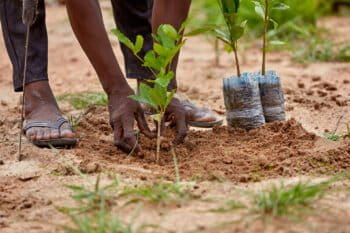
Navigating the complex world of reforestation efforts

Rhett Ayers Butler 16 Dec 2025

Founder’s Briefs: An occasional series where Mongabay founder Rhett Ayers Butler shares analysis, perspectives and story summaries.

Reforestation has become a feel-good global rallying cry. From corporations touting “net zero” targets to philanthropies seeking visible impact, planting trees has become shorthand for planetary repair. Yet behind the glossy photos of saplings and smiling farmers lies a question few can answer with confidence: Which organizations are actually doing it well?

Karen D. Holl, a professor of environmental studies at the University of California, Santa Cruz, has spent decades studying forest recovery.

“I would give talks, and people would ask, ‘Who should I donate my money to?’” she told Mongabay’s Liz Kimbrough. “There was really no standardized way to answer that question.”

To fill that gap, Holl and postdoctoral researcher Spencer Schubert surveyed and analyzed more than 125 intermediary reforestation groups, the entities that funnel most global funding to local tree-planting projects, Kimbrough reported last month. Their year-long study now forms the backbone of Mongabay’s Global Reforestation Organization Directory.

Rather than ranking or endorsing projects, the directory presents standardized information on each group’s transparency and adherence to scientific best practices. Users can compare organizations based on four criteria: permanence, ecological soundness, social benefit, and financial disclosure. The researchers verified whether monitoring protocols, tree survival data and financial reports were publicly available, though much of the data relies on self-reporting.

The result is not a verdict, but a map of a sprawling, opaque sector. Many organizations claim to restore forests; fewer disclose evidence that trees survive or communities benefit. “We’ve graduated from asking, ‘How many trees did they plant?’ to ‘Has tree cover increased over time?’” Schubert said.

For donors, the tool offers clarity in a crowded market. For practitioners, it hints at a higher bar. Transparency, Holl argues, is itself a measure of competence. “If you’re going to say you’re doing this, then you need to show that you actually are.”

Read the full story by Liz Kimbrough here.

Banner image: Tree Aid’s efforts as part of the Great Green Wall in Mali. Image courtesy of Tree Aid.

Tree Aid’s efforts as part of the Great Green Wall has resulted in planting nearly 28 million trees in the region so far.

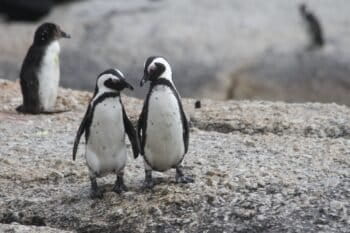
South Africa considers site near African penguin colony for third nuclear power plant

Shreya Dasgupta 16 Dec 2025

South African state electricity company Eskom is reevaluating two sites to host the country’s third nuclear power plant, having previously dismissed both for an earlier facility.

The two potential sites are Thyspunt, on the Eastern Cape coast, and Bantamsklip, near Dyer Island in the Western Cape, home to a significant, but declining colony of critically endangered African penguins (Spheniscus demersus).

“Bantamsklip is a globally unique coastal environment with extremely high ecological value, and the risks from infrastructure of this scale remain unacceptable,” Wilfred Chivell, founder of the nonprofit Dyer Island Conservation Trust, told Mongabay by email.

South Africa’s first nuclear power plant, the 1,860-megawatt Koeberg facility, has been running since 1984 and supplies roughly 4% of the country’s electricity.

Discussions for a second nuclear plant began in the mid-2000s, identifying Thyspunt, Bantamsklip and Duynefontein, near Koeberg, as potential locations. After years of legal challenges over coastal ecology, seismic risks, and heritage impacts concerns, in August 2025 Duynefontein was upheld as the site for the 4,000-MW second plant.

Eskom has now initiated an environment impact assessment for its third nuclear facility, with a capacity of 5,200 MW.

An Eskom spokesperson told Mongabay by email that the EIA is for Thyspunt, with Bantamsklip being evaluated as an alternative site, “in line with EIA regulations that require consideration of alternatives.”

“This will be a new EIA application and lessons learnt from the previous application will be taken into account by the specialists,” they said.

South African news agency GroundUp reported that during the project’s virtual public meetings in early December, attendees questioned the lack of public participation ahead of choosing Bantamsklip and Thyspunt “as the only suitable sites.”

Chivell told Mongabay that while he’s not opposed to nuclear energy, which could be important for South Africa’s low-carbon energy future, the environmental concerns previously raised for Bantamsklip remain valid today.

The site lies within a unique marine environment, where ocean currents create conditions for highly productive ecosystems, Chivell said. Bantamsklip neighbors Dyer Island Nature Reserve, which hosts southern right whales (Eubalaena australis), Cape fur seals (Arctocephalus pusillus), sharks, dolphins, abalone and seabirds — including about 1,000 breeding pairs of African penguins.

Chivell said operating a nuclear plant at Bantamsklip could result in potential sediment disturbance, increased underwater noise, and chemical pollution, while heated water discharged back into the ocean could alter the currents and food web. Furthermore, the proposed dumping of the sand excavated during construction back into the sea could devastate kelp forests along the coastline, he said.

The ecological damage would undermine “decades of conservation and scientific research, as well as the nature-based tourism that sustains local livelihoods,” Chivell said.

He added that since the previous EIA for the second nuclear facility, conditions in the area have worsened. “African Penguins are now critically endangered, and local shark populations have declined dramatically,” he said. “Any new environmental assessment must be comprehensive, transparent, and ecosystem-wide.”

Banner image of African penguins by Pam Ivey via Unsplash (Public domain).

The endangered African penguins (Spheniscus demersus)

From Kalimantan’s haze to Jakarta’s grit: A journalist’s journey

Rhett Ayers Butler 15 Dec 2025

Founder’s Briefs: An occasional series where Mongabay founder Rhett Ayers Butler shares analysis, perspectives and story summaries.

Indonesia’s environmental challenges can feel overwhelming when taken as a whole. A country said to contain more than 17,000 islands, it holds the world’s third-largest tropical rainforest and a resource economy that has reshaped much of that landscape. For many Indonesians, modern development is experienced not in graphs but in the air around them: childhoods spent under yellowed skies, peat smoke drifting into classrooms, the sweet-acrid smell that clings to shirts long after the fires burn out. Others recognize the shifting environment in subtler ways, like the ground growing wetter where it once stayed firm or the metallic tang in Jakarta’s air on days when pollution monitors flash red.

For Sapariah “Arie” Saturi, Mongabay Indonesia’s managing editor, these are not distant impressions. They are the texture of her early life along the Kapuas River in West Kalimantan, a region defined by peatlands, forests and the heavy footprint of timber, palm oil and mining interests. Dry seasons in the 1990s often brought fires and a haze so thick it dulled both sound and color. Eyes burned after minutes outdoors; masks were uncommon. Children adapted because they had no choice.

Arie now lives in Jakarta, where the problems are different but equally immediate. The capital sinks a little more each year, traffic strains patience, and even a brief gust through an open window can leave a chemical scent lingering in the curtains. On weekends, she escapes to a nearby village, tending mint and chiles in rows of pots. A friend once joked that her garden was “offline environmentalism” compared to Mongabay’s online work. She let the joke stand.

Her journalism career took shape after the fall of former President Soeharto, during a burst of media openness in the late 1990s. She started in Pontianak, moving between small newsrooms, learning through trial, error, late-night writing and stacks of magazines bought from a 24-hour stall. The persistence stuck. “Tak bisa ke lain hati,” she says in an interview with Mongabay. Her heart cannot be redirected elsewhere.

Arie joined Mongabay Indonesia when it was still a tiny operation. Environmental coverage in mainstream outlets was often sidelined or softened, especially when it involved companies that bought advertising space. Mongabay’s independence was a rare chance to pursue the stories others ignored.

Today she manages reporters across the archipelago, beginning her days before dawn with edits, coordination calls and field updates. Some stories take days of checking, others only an hour, but the flow never stops — from Sumatra’s peatlands to Sulawesi’s nickel mines.

For Arie, journalism is a way to amplify the voices of people who are too often unheard: communities defending customary forests, farmers trapped in debt cycles, island residents resisting destructive mining. Sometimes coverage triggers policy changes; sometimes it simply affirms people’s experiences. Both matter.

Read the full interview with Sapariah “Arie” Saturi here.

Banner image of Sapariah Saturi in Papua courtesy of Saturi.

Share Short Read Full Article

Share this short

If you liked this story, share it with other people.

Facebook Linkedin Threads Whatsapp Reddit Email

Subscribe

Stay informed with news and inspiration from nature’s frontline.
Newsletter

News formats

  • Videos
  • Podcasts
  • Articles
  • Specials
  • Shorts
  • Features
  • The Latest

About

  • About
  • Contact
  • Donate
  • Impacts
  • Newsletters
  • Submissions
  • Terms of Use

External links

  • Wild Madagascar
  • For Kids
  • Mongabay.org
  • Reforestation App
  • Planetary Health Check
  • Conservation Effectiveness
  • Mongabay Data Studio

Social media

  • LinkedIn
  • Instagram
  • Youtube
  • X
  • Facebook
  • Tiktok
  • Reddit
  • BlueSky
  • Mastodon
  • Android App
  • Apple News
  • RSS / XML

© 2025 Copyright Conservation news. Mongabay is a U.S.-based non-profit conservation and environmental science news platform. Our EIN or tax ID is 45-3714703.

you're currently offline