When a 2018 fire burned across 73,000 hectares (180,000 acres) of the Santana Indigenous Territory, located in Brazil’s Cerrado savanna, the local Bakairi people waited helplessly for authorities who came far too late.
That devastating experience was a turning point. The community mobilized to create a volunteer fire brigade, largely composed of Indigenous women, Mariana Rosetti and Paola Churchill reported for Mongabay in October.
“It’s not just young girls,” Edna Rodrigues Bakairi, a local educator and member of the brigade, told Mongabay. “There are women aged 40, 45, 50 who can fight the fires. They come from all age groups, and they all act with courage.”
Of the 45 trained volunteers, 25 are women ranging from teenagers to grandmothers. They were trained by Paulo Selva, a retired colonel from the Mato Grosso state fire department who recognized the urgent need to empower Indigenous communities to defend their territories from the growing threat of wildfire.
“The fire department only addresses issues related to fires that occur within its areas of operation, but more than 45% of forest fires occur outside of that legal condition,” Selva said.
To help fill that gap, Selva created the nonprofit Environmental Operations Group Institute. With the organization, he travels to Indigenous communities across the region to offer trainings on firefighting and prevention, first aid and survival skills.
During a visit to the Santana Indigenous village in 2021, Selva found that women were an obvious choice for the role. They tend to spend more time in the community, caring for children and homes, while men migrate to work on nearby farms. During the 2018 fire, it was largely women who remained behind and watched their community burn, unable to respond. That experience left an impression and a determination to be better prepared next time.
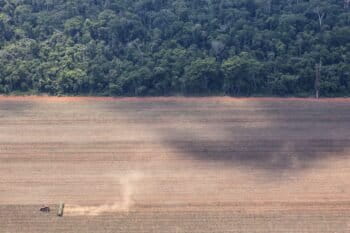
Fire risk across Brazil is growing. In 2024, nearly 10 million hectares (24.7 million acres) of Cerrado land burned; roughly 85% of it was covered with native vegetation. Indigenous territories in the Cerrado are particularly vulnerable; over much of 2024, the total area of burned Indigenous land increased by 105%. Local experts note that most of those fires start outside indigenous territory from deforestation and burning for farm expansion. When native vegetation burns, Indigenous communities lose their food, medicine and habitat for the animals they hunt.
Since the women-led brigade formed roughly six years ago, there haven’t been any significant fires in their territory, even as other parts of the Cerrado have burned. The firefighters are all volunteers, not even reimbursed for personal expenses. They do the dangerous work of fighting wildfires, often in sneakers, with just eight donated uniforms among them.
“The Bakairi are stubborn, the Bakairi are insistent, the Bakairi persevere,” Edna Rodrigues Bakairi said.
Read the full story by Mariana Rosetti and Paola Churchill here.
Banner image: Bakairi women firefighters from the Environmental Operations Group, in the Santana Indigenous Territory, Mato Grosso. Image courtesy of Colonel Paulo Selva.