• Features
  • Videos
  • Podcasts
  • Specials
  • Articles
  • Shorts
Donate
  • English
  • Español (Spanish)
  • Français (French)
  • Bahasa Indonesia (Indonesian)
  • Brasil (Portuguese)
  • India (English)
  • हिंदी (Hindi)
  • বাংলা (Bengali)
  • Swahili
  • Videos
  • Podcasts
  • Articles
  • Short News
  • Feature Stories
  • The Latest
  • Explore All
  • About
  • Team
  • Contact
  • Donate
  • Subscribe page
  • Submissions
  • Privacy Policy
  • Terms of Use
  • Advertising
  • Wild Madagascar
  • For Kids
  • Mongabay.org
  • Reforestation App
  • Planetary Health Check
  • Conservation Effectiveness
  • Mongabay Data Studio

Latest

Venezuela’s new mining law could spell disaster for the Amazon, critics warn

Maxwell Radwin 10 Apr 2026

Africa’s solar costs could rise as China cuts export subsidies

Elodie Toto 10 Apr 2026

Christianity can be an ally for Kenyan conservation (commentary)

Peter Rowe 10 Apr 2026

Tropics take the brunt as hotter oceans drive large-scale humid heat waves: Study

Adam Litchkofski 10 Apr 2026

Record kākāpō breeding season with 95 rare parrot hatchlings: Photo of the week

Shanna Hanbury 10 Apr 2026

Indian border town adjacent to Bhutan is reeling from riverbed pollution

Mongabay.com 10 Apr 2026
All news

Top stories

Giant otters, river sentinels, now listed as threatened migratory species

Kushki (male) is one of the last surviving Asiatic cheetahs from northeastern Iran’s Miandasht Wildlife Refuge.

War on Iran disrupts efforts to save the Asiatic cheetah, world’s rarest big cat

Kayleigh Long 9 Apr 2026

As EU-Mercosur agreement goes into effect, environmentalists raise red flags

Ramana Rech 8 Apr 2026

Mennonites from Belize spark deforestation fears with new settlement plans in Suriname

Maxwell Radwin 8 Apr 2026
Shark meat in Brazil. Image by Philip Jacobson/Mongabay.

Latin America’s largest hospital complex cancels plan to buy shark meat

Philip Jacobson, Lucas Berti, Karla Mendes 7 Apr 2026

Subscribe

Stay informed with news and inspiration from nature’s frontline.
Newsletter

We’re a nonprofit

Help us tell impactful stories of biodiversity loss, climate change, and more
Donate

News and Inspiration from Nature's Frontline.

Collage of a cloned jaguar
Videos
Articles
Starting out as a terrestrial ecologist and environmental educator, Jessie Panazzolo is a proud carer of people who care for Mother Earth. In 2019, she founded the global community, Lonely Conservationists, a pioneering platform that provides resources, advocacy, and a voice to budding and burnt-out environmentalists. Advocating for the need to provide care to members of an often forgotten care-based industry, Jessie's websites, books, podcasts, and workshops are used to help budding and burnt-out conservationists around the world.
Podcasts

Special issues connect the dots between stories

Who controls Mexico’s Yaqui River?

Behind Mario Luna Romero, a Yaqui spokesperson and water defender is the Plutarco Elías Calles (El Novillo) on the left and the Independencia Aqueduct on the right. Image by Abimael Ochoa Hernández.

Despite court ruling, Yaqui water rights abuses ignored

Aimee Gabay 10 Oct 2024
A traditional Yaqui ceremonial hut in Vícam which is made from alamo

Lack of research as contaminated Yaqui River poses health risks

Aimee Gabay 10 Sep 2024
Young traditional dancers wearing ténabari around their ankles perform the danza del pascola y venado (the dance of the pascolas and the deer).

Loss of water means loss of culture for Mexico’s Indigenous Yaqui

Aimee Gabay 16 Jul 2024
Guasimas Bay has been contaminated by agrochemicals and waste that is released from shrimp farms not far from the coast.

As drought parches Mexico, a Yaqui water defender fights for a sacred river

Aimee Gabay 9 Jul 2024

Water has shaped the identity, livelihoods and governance of the Yaqui Indigenous people in northern Mexico for centuries. Today, the Yaqui River faces mounting pressure as drought intensifies, pollution persists and water is increasingly diverted to agriculture and cities. In this award-winning series, staff writer Aimee Gabay explores how climate change is sharpening long-standing disputes […]

Who controls Mexico’s Yaqui River? series

More specials

12 stories

Beyond the screen: DCEFF

A dairy cow in a farm in the Netherlands.
5 stories

The Dutch Nitrogen Crisis

10 stories

Mongabay Explains

Free and open access to credible information

Learn more

Listen to Nature with thought-provoking podcasts

Starting out as a terrestrial ecologist and environmental educator, Jessie Panazzolo is a proud carer of people who care for Mother Earth. In 2019, she founded the global community, Lonely Conservationists, a pioneering platform that provides resources, advocacy, and a voice to budding and burnt-out environmentalists. Advocating for the need to provide care to members of an often forgotten care-based industry, Jessie's websites, books, podcasts, and workshops are used to help budding and burnt-out conservationists around the world.

The ‘unfair’ job of being a conservationist in a world working against nature

Mike DiGirolamo 7 Apr 2026

Watch unique videos that cut through the noise

Collage of a cloned jaguar

Lab-made jaguar: Is cloning a solution to extinction?

Collage of a red-bellied toad and a bridge broken by flood

In search of the tiny toad that stopped a dam

Thamys Trindade, Felipe Rosa, Julia Lima 14 Mar 2026
Collage featuring cockfighting and a largetooth sawfish

Why is cockfighting a risk to Peru’s rarest fish?

Romi Castagnino 25 Feb 2026
Collage featuring a white-rumped shama (Copsychus malabaricus) and a poacher

The most desirable songbird in Indonesia is disappearing from the wild

Rizky Maulana Yanuar, Sandy Watt 18 Feb 2026
Collage featuring Jeffrey Lendrum

The man who risked everything to steal bird eggs

Sandy Watt 11 Feb 2026

We’re a nonprofit

Help us tell impactful stories of biodiversity loss, climate change, and more
Donate

In-depth feature stories reveal context and insight

The vulnerable Rufous-breasted blue flycatcher was photographed on Luzon Island in March 2025. It was last documented in 2008. Image by kenny_well via iNaturalist (CC BY-NC 4.0).
Feature story

Once lost, now found: Five “missing” bird species rediscovered in 2025, offering hope

Spoorthy Raman 4 Apr 2026
Feature story

Railroad & tariff war boost soy in Brazil’s Cerrado, endangering Indigenous lands

Kevin Damasio 2 Apr 2026
Banteng
Feature story

How wild cattle recovery is transforming local livelihoods near key Thai reserve

Carolyn Cowan 2 Apr 2026
Feature story

Thai court rules gold mine liable, but villagers face uncertain justice

Kannikar Petchkaew 1 Apr 2026

Quickly stay updated with our news shorts

Africa’s solar costs could rise as China cuts export subsidies

Elodie Toto 10 Apr 2026

The end of China’s export tax rebates for solar panels and associated equipment could prompt a rush by power developers in African to secure supplies at the previous lower prices.

Across Africa, a lack of reliable access to grid electricity is driving the adoption of mini-grids and off-grid solar applications, especially in rural areas. Solar currently accounts for only 3% of electricity generation on the continent, but solar capacity is expanding rapidly, and the end of the 9% value-added tax rebate on Chinese exports of photovoltaic modules, cells and inverters as of April 1 could hasten adoption across Africa.

“There’s a big acceleration of people trying to buy panels at the current reduced price with the rebate, which is why you’re seeing many projects rushing to start construction so they can procure panels at a lower cost,” Gerrit Jan Cronselaar, engineering project manager at GameChange Solar, a U.S.-based solar energy company, said at a March webinar organized by the Africa Solar Industry Association (AFSIA), ahead of the end of the rebate.

“Over the course of 2026, we are likely to see a wave of projects coming online as a result of this early push.”

China is the world’s dominant producer and exporter of solar panels, and African countries depend heavily on the country for solar components. China is also phasing out export tax rebates for batteries, reducing them from 9% to 6% this month. They will be fully eliminated by January 2027. Storage systems including batteries ensure a more reliable supply of solar power so electricity is available even after sunset or on cloudy days.

“We don’t expect there to be a massive price spike,” Cronselaar said. “We expect there to be a step-by-step increase in panel prices that is not as catastrophic as some people might think, certainly not for utility-scale projects.”

Ha added that the segments most affected by the end of the rebate will be smaller commercial and industrial users, “as well as the off-grid and mini-grid sectors, where price sensitivity is much higher.”

Another factor that could boost demand for solar is the U.S.-Israeli war on Iran, which has throttled oil and gas exports from the Persian Gulf and driven up global energy prices. Facing an oil shock, some experts say African countries might view solar as a more attractive alternative despite the increased upfront costs.

“The VAT removal will slow, but not reverse Africa’s clean energy transition,” Basil Abia, co-founder of Nigerian energy research company Truva Intelligence told the Associated Press.

The increased cost of solar installations is bringing renewed scrutiny to global dependence on China for critical components and has spurred calls for other countries to increase their domestic manufacturing capacity.

“Countries that use this moment to accelerate local manufacturing will emerge stronger. Those that do not will remain exposed to Beijing’s next industrial policy adjustment,” Abia said.

Banner Image: A solar installation in Mali. Image ©Curt Carnemark/World Bank via Flickr (CC BY-NC-ND 2.0).

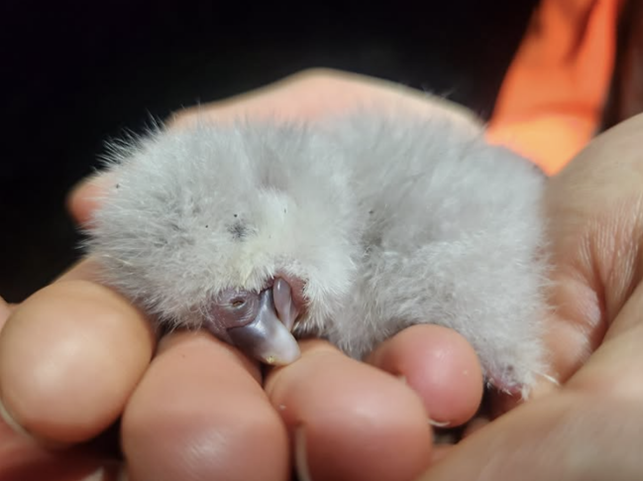
Record kākāpō breeding season with 95 rare parrot hatchlings: Photo of the week

Shanna Hanbury 10 Apr 2026

The kākāpō is a flightless bird endemic to Aotearoa New Zealand, and one of the heaviest parrots in the world. It’s also critically endangered; after the introduction of predators to the islands off New Zealand, the adult kākāpō population plummeted to just 235 today.

But this year, following a standout harvest of rīmu (Dacrydium cupressinum) berries, a staple of the kākāpō diet, at least 95 chicks are now growing. The previous record, in 2019, produced 73 fledglings.

“2026 is now officially the biggest on record,” New Zealand’s Department of Conservation wrote on its kākāpō recovery Instagram account.

In the photo above, kākāpō (Strigops habroptilus) siblings Tīwhiri-A3 and Tīwhiri-A4, both named after their mother, are pictured on Pukenui Anchor Island in southern New Zealand, a predator-free island chosen as a kākāpō sanctuary. The photo was taken by Sarah Manktelow, a kākāpō recovery program ranger at the Department of Conservation.

The chicks will be officially added to the species’ population count once they reach 150 days old, after which they’re considered fledglings. Not all the chicks are expected to make it to this stage.

Ten chicks have died so far, and three more are currently receiving veterinary care.

Every Friday, the Department of Conservation released data on the progress of the eggs, with an uploaded photo of the tally written in marker on the department’s refrigerator. This year, 80 nests produced at least 256 eggs. Of these, 148 were fertile, and 105 hatched.

“Infertility and low hatching success is a key obstacle for the program, and not every chick will survive through to fledging,” Deidre Vercoe, the Department of Conservation’s operations manager for kākāpō, told Mongabay by email. “[B]ut each successful hatching is a reminder of how far we have come.”

The kākāpō breeding season still involves heavy human involvement; some birds are artificially inseminated at the beginning of the breeding season, and many eggs are placed in incubators to increase the likelihood of a successful hatch.

According to the Department of Conservation, the goal is to gradually step away so that the population can naturally self-sustain without as much intervention.

“As the population grows, we will begin to step back on some of the more hands-on management so we can begin to understand what a more natural level of survival looks like,” Vercoe said.

  • unnamed(2)
    Siblings Tīwhiri-A3 and Tīwhiri-A4 on Pukenui Anchor Island, New Zealand. Image courtesy of Sarah Manktelow/DOC.
  • Picture1
    An adult kākāpō named Alice and her chick Rupi. Image courtesy of Jake Osborne/DOC.
  • 670720744_1411328327697742_568316025295194431_n2
    Bella with her chicks Hera-A3 and Margaret-Maree-A1. Image courtesy of Mahina Welle/DOC.
  • Picture3
    Tīwhiri-A1-2026 was the first kākāpō to hatch in four years. Image courtesy of Lydia Uddstrom/DOC.
  • 670871399_1411328207697754_8082530904573231141_n
    Hatching season numbers were updated weekly in marker on the department’s fridge. Image courtesy of DOC.
  • unnamed
    Siblings Tīwhiri-A3 and Tīwhiri-A4 on Pukenui Anchor Island, New Zealand. Image courtesy of Sarah Manktelow/DOC.

unnamed(2)Picture1670720744_1411328327697742_568316025295194431_n2Picture3670871399_1411328207697754_8082530904573231141_nunnamed

Banner image: Siblings Tīwhiri-A3 and Tīwhiri-A4 on Pukenui Anchor Island, New Zealand. Image courtesy of Sarah Manktelow/New Zealand Department of Conservation (DOC).

Siblings Tīwhiri-A3 and Tīwhiri-A4 on Pukenui Anchor Island, New Zealand. Image courtesy of Sarah Manktelow/New Zealand Department of Conservation (DOC).

Indian border town adjacent to Bhutan is reeling from riverbed pollution

Mongabay.com 10 Apr 2026

Jaigaon, a densely populated town on India’s border with Bhutan, is facing a crisis of poor waste disposal, reports contributor Chandrani Sinha for Mongabay India.

Much of the town’s plastic, construction and medical waste gets dumped along the banks of the Torsa River. The river originates in the Chumbi Valley in the eastern Himalayas and flows through Bhutan before entering India at Jaigaon.

Locals say they worry the rampant river pollution could impact the image of Jaigaon, a key tourist and trade point between India and Bhutan.

“Our towns share an international border and a lot of tourist footfall takes place every year, as the town is growing population-wise, we demand a municipality facility to manage the solid waste and also other issues of Jaigaon,” Jayant Mundra, convenor for the Joint Forum of Business Association Jaigaon and vice president of the Jaigaon Merchant Association, told Mongabay India.

Mundra added that during rains, much of the waste enters the river, and ends up in homes and public places.

Environmental activists said the dumped waste is often openly burned, which releases toxic pollutants into the air. Downstream, the Torsa flows through ecologically sensitive floodplains that serve as habitat for Indian rhinos, elephants, and various migratory bird species.

“River life depends on three things: flow, silt and oxygen in the water,” Dipankar Saha, former additional director of India’s Central Pollution Control Board, told Mongabay India. “But we excavate the river, pollute it. So, if we don’t manage the river system, then the river will also not manage its wetlands, flora, fauna, agricultural fields, and groundwater systems in the plains.”

Residents living near the river also told Mongabay India that the air and water pollution from the waste disposal is affecting their health.

“Staying here amidst the foul smell of waste is very frustrating,” said Fatima Khatun, 34. “Sometimes we fall sick and have nausea, a cold and a headache. With little kids, it’s more difficult because they constantly fall sick.”

Dumping waste along a riverbank is a violation of Indian laws, said Sabyasachi Chatterjee, senior advocate of the Kolkata High Court. “The law is effectively ‘geography-blind,’” he said. “It doesn’t matter if the dumping happens in a bustling city or a quiet border village; if the water is being poisoned, the crime is the same.”

“India does have a fairly strong policy framework,” Swati Singh Sambyal, an international circular economy and waste expert, told Mongabay India. “However, the challenge today is not policy absence but implementation.”

Jaigaon’s riverside pollution gained widespread public attention following an Instagram reel by a 24-year-old local content creator Rock Lama. Now, each Sunday, residents of Jaigaon join Rock and other content creators on cleanup drives in the community.

The Jaigaon Development Authority declined to comment.

Read the full story by Chandrani Sinha here.

Banner image: Cattle forage through plastic and household waste at an open dumping site in Jaigaon. Image by Chandrani Sinha.

Cattle forage through plastic and household waste at an open dumping site in Jaigaon. Image by Chandrani Sinha.

Antarctic fur seals now endangered as climate change reduces krill for pups

Shanna Hanbury 9 Apr 2026

Antarctic fur seals are the smallest of the polar seals and live almost exclusively on the island of South Georgia. The latest assessment by the IUCN Red List of Threatened Species, the global conservation authority, upgraded fur seal extinction threat from least concern to endangered. The last assessment was carried out in 2014.
Recent research found that Antarctic fur seal (Arctocephalus gazella) populations have more than halved over the last 25 years, plummeting from nearly 2.2 million adult seals in 1999 to 944,000 in 2025.

That’s a huge population loss in just three generations, Jaume Forcada, who has been studying fur seals at the British Antarctic Survey for more than 20 years, wrote in a statement. “Unless we address the root causes of climate change, we risk losing even more,” he added.

The IUCN attributed the 50% population loss to reduced food availability: Warmer temperatures and shrinking sea ice caused by fossil fuel emissions led large schools of krill, the seal’s main prey, to move into deeper and colder waters.

Fur seals are also competing with large fishing vessels, harvesting krill mostly for use as feed in aquaculture. In October 2025, Norway proposed doubling the krill catch limit in the Southern Ocean.

Young seal pups under the age of 1 year are the most impacted by the habitat change; many are unable to survive to adulthood without sufficient food.

The southern elephant seal (Mirounga leonina) was also listed as vulnerable in the IUCN’s April 9 announcement. An outbreak of the H5N1 avian influenza in 2023 killed an estimated 17,000 elephant seal pups on southern Argentina’s Valdés Peninsula, the species’ largest die-off ever recorded.

On the other side of the Earth, in the Arctic, temperatures are rising four times faster than the global average, and Arctic seals are also feeling the impacts of a changing climate. In October 2025, three more seal species were relisted, moving closer to extinction due to climate change and melting sea ice.

The hooded seal (Cystophora cristata), which lives in the Arctic region between Canada, Greenland and Norway, went from vulnerable to endangered.

Similarly, the bearded seal (Erignathus barbatus) and harp seal (Pagophilus groenlandicus), which both live across the Arctic region, were moved from least concern to near threatened.

“These assessments sound an alarm,” Kit Kovacs, co-chair of the IUCN Pinniped Specialist Group, wrote in a statement. “We are concerned about how environmental changes are affecting all ice-dependent species.”

The emperor penguin, one of Antarctica’s most iconic species, was also listed as endangered in the IUCN announcement, following ice losses that threaten the survival of baby chicks.

Banner image: Antarctic fur seal (Arctocephalus gazella). Image courtesy of Kit Kovacs & Christian Lydersen/Norwegian Polar Institute.

Antarctic fur seal (Arctocephalus gazella). Image courtesy of Kit Kovacs & Christian Lydersen/Norwegian Polar Institute.

Emperor penguins are now endangered amid climate change and melting ice

Shanna Hanbury 9 Apr 2026

Emperor penguins are native to Antarctica, where record low sea ice over the last decade has dramatically changed their habitat. Populations of the world’s largest penguin have fallen so much that they have now officially moved from near threatened to endangered in the latest assessment by the IUCN Red List of Threatened Species, the global conservation authority, published April 9.

“Penguins are already among the most threatened birds on Earth,” Martin Harper, CEO of BirdLife International, which coordinated the emperor penguin (Aptenodytes forsteri) assessment for the IUCN Red List, wrote in a statement. “The emperor penguin’s move to Endangered is a stark warning: climate change is accelerating the extinction crisis before our eyes. Governments must act now to urgently decarbonise our economies.”

In 2022, researchers found that four out of five emperor penguin colonies in western Antarctica’s Bellingshausen Sea had died due to a lack of sea ice. In 2019, satellite images found that at Halley Bay, farther North, the colony failed to reproduce for three years in a row. The sea ice broke up before penguin chicks grew their waterproof feathers or learned to swim. They all died before fledging.

“It’s very hard to think of these cute fluffy chicks dying in large numbers,” Peter Fretwell, a researcher with the British Antarctic Survey, told The Guardian in 2023 following the Bellingshausen colony losses. “The sea ice loss has been unprecedented and far quicker than we imagined.”

Between 2009 and 2018, satellite images of 50 colonies across all of Antarctica indicated that 9.6% of the population, around 24,000 mature penguins, would have died due to habitat loss, according to a 2024 study.

Penguins are especially dependent on “fast ice,” expanses of frozen ocean ice that are fastened to the coast. In 2026, scientists discovered new emperor penguin molting sites where penguins go to shed old feathers. But satellite imagery shows the sites seem to be melting beneath the birds’ feet, potentially forcing the penguins back to sea before their protective feathers regrew.

The IUCN projects that emperor penguin populations are set to fall by 50% within the next 50 years as Antarctic sea ice continues to melt.

“Emperor penguins are a sentinel species that tell us about our changing world and how well we are controlling greenhouse gas emissions that lead to climate change,” wrote Philip Trathan, a member of the IUCN SSC Penguin Specialist Group who worked on the emperor penguin Red List assessment.

“After careful consideration of different possible threats, we concluded that human-induced climate change poses the most significant threat to emperor penguins,” he added.

Competition for krill is another threat to penguin abundance, as large vessels are fishing krill at record rates, scientists recently alerted, mostly to use as aquaculture feed.

Banner image: Emperor penguin chicks on Antarctica’s Rothschild Island. Image courtesy of Philip Trathan.

Emperor penguin chicks on Antarctica’s Rothschild Island. Image courtesy of Philip Trathan.

New mahogany species found in Zanzibar — but fewer than 30 trees remain

Ryan Truscott 9 Apr 2026

A small group of mahogany trees were found growing along a 200-meter (650-foot) stretch of shoreline on Pemba Island, Zanzibar. Scientists have recently confirmed the tree is a new species, but with fewer than 30 left in the wild, it’s already critically endangered.

“It’s an extraordinary finding that none of us expected,” Silvia Ceppi of Istituto Oikos, a conservation nonprofit working in the area, told Mongabay.

Ceppi said the mahogany trees were hiding in plain sight. The beach along the Tondooni peninsula where they grow is visited by thousands of residents and tourists each year.

The trees, named Afzelia corallina after the ancient fossilized coral beds where they grow, also produce sweet-smelling crimson, white and pink flowers that resemble coral, the botanists write in a paper describing the species.

Mongabay was with the team of researchers in December 2024 when they stumbled upon the first of these flowering trees during a botanical expedition to the 2,000-hectare (nearly 5,000-acre) Ngezi-Vumawimbi Forest Reserve, in the north of Pemba. The team initially thought it could be one of the rare Intsia bijuga trees that grew in the reserve’s nearby patch of coastal forest. But closer examination confirmed it was an Afzelia, or mahogany. Like a number of other mahogany species, the timber is attractive and sought after for furniture, which could explain why there are so few surviving on Pemba, located just 50 kilometers (31 miles) from the Tanzanian mainland.

A follow-up expedition in January found one of the 30 surviving trees was felled by illegal wood cutters, and two others were toppled by storms — showing just how vulnerable the trees are. Worryingly, the team discovered very few seeds; natural regeneration was mostly from shoots that grew from the roots of some parent trees.

The few seeds they did collect, however, were easy to germinate and have a 90% survival rate, said tropical botanist Andrea Bianchi, a member of the research team and co-author of the study describing the tree. He and colleagues will appeal to owners of private lodges just north of the trees’ natural range to consider having A, corralina seedlings planted in their gardens where they’ll be safe from timber poachers.

“Then we could carefully plant seedlings from different mother trees,” to maximize genetic variability, he says.

Ngezi-Vumawimbi Forest Reserve is home to nearly 500 different plant species, including at least four that are new to science, but it remains under threat from illegal wood poaching and the construction of a planned eco-resort, which, when built, will cover much of the reserve’s intact coastal forest.

Istituto Oikos recently applied for emergency funding to combat a spike in commercial timber poaching in Ngezi. They also plan to sift through leaf litter beneath the surviving mahogany trees to find any additional seeds that could be raised in a plant nursery.

“It’s a last-minute situation, because there are only 27 [mahogany] trees [left],” Ceppi said.

Banner image: Scientists examine the new mahogany tree on Pemba Island, Zanzibar, in December 2024. Image by Ryan Truscott.


Share Short Read Full Article

Share this short

If you liked this story, share it with other people.

Facebook Linkedin Threads Whatsapp Reddit Email

Subscribe

Stay informed with news and inspiration from nature’s frontline.
Newsletter

News formats

  • Videos
  • Podcasts
  • Articles
  • Specials
  • Shorts
  • Features
  • The Latest

About

  • About
  • Contact
  • Donate
  • Impacts
  • Newsletters
  • Submissions
  • Terms of Use

External links

  • Wild Madagascar
  • For Kids
  • Mongabay.org
  • Reforestation App
  • Planetary Health Check
  • Conservation Effectiveness
  • Mongabay Data Studio

Social media

  • LinkedIn
  • Instagram
  • Youtube
  • X
  • Facebook
  • Tiktok
  • Reddit
  • BlueSky
  • Mastodon
  • Android App
  • Apple News
  • RSS / XML

© 2026 Copyright Conservation news. Mongabay is a U.S.-based non-profit conservation and environmental science news platform. Our EIN or tax ID is 45-3714703.

you're currently offline