• Features
  • Videos
  • Podcasts
  • Specials
  • Articles
  • Shorts
Donate
  • English
  • Español (Spanish)
  • Français (French)
  • Bahasa Indonesia (Indonesian)
  • Brasil (Portuguese)
  • India (English)
  • हिंदी (Hindi)
  • বাংলা (Bengali)
  • Swahili
  • Videos
  • Podcasts
  • Articles
  • Short News
  • Feature Stories
  • The Latest
  • Explore All
  • About
  • Team
  • Contact
  • Donate
  • Subscribe page
  • Submissions
  • Privacy Policy
  • Terms of Use
  • Advertising
  • Wild Madagascar
  • For Kids
  • Mongabay.org
  • Reforestation App
  • Planetary Health Check
  • Conservation Effectiveness
  • Mongabay Data Studio

Latest

Australia spends $18b more on harming nature than protecting it: Study

Megan Strauss 25 Feb 2026

Agroforestry offers market-based way to boost Amazon rains & farmer incomes (analysis)

Timothy J. Killeen 25 Feb 2026

Big biodiversity goals run up against small funding realities

John Cannon 25 Feb 2026

Floods ravage southeastern Brazil and kill 40 as rescuers race to find dozens missing

Associated Press 25 Feb 2026

Penguins are breeding much earlier in a warming Antarctic, study finds

Ruth Kamnitzer 25 Feb 2026

In Brazil, a free platform uses government data to track EUDR compliance

Constance Malleret 25 Feb 2026
All news

Top stories

Collage featuring cockfighting and a largetooth sawfish

Why is cockfighting a risk to Peru’s rarest fish?

A lion in Africa.

Botswana shows how smarter cattle herding can save lions, reopen ancient wildlife pathways

Gloria Dickie 24 Feb 2026
Rosolie documenting the destruction of the Amazon for social media.

A journey from student to Amazon “Junglekeeper”: Interview with Paul Rosolie

Jeremy Hance 23 Feb 2026

In Ecuador’s Chocó, roads shape the fate of the rainforest

Maxwell Radwin 18 Feb 2026
Collage featuring a white-rumped shama (Copsychus malabaricus) and a poacher

The most desirable songbird in Indonesia is disappearing from the wild

Rizky Maulana Yanuar, Sandy Watt 18 Feb 2026

Subscribe

Stay informed with news and inspiration from nature’s frontline.
Newsletter

We’re a nonprofit

Help us tell impactful stories of biodiversity loss, climate change, and more
Donate

News and Inspiration from Nature's Frontline.

Collage featuring cockfighting and a largetooth sawfish
Videos
Articles
Podcasts

Special issues connect the dots between stories

Mongabay Explains

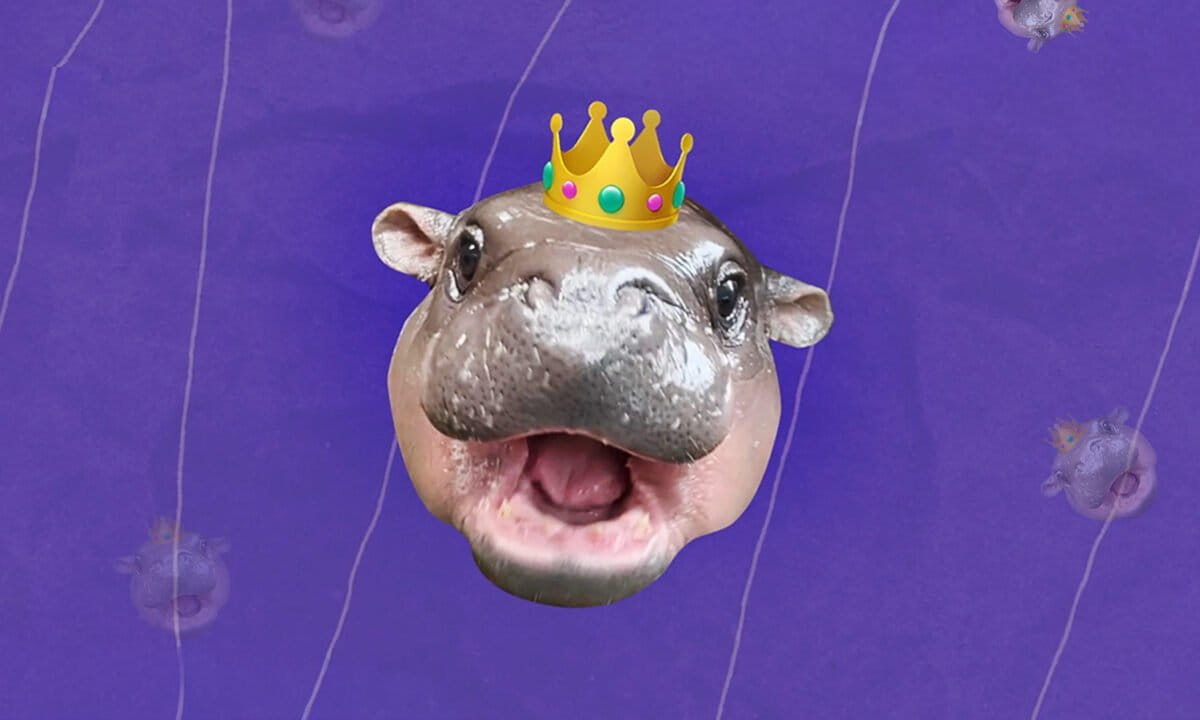
Moo Deng meme collage

Small hippo, big dreams: Can Moo Deng, the viral pygmy hippo, save her species? 

Sam Lee 14 Jan 2026
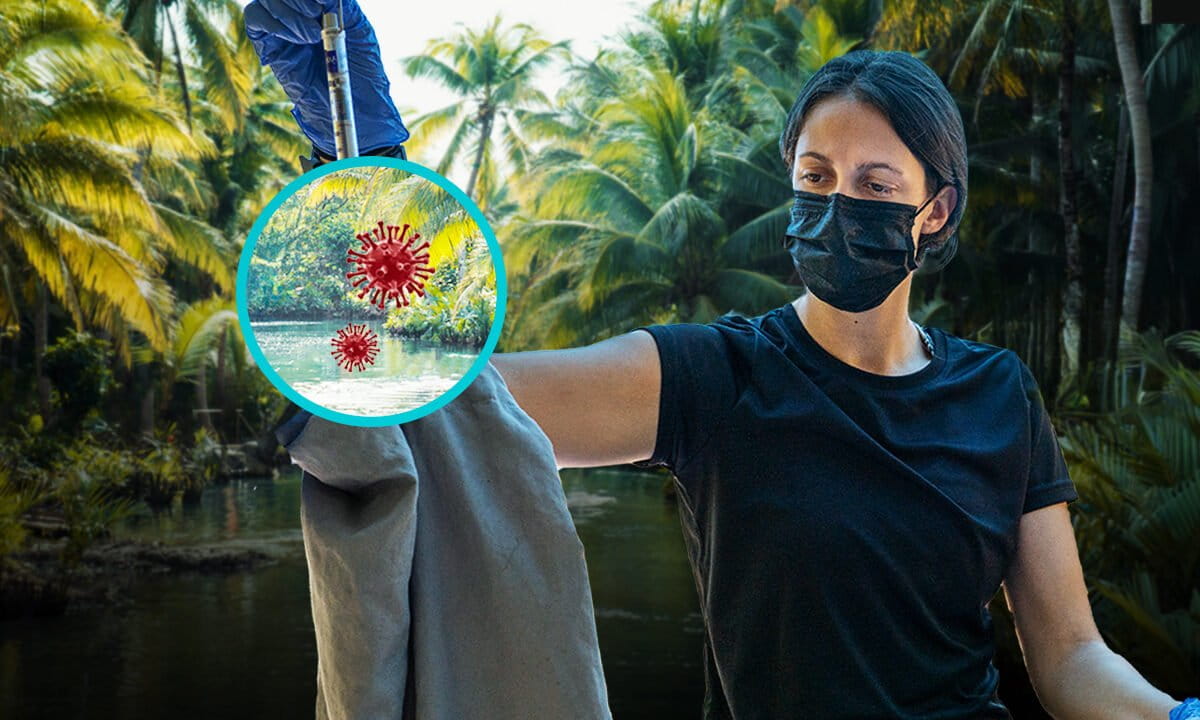
Collage: Elise Paietta, postdoctoral research scholar during fieldwork, with tropical forest

How do we stop the next pandemic?

Abhishyant Kidangoor 26 Nov 2025
What singing lemurs can tell us about the origin of music

What singing lemurs can tell us about the origin of music

Sam Lee 8 Jan 2025

What are the High Seas (and why should we care?)

Abhishyant Kidangoor 23 Oct 2024

Join Mongabay’s reporters as we unpack some of the most urgent and intriguing issues in climate, the environment and biodiversity today. In this multimedia Special Issue, we go beyond the headlines to examine how science, policy and human activity intersect with Nature. We try to answer questions you might not have known to ask, with […]

Mongabay Explains series

More specials

Trekking through the Cardamom Tented Camp concession in Botum Sakor National Park Photo by Gerald Flynn
12 stories

Carving up the Cardamoms

9 stories

Can anyone save the Sumatran rhino?

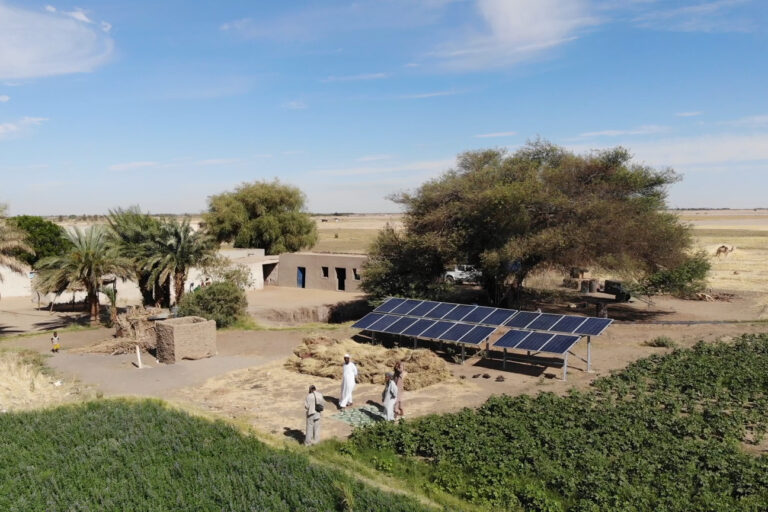
Solar panels in an arid part of Sudan.
9 stories

Negotiating Africa’s Energy Future

Free and open access to credible information

Learn more

Listen to Nature with thought-provoking podcasts

Bringing Mongabay’s Amazon narco airstrip exposé to the stage

Mike DiGirolamo 24 Feb 2026

Watch unique videos that cut through the noise

Collage featuring cockfighting and a largetooth sawfish

Why is cockfighting a risk to Peru’s rarest fish?

Collage featuring a white-rumped shama (Copsychus malabaricus) and a poacher

The most desirable songbird in Indonesia is disappearing from the wild

Rizky Maulana Yanuar, Sandy Watt 18 Feb 2026
Collage featuring Jeffrey Lendrum

The man who risked everything to steal bird eggs

Sandy Watt 11 Feb 2026
Collage featuring a puma and Ida Isabel Auris Arango, shepherd and Quechua woman

Women secure a future with pumas in the Andes

Romi Castagnino 28 Jan 2026
Moo Deng meme collage

Small hippo, big dreams: Can Moo Deng, the viral pygmy hippo, save her species? 

Sam Lee 14 Jan 2026

We’re a nonprofit

Help us tell impactful stories of biodiversity loss, climate change, and more
Donate

In-depth feature stories reveal context and insight

Fishers in Takeo province rely on the annual flooding of wetlands where they raise and catch a variety of crustaceans. Image by Gerald Flynn/Mongabay.
Feature story

Farmers fear displacement, drought, flooding tied to Cambodia’s Funan Techo Canal

Gerald Flynn, Phoung Vantha 12 Feb 2026
Across Kep province, fishing communities fear the Funan Techo Canal will see them lose their homes on land and their livelihoods at sea. Image by Gerald Flynn / Mongabay.
Feature story

Cambodia’s canal mega-project threatens coastal communities and marine life

Gerald Flynn, Phoung Vantha 10 Feb 2026
Forester kangaroos at The Quoin. Photo credit Doug Gimesy
Feature story

Financing biodiversity: Lisa Miller on investing in nature

Rhett Ayers Butler 9 Feb 2026
Feature story

Mines, dams move in as protection slips in a Cambodian wildlife sanctuary

Coby Hobbs, Eung Sea 6 Feb 2026

Quickly stay updated with our news shorts

Australia spends $18b more on harming nature than protecting it: Study

Megan Strauss 25 Feb 2026

The Australian government spends more money on activities that harm biodiversity than those that protect biodiversity, a new study suggests.

Australia is a biodiversity hotspot, home to more than two-thirds of the world’s marsupials and a high rate of endemic species, but the country has suffered significant species extinctions since European arrival.

Under Target 18 of the Kunming-Montreal Global Biodiversity Framework (GBF), Australia’s government agreed to identify spending that harms the country’s plants, animals and fungi by 2025, and reduce it by 2030. However, the government has yet to release such estimates, so a team of researchers did it themselves.

“The urgency of the 2030 reform deadline, and the ongoing deterioration of Australia’s environment, made it clear that this work couldn’t wait,” lead author Paul Elton of Australian National University told Mongabay by email.

The study analyzed the federal government’s 2022-2023 budget using a method recommended by the Organisation for Economic Co-operation and Development (OECD). It identified subsidies in the form of payments and tax concessions that may be harmful to biodiversity. Experts and collaborators from the Australian Biodiversity Council then ranked the impacts from those subsidies on biodiversity.

The researchers found that between 2022 and 2023, Australia’s government spent A$26.3 billion ($18.6 billion) — or 1.1% of the country’s gross domestic product — on subsidies for activities believed to cause at least a medium level of harm to biodiversity. This stands in sharp contrast with the current spending on biodiversity conservation, estimated by the Biodiversity Council at less than A$0.8 billion ($0.6 billion) per year.

The bulk of the harmful subsidies identified in the report were for fossil fuel extraction and use (A$14.1 billion, or $10 billion). Transportation infrastructure accounted for an additional (A$8.5 billion, or $6 billion). Harmful subsidies were also identified in agriculture, fisheries, and forestry.

The more than A$26 billion in spending is a conservative estimate due to data limitations, and that’s only federal spending; it doesn’t account for subsidies from state and territory governments.

A representative with the Department of Climate Change, Energy, the Environment and Water (DCCEEW) told Mongabay by email that “The Australian Government continues to make investments and take actions to halt and reverse the decline of biodiversity, this includes working with all levels of government and parts of society to drive improvements in nature.” They note that the total budgeted spending for the environment in the DCCEEW portfolio from 2025-2026 to 2028-2029 is A$10.1 billion ($7.1 billion).

The report authors suggest that prioritizing fiscal reforms across the economy could help Australia meet its biodiversity targets. However, they caution that reforms must be implemented in a fair and just way that considers affected communities and industries.

“Australia can and should play a leading role in demonstrating how a wealthy, megadiverse nation transforms its fiscal policy to support rather than erode biodiversity,” Elton said.

Banner image: Red kangaroos (Osphranter rufus). Image © Richard Crook via iNaturalist (CC BY-NC 4.0).

Floods ravage southeastern Brazil and kill 40 as rescuers race to find dozens missing

Associated Press 25 Feb 2026

JUIZ DE FORA, Brazil (AP) — Families of those killed in the devastating floods in southeastern Brazil began burying the dead on Wednesday, as the death toll climbed to at least 40 in the state of Minas Gerais.

All the victims found so far are in the cities of Juiz de Fora and Uba, about 310 kilometers (192 miles) north of Rio de Janeiro. Some 30 people are still missing and more than 3,000 residents have been forced to leave their homes as of Wednesday morning, according to Minas Gerais’s fire department.

Among the dead was 11-year-old Bernardo Lopes Dutra, after the rain caused his house to collapse.

“It’s a tragedy that no one was expecting,” his father, Ricardo Dutra, said at the funeral in Juiz de Fora. He described Bernardo as “a boy with a big heart who, in his own way, touched everyone around him.” Dutra’s wife and daughter were still in a hospital.

The Rev. Ananias Simões, the pastor at the church that Dutra and his family regularly attended in Juiz de Fora, said that the building has been turned into a temporary shelter.

“We’re doing what we can, collecting food, water. We’re in a war situation,” Simões said.

Dário Tibério, a 41-year-old truck driver, decided to leave his house along with his family for fear of collapse. He found refuge at the church, while he waits on authorities to say his home is risk-free.

“There’s a danger that the mud and earth can come and bury us along with the debris. We have this feeling of insecurity,” he said.

The streets of Juiz de Fora, a city of 560,000, were covered in mud as authorities feared more landslides. Life in neighboring Uba, with its 107,000 residents, came to a stop. Classes were suspended in both cities, their mayors said.

Juiz de Fora’s City Hall said in a statement that around 600 families living in endangered areas were about to be relocated to local schools improvised as shelters and that the city experienced double the rain expected for February. Mayor Margarida Salomão said at least 20 landslides had been reported since the torrential rain began Monday evening.

Brazilian President Luiz Inácio Lula da Silva said on his social media channels Tuesday that security forces have been deployed on rescue missions and are providing immediate assistance to the population affected by the rain. He also said health care teams were sent to the region, which lies close to hills, valleys and slopes.

Scientists say extreme weather is happening more frequently due to human-caused climate change.

By Diarlei Rodrigues and Eléonore Hughes, Associated Press

Banner image: Collapsed homes sit after heavy rains and severe flooding in the Parque Burnier neighborhood of Juiz de Fora in Minas Gerais state, Brazil, Tuesday, Feb. 24, 2026. Photo courtesy of Silvia Izquierdo via Associated Press

Indigenous leader assassinated in Colombia’s Caldas department

Aimee Gabay 24 Feb 2026

Indigenous leader José Albino Cañas Ramírez was recently shot and killed by two unknown individuals in Colombia’s Caldas department. Indigenous authorities suspect it was a targeted attack linked to his work in defense of one of the oldest Indigenous reserves in Colombia, the Resguardo of Colonial Origin Cañamomo Lomaprieta (RCMLP). It’s a 37.6-square-kilometer (14.5-square-mile) reserve established in 1540 but has been threatened by illegal miners and armed groups for decades.

According to a statement released by the RCMLP, the two individuals arrived at the shop attached to the home of Cañas Ramírez at approximately 8:50 p.m. on Feb. 16. As Ramírez prepared to attend to them, they shot him four times and fled along the community’s roads toward Supía, a neighboring municipality. Ramírez died several minutes later, the statement said.

Ramírez was an active member of the resguardo’s governing council (cabildo) and an Indigenous authority from the community of Portachuelo, one of 32 Embera Chamí Indigenous communities in the reserve. Ramírez’s responsibilities included territorial protection, conflict resolution and the promotion of cultural preservation within the Portachuelo community. As part of his work, he encouraged young people to stay away from drugs, which has been a growing concern in the community, Hector Jaime Vinasco, a member of the resguardo’s governing council, told Mongabay over a phone call.

Illegal mining and armed conflict have threatened the local communities for many years. In recognition of the threats and violence they face, the Inter-American Commission on Human Rights granted the Embera people precautionary measures in 2002, requiring the Colombian government to adopt immediate security measures and investigate the acts of violence and threats against the community. More recently, the communities have requested support from the country’s Ministry of Defense and the National Ombudsman, urging immediate measures to address the situation. But those calls for help have fallen on deaf ears, Vinasco told Mongabay.

Vinasco said Ramírez’s killing reflects a growing pattern of violence in the region. “This is not the first [killing],” he said. “We unfortunately have a rather grim history with violence. We’ve been victims of several massacres, such as the Masacre de La Rueda,” referring to an event in 2001, when a paramilitary group killed six community members and detained and tortured several others.

“It was one of the most tragic events in the history of our reservation,” he added. “Since then, there have been a series of homicides of people, of leaders, which have been reported to the prosecutor’s office, and some of them remain unpunished.”

Banner image: A festival held in the Portachuelo Indigenous community, one of 32 communities that form part of the Indigenous Resguardo of Colonial Origin Cañamomo Lomaprieta (RCMLP) in Caldas, Colombia. Image courtesy of the Indigenous organization of Cañamomo Lomaprieta.

Spiro secures $50 million to expand Africa battery-swapping network

Associated Press 24 Feb 2026

NAIROBI, Kenya (AP) — Financing for electric vehicle transport is ramping up in Africa as confidence rises in the potential for battery swapping, fast charging and other technologies.

Spiro, Africa’s largest electric mobility operator, has secured $50 million in debt financing from African Export-Import Bank, or Afreximbank, U.S.-based climate fintech platform Nithio and the Africa Go Green Fund to expand its battery-swapping network.

The announcement came days after Arc Ride, another e-mobility firm, received a $5 million equity commitment from the International Finance Corp., or IFC, signaling growing institutional confidence in Africa’s clean transport sector. Gogo Electric, a Ugandan e-bike startup also raised $1 million last week from ElectriFi, the European Union-funded electrification financing funded by the EDFI management firm.

Spiro said that it would use the capital to extend its battery-swapping stations to existing and new markets, while advancing technology including automated battery swaps, fast charging and renewable energy integration.

“This new funding reinforces our vision of building a robust, scalable energy network tailored for Africa by Africans,” said Kaushik Burman, CEO of Spiro.

The e-mobility company operates in Kenya, Uganda, Rwanda, Nigeria, Benin and Togo, with trials in Cameroon and Tanzania. It has deployed more than 80,000 electric motorcycles, circulated more than 300,000 batteries, completed 30 million battery swaps, and established more than 2,500 swap stations. Riders have logged more than 1 billion carbon-free kilometers.

“We will use it to deploy energy infrastructure that will contribute meaningfully to a greener future in Africa,” said its founder, Gagan Gupta.

Development financiers see electric mobility as both a climate solution and an industrialization opportunity in Africa.

“Spiro is one of the largest and fastest-growing players in the Pan-African e-mobility market. We see e-mobility as a critical pillar of Africa’s clean energy transition,” said Raghav Sachdeva, chief investment officer at Nithio.

Laurène Aigrain, managing director of Africa Go Green Fund said that the transaction reflects the funds commitment to backing commercially robust businesses that combine innovation with measurable environmental and social impact.

Afreximbank officials framed their backing as central to Africa’s sustainable industrialization.

“Driving Africa’s transition to electric mobility is central to how we view sustainable economic development across the continent,” said Oluranti Doherty, managing director for export development.

Since 2022, Spiro has raised more than $230 million, financing production and assembly facilities across Nigeria, Kenya, Uganda, and Rwanda, a reflection of the broader trend of climate-focused capital flowing into Africa’s e-mobility sector.

By Allan Olingo, Associated Press

Banner image: Riders swap batteries at an electric Spiro motorcycle charging station in Nairobi, Kenya, Tuesday, Feb. 24, 2026. (AP Photo/Henry Naminde)

Supreme Court agrees to hear from oil and gas companies trying to block climate change lawsuits

Associated Press 23 Feb 2026

WASHINGTON (AP) — The Supreme Court said Monday that it will hear from oil and gas companies trying to block lawsuits seeking to hold the industry liable for billions of dollars in damage linked to climate change.

The conservative-majority court agreed to take up a case from Boulder, Colorado, among a series of lawsuits alleging the companies deceived the public about how fossil fuels contribute to climate change.

Governments around the country have sought damages totaling billions of dollars, arguing it’s necessary to help pay for rebuilding after wildfires, rising sea levels and severe storms worsened by climate change. The lawsuits come amid a wave of legal actions in states including California, Hawaii and New Jersey and worldwide seeking to leverage action through the courts.

Suncor Energy and ExxonMobil appealed to the Supreme Court after Colorado’s highest court let the Boulder case proceed. The companies argue emissions are a national issue that should be heard in federal court, where similar suits have been tossed out.

“The use of state law to address global climate change represents a serious threat to one of our Nation’s most critical sectors,” attorneys wrote.

President Donald Trump’s administration weighed in to support the companies and urge the justices to reverse the Colorado Supreme Court decision, saying it would mean “every locality in the country could sue essentially anyone in the world for contributing to global climate change.”

Trump, a Republican, has criticized the lawsuits in an executive order, and the Justice Department has sought to head some off in court.

Attorneys for Boulder had agued that the litigation is still in early stages and should stay in state court. “There is no constitutional bar to states addressing in-state harms caused by out-of-state conduct, be it the negligent design of an automobile or sale of asbestos,” they wrote.

By Lindsay Whitehurst, Associated Press

Banner image: The U.S. Supreme Court. Photo courtesy of Rahmat Gul, Associated Press 

Giant tortoises return to Galápagos island 180 years after relatives went extinct

Bobby Bascomb 20 Feb 2026

For the first time in nearly two centuries, giant tortoises are once again roaming Floreana Island in the Galápagos, a conservation milestone more than a decade in the making.

Early settlers on Floreana Island altered the landscape and hunted the Floreana giant tortoise (Chelonoidis niger niger) into extinction about 180 years ago. But while working on Wolf Volcano, roughly 180 kilometers (112 miles) away on Isabela Island, researchers with the Galápagos Conservancy noticed something unexpected.

“The tortoises seemed different,” Penny Becker, CEO of Island Conservation told Mongabay in a video call. “They looked different and they were behaving differently.”

So, the researchers took DNA samples from those tortoises and compared them with DNA from tortoise bones found in caves on Floreana. “Indeed, there were some pretty strong genetics left in the Wolf [Volcano] population from tortoises that were here on Floreana,” Becker said.

How the heavy terrestrial reptiles got to Wolf Volcano remains uncertain. They could have floated on ocean currents or been transported by whaling ships that kept tortoises for food.

In any case, scientists launched a breeding program using the Wolf Volcano tortoises to establish a new hybrid population for reintroduction to Floreana. On Feb. 20, with support from local residents and a consortium of partners, 156 endangered tortoises were released. Each of them is between 10 and 13 years old. They will reach sexual maturity at roughly 25 years old, so building a self-sustaining population will take time.

Becker is confident in the project’s long-term success. The tortoises’ health and progress toward adaptation on the island will be closely monitored. “We’re going to adaptively manage things as we go along to ensure that it’s successful.”

Tortoises are a keystone species and critical ecosystem engineers. Their impacts on the island could be transformative.

“By dispersing seeds, shaping vegetation, creating micro-habitats such as their well-known wallows, and influencing how landscapes regenerate, they help rebuild ecological processes that many other species depend on,” Rakan Zahawi, Charles Darwin Foundation executive director, said in a press release.

Their return is expected to improve seabird nesting habitats, for example.  More seabirds mean more nutrients flowing between land and sea, enhancing the so-called “circular seabird economy” that can improve fisheries productivity and coral reef health.

The tortoise reintroduction is part of a much broader restoration effort on Floreana. In 2025 following a successful rat eradication program, the Galápagos rail (Laterallus spilonota), a small ground bird, returned to the island after 190 years. The team is also working on plans to reintroduce several other extirpated species, including the vegetarian finch (Platyspiza crassirostris), one of Darwin’s finches that gave rise to his theory of evolution.

“Seeing giant tortoises return to Floreana confirms that long-term commitment and collective action can restore ecosystems that once seemed lost,” Eliécer Cruz, director of Fundación Jocotoco’s Galápagos Program, said in a press release.

Banner image: A giant tortoise. Image courtesy of Carlos Espinosa via the Charles Darwin Foundation. 

Share Short Read Full Article

Share this short

If you liked this story, share it with other people.

Facebook Linkedin Threads Whatsapp Reddit Email

Subscribe

Stay informed with news and inspiration from nature’s frontline.
Newsletter

News formats

  • Videos
  • Podcasts
  • Articles
  • Specials
  • Shorts
  • Features
  • The Latest

About

  • About
  • Contact
  • Donate
  • Impacts
  • Newsletters
  • Submissions
  • Terms of Use

External links

  • Wild Madagascar
  • For Kids
  • Mongabay.org
  • Reforestation App
  • Planetary Health Check
  • Conservation Effectiveness
  • Mongabay Data Studio

Social media

  • LinkedIn
  • Instagram
  • Youtube
  • X
  • Facebook
  • Tiktok
  • Reddit
  • BlueSky
  • Mastodon
  • Android App
  • Apple News
  • RSS / XML

© 2026 Copyright Conservation news. Mongabay is a U.S.-based non-profit conservation and environmental science news platform. Our EIN or tax ID is 45-3714703.

you're currently offline