A decade after countries agreed to the Paris climate agreement, Mongabay reports on an idea often invoked when discussing Africa’s path toward a low-carbon future: a just energy transition. Reporters from across the continent explore what “just” and “clean” energy mean for Africans. These stories show African countries are pursuing their own journeys toward more […]
EU votes to delay EUDR antideforestation law for second year in a row
Shanna Hanbury19 Dec 2025
The European Parliament voted on Dec. 17 to delay a key antideforestation regulation that was adopted in 2023 and originally supposed to be implemented at the end of 2024. The implementation was delayed a year to December 2025, and now the EU has voted to delay it yet again by another year.
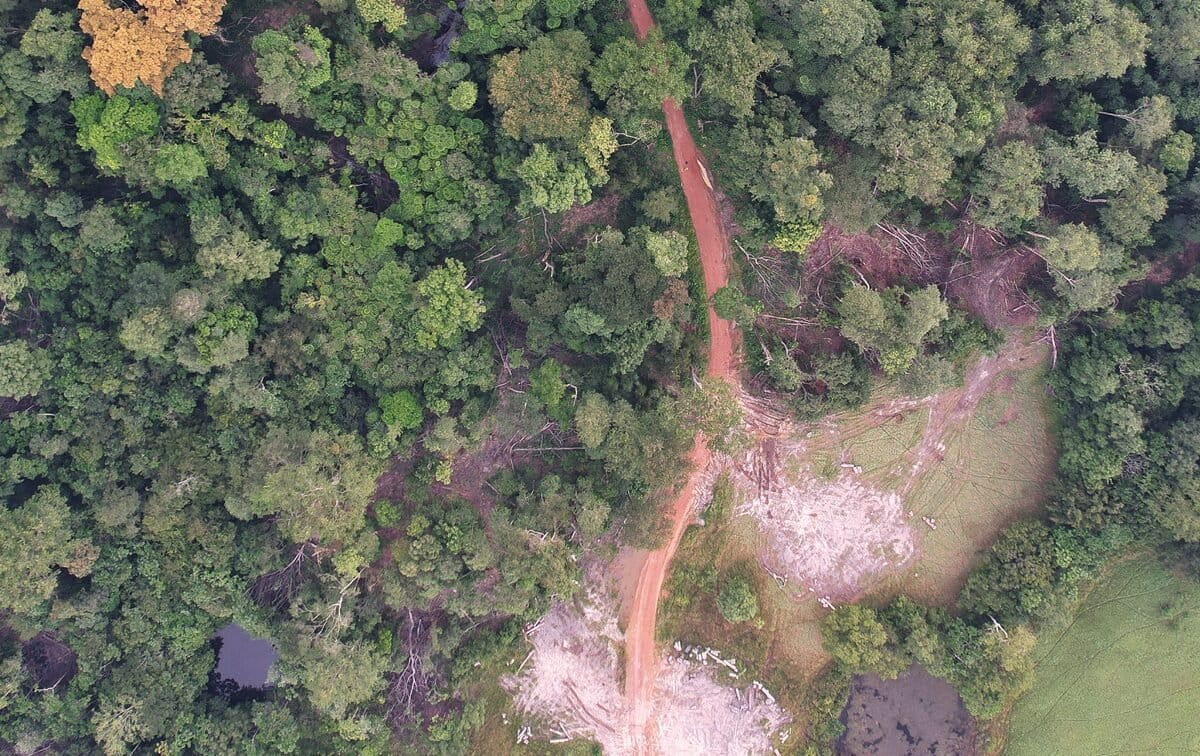
The European Union Deforestation Regulation (EUDR) requires producers of seven of the key commodities that drive tropical deforestation — beef, cocoa, coffee, palm oil, rubber, soy and timber — to prove that their products are not sourced from land deforested after Dec. 31, 2020.
That requirement includes submitting geolocalized data. But in September, the European Commission cited concerns that its IT system wasn’t ready yet to meet that demand, as a reason for proposing a delay to implementation.
“This is the latest chapter in a farce that’s lasted more than two years, ever since the EUDR was passed with a huge democratic mandate,” Nicole Polsterer, sustainable consumption and production campaigner with the forests and rights nonprofit Fern, wrote Mongabay by email. “[This] decision puts forests on the chopping block and rule-abiding European businesses at a competitive disadvantage.”
The amendment confirms a blanket one-year delay, but small operators will have an additional six months after that, until June 30, 2027, to comply. The decision also introduces the opportunity for additional changes until April 2026 to “assess the law’s impact and administrative burden.”
European lawmakers voted 405 to 242 in favor of the change; eight abstained.
Polsterer criticized the decision to assess the law before it’s even been enacted, saying that without operational experience, there’s no real-world situation to assess. “Agreeing to review the law in April 2026 without this evidence enables anti-EUDR lobbyists to base proposals on what they think might happen rather than actual experience of the law,” she said.
The change also exempts paper used in books, newspapers and other products of the printing industry from the scope of the law — a development the UK Publishers Association celebrated. “It’s a common sense move given the legislation was never designed for our sector,” Dan Conway, the CEO of the Publishers Association, wrote in a statement.
Fern has criticized the pressure from lobbyists for the international pulp and paper industry, going as far back as July 2024, citing the American Forest and Paper Association’s claim that the companies they represent could not prove that their products were deforestation-free.
The recent vote confirms the final text of the amendment but it still needs to be confirmed by the Council of the European Union and published in the EU’s Official Journal before the end of 2025 to apply.
Banner image: Press conference following the vote to delay the EUDR, again. Image courtesy of Laurie Dieffembacq/European Union.
Tanzania’s tree-climbing hyraxes have adapted to life without trees
Ryan Truscott19 Dec 2025
Despite their name, tree hyraxes — small, furry, nocturnal African mammals — don’t always live in trees. In Tanzania’s Pare mountains, near the border with Kenya, they’ve adapted to life on steep rocky outcrops as forests disappeared over the centuries, a recent study has found.
Eastern tree hyraxes (Dendrohyrax validus) are known to inhabit the Eastern Arc mountains, which stretch from southern Kenya across eastern Tanzania, and the Zanzibar archipelago. They prefer old-growth evergreen forests, sheltering from the heat inside the cavities of large trees. But after centuries of agriculture, mining and logging, the Eastern Arc’s Pare mountains retain less than 3% of their original forest cover.
Hanna Rosti, a conservation biologist from the University of Helsinki, Finland, and colleagues observed hyraxes and recorded more than 700 hours of their calls at 18 sites across the Pare massif. Across all sites, the researchers heard tree hyraxes calling mostly from rocky outcrops and saw them seeking shelter in rock crevices.
A tree hyrax on a rock in the Pare Mountains. Image courtesy of Hanna Rosti.
The team also found that the songs of Pare hyraxes, including a distinctive “strangled thwack,” resemble those of eastern tree hyraxes on Mount Kilimanjaro and in Kenya’s Taita Hills. However, Pare hyrax calls differ markedly from populations elsewhere in Tanzania traditionally classified as the same species, including those on Zanzibar and other parts of the Eastern Arc.
This suggests the eastern tree hyrax populations in places like Pare and Kilimanjaro may represent a different taxonomic unit, though Rosti said not enough analysis has been done to formally split them into separate species or subspecies.
Trevor Jones, a conservation zoologist who works in the Udzungwa mountains, an Eastern Arc massif to the southwest of Pare, told Mongabay he’s familiar with the “ping pong” call of Udzungwa’s eastern tree hyraxes but not the “strangled thwack.”
“Clear acoustic differences can indeed be a strong indicator of divergence,” he said.
The Udzungwa hyraxes Jones is familiar with do inhabit trees, but he’s also seen them in cliffs and rocky crevices, even within undisturbed forest. This, Jones said, suggests that for eastern tree hyraxes, life in rocky crevices is an adaptation that pre-dates habitat loss, but is becoming increasingly useful now.
“These special beasts are in decline and so yes, we should also be protecting these rocky habitats, especially where they have lost their primary forest.”
The study’s authors say that Pare’s high number of inaccessible cliffs also offer tree hyraxes and other species in the area safety from hunters who kill them with spears. “There is statistical evidence that the height or slope of the crevice is important, because if it’s almost vertical the people won’t go to kill them that easily,” Rosti told Mongabay in an interview.
The closely related southern tree hyrax (Dendrohyrax arboreus) has also shown flexibility in its habitat: it’s been found sheltering in human-made structures, including at the Karen Blixen Museum’s old coffee factory in Nairobi, Rosti said.
Banner image: Eastern tree hyrax in Pare mountains. Image courtesy of Hanna Rosti.
Tiny Caribbean island brings hope for critically endangered iguana
Shreya Dasgupta18 Dec 2025
Over the past decade, Prickly Pear East, a small, privately owned island in the Caribbean, has become a beacon of hope for a critically endangered lizard.
The islet, near the main island of Anguilla, a British territory, is one of just five locations where the lesser Antillean iguana (Iguana delicatissima) is breeding and thriving, protected from invasive iguanas and human disturbances, conservationists say.
The latest surveys, from July, show the species’ population on Prickly Pear East has grown to more than 300 adults and adolescents — up from just 23 individuals that were moved there from Anguilla starting in 2016.
“This is a wonderful reward after having invested several years of work to plan this reintroduction, engage with their local communities, eradicate the non-native rats, and survey and protect the precious iguana population,” Jenny Daltry, Caribbean alliance director of the NGOs Fauna & Flora and Re:wild, which are supporting the NGO Anguilla National Trust in the iguana’s conservation, told Mongabay by email.
The lesser Antillean iguana was once widespread across the Caribbean, but habitat destruction, hunting, and the introduction of invasive species, including the common green iguana (I. iguana), led to its extinction across several islands.
It was also on the verge of being wiped out from Anguilla mainland. So, between 2016 and 2021, conservationists translocated Anguilla’s remaining 23 individuals to the uninhabited Prickly Pear East. The islet had a suitable habitat for the native iguana; it also lacked invasive iguanas, and conservationists had eradicated all invasive brown rats by 2018, Daltry said.
But there was a problem: the small population could suffer from inbreeding. So the conservationists reached out to the government of Dominica, one of the last strongholds of the lesser Antillean iguana. The government permitted 10 individuals to be moved from its island to Prickly Pear East.
A lesser Antillean iguana from Dominica receiving a health screening before being translocated to Prickly Pear East, an islet off mainland Anguilla. Image by Farah Mukhida/Anguilla National Trust.
Four years later, population surveys show the iguanas are breeding on Prickly Pear East, with their numbers increasing almost tenfold since the translocations. Conservationists have also collected DNA samples to monitor the genetic makeup of the rising population, Daltry said.
The conservation teams are now preparing to reestablish a secure population of lesser Antillean iguanas on Anguilla. For this, they’ve fully encircled Fountain National Park with a fence “designed to exclude cats, rodents, goats, green iguanas and other harmful non-native animals, to create a sanctuary for native wildlife,” Daltry said.
This new population will be important “not only to avoid Anguilla having all its eggs in one basket (Prickly Pear East), but to restore the iguanas’ place and role in their natural ecosystem. The iguanas are the top native herbivores and help to germinate and disperse seeds,” Daltry said.
She added the case of the lesser Antillean iguana shows how a group of dedicated individuals can achieve their dream of saving a species, given inter-regional collaboration and international support. “What greater legacy can there be?”
Banner image: A critically endangered lesser Antillean iguana in Dominica. Image courtesy of Andrew Snyder/Re:wild.
‘Neither appropriate nor fair’: Ecuador ordered to pay oil giant Chevron $220m
Shanna Hanbury18 Dec 2025
Indigenous and rural communities in Ecuador’s Amazon have condemned an international arbitration ruling that ordered Ecuador to pay more than $220 million to U.S. oil giant Chevron. The sum is to compensate the company for alleged denial of justice in a trial that found Chevron, operating through its predecessor Texaco, guilty of widespread environmental damage in northeastern Ecuador.
The Union for People Affected by Texaco’s Oil Operations (UDAPT), which represents six Indigenous nations and 80 communities, said the decision forces the Ecuadorian public to compensate a company after it caused one of the worst environmental disasters in the region’s history.
“It is neither appropriate nor fair. Chevron came to Ecuador, took more than $30 billion from the oil it extracted, polluted the Amazon, caused the extinction of peoples and the deaths of hundreds of people from cancer,” the organization wrote in a statement. “The affected communities took the company to court and won, yet now the entire country has to pay.”
In 1993, residents in the Lago Agrio oil basin sued Texaco, later acquired by Chevron, for environmental damage caused during its operations from 1964-1992. Ecuadorian courts found the company had opted for a substandard oil waste disposal system, which dumped more than 16 billion gallons (61 billion liters) of toxic water in at least 880 unlined open pits across the Amazon Rainforest. These pools contaminated groundwater, soil and rivers that local communities depended on for drinking, fishing, bathing and more, the rulings said. Oil spills and gas flaring were also frequent.
From 2011 to 2018, several Ecuadorian courts found Chevron guilty. The company was ordered to pay $9.5 billion to repair the damage done to the environment and impacted communities.
A U.S. court in 2014 refused to accept or enforce the ruling, calling the trials fraudulent. Chevron also sued Steven Donziger, a U.S. lawyer who represented the impacted Ecuadorian communities, in a New York court for allegedly financially benefiting from the Ecuador case. Donzinger was subsequently jailed for criminal contempt.
During the trials, Chevron took the case to the Permanent Court of Arbitration in The Hague, claiming Ecuador had violated its bilateral investment treaty with the U.S., and that one of the Ecuadorian judges had engaged in “corrupt collusion” with the plaintiffs. In 2018, the court sided with Chevron. The same year, Ecuador terminated its bilateral investment treaty with the U.S.
On Nov. 17 this year, the court’s arbitrators ruled Ecuador must pay Chevron more than $180 million in legal costs and more than $40 million in interest.
Chevron’s initial claim was for more than $3.35 billion Ecuador’s Attorney General’s Office celebrated the arbitration court’s decision, saying it spares the nation from paying $3.13 billion.
Nataly Morillo, Ecuador’s minister of government, called the decision unjust, while Amazon Watch, a nonprofit, called it “the epitome of environmental racism.”
A rare right whale spotted off Ireland resurfaces near Boston
Bobby Bascomb17 Dec 2025
In a rare sighting, a critically endangered North Atlantic right whale, first photographed in 2024 off the coast of Ireland, was recently reidentified near Boston, U.S., on Nov. 19.
This is the first time a North Atlantic right whale (Eubalaena glacialis) was initially documented in Irish waters; before that, it was unknown to scientists. The whale then crossed the Atlantic Ocean and was confirmed through a photographic match, some 4,800 kilometers (3,000 miles) away near Boston.
“Encounters like this highlight both their [right whales’] resilience and the importance of international cooperation to support their recovery,” Daniel Palacios, director of the right whale ecology program at the nonprofit Center for Coastal Studies (CCS), said in a statement.
Researchers don’t quite know what prompted the whale’s transatlantic journey. “It’s hard to say if they’re looking for food or they’re just exploring,” Amy Warren, a scientific program officer with the New England Aquarium’s Anderson Cabot Center for Ocean Life, told Mongabay in a video call. Her group helps match photographic identifications for right whales and maintains a catalog of them.
Today, an estimated 384 North Atlantic right whales remain, nearly all inhabiting the western North Atlantic. This population historically migrated along the east coast of the U.S. and Canada. But over the last decade, warming temperatures have pushed the whales farther north, into cooler Canadian waters.
Scientists believe there was once a subpopulation of these whales in the eastern Atlantic until whaling extirpated them from European waters. Though the recently spotted whale is the first to be initially discovered in Ireland, it is one of seven that have been documented crossing the Atlantic from Irish waters.
“All the other whales were first seen here in their normal area on the east coast of the U.S. and Canada, already documented in the catalog, then went to Europe and came back. This one, to our knowledge, has never been seen before until it was first seen in Ireland,” Warren said.
Warren said other right whales are also known to venture outside the usual migration route.
A whale named Mogul, for instance, was seen off the U.S. coast for several years after his birth, until he was documented in Iceland in 2018, then in France in 2019. A year later, Mogul returned to the U.S. coast. Another female whale “only shows up when she’s pregnant,” Warren said. The whale comes to the calving grounds to give birth and raise her calf for a few months. Then she travels to parts unknown and disappears for a decade until she is ready to give birth again.
North Atlantic right whales are one of the most critically endangered, and well-studied, whale species in the world.
But Warren said this unusual sighting shows that “we still have a lot to learn.”
Banner image:A right whale photographed off Boston, previously spotted in Ireland in July 2024. Image courtesy of the Center for Coastal Studies, taken under NOAA permit 25740-03.
Navigating the complex world of reforestation efforts
Rhett Ayers Butler16 Dec 2025
Founder’s Briefs: An occasional series where Mongabay founder Rhett Ayers Butler shares analysis, perspectives and story summaries.
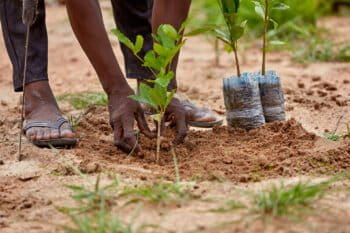
Reforestation has become a feel-good global rallying cry. From corporations touting “net zero” targets to philanthropies seeking visible impact, planting trees has become shorthand for planetary repair. Yet behind the glossy photos of saplings and smiling farmers lies a question few can answer with confidence: Which organizations are actually doing it well?
Karen D. Holl, a professor of environmental studies at the University of California, Santa Cruz, has spent decades studying forest recovery.
“I would give talks, and people would ask, ‘Who should I donate my money to?’” she told Mongabay’s Liz Kimbrough. “There was really no standardized way to answer that question.”
To fill that gap, Holl and postdoctoral researcher Spencer Schubert surveyed and analyzed more than 125 intermediary reforestation groups, the entities that funnel most global funding to local tree-planting projects, Kimbrough reported last month. Their year-long study now forms the backbone of Mongabay’s Global Reforestation Organization Directory.
Rather than ranking or endorsing projects, the directory presents standardized information on each group’s transparency and adherence to scientific best practices. Users can compare organizations based on four criteria: permanence, ecological soundness, social benefit, and financial disclosure. The researchers verified whether monitoring protocols, tree survival data and financial reports were publicly available, though much of the data relies on self-reporting.
The result is not a verdict, but a map of a sprawling, opaque sector. Many organizations claim to restore forests; fewer disclose evidence that trees survive or communities benefit. “We’ve graduated from asking, ‘How many trees did they plant?’ to ‘Has tree cover increased over time?’” Schubert said.
For donors, the tool offers clarity in a crowded market. For practitioners, it hints at a higher bar. Transparency, Holl argues, is itself a measure of competence. “If you’re going to say you’re doing this, then you need to show that you actually are.”