• Features
  • Videos
  • Podcasts
  • Specials
  • Articles
  • Shorts
Donate
  • English
  • Español (Spanish)
  • Français (French)
  • Bahasa Indonesia (Indonesian)
  • Brasil (Portuguese)
  • India (English)
  • हिंदी (Hindi)
  • বাংলা (Bengali)
  • Swahili
  • Videos
  • Podcasts
  • Articles
  • Short News
  • Feature Stories
  • The Latest
  • Explore All
  • About
  • Team
  • Contact
  • Donate
  • Subscribe page
  • Submissions
  • Privacy Policy
  • Terms of Use
  • Advertising
  • Wild Madagascar
  • For Kids
  • Mongabay.org
  • Reforestation App
  • Planetary Health Check
  • Conservation Effectiveness
  • Mongabay Data Studio

Latest

A Venezuela snouted treefrog. Image by Taucce et al., 2022, via Wikimedia Commons (CC BY 4.0).

Study finds microplastics in tadpoles in the Amazon for the first time

David Brown 5 May 2026

In India, few are tracking birds colliding with glass in buildings

Mongabay.com 5 May 2026

EU moves to drop leather from deforestation law after industry lobbying

Elisângela Mendonça 5 May 2026

Suspected chemical pollution threatens Nairobi Nat’l Park & key water sources

Elodie Toto 5 May 2026

Declining Australian tree health is as big a problem as bushfires (commentary)

Michael Reid 5 May 2026

At 100, David Attenborough’s message is no longer just about wonder

Rhett Ayers Butler 5 May 2026
All news

Top stories

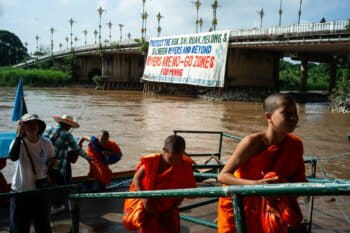
Fishers collect their nets on the Sesan River, just a few hundred meters from the O’Ta Bouk-Sesan confluence. Fishers who use the O’Ta Bouk told Mongabay that their catches have declined significantly over the past three years. Photo by Andy Ball/Mongabay.

Cambodia tested waters amid pollution claims; months later, still no public results

The Golden dorado (Salminus brasiliensis), a powerful migratory freshwater fish native to the Pantanal and Paraná River Basin, shown here being held by researcher Zeb Hogan. Highly prized by recreational anglers and important to commercial fisheries, the species has declined in parts of its range due to dam construction.

Migratory freshwater fish are in trouble: Will we act in time to save them?

Stefan Lovgren 1 May 2026

In Guatemala, new AI technology will be ‘listening’ for illegal deforestation

Maxwell Radwin 30 Apr 2026
Peter H. Raven at the Missouri Botanical Garden. Photo by M. Jacob.

Peter Raven, botanist and advocate for biodiversity, has died, aged 89

Rhett Ayers Butler 27 Apr 2026
Khudi Bari hause

These tiny houses are designed to stand in extreme floods

Lucia Torres 25 Apr 2026

Subscribe

Stay informed with news and inspiration from nature’s frontline.
Newsletter

We’re a nonprofit

Help us tell impactful stories of biodiversity loss, climate change, and more
Donate

News and Inspiration from Nature's Frontline.

Khudi Bari hause
Videos
Louis Vuitton bag.
Articles
Goose Island Archipelago is a cluster of tree-covered islands with wild, rocky beaches located off the central coast of British Columbia.
Podcasts

Special issues connect the dots between stories

Primate Planet

Rangers at Gashaka Gumti National Park, Nigeria

Defying conflict to track the world’s rarest chimpanzees

Leo Plunkett, Tom Richards, Sandy Watt 13 Apr 2026
Izzy Sasada and orangutan

Orangutans rescued undergo re-training to return to the wild

Izzy Sasada, Sam Lee 17 Dec 2025
In Java, communities help reconnect fragmented forests to help save the endangered Javan gibbon

Natural bridges to reconnect the last Javan gibbons

Nanang Sujana, Sandy Watt 18 Jun 2025
What singing lemurs can tell us about the origin of music

What singing lemurs can tell us about the origin of music

Sam Lee 8 Jan 2025

Across the tropics, a growing movement is working to secure a future for primates in the face of disease, deforestation and wildlife trade. Reporting from across the planet, this video series highlights how scientists, conservationists and local communities are rebuilding populations and reconnecting fragmented forests. Along the way, it reveals the innovation, collaboration and resilience […]

Primate Planet series

More specials

Guasimas Bay has been contaminated by agrochemicals and waste that is released from shrimp farms not far from the coast.
5 stories

Who controls Mexico’s Yaqui River?

12 stories

Beyond the screen: DCEFF

A dairy cow in a farm in the Netherlands.
5 stories

The Dutch Nitrogen Crisis

Free and open access to credible information

Learn more

Listen to Nature with thought-provoking podcasts

Goose Island Archipelago is a cluster of tree-covered islands with wild, rocky beaches located off the central coast of British Columbia.

Reciprocity, not extraction: Centering an Indigenous approach to forestry

Mike DiGirolamo 28 Apr 2026

Watch unique videos that cut through the noise

Khudi Bari hause

These tiny houses are designed to stand in extreme floods

Rangers at Gashaka Gumti National Park, Nigeria

Defying conflict to track the world’s rarest chimpanzees

Leo Plunkett, Tom Richards, Sandy Watt 13 Apr 2026
Collage of a cloned jaguar

Lab-made jaguar: Is cloning a solution to extinction?

Julia Lima, Gustavo Fonseca, Letícia Klein 30 Mar 2026
Collage of a red-bellied toad and a bridge broken by flood

In search of the tiny toad that stopped a dam

Thamys Trindade, Felipe Rosa, Julia Lima 14 Mar 2026
Collage featuring cockfighting and a largetooth sawfish

Why is cockfighting a risk to Peru’s rarest fish?

Romi Castagnino 25 Feb 2026

We’re a nonprofit

Help us tell impactful stories of biodiversity loss, climate change, and more
Donate

In-depth feature stories reveal context and insight

Black rhinos are critically endangered.
Feature story

Chinese court cases reveal most trafficked rhino horns come from Southern Africa

Spoorthy Raman 21 Apr 2026
Pa Haw, father of Saw Si Paw, takes to the Salween River each morning to inspect their nets for fish, despite heavy metal contamination linked to mining sites upstream. Photo by Gerald Flynn/Mongabay.
Feature story

Asia’s longest free-flowing river contaminated by arsenic linked to Myanmar mines

Gerald Flynn 20 Apr 2026
Ivonne Kienast at Dzanga Bai
Feature story

Studying the world’s largest gathering of forest elephants with sound and field observation

Rhett Ayers Butler, David Akana 19 Apr 2026
An older chimp, BF, was the last male to go between groups.
Feature story

Chimp ‘civil war’ follows rare community split in a Ugandan national park

Keith Anthony Fabro 17 Apr 2026

Quickly stay updated with our news shorts

Study finds microplastics in tadpoles in the Amazon for the first time

David Brown 5 May 2026

Researchers have recorded microplastics in frog tadpoles and their pond habitats in the wild in the Amazon for the first time, according to a new study. This confirms widespread microplastic contamination in the Amazon Rainforest, the researchers say.  

Previous studies from the region have found microplastic contamination in fish, invertebrates, soil and water samples.

In the recent study, ecologist Fabrielle Barbosa de Araújo from the Federal University of Pará and her colleagues collected 20 water samples from five natural water bodies formed by the accumulation of rainwater in soil depressions at Gunma Ecological Park in Pará state in April 2025. These temporary ponds are important breeding sites and larval development areas for various frog species in the Amazon. 

From each of the five ponds, the researchers also collected 100 tadpoles of the Venezuela snouted treefrog (Scinax x-signatus), commonly found in both forests and urban areas across South America.

The researchers found microplastics in each sampled pond and tadpole. Most of the microplastics were transparent, blue and black fibers made of plastic like polyester. Other studies have also found similar blue and transparent fibers across the Amazon, possibly originating from sanitary sewage and fishing activities, the researchers write.

Araújo told Mongabay by email that finding microplastics in the tadpoles and their habitats was not surprising as several previous studies have shown microplastic contamination in other organisms in the Amazon. “What really caught our attention was the large quantity found, especially because this is an area with low [human] population density and considered relatively well preserved,” she said. 

Araújo said she’s particularly concerned about microplastics in the tadpoles because the “contamination can negatively affect the health of amphibians, causing genetic and morphological damage, such as alterations in blood cells and in the DNA itself.” She added that microplastic particles can also accumulate in tissues and cause physiological changes in frogs.

The authors write that tadpoles of the Venezuela snouted treefrog eat algae, fungi and eggs in water and may have ingested the microplastics that way.

“Research on the presence of microplastics in the Amazon has intensified in recent years, and our goal is to continue monitoring this contamination, especially in anuran tadpoles, in order to better understand how this pollutant is affecting the biodiversity of our region,” Araújo said.

“This study provides the first evidence that microplastics are reaching tadpoles in the Amazon, a region where we have very limited data,” Jess Hua, an ecologist who studies freshwater ecology and amphibians and wasn’t affiliated with the study, told Mongabay by email. “This is important because amphibians represent the most threatened vertebrate taxa and understanding potential threats, including from microplastics, is important to their conservation.” 

Hua added that microplastic contamination in freshwater systems is still much less studied compared to marine systems.

Banner image of a Venezuela snouted treefrog by Taucce et al., 2022, via Wikimedia Commons (CC BY 4.0).

A Venezuela snouted treefrog. Image by Taucce et al., 2022, via Wikimedia Commons (CC BY 4.0).

In India, few are tracking birds colliding with glass in buildings

Mongabay.com 5 May 2026

Bird deaths from collisions with glass structures are a global problem. But in India, conservationists are just beginning to learn the scale of the issue, reports Mongabay India’s Kartik Chandramouli.

While humans are taught the concept of glass and its transparency, birds likely perceive the reflection of vegetation or the sky as reality, researchers say, leading to collisions, often fatal.

In Gujarat state, in western India, for example, more than a dozen migratory rosy starlings (Pastor roseus) crashed into a glass building in February 2022. In Meghalaya, in northeast India, several long-tailed broadbills (Psarisomus dalhousiae) collided with the façade of an automobile showroom in January this year.

While such sporadic local reports exist, well-recorded data on bird collisions are generally missing in India. Only recently have a few studies started offering some trends. A 2025 study in Nilgiri Biosphere Reserve in southern India recorded 35 instances of collisions in just one year, involving 22 bird species, including the endemic Nilgiri wood pigeon (Columba elphinstonii). These collisions involved two-story buildings. 

“Tall glass skyscrapers are not the only culprits,” Peeyush Sekhsaria, an architect and bird-watcher, told Mongabay India. Many birds in India move between trees and plants tall enough to reach the fourth floor, placing most buildings directly in their flight paths.

Given the lack of data, Sekhsaria and Ashwin Viswanathan, an ecologist at the nonprofit Nature Conservation Foundation, launched a citizen science project called Bird Collisions India on the iNaturalist app in 2020. As of April 2026, it’s recorded nearly 88 cases of bird collisions involving 47 species. The Indian pitta (Pitta brachyura), a vibrant migratory bird, appears frequently among the reports.

Sekhsaria and Viswanathan have also collected reports of bird-building collisions on Facebook posts, iNaturalist observations and eBird entries, and through interviews with wildlife rescue organizations. So far, they’ve compiled roughly 500 collision reports involving more than 80 species. Most records come from the city of Bengaluru, though, and aren’t representative of a national trend.

Both projects have shown Sekhsaria and Viswanathan that citizen science isn’t enough to reveal the full scale of the bird collision problem in India. Wildlife rescue organizations in cities, which often treat injured birds, could help fill the gap if they collected data systematically.

Bengaluru’s Avian and Reptile Rehabilitation Centre (ARRC) has started collecting collision incidents through a standardized reporting form and aims to develop a protocol that other centers can adopt. But implementation could be challenging, Jayanthi Kallam of ARRC told Mongabay India. Many rescue centers in India have limited staff and funding, maintain handwritten or digital logs, or have no recordkeeping at all.

Without more coordinated monitoring, scientists don’t have a full picture of hotspots for bird collisions or understand what species are most vulnerable to collisions.  

Read the full story by Kartik Chandramouli here.

Banner image: The Indian pitta is vulnerable to collisions with glass surfaces in India. Image by Sinijose Jose via iNaturalist (CC BY-NC 4.0).

The Indian pitta is vulnerable to collisions with glass surfaces in India. Image by Sinijose Jose via iNaturalist (CC BY-NC 4.0).

Suspected chemical pollution threatens Nairobi Nat’l Park & key water sources

Elodie Toto 5 May 2026

A suspected chemical discharge is flowing into Nairobi National Park, raising concerns over the vulnerability of a unique protected ecosystem and the growing pressure of urban-industrial activity at its borders.

On April 30, 2026, the Kenya Wildlife Service (KWS) reported in a press release sent to Mongabay “abnormal foamy water inflows” entering the park through the Mlolongo drainage corridor. In a statement sent to Mongabay, the agency described white, effervescent bubbles, continuous discharge and unnatural coloration, all “consistent with possible chemical contamination”.

What makes the situation particularly alarming is the location. Established in 1946, Nairobi National Park is the only national park in the world located within a capital city. The park covers 117 square kilometers (45 square miles) of savanna, forest and wetlands. It’s home to four of the “Big Five”: lions, buffalo, leopards and rhinos (missing only elephants). The park also hosts a rhino sanctuary and an animal orphanage where injured wildlife are treated. But its proximity, surrounded by Nairobi’s expanding industrial zones, has long made it vulnerable.

KWS warned that the risk goes beyond wildlife, noting, “The affected system feeds into the Mbagathi and Athi Rivers, placing Athi Dam a critical ecological and water resource at significant risk, alongside aquatic biodiversity and downstream water users, including communities, agriculture, and livestock.” Authorities have urged the public to avoid fishing and using water from the rivers.

An investigation has been launched to determine the source of the contamination. Preliminary findings suggest that “the runoff may have interacted with nearby industrial zones, including areas near Orbit Chemical Industries Ltd, though investigations are ongoing to confirm the source.” Founded in 1972, the company produces hygiene products as well as industrial chemicals, including anionic surfactants, compounds commonly used in laundry detergents and known to cause skin irritation.

Mongabay contacted Orbit Chemical for comment, but the company did not respond by the time of publication.

On April 30th, KWS announced it has launched a joint intervention with the National Environment Management Authority and the Water Resources Authority to identify the source of the pollution, determine its composition and implement containment measures.

KWS added that the discharge of untreated waste or hazardous substances into protected ecosystems is illegal and will be met with strict enforcement.

Banner image: Picture of the abnormal foamy water taken by KWS officers in Nairobi National Park. Image courtesy of Kenya Wildlife Service.

Iceland plans to resume whale hunting this summer

Bobby Bascomb 4 May 2026

Icelandic commercial whaling company Hvalur hf. plans to resume whale hunting this summer, following a two-year pause in commercial operations.

In 2024, the Icelandic government issued the company a five-year license allowing it to catch up to 209 fin whales (Balaenoptera physalus) annually. However, Hvalur hf. didn’t hunt any whales in 2024 or 2025.

Iceland’s Marine and Freshwater Research Institute advised that no more than 150 should be caught in 2026, a 28% reduction from previous catch recommendations.

The IUCN Red List classifies fin whales as vulnerable to extinction. The species is the second-largest animal on Earth, after blue whales (B. musculus). Partly because they are so large, fin whales are “slow to mature, with low reproductive rates, which means populations recover slowly from any pressure,” Luke McMillan, head of hunting and captivity with the U.S.-based NGO Whale and Dolphin Conservation, told Mongabay by email.

Following the 1982 International Whaling Commission moratorium on commercial whaling, most countries discontinued the practice. Just Iceland, Japan and Norway still allow it. However, Iceland Minister of Industries Hanna Katrín Friðriksson has reportedly said commercial whaling is not in the public interest and that legislation to end the practice will be introduced in the fall, after the 2026 whaling season.

Animal welfare concerns remain a central question. A 2023 report from the Icelandic Food and Veterinary Authority found more than 40% of whales did not die immediately after being struck by harpoons, with a median of 11.5 minutes before death. In one case, a whale took a full two hours to die after being struck.

McMillan said he doesn’t believe whale hunting can be done in a way that guarantees humane treatment. “At sea, you’re firing from a moving ship at a moving target, in weather you can’t control, making consistent humane killing impossible,” he said.

However, Hvalur hf. CEO Kristján Loftsson has previous defended whaling in purely utilitarian terms by reportedly saying, “Whales are just another fish for me, an abundant marine resource, nothing else.” Whales are not fish, they’re marine mammals.

McMillan told Mongabay that fewer than 2% of Icelanders report regularly eating whale meat. Japanese demand, historically the main market for fin whale meat, has declined by roughly 99% in fiscal year 2023-24 compared with the previous year.

In 2025, Loftsson said the Japanese market was unfavorable, “making the price of our products so low that it is not justifiable to fish.”

“The economic case for whaling has effectively collapsed,” McMillan said. “What remains is a political and legal question about whether to formalise that with legislation. The question for the 2026 season is whether any fin whales will be killed before that legislation arrives.”

Mongabay requested a comment from Hvalur hf. and Iceland’s Ministry of Industries but did not receive a response from either at the time of publishing this article.

Banner image: A rare blue whale-fin whale hybrid killed by Hvalur in 2018. Image courtesy of Hard to Port.

Endangered whale protections may be delayed to 2035 under Trump-backed plan

Associated Press 4 May 2026

PORTLAND, Maine (AP) — For roughly 380 right whales left in the North Atlantic, which can die after getting tangled in fishing ropes or hit by ships, the Trump administration said this month it wants to delay new protections by almost a decade in favor of commercial fishing interests.

The sleek black whales, which weigh as much as a midsized bulldozer, are critically endangered and their numbers have declined sharply in recent decades. Environmental groups say reducing deaths and injuries caused by people is essential to the species’ recovery.

The whales give birth off Florida and Georgia before making a long migration north to feed off New England and Canada. Protected areas of ocean aid them on their journey, but scientists have said they have strayed from those zones in recent years in search of food as the oceans have warmed.

A proposal by U.S. Rep. Jared Golden, a Democrat from Maine, would push back new federal protections for right whales to 2035, and allow time to craft regulations that are less burdensome to the fishing industry. The White House released a memo Friday saying it “strongly supports” the plan and that President Donald Trump’s senior advisors would recommend he sign it into law if it passes Congress.

The proposal comes as the government already paused any new federal rules about right whales until 2028.

According to Golden, Maine’s iconic lobster industry would’ve been crushed by the now-paused regulations, which he said were “based on flawed science and hypothetical scenarios rather than the reality on the water.”

A longer delay would give the government time to “get the science right” about threats to whales, Golden said in a statement Friday.

The U.S. lobster and crab fishing industries are worth hundreds of millions of dollars at the docks.

“This legislation is critical to ensuring the long-term stability of American fisheries for generations to come,” said John Drouin, vice president of the New England Fishermen’s Stewardship Association.

Environmental groups like California-based In Defense of Animals have pushed back against efforts to weaken whale protections. They cite how the whales’ population fell by about a quarter from 2010 to 2020, and recent years of recovery have been slow.

Some signs about the whale’s population have been encouraging. This year’s birthing season produced 23 mother-calf pairs, the most since 2009, the New England Aquarium said in a statement.

The whale, which has been federally protected for more than 50 years, remains critically endangered, the aquarium said. They were once abundant off the East Coast, but they were decimated during the era of commercial whaling.

By Patrick Whittle, Associated Press

Banner image: A pair of North Atlantic right whales interact at the surface of Cape Cod Bay, March 27, 2023, in Massachusetts. Image by Robert F. Bukaty, NOAA permit # 21371

Can listening to a forest reveal whether it is ecologically healthy?

Rhett Ayers Butler 4 May 2026

Founder’s Briefs: An occasional series where Mongabay founder Rhett Ayers Butler shares analysis, perspectives and story summaries.

Researchers have been using sound to study ecosystems for years. A study from ETH Zürich uses it to examine Costa Rica’s payment for ecosystem services program, reports Mongabay’s Abhishyant Kidangoor.

Giacomo Delgado, a doctoral researcher, compares the method to a physician using a stethoscope. With enough experience, a doctor can distinguish a healthy heartbeat from an irregular one. Forests, he suggests, also produce patterns that can be compared across sites.

To test this, Delgado and colleagues deployed recorders across 119 sites on the Nicoya Peninsula in northwestern Costa Rica. They gathered more than 16,000 hours of audio from various types of landscapes: protected forests, areas regenerating under the country’s payment for ecosystem services (PES) scheme, monoculture plantations, and active pastures. Costa Rica’s PES program, launched in 1997, compensates landowners for maintaining forest cover and is frequently used as a reference point in conservation policy.

Satellite data show that forest cover has recovered after steep declines in the late 20th century. They don’t show whether those forests function as habitats. Counting trees is simpler than assessing species diversity or ecological interactions.

Sound offers a different way to assess this. Insects, birds and amphibians produce layered soundscapes that change over the course of a day. Forests with more activity tend to show pronounced peaks at dawn and dusk. Pastures do not.

The recordings that Delgado and his team collected suggest that naturally regenerated forests under PES resemble protected forests more closely than degraded land. Plantations show signs of recovery, though less consistently.

The method doesn’t resolve all uncertainties. It can’t establish what would have happened without financial incentives. Even so, it provides a more direct measure of ecological condition than canopy cover alone. Delgado’s team is now expanding the analysis across the country.

Read the full story Abhishyant Kidangoor here.

Banner image of a forest in Costa Rica. Image by Rhett A. Butler/Mongabay.

A forest in Costa Rica. The country is considered a pioneer in a forest protection mechanism that has helped drastically reverse deforestation. Image by Rhett Butler.

Share Short Read Full Article

Share this short

If you liked this story, share it with other people.

Facebook Linkedin Threads Whatsapp Reddit Email

Subscribe

Stay informed with news and inspiration from nature’s frontline.
Newsletter

News formats

  • Videos
  • Podcasts
  • Articles
  • Specials
  • Shorts
  • Features
  • The Latest

About

  • About
  • Contact
  • Donate
  • Impacts
  • Newsletters
  • Submissions
  • Terms of Use

External links

  • Wild Madagascar
  • For Kids
  • Mongabay.org
  • Reforestation App
  • Planetary Health Check
  • Conservation Effectiveness
  • Mongabay Data Studio

Social media

  • LinkedIn
  • Instagram
  • Youtube
  • X
  • Facebook
  • Tiktok
  • Reddit
  • BlueSky
  • Mastodon
  • Android App
  • Apple News
  • RSS / XML

© 2026 Copyright Conservation news. Mongabay is a U.S.-based non-profit conservation and environmental science news platform. Our EIN or tax ID is 45-3714703.

you're currently offline