• Features
  • Videos
  • Podcasts
  • Specials
  • Articles
  • Shorts
Donate
  • English
  • Español (Spanish)
  • Français (French)
  • Bahasa Indonesia (Indonesian)
  • Brasil (Portuguese)
  • India (English)
  • हिंदी (Hindi)
  • বাংলা (Bengali)
  • Swahili
  • Videos
  • Podcasts
  • Articles
  • Short News
  • Feature Stories
  • The Latest
  • Explore All
  • About
  • Team
  • Contact
  • Donate
  • Subscribe page
  • Submissions
  • Privacy Policy
  • Terms of Use
  • Advertising
  • Wild Madagascar
  • For Kids
  • Mongabay.org
  • Reforestation App
  • Planetary Health Check
  • Conservation Effectiveness
  • Mongabay Data Studio

Latest

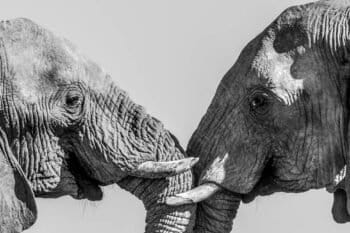
African savannah elephants, the biggest land animals on the planet, are socially advanced and highly intelligent mammals. Image by O’Connell’s & Rodwell.

On ivory, follow the trafficking networks and not the headlines (commentary)

Mary Rice 11 Aug 2026
Feature story

Cambodia’s banned sand trade with Singapore appears to be back

Andy Ball 11 Aug 2026

Key Amazon cases reach Brazil’s Supreme Court following Lula’s defeats in Congress

Associated Press 11 Aug 2026

Meet the Indigenous women restoring Kenya’s Mau Forest — and reshaping gender roles

Juliet Akoth Ojwang 11 Aug 2026

Iceland to deport antiwhaling protest ship’s crew after they interfered with whale hunt

Alex Megerle 11 Aug 2026
Feature story

As Singapore culls ‘nuisance’ birds, rapid urbanization continues to fuel an avian boom

Robin Hicks 11 Aug 2026
All news

Top stories

Rokar Koang Commune, Kandal Province (Cambodia). Sand mining barges extract sand from the Mekong, May 2022.

Cambodia’s banned sand trade with Singapore appears to be back

Crows, in particular, have found themselves in the crosshairs of late.

As Singapore culls ‘nuisance’ birds, rapid urbanization continues to fuel an avian boom

Robin Hicks 11 Aug 2026
Adam Falk at Jahoo Gibbon Camp within Keo Seima Sanctuary in Cambodia. Photo courtesy of WCS.

What conservation looks like from the outside: A conversation with Adam Falk after his first year as CEO of WCS

Rhett Ayers Butler 11 Aug 2026

In Amazon rivers, fish breathe and ingest plastics

Tiago da Mota e Silva 10 Aug 2026
Indigenous representatives interviewed by Mongabay. Illustration by Nadiyah Suyatna.

‘This is what’s working’: Indigenous leaders on environment solutions in their communities

Latoya Abulu 9 Aug 2026

Subscribe

Stay informed with news and inspiration from nature’s frontline.
Newsletter

We’re a nonprofit

Help us tell impactful stories of biodiversity loss, climate change, and more
Donate

News and Inspiration from Nature's Frontline.

Videos
African savannah elephants, the biggest land animals on the planet, are socially advanced and highly intelligent mammals. Image by O’Connell’s & Rodwell.
Articles
Podcasts

Special issues connect the dots between stories

Forest Restoration Solutions

Seatrees and project partner COBEC with local community members in Marereni, Kenya.

How intermediaries are reshaping mangrove restoration

Marina Martinez 6 Feb 2026

Measuring biodiversity in a world of tree-planting pledges

Ruth Kamnitzer 12 Jan 2026
Giant conebird in Peru.

Project sees long-term success restoring forests in the high Andes: Study

Ruth Kamnitzer 22 Dec 2025
Tree Aid’s efforts as part of the Great Green Wall has resulted in planting nearly 28 million trees in the region so far.

New directory helps donors navigate the complex world of global reforestation

Liz Kimbrough 12 Nov 2025

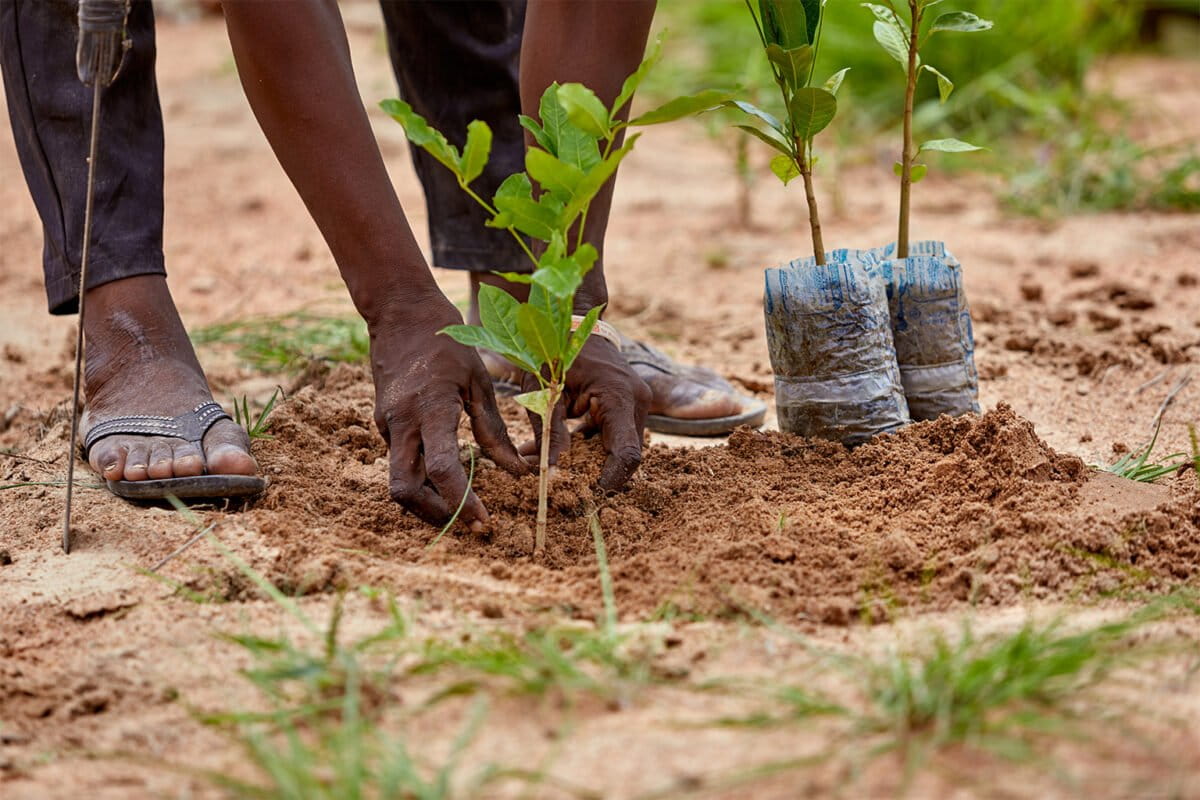
Tree growing has become one of the most widely promoted responses to climate change and ecosystem degradation, with governments, companies and nonprofits pledging to restore hundreds of millions of hectares of forests worldwide. But restoring ecosystems is far more complex than putting seedlings in the ground. This Special examines what it takes to rebuild forest […]

Forest Restoration Solutions series

More specials

8 stories

Finning the High Seas

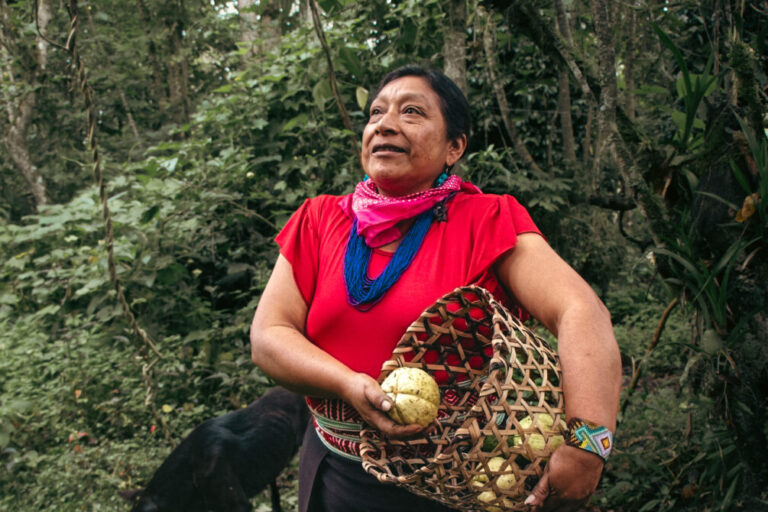
Mamá Conchita in her chagra with her dogs.
9 stories

Women Defenders of the Colombian Amazon

7 stories

The Ideas Shaping Environmental Action

Free and open access to credible information

Learn more

Listen to Nature with thought-provoking podcasts

Forest fires likely to continue to burn twice as much without ‘serious action’ on climate change

Mike DiGirolamo 11 Aug 2026

Watch unique videos that cut through the noise

How rescued orangutans are rebuilding a new wild population in Sumatra

A collage featuring Ashoka Mukpo, a Mongabay reporter, and a cocoa bean

Why are forests vanishing in southeastern Liberia?

Juan Maza, Ashoka Mukpo 18 Jul 2026

Mongabay, Scientific American, and Project Multatuli release a documentary on Indonesia’s new capital

Leah Varjacques, Rizky Rahad, Sandy Watt 15 Jul 2026
Collage, Fritz Pinnow, contributor, and a soldier

Honduras taps armed forces to eliminate deforestation by 2029. Is it working?

Fritz Pinnow 27 Jun 2026
Yo Yaj at Songkhla Lake, Thailand

What is happening to Thailand’s famous giant nets

Lucia Torres 30 May 2026

We’re a nonprofit

Help us tell impactful stories of biodiversity loss, climate change, and more
Donate

In-depth feature stories reveal context and insight

Feature story

Land records reveal how Mennonites are reshaping Belize’s forests

Maxwell Radwin 31 Jul 2026
Tigers are territorial and must strike out to find their own territory when they leave their mothers at 18 months-two years of age and adult cats require large home ranges, making safe pathways between protected areas critical for their survival. Image © Steve Winter/Big Cat Voices.
Feature story

India’s tiger numbers are rising. Protecting their pathways is next

Nirmal Ghosh 28 Jul 2026
Cerros de Mavecure in Colombia's Guainía in July 2026. Photo by Rhett Ayers Butler / Mongabay
Feature story

Ten years of Mongabay Latam

Rhett Ayers Butler 23 Jul 2026
Feature story

For Brazil’s Xokleng people, saving a sacred tree means saving their culture

Letícia Klein 23 Jul 2026

Quickly stay updated with our news shorts

Key Amazon cases reach Brazil’s Supreme Court following Lula’s defeats in Congress

Associated Press 11 Aug 2026

SAO PAULO (AP) — Brazil’s Supreme Court is set to decide cases that could reshape protections for the Amazon rainforest and Indigenous communities. These cases involve Indigenous land rights, environmental safeguards, and infrastructure projects. Congress approved measures that environmentalists say violate constitutional rights, but President Lula vetoed some. Lawmakers overrode these objections, sending disputes to the Supreme Court. Environmental advocates see the court as a defense against weakening protections. Despite reducing deforestation, Lula’s administration struggles against a conservative Congress aligned with agribusiness. The Supreme Court’s decisions could significantly impact Brazil’s environmental and Indigenous policies.

By Gabriela Sá Pessoa, Associated Press

Banner image: A section of the Amazon rainforest stands next to soy fields in Belterra, Para state, Brazil, on Nov. 30, 2019. Image courtesy of Leo Correa, via Associated Press

What makes chimpanzee conservation last? Lessons from Sierra Leone

Rhett Ayers Butler 11 Aug 2026

Founder’s Briefs: An occasional series where Mongabay founder Rhett Ayers Butler shares analysis, perspectives and story summaries.

For more than three decades, Willie Tucker has helped care for Sierra Leone’s western chimpanzees and watched the pressures on them change, reports contributor Patricia Sia Ngevao for Mongabay.

Tucker, widely known as “Pa Willie,” helped establish Tacugama Chimpanzee Sanctuary in 1995. Since then, the sanctuary has rescued and cared for hundreds of chimpanzees, many confiscated from the illegal pet trade. It now houses more than 120 critically endangered western chimpanzees (Pan troglodytes verus), indicating that trafficking remains a serious problem.

Tacugama’s work also shows why wildlife protection cannot be separated from local livelihoods.

The sanctuary supports nearby communities through livestock, seed, and other livelihood programs intended to reduce dependence on hunting and forest resources. Families with more dependable sources of food and income may have less need to exploit wildlife habitat. Such programs can also give communities a direct stake in conservation and make restrictions on forest use more workable.

Public recognition has helped as well. In 2019, Sierra Leone designated the western chimpanzee as its national animal. Tucker says the decision increased awareness of the species and encouraged greater respect for it. National symbols do not protect habitat by themselves, but they can support education, enforcement, and political attention.

Tacugama’s experience offers several practical lessons for conservation organizations. Rescue centers can do more than rehabilitate individual animals. They can train local staff, document wildlife crime, assist law enforcement, educate visitors, and maintain long-term relationships with surrounding communities.

These functions are especially valuable in places where government agencies have limited staff and funding. They also require continuity. Community trust, professional expertise, and public support generally develop through repeated work over many years.

Tacugama’s record suggests that a sanctuary’s impact should therefore be assessed across a wider set of measures: animal welfare, trafficking cases, local employment, community participation, public awareness, and the condition of nearby habitat. That broader view gives conservation groups a clearer basis for deciding where their resources are working.

Read the full interview with Tacugama’s Willie Tucker here.

Banner image: Chimpanzees at Tacugama. Image courtesy of Tacugama Chimpanzee Sanctuary.

Chimpanzees at Tacugama

Wildfire ravages Indonesia’s Bromo Tengger Semeru National Park

Naina Rao 11 Aug 2026

A massive wildfire within a national park in Indonesia has forced a total closure of one of the country’s best-known tourist destinations.

Some 899 hectares (2,222 acres) of savanna and forest within Bromo Tengger Semeru National Park (TNBTS) in East Java province have been destroyed by fire as of the morning of Aug. 11, the provincial disaster management agency told Mongabay.

The fire, which broke out on Aug. 3 in the park’s eastern entrance, is suspected to be human-caused, TNBTS chief Rudijanta Tjahja Nugraha told local media.

TNBTS spokesperson Endrip Wahyutama confirmed the blaze originated along a path used as a shortcut by local residents that bypasses the park’s official tourist roads. “The source is … not a tourist location, and not a public road either,” Endrip said as quoted by Detik.com.

The Bromo Tengger Semeru National Park Agency, which manages the protected area, has ordered it closed until further notice.

Daryono Perwira Sakti, a disaster mitigation educator who previously oversaw the earthquake and tsunami directorate at the BMKG, Indonesia’s weather agency, posted on social media that it’s crucial the park be closed because vegetation on loose volcanic soil there is highly vulnerable to severe fires, which could trigger more disaster.

“The extreme heat from this fire not only destroys vegetation cover and natural seed reserves (seed bank), but also triggers the formation of a water-repellent soil layer,” Daryono wrote.

He said this water-repellent soil layer eliminates water absorption into the soil, elevating risks of massive gully erosion and landslides during the upcoming rainy season, while heavy smoke from the fire impairs visual monitoring of the active volcanoes — Bromo, Tengger and Semeru — that sit at the heart of the park.

“Steep terrain, whipping winds, and the fire’s location in forested areas have made it difficult for firefighters to reach the blaze by foot,” Abdul Muhari, spokesperson for the National Disaster Mitigation Agency (BNPB), said as quoted by Al Jazeera. Local media reported that firefighters are using tree branches and water hoses to tackle the flames from the ground, and a fleet of three water-bombing helicopters and water-spraying drones from the air.

The BMKG has said the 2026 dry season will be more intense and prolonged than usual, with a higher risk of wildfires and drought, in part due to El Niño.

Banner image: Firefighters battle a fire at Mount Bromo, in Indonesia’s East Java province, on Aug. 8, 2026. Image courtesy of the East Java Disaster Management Agency.

Uzbekistan’s houbara releases serve hunting, not conservation, expert says

Naina Rao 11 Aug 2026

There’s no conservation motive or benefit behind the Uzbekistan government’s recent releases of more than 2,000 captive-bred Asian houbara bustards across its desert regions, according to an expert on the threatened species.

The government has touted the releases over the past three months as a wildlife restoration effort, but Nigel Collar, a conservation biologist at BirdLife International, suggested the birds are meant to serve as quarry for hunting parties.

“In reality both areas [where they were released] are hunting concessions for Gulf State falconers and these are birds being put out in the wild simply to provide ‘sport,’” Collar, who also co-chairs the Bustard Specialist Group at the IUCN, the global wildlife conservation authority, told Mongabay by email.

“[T]here is no conservation strategy related to these releases, because they are not intended for conservation except in the sense that they can absorb some of the hunting pressure on wild populations,” he added.

Neither Falcon Hunting Solutions LLC nor Uzbekistan’s National Committee on Ecology and Climate Change, both involved in the releases, had responded to Mongabay’s requests for comment by the time this story was published.

The Asian houbara (Chlamydotis macqueenii) is listed as vulnerable to extinction on the IUCN’s Red List. It migrates between Central and South Asia and the Middle East, and is hunted intensively across this range.

Uzbekistan released nearly 900 of the birds in the Aral Sea region of Karakalpakstan in May this year, followed by some 670 birds in June, according to statements from the National Committee on Ecology and Climate Change. An additional 778 birds were released in July in the Navoiy region.

The released birds were all raised at breeding centers in the United Arab Emirates, the government statements note. They add the releases were carried out under the supervision of specialists from the committee and “Falcon Hunting Solutions” LLC. The latter, according to its website, focuses on “trophy hunting development as an ecotourism segment of Uzbekistan.”

The statements also say the birds’ release into the arid ecosystems of Karakalpakstan and Navoiy contributes to the restoration of ecological balance and the conservation of the region’s unique biodiversity.

“There are already wild houbara in both regions, so it would not be a reintroduction but a reinforcement,” Collar said.

He added the releases “will not contribute to any knowledge” since no information is being gathered on the baseline population of the birds, how many are hunted, what levels of hunting would be acceptable, or what reinforcement would be appropriate.

Collar said the fundamental threats to the species remain entirely unaddressed. These include an 800-kilometer (500-mile) overhead power line across the birds’ desert habitats, which poses severe collision risks.

He said long-term survival requires running power lines underground, reducing human contact during rearing, and implementing the Convention on Migratory Species’ (CMS) Bustards Multispecies Action Plan approved by signatory countries, including Uzbekistan.

Banner image: An Asian houbara bustard in Talagang tehsil, Punjab, Pakistan. Image by Sahibzada tariq hameed via Wikimedia Commons (CC BY-SA 4.0).

Gabon ends fisheries partnership agreement with EU

Victoria Schneider 10 Aug 2026

Gabon has ended its 19-year fisheries partnership with the European Union, which allowed EU industrial vessels to target tuna in Gabonese waters in exchange for payment, arguing the agreement no longer serves the country’s economic interests.

The decision follows a June 2025 Council of Ministers meeting at which the government announced it would seek to renegotiate the Sustainable Fisheries Partnership Agreement (SFPA), before formally ending it on June 29, 2026.

In a statement last year, the Gabonese government said the massive exploitation of fishery resources wasn’t commensurate with the returns Gabon should receive in exchange.

In a speech in January, government spokesperson Charles Edgard Mombo, said the move to cancel the agreement “reflects Gabon’s firm commitment to strengthening its sovereignty over its fishery resources and promoting a renewed, balanced, sustainable, and mutually beneficial cooperation framework.”

The SPFA between the EU and Gabon was established in 2007 and implemented through three protocols lasting between three and six years. The latest protocol covering 2021–2026 allowed up to 27 EU purse seiners, commercial fishing boats that use large, vertical nets; six pole-and-line tuna vessels and four exploratory crustacean trawlers to fish in Gabonese waters.

An independent evaluation commissioned by the European Commission found the EU paid Gabon an average of €2.6 million ($3 million) annually between 2021 and 2024 in exchange for access to 32,000 tons of tuna. However, it also found that Gabon captured just 23% of the total economic value generated; nearly half accrued to other countries because EU vessels made little use of Gabonese ports or processing facilities.

An EU Commission spokesperson told Mongabay the bloc has been ready to negotiate a new agreement since October 2025. “We are working on a new generation of sustainable fisheries agreements, and a future agreement with Gabon could be an example of this,” she said.

The EU has ongoing SPFAs with seven African countries, including Mauritius and Mauritania, which are due to expire later this year. Eight SPFAs are currently dormant.

“SFPAs were designed as fisheries access agreements, not as economic development agreements,” Peter Hammarstedt, Chief Campaigns Officer at the international oceans nonprofit Sea Shepherd, told Mongabay by email. He said the design of the partnership favors European operators over domestic processors and fishing companies, which it doesn’t financially support.

Hammarstedt added that Gabon has invested in its domestic tuna industry to process more EU catches, but the EU found the port infrastructure “inadequate”. The EU Commission spokesperson did not respond to this comment.

“What African coastal and island states need is not simply access-fee revenue, but genuine investment in conservation, economic development that creates jobs, builds domestic industries, and enables them to capture a greater share of the value from their own waters,” Hammarstedt said.

The Gabonese Ministry of Fisheries and Maritime Economy did not respond to Mongabay’s request for comment by the time this article was published.

Banner Image: Artisanal fishers at Cocobeach, Gabon. Photo by Ralph Messi on Unsplash.

Artisanal fishers at Cocobeach, Gabon. Photo by Ralph Messi on Unsplash.

Kazakhstan releases first tiger into the wild in 70 years

Yenni Kwok 10 Aug 2026

Kazakhstan has released its first tiger into the wild more than seven decades since the last confirmed sighting of the big cat in the country.

On July 31, 2026, an adult female Amur tiger called Umit, which means “hope” in Kazakh, leapt from her cage on the back of a pickup truck, as she was released into the wilderness of the 450,000-hectare (1.1 million-acre) Ile-Balkhash State Nature Reserve in southeastern Kazakhstan.

According to a statement issued by the Kazakhstan government on Aug. 3, Umit is fitted with a satellite tracking collar to monitor her movements and behavior in real time.

“Today we are truly witnessing a historic event,” said Kazakh Ecology and Natural Resources Minister Yerlan Nyssanbayev in the statement. “For the first time in over 70 years since tigers were wiped out in Kazakhstan, a tiger has been reintroduced to its historic range.”

The area of the Ile-Balkhash Reserve where Umit was released was once inhabited by the extinct Caspian (Turian) tiger. Its last confirmed sighting in Kazakhstan was recorded in 1948. Umit is an Amur tiger, a population of the mainland Asian tiger (Panthera tigris tigris) native to the Russian Far East and northeastern China.

The Amur and Caspian tigers were once recognized as two distinct tiger subspecies, but the IUCN recognized both as Panthera tigris tigris in 2017.

Preparations for returning tigers to Kazakhstan have taken more than a decade, the Ministry of Ecology and Natural Resources said.

The reserve was established in 2018 to create the necessary conditions for the tigers’ return to the wild, including efforts to increase the population of their natural prey, such as Bukhara deer (Cervus hanglu bactrianus) and kulan (Equus hemionus kulan).

The Kazakh government chose Amur tigers after research showed their genetic makeup was almost identical to that of Caspian tigers, which went extinct owing to habitat loss and hunting by humans.

Umit is one of four Amur tigers gifted to Kazakhstan by Moscow. Captured from the far-eastern Russian region of Khabarovsk Krai, the animals — two adult tigers and two cubs aged around six to seven months — were flown to Kazakhstan in May 2026, ahead of Russian President Vladimir Putin’s visit.

Amur, the adult male tiger, and Turan and Ussuri, the two cubs, are currently living in adaptation enclosures in the Ile-Balkhash reserve, local Kazakh media has reported.

According to the Kazakh government’s statement, Amur is undergoing behavioral tests and will be released into the wild after they’re completed and experts confirm he’s fully prepared to survive on his own.

Meanwhile, the two cubs are expected to stay in the special enclosures until they are at least 18 months old. “After veterinary examinations and behavioral tests for each tiger are completed, an individual decision will be made on the possibility of releasing them into the wild,” the statement said.

Banner image: Umit, an adult female Amur tiger, recently released into Ile-Balkhash State Nature Reserve in southeastern Kazakhstan. Image courtesy of Kazakhstan’s Ministry of Ecology and Natural Resources.

Umit, an adult female Amur tiger, recently released into Ile-Balkhash State Nature Reserve in southeastern Kazakhstan. Image courtesy of Kazakhstan’s Ministry of Ecology and Natural Resources.

Share Short Read Full Article

Share this short

If you liked this story, share it with other people.

Facebook Linkedin Threads Whatsapp Reddit Email

Subscribe

Stay informed with news and inspiration from nature’s frontline.
Newsletter

News formats

  • Videos
  • Podcasts
  • Articles
  • Specials
  • Shorts
  • Features
  • The Latest

About

  • About
  • Contact
  • Donate
  • Impacts
  • Newsletters
  • Submissions
  • Terms of Use

External links

  • Wild Madagascar
  • For Kids
  • Mongabay.org
  • Reforestation App
  • Planetary Health Check
  • Conservation Effectiveness
  • Mongabay Data Studio

Social media

  • LinkedIn
  • Instagram
  • Youtube
  • X
  • Facebook
  • Tiktok
  • Reddit
  • BlueSky
  • Mastodon
  • Android App
  • Apple News
  • RSS / XML

© 2026 Copyright Conservation news. Mongabay is a U.S.-based non-profit conservation and environmental science news platform. Our EIN or tax ID is 45-3714703.

you're currently offline