
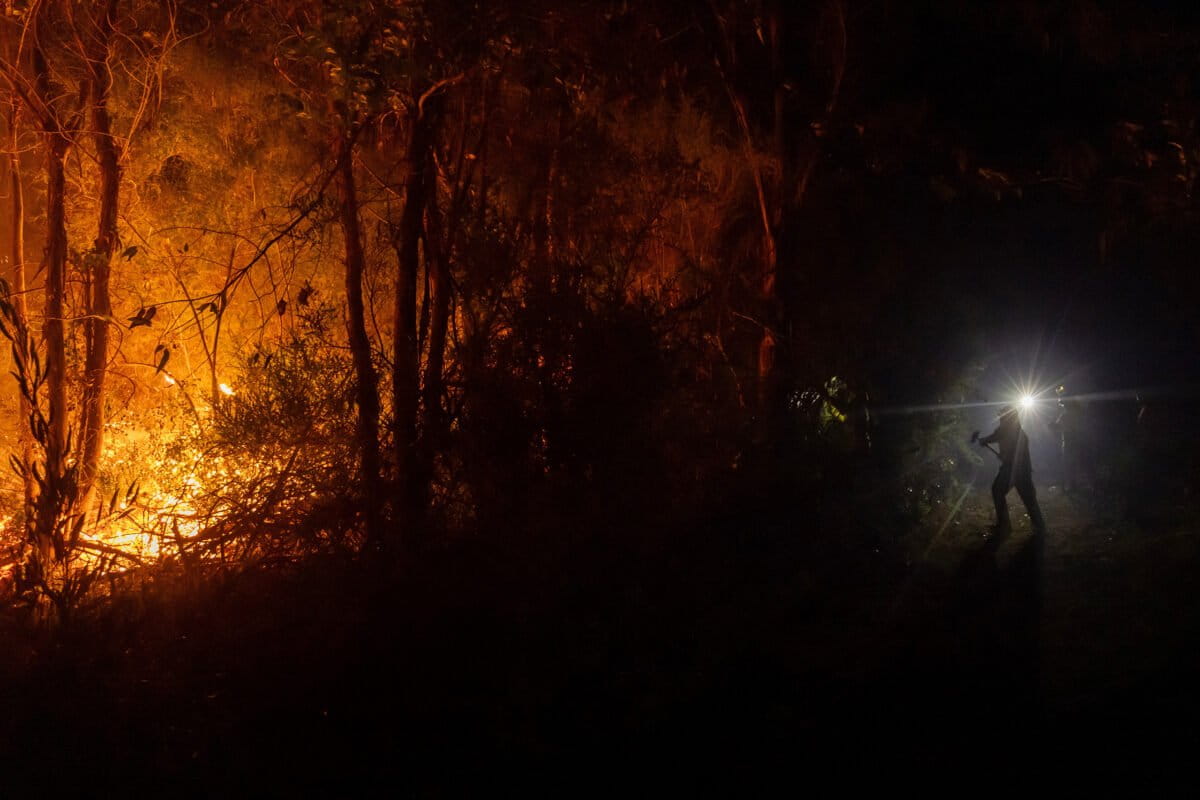
- Robert Muggah of the Igarapé Institute argues that climate tipping points and large-scale biodiversity loss now pose a more profound threat to global security than many conventional risks, undermining food systems, water supplies, public health, and state legitimacy across borders.
- Drawing on a newly released UK security assessment and wider research, he shows how ecosystem collapse creates cascading, non-linear shocks — from inflation and political polarization to displacement and conflict — that current economic and risk models consistently underestimate.
- He concludes that protecting and restoring nature, alongside a rapid energy transition, is not a secondary environmental concern but a core security and economic strategy, and often cheaper than coping with systemic collapse after the fact.
- This article is a commentary. The views expressed are those of the author, not necessarily of Mongabay.
The focus of experts in global security tends to orbit familiar threats. War in Europe and the Middle East. Trade disruption and financial volatility. Technology shocks and threats to information integrity. But the most consequential driver of instability is unfolding under our feet and over our heads. The world’s climate system is edging toward tipping points and nature is being degraded at scale. Together they present an existential threat to air, food, water, health, and the legitimacy of states in ways that do not respect borders.
Nature on the security agenda
A newly released UK government assessment, published in January 2026 after a freedom of information process, offers a rare view of how security professionals think about biodiversity loss. It is a sanitized overview rather than a full exposure of the underlying analysis. Even so, the central finding is hard to ignore. Global ecosystem degradation and collapse threaten national security and prosperity, and without major intervention the trend is highly likely to continue to 2050 and beyond.
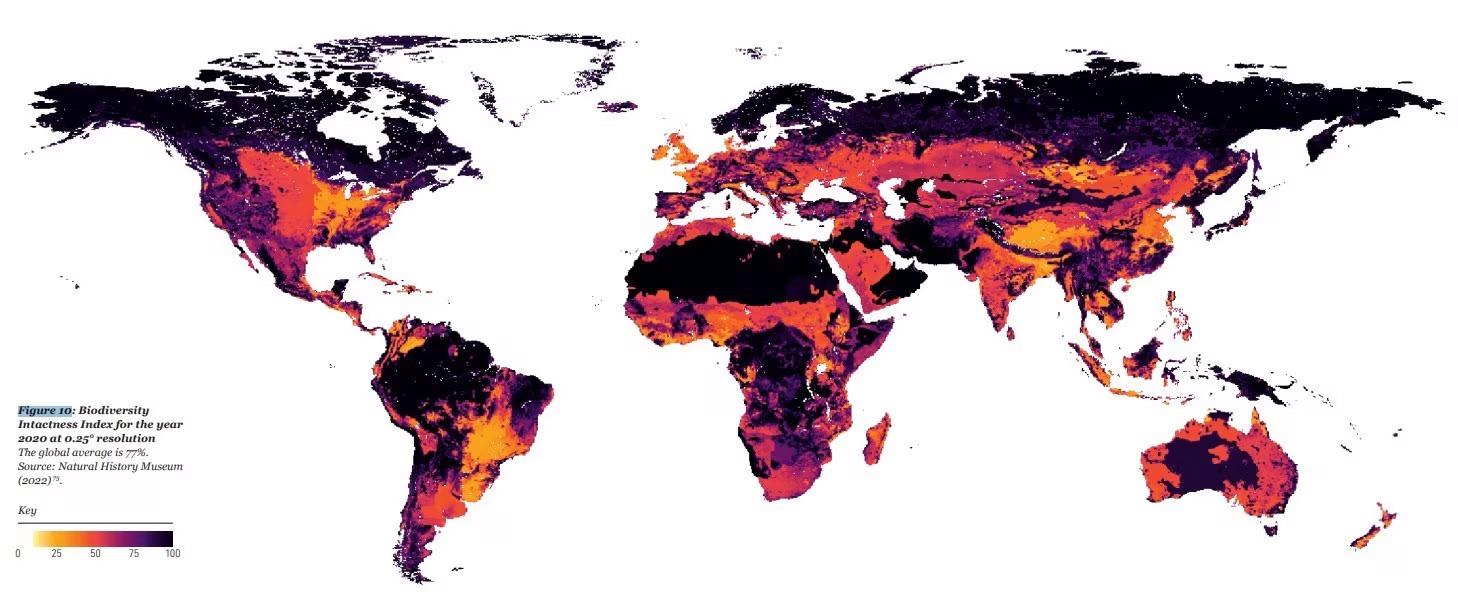
What stands out is that this is a government security assessment, and that it also spells out the mechanics of collapse with unusual clarity. When ecosystems degrade, the services they provide start to fail. Water regulation weakens. Soil fertility declines. Pollination drops. Disease control erodes. These are not abstract ecological concepts. They are the quiet foundations of modern economies. As they weaken, practical consequences follow. Crops fail more often. Fisheries decline. Food prices rise. Supply chains become brittle. Water scarcity expands. Carbon storage deteriorates. Public health risks increase as familiar diseases spread and new ones emerge.
On their own, any one of these pressures might be manageable. The security risk appears when they stack up, interact, and reinforce each other. A food shock can trigger inflation. Inflation can sharpen political polarisation. Polarisation can weaken institutions. Weaker institutions struggle to manage disaster response and border pressure. That is how environmental stress becomes forced displacement, organised crime, conflict over scarce resources, and instability.
Tipping out of the safe zone
This analysis is consistent with a broader body of research on planetary tipping points. A tipping point is a threshold beyond which a system shifts quickly and often irreversibly into a new state. In the climate system, that can mean large scale ice loss or disruption to ocean circulation. In ecosystems, it can mean a rainforest flipping into a drier savannah like state, or coral reefs shifting toward algae dominated systems that no longer support fisheries or buffer coasts from storms. The defining feature is non-linearity. These are not smooth drags on growth. They are regime changes.
The UK study flags several ecosystems whose collapse would have global consequences and therefore direct security implications. It highlights the Amazon and Congo rainforests, boreal forests, the Himalayas, and South East Asia coral reefs and mangroves as particularly significant because they shape global climate, rainfall, food production, and hydrological cycles with implications for billions of people.
There is of course some uncertainty about the exact timing. Even so, there is acknowledgment that systems could begin collapsing within the planning horizon of today’s governments, with a realistic possibility of early collapses from the 2030s for some ecosystems. That is close enough to matter for defence planning, trade policy, food strategy, and migration management. It is also close enough that a complacent assumption of gradual linear change becomes a strategic error.
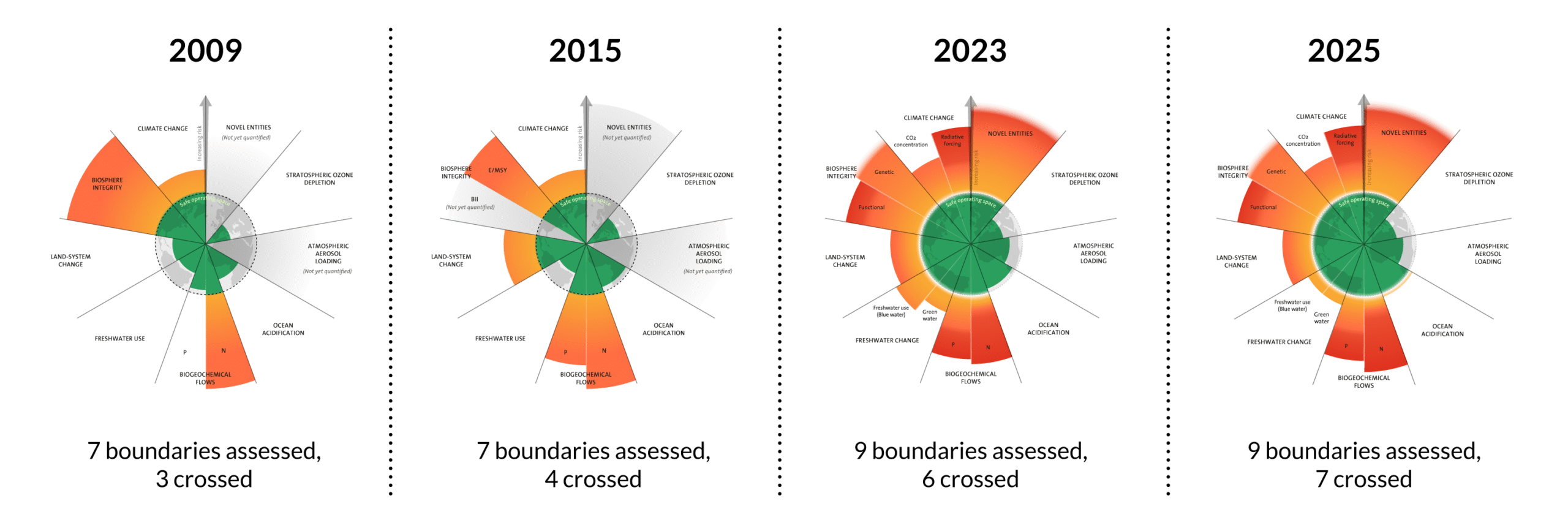
There is already evidence from leading climate scientists that six of nine boundaries are transgressed. What this means is that humanity is already operating outside a safe zone on climate change, biosphere integrity, land system change, freshwater change, nutrient pollution, and novel entities such as chemical and plastic pollution. The point is not that a single event triggers doom. It is that multiple Earth system guardrails are being crossed simultaneously.
Economic models miss extremes
Yet most conventional economic and financial models still struggle to treat these climate and ecological dynamics as real. A recent warning from climate risk researchers associated with the University of Exeter and Carbon Tracker argues that the dominant modelling used by governments and financial institutions largely misses shocks from extreme weather and tipping points. Instead, it often projects steady growth with only modest drag from higher average temperatures. That is like estimating health risk using average blood pressure while ignoring strokes.
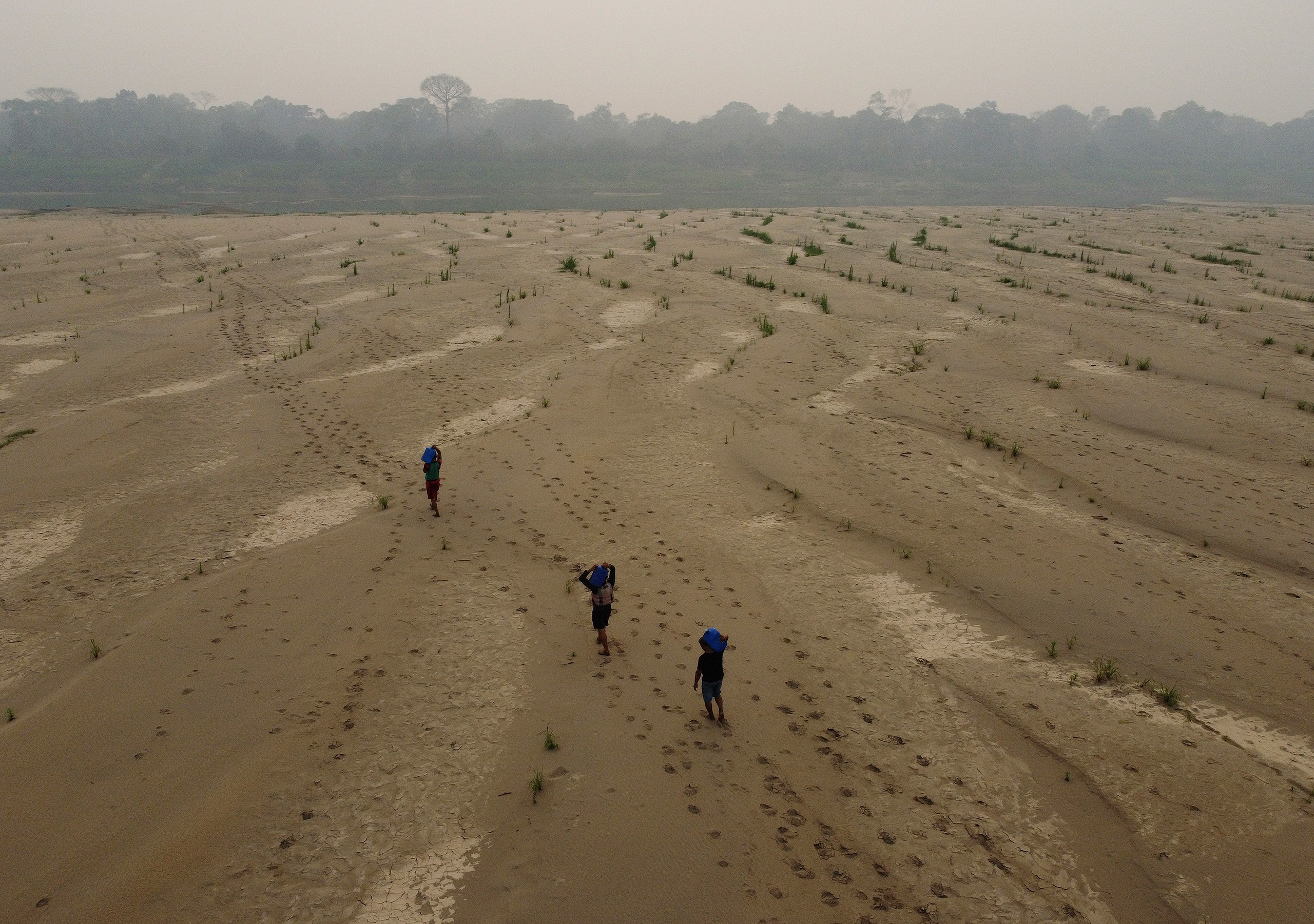
These flaws in economic modelling matter because they shape policy, and policy shapes risk. If the model says damages are manageable and gradual, decision makers feel licensed to delay. But the real world damages come from extremes and compounding shocks. Consider floods and droughts that hit the same supply chain, heat waves that strain power grids while shrinking labour productivity or storms that destroy housing and raise insurance costs while public budgets are already tight. A non-linear threat should not be treated as if it is linear.
Actuaries have started to quantify what this mispricing could mean. In January 2025, the Institute and Faculty of Actuaries warned the global economy could face a 50 percent loss in GDP between 2070 and 2090 under catastrophic climate risk, and argued that current policy paths accept large and under-recognized nature and societal risks, including tipping points. The exact figure is not the headline. The take-away is the range of plausible outcomes and the recognition that standard modelling can be wildly optimistic.
Biodiversity collapse makes the accounting problem worse, because nature is an asset that is rarely counted properly. GDP is a flow metric. It can rise after disasters due to spending on recovery, even if underlying wealth and wellbeing have fallen. That is why economists have pushed natural capital accounting and broader measures of prosperity. The 2021 Dasgupta Review, commissioned by the UK Treasury, argues that economics has treated nature as a blind spot and that sustainable growth requires embedding nature into decision making.
Attention drifts, risks mount
So why is this mounting evidence barely making a dent on the public narrative? Partly because the crisis is diffuse and does not arrive as a single headline event. Instead, it arrives as repeated shocks that feel local and disconnected until they become impossible to ignore. And partly because public attention is being consumed by everything else. Geopolitical disruption. Crypto meltdown. AI anxieties. The Epstein files. Each separate crisis can dominate a news cycle.
Too many still talk about the climate and nature crisis as if it belongs to a later generation. The World Economic Forum’s 2026 Global Risks Report suggests the opposite. In its ten year outlook, four of the five highest ranked risks are climate and ecosystem related. Extreme weather sits at the top, followed by biodiversity loss and ecosystem collapse and critical change to Earth systems, with natural resource shortages also near the top. In other words, the mainstream risk community is no longer treating this as a distant tail risk.
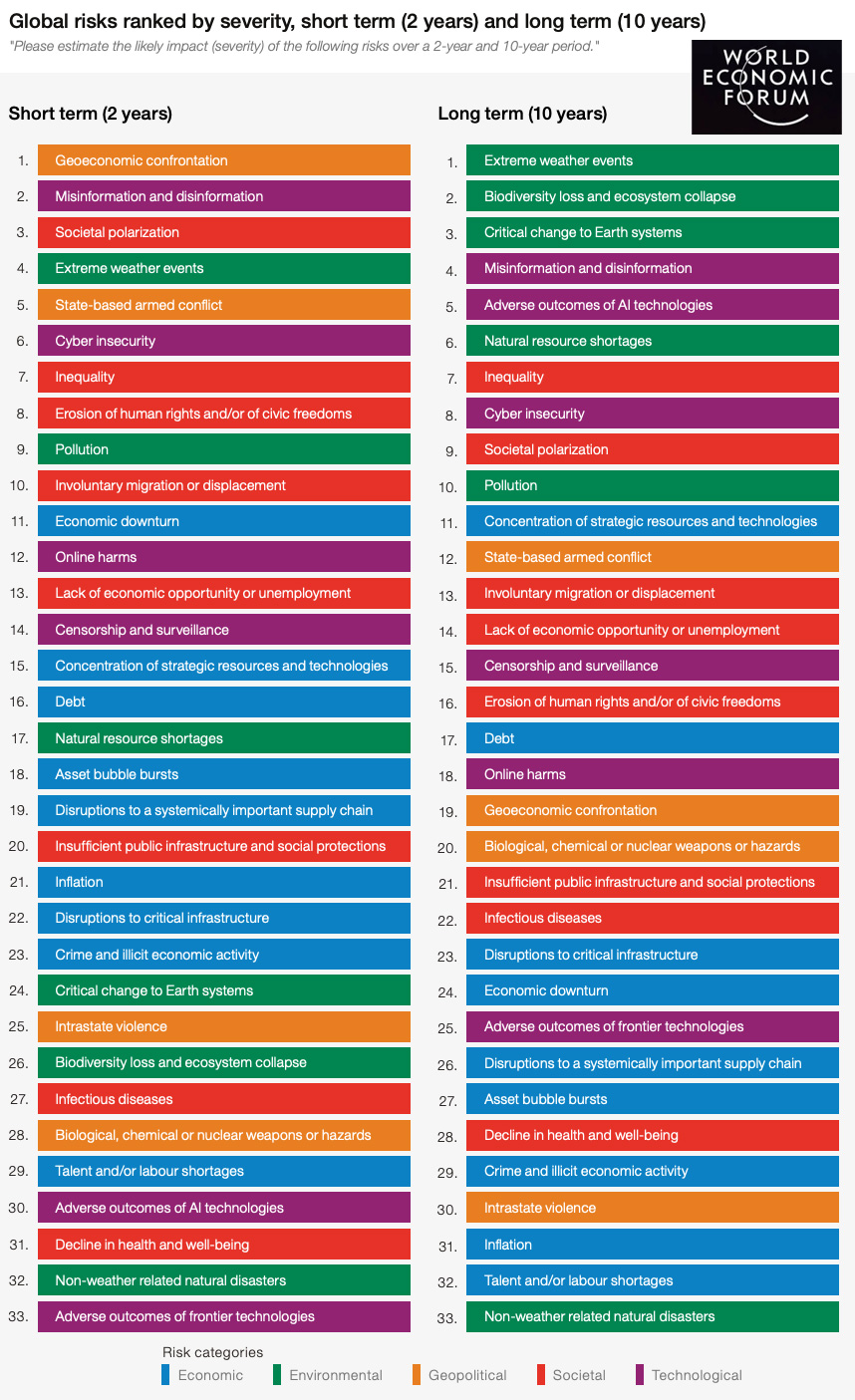
The uncomfortable truth is that climate tipping points and biodiversity loss are the clearest and most present danger precisely because they attack foundations of everything. They undermine food security, hydrological systems, public health, economic confidence, and social cohesion. Once those begin to fail in multiple places, security risks multiply. States will intervene in supply chains, prices will spike, and migration will rise. We can also envision border disputes hardening around resources. While the downstream effects look like geopolitics, the upstream drivers are biophysical.
The good news is that the solution set is not mysterious. We have the tools in front of us. It starts with nature-based mitigation through regenerative agriculture, ecosystem restoration, and protection of forests, wetlands, reefs, and mangroves. It requires finance that rewards verified ecological outcomes rather than short-term extraction. And the core requirement is a rapid energy and just transition that cuts emissions and reduces the probability of triggering irreversible climate shifts. The UK security assessment emphasizes that protecting and restoring ecosystems is often cheaper and more reliable than trying to cope after collapse.
We do not need more awareness that the world is changing. What we need is a change in what we prioritize in policy and finance. The basic truth is that the systems that keep societies stable are being degraded. The risk is systemic, compounding, and increasingly visible. We just do not seem prepared to face it.