
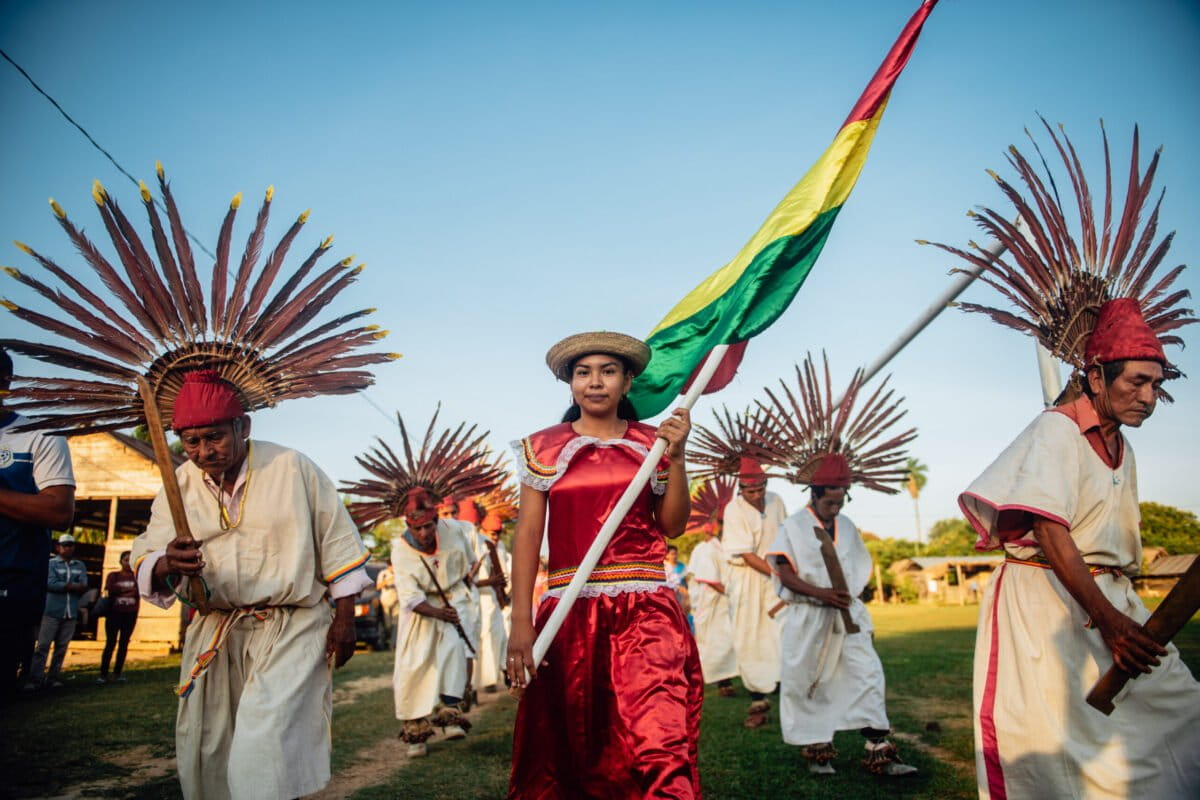
- Establishing the first Indigenous protected area in the Bolivian Amazon took years and involved local communities, NGOs and the government.
- This natural reserve is home to five Indigenous peoples of the Bolivian Amazon, who act as the guardians of Loma Santa.
- Imperiled by illegal logging, communities hope new tools will make combating the exploitation of their natural resources more effective.
- The protected area emerged from the first Indigenous territorial autonomy in the Bolivian Amazon, where the communities have their own system of self-governance.
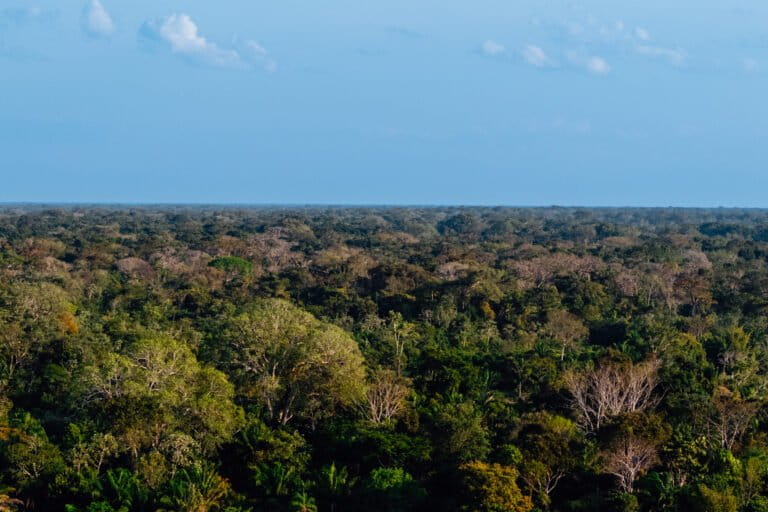
Loma Santa, a newly established Indigenous protected area spanning an area the size of the Hawaiian island of Maui, sits at the heart of the T’simane Forest, an expanse of the Amazon in Bolivia. For years, loggers plundered this forest for its prized mahogany. But Loma Santa was also a place of sanctuary — a refuge where, more than a century earlier, Indigenous people fled from enslavement by rubber barons and landowners. For their descendants today, this swath of the Bolivian Amazon is now a place of peace, natural abundance and culture importance.
On Aug. 19 this year, the Bolivian government officially declared Loma Santa a new Indigenous protected area, spanning 198,778 hectares (491,191 acres). The official inauguration was held in the Indigenous community of Monte Grande del Apere, which forms part of the Multiethnic Indigenous Territory in the municipality of San Ignacio de Moxos.
Bernardo Muiba, president of the Subcentral of Indigenous Councils of the Multiethnic Indigenous Territory, told Mongabay Latam that the Loma Santa Indigenous Conservation Area is a leading example of Indigenous territorial governance and participatory conservation.
Muiba said this protected area embodies a harmonious integration of nature and culture, driven by the active participation of local Indigenous groups: the Mojeño-Trinitario, Mojeño-Ignaciano, T’simane, Yuracaré and Movima peoples. Such integration means adapting to the specific characteristics of the region to safeguard both the natural and cultural wealth of the Bolivian Amazon.
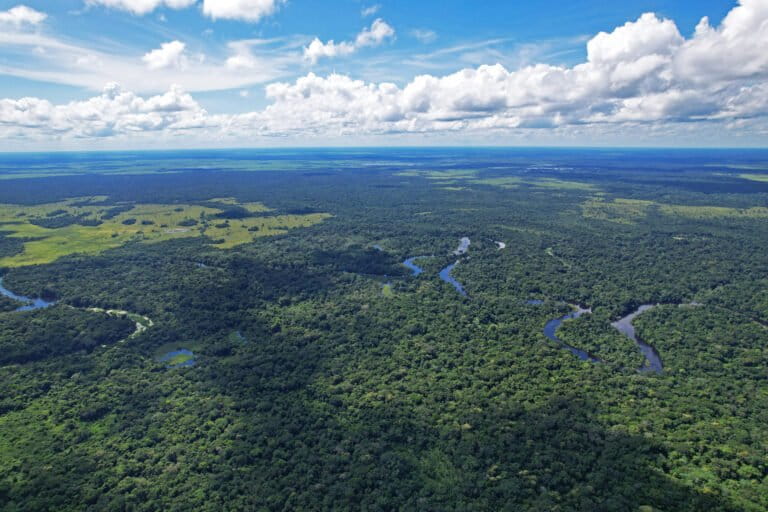
“A bill has been proposed at the request of the community leaders and local authorities to regulate the illegal activities of outsiders who come to Loma Santa solely to exploit our resources,” Muiba said. “They were plundering wood, particularly mara [mahogany].”
The area is named after a literal and religious high ground (Loma Santa translates into “Holy Hill”). In local Indigenous traditions, chosen community members, known as seekers, are tasked with seeking out this high ground. These individuals play fundamental roles in Indigenous cultural practices, including identifying high grounds during the rainy season’s flooding.
The initiative to establish Loma Santa as an Indigenous protected area was led by the Multiethnic Indigenous Territory, with technical and legal guidance from Indigenous advocacy group ORÉ and financial support from conservation organizations such as Re:wild, the Gordon and Betty Moore Foundation, the International Work Group for Indigenous Affairs (IWGIA) and Bolivia Bird Conservation, the local affiliate of BirdLife International.
ORÉ supported the Multiethnic Indigenous Territory’s Subcentral of Indigenous Councils throughout the entire process of declaring, demarcating and zoning the Loma Santa conservation area. The organization also provided guidance to the Indigenous Autonomous Government of the Multiethnic Indigenous Territory for establishing the area and registering it with the Ministry of Environment and Water as an Indigenous conservation area.
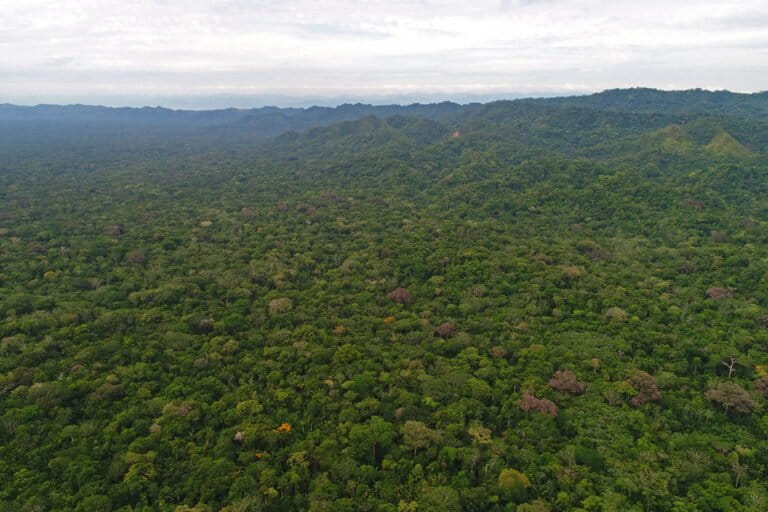

“We worked with them to establish a monitoring and surveillance system, including a corps of forest guardians and monitoring posts at the entrances to the area,” Leonardo Tamburini, director of ORÉ, told Mongabay Latam. Even the remotest communities were equipped to stay connected with the territorial government authorities and report on conditions across the entire Multiethnic Indigenous Territory, he added.
Tamburini said that communities were “trained in data recording and transmission, as well as in using technology to monitor and document the condition of rivers, forests and wildlife.”
Biodiversity in Loma Santa
Loma Santa is home to an extraordinary wealth of bird species. During the dry season, fieldwork documented 252 species of birds. Among the most representative bird families in the area are the tyrant flycatchers (Tyrannidae), with 39 species, followed by tanagers (Thraupidae) and antbirds (Thamnophilidae).
The area also hosts rarer species of high conservation value, such as the iconic harpy eagle (Harpia harpyja) and the gray tinamou (Tinamus tao), a ground bird; both species are classified as vulnerable on the IUCN Red List. This area not only protects resident species but also serves as a habitat for migratory birds from both the Northern and Southern Hemispheres, underscoring its key role in regional and ecological connectivity.
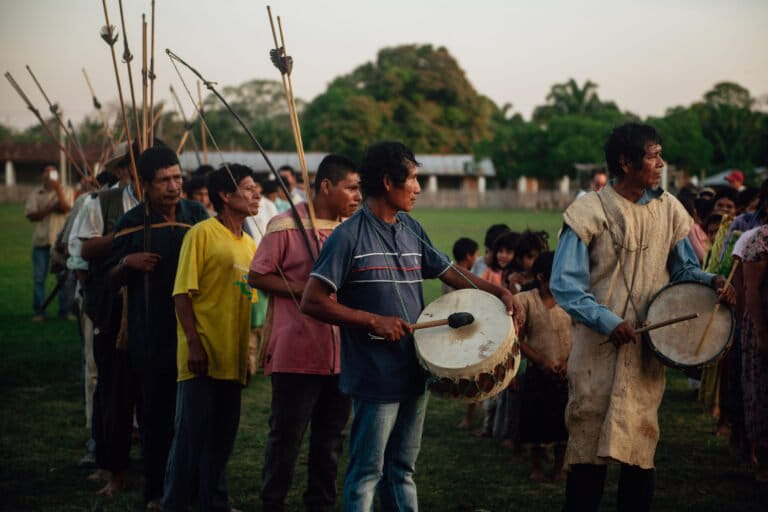
Alfredo Matareco, territorial leader of the Multiethnic Indigenous Territory, said the Loma Santa Indigenous Conservation Area represents an opportunity to consolidate a living territory — one that sustains hundreds of bird species and the ancestral cultures of the Bolivian Amazon. He added this initiative stands as a model of collaboration between local communities, NGOs and international conservation efforts.
“One of the reasons we decided to protect our territory is because we see the world falling apart, and we don’t want to be part of that tragedy,” Matareco said. “We want to help ensure that our forests and our land are preserved so that our children and future generations can also enjoy our Loma Santa and all the natural riches it holds.”
In 2022, the five Indigenous people of the Multiethnic Indigenous Territory came together to establish the Indigenous Autonomous Government of the Multiethnic Indigenous Territory. Its highest authorities are the territorial leader and the Indigenous assembly members. This marks the first Indigenous autonomous territory in the Bolivian Amazon, and the fifth in the country since the 2009 Constitution recognized the right of Indigenous peoples to self-governance.
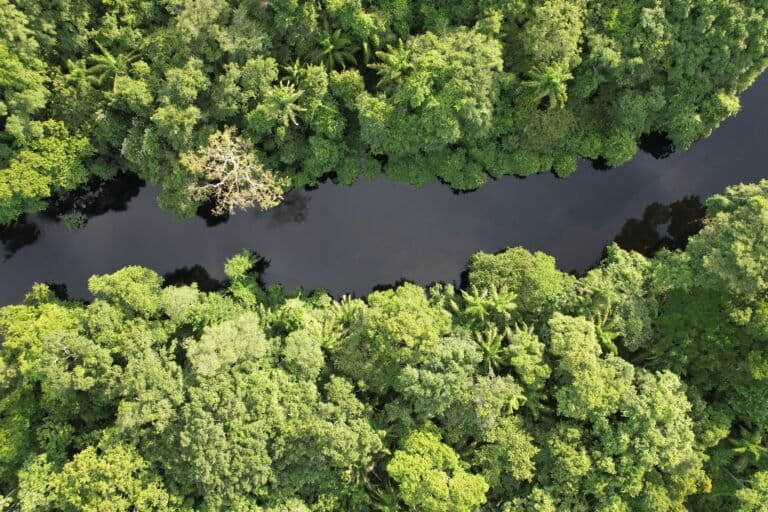
The territory, which now has its own government, lies west of Trinidad, the capital of Bolivia’s Beni department. Its boundaries begin roughly 14 kilometers (8.7 miles) from the road linking the municipalities of San Ignacio de Mojos and San Borja, and stretch southward to meet the Isiboro Sécure Indigenous Territory and National Park, one of the country’s largest protected areas.
“The problem of logging goes back many years. In the past, there were timber concessions operating within our territory, and some companies built roads that were later used to remove the wood,” Matareco said. “There were also people with properties bordering the Multiethnic Indigenous Territory who would illegally expand into our land to extract timber. Now, with our monitoring posts in place, we’re preventing the illegal extraction of our forest resources.”
Indigenous control
Muiba said illegal activities on their land prompted the communities to organize, coordinating with various organizations to establish monitoring and surveillance posts. He said a third post will soon be set up in a community in the northern part of the Multiethnic Indigenous Territory.
“At these posts, trained forest rangers, who are members of the communities themselves, carry out their duties. One post is equipped with satellite internet and radios, allowing us to coordinate whenever illegal activity is suspected. This base even reports daily meteorological data,” Muiba said.
Loma Santa is split into two distinct areas. The first, which covers the bulk of the territory, is home to many T’simane communities who depend entirely on the forest’s resources. In contrast, the uninhabited breeding zone has stricter protections to ensure the preservation of biodiversity.
At the entrance to the Loma Santa Indigenous Conservation Area is one of the monitoring posts, powered by solar panels. The building, constructed by locals, also has a meteorological station, allowing them to monitor regional weather. With this equipment, they no longer need to rely on nearby municipalities for such information.
The post is also equipped with satellite internet and shortwave radio that connects it with other communities across the Multiethnic Indigenous Territory. The data can be accessed in real time through a high-tech console that requires just some basic training to operate.
“Loma Santa is a natural refuge, a place of peace and abundance, rich in natural resources and a place where life and culture flourish, where there is no violence or human exploitation, only harmony with nature,” Tamburini said.
Banner image: Indigenous peoples of the Bolivian Amazon celebrate the creation of the Loma Santa Indigenous Conservation Area. Image courtesy of ORÉ.
This story was first published here in Spanish on Sept. 2, 2025.