• Features
  • Videos
  • Podcasts
  • Specials
  • Articles
  • Shorts
Donate
  • English
  • Español (Spanish)
  • Français (French)
  • Bahasa Indonesia (Indonesian)
  • Brasil (Portuguese)
  • India (English)
  • हिंदी (Hindi)
  • বাংলা (Bengali)
  • Swahili
  • Videos
  • Podcasts
  • Articles
  • Short News
  • Feature Stories
  • The Latest
  • Explore All
  • About
  • Team
  • Contact
  • Donate
  • Subscribe page
  • Submissions
  • Privacy Policy
  • Terms of Use
  • Advertising
  • Wild Madagascar
  • For Kids
  • Mongabay.org
  • Reforestation App
  • Planetary Health Check
  • Conservation Effectiveness
  • Mongabay Data Studio

Latest

Brazil Environment Minister Marina Silva speaks out against the vote in Congress. Image courtesy of Fábio Rodrigues-Pozzebom/Agência Brasil.

Brazil votes to allow most projects & farms to skip environmental licensing

Shanna Hanbury 2 Dec 2025

Artificial incubation gives Colombia’s threatened Andean condor a new lifeline

Christina Noriega 2 Dec 2025

Peru’s Río Abiseo park yields new marsupial, hinting at more undiscovered species

Yvette Sierra Praeli 2 Dec 2025

In Ecuador’s Yasuní, cameras reveal the wild neighbors visitors rarely see

Ana Cristina Alvarado 2 Dec 2025

New ventures set out to tackle the plastic choking Bangladesh’s ECAs

Abu Siddique 2 Dec 2025

International Jaguar Day: A year of wins for the big cat

Mongabay.com 2 Dec 2025
All news

Top stories

A Bornean orangutan.

Indigenous Dayak sound alarm as palm oil firm razes orangutan habitat in Borneo

A gray wolf in Minnesota.

First state-authorized killings mark escalation in California’s management of wolves

Spoorthy Raman 29 Nov 2025
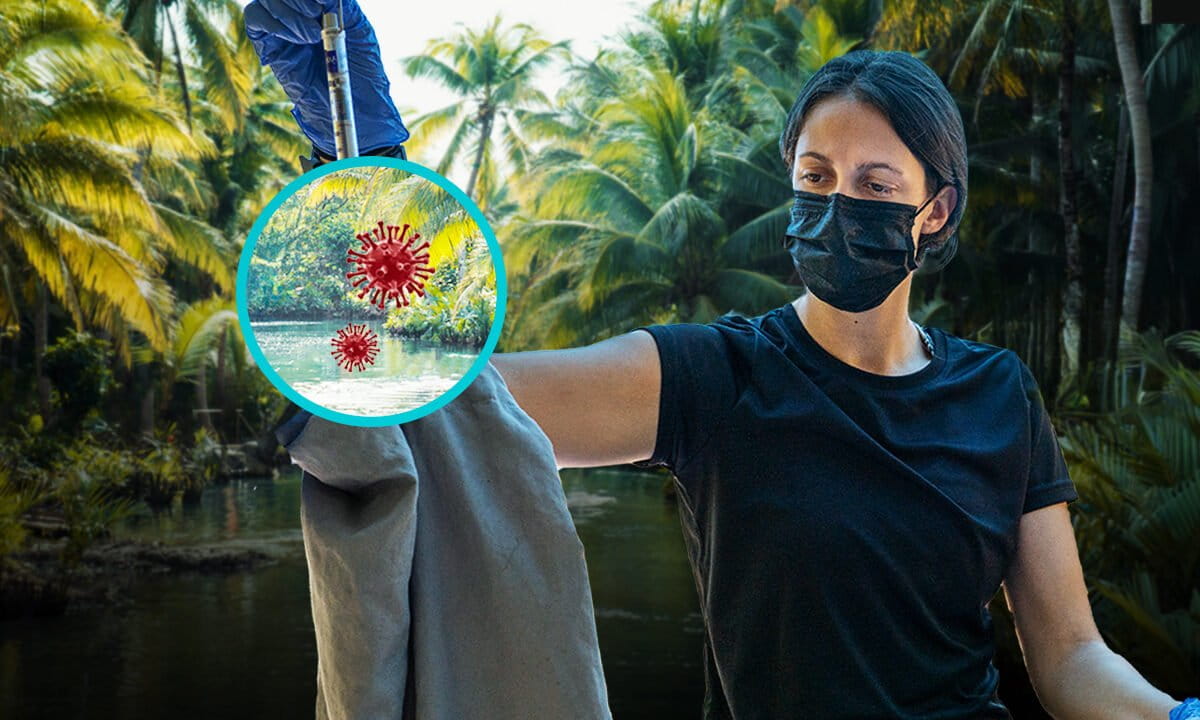
Collage: Elise Paietta, postdoctoral research scholar during fieldwork, with tropical forest

How do we stop the next pandemic?

Abhishyant Kidangoor 26 Nov 2025
A juvenile orange-fronted parakeet seized by the U.S. Fish and Wildlife Service Office of Law Enforcement at the Otay Mesa Port of Entry in California.

It’s ‘whack-a-mole’: Alarming rise in pet trade fuels wildlife trafficking into California

Spoorthy Raman 25 Nov 2025
Satellite imagery from February 2025 shows the transformation of the landscape at Global Green's gold mine, which is believed to be contaminating the O'Ta Bouk River. Image provided by Google Earth, Maxar Technologies.

Toxic runoff from politically linked gold mine poisons Cambodian rivers, communities

Andy Ball, Gerald Flynn, Phoung Vantha 24 Nov 2025

Subscribe

Stay informed with news and inspiration from nature’s frontline.
Newsletter

We’re a nonprofit

Help us tell impactful stories of biodiversity loss, climate change, and more
Donate

News and Inspiration from Nature's Frontline.

Collage: Elise Paietta, postdoctoral research scholar during fieldwork, with tropical forest
Videos
Andean condor flying
Articles
Where cars go to die: an auto graveyard.
Podcasts

Special issues connect the dots between stories

Negotiating Africa's Energy Future

Logging concession near Ndolou, Gabon

Norway’s multibillion-dollar bet on forests: An interview with Minister Eriksen

David Akana 25 Nov 2025
Pastoralists in Lesotho.

Lesotho communities allege greenwashing by project transferring water to South Africa

Malavika Vyawahare 21 Nov 2025
Farmers at Yangambi, Democratic Republic of Congo. Image by Axel Fassio/CIFOR via Flickr (CC BY-NC-ND 2.0)

Fighting for food sovereignty at COP30: Interview with GRAIN’s Ange-David Baïmey

Yannick Kenné 20 Nov 2025
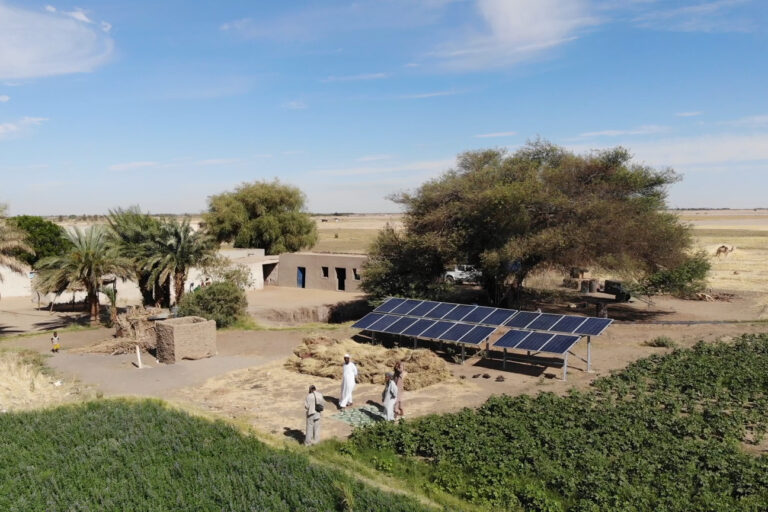
Solar panels in an arid part of Sudan.

‘The perfect ingredients’: WRI Africa deputy director shares vision for the continent’s energy transition

John Cannon 19 Nov 2025

A decade after countries agreed to the Paris climate agreement, Mongabay reports on an idea often invoked when discussing Africa’s path toward a low-carbon future: a just energy transition. Reporters from across the continent explore what “just” and “clean” energy mean for Africans.  These stories show African countries are pursuing their own journeys toward more […]

Negotiating Africa's Energy Future series

More specials

6 stories

Letters to the Future

Natural forests, like this one in Indonesia, contain hundreds of native species that all contribute to the ecosystem services they provide. Protecting standing forests is quicker and cheaper than replanting lost ones. Many forests can regenerate on their own with a little assistance, but where tree planting is needed, it must aim to restore natural diversity and support local communities. Image by Rhett A. Butler/Mongabay.
5 stories

Tech for the Trees

Trawlers docked outside Sihanoukville. Screenshot from ‘Illegal fishing and land grabs push Cambodian coastal communities to the brink’ by Andy Ball / Mongabay.
4 stories

Chaos on Cambodia’s Coast

Free and open access to credible information

Learn more

Listen to Nature with thought-provoking podcasts

Where cars go to die: an auto graveyard.

A ‘Life After Cars’ can provide huge human health and environmental benefits

Mike DiGirolamo 2 Dec 2025

Watch unique videos that cut through the noise

Collage: Elise Paietta, postdoctoral research scholar during fieldwork, with tropical forest

How do we stop the next pandemic?

Collage: A group of security guards preventing people from crossing a checkpoint and Fernanda Wenzel Mongabay reporter

On the frontline of the Amazon land war

Julia Lima, Fernanda Wenzel, Fernando Martinho 13 Nov 2025
Soldiers from the PROLANSATE Foundation on patrol

Why is protecting this Honduran lagoon so dangerous? 

Fritz Pinnow, Sam Lee 22 Oct 2025
Cassandra Garduño harvests kale in her chinampa.

Saving Mexico City’s ancient floating farms

Lucia Torres, Associated Press 8 Oct 2025
When art turns into a sustainable treasure

When art turns into a sustainable treasure

Julia Lima, Fellipe Abreu, Sibélia Zanon 1 Oct 2025

We’re a nonprofit

Help us tell impactful stories of biodiversity loss, climate change, and more
Donate

In-depth feature stories reveal context and insight

Feature story

The land deal threatening a vital piece of Bolivia’s Chiquitano dry forest

Maxwell Radwin 20 Nov 2025
Youth activist Oliver Nyirenda in Kabwe. Image courtesy of Radio Workshop.
Feature story

As Zambia eyes green minerals, Kabwe’s poisoned past looms large

Chisapi Kumbutso 19 Nov 2025
Feature story

Offshore fossil fuel exploration jeopardizes Brazil’s climate leadership, study says

Lucas Berti 18 Nov 2025
Banner image: Adult male peregrine (F. p. brookei) in Rann of Kutch, Gujarat, India. Peregrine falcons almost disappeared across North America and Europe in the early 1900s because of DDT and other pesticides.
Feature story

Scientists slam Canada-US proposal to lower trade protections for peregrine falcons

Spoorthy Raman 18 Nov 2025

Quickly stay updated with our news shorts

Brazil votes to allow most projects & farms to skip environmental licensing

Shanna Hanbury 2 Dec 2025

Brazil’s lawmakers have voted, by an overwhelming majority, to weaken the nation’s environmental licensing system, overturning key protections that Brazilian President Luiz Inácio Lula da Silva had vetoed earlier this year.

Congress first passed the law, commonly called the “devastation bill” across national media outlets, in July 2025 despite widespread protests. In September, President Lula vetoed dozens of clauses in the bill to avoid the worst environmental setbacks.

In a Nov. 27 joint session on the General Environmental Licensing Law, Congress voted to overturn 56 of the 63 presential vetoes. The Chamber of Deputies voted 268-190 in favor of overriding the vetoes, while the Senate voted 50-18.

One of the impacts of the lawmakers’ vote is that businesses will no longer need to consider impacts on communities that haven’t completed their land titling process. Indigenous and Quilombola — descendants of enslaved people — communities will be heavily impacted.

The decision to overturn the vetoes has “cemented the institutionalization of environmental racism and deepened conflicts in traditional territories,” said Alice Dandara de Assis Correia, an attorney at the Brazilian nonprofit Socioenvironmental Institute (ISA).

“If this law stands, we will face high legal uncertainty and weaker social and environmental protections,” Correia added. According to ISA, 32.6% of all Indigenous territories and 80% of Quilombola communities would be excluded from impact studies, which until now were a prerequisite for environmental licensing.

Another overturned veto allows farms that have illegally deforested or grabbed land to operate and sell their products without an environmental license, according to the Climate Observatory, a Brazilian environmental watchdog organization.

Environmental licensing would also no longer be required for large infrastructure projects, such as paving the BR-319 highway across 885 kilometers (550 miles) of the Amazon, the Climate Observatory added. “In addition to being unconstitutional, [the law] puts the health and safety of Brazilians at risk, allows broad destruction of our ecosystems and violates the country’s climate goals,” the organization wrote in a statement.

In the coming days, Congress will vote on overturning the remaining seven presidential vetoes, including one of the most contentious clauses, which would allow an estimated 90% of medium-impact businesses to “self-license.” If overturned, companies will be able to automatically produce their own environmental licenses at the click of a button by filling out an online form.

Brazil’s Environment Minister Marina Silva has announced that the government is considering challenging the Congressional overrides in court.

“We cannot treat environmental laws like they exist to hinder development. There is no development without a stable climate,” she said during a Nov. 28 interview on state-owned TV. “It is unconstitutional to override Article 225 of the Federal Constitution, which says that all citizens have the right to a healthy environment.”

Banner image: Brazil Environment Minister Marina Silva speaks out against the vote in Congress. Image courtesy of Fábio Rodrigues-Pozzebom/Agência Brasil.

Brazil Environment Minister Marina Silva speaks out against the vote in Congress. Image courtesy of Fábio Rodrigues-Pozzebom/Agência Brasil.

International Jaguar Day: A year of wins for the big cat

Mongabay.com 2 Dec 2025

Every Nov. 29 is International Jaguar Day, created to raise awareness about threats the jaguar (Panthera onca) faces, including habitat loss and poaching.

While the Amazon and Brazil’s Pantanal biomes are strongholds for the jaguar, hosting a high density of the animals, the species has lost most of its historic range, a reality that conservationists are working to reverse.

In places such as Argentina and Guatemala, jaguar numbers were pushed to the brink of extinction. But in some places, jaguars are finally bouncing back.

Here are some highlights from Mongabay’s recent jaguar coverage:

Crochet project helps jaguar numbers double near the Iguazú Falls

In 2009, the jaguar population in Brazil’s Iguaçu National Park crashed to just 11 individuals. Now, more than a decade later, there are at least 105 jaguar individuals roaming the Iguazú region on the Brazil-Argentina border, contributor Sarah Brown reported.

Community support and a shift in public perceptions about jaguars were vital in the conservation turnaround. The Jaguar Crocheteers project, for example, employs more than a dozen women to crochet jaguar-themed items for sale as part of an awareness campaign. For many local women, the project has become a main source of income.

“It’s not often we’re able to connect people from different towns around a shared cause. But all of them are united by the jaguars,” Claudiane Tavares, a coordinator at the Jaguar Crocheteers project, told Mongabay.

Wild jaguar cub born in Argentina’s Gran Chaco after three decades

A 5-month-old jaguar cub was spotted along the Bermejo River in northern Argentina’s Gran Chaco region in August. The sighting marks the first known wild-born cub in the region in three decades.

The conservation nonprofit Rewilding Argentina had released the cub’s mother, Nalá, into the wild one year before, in an effort to reintroduce the species into the ecosystem.

“It was a wonderful day for me,” said Darío Soraire, a guide who first spotted the cub. “I had the incredible luck of seeing Nalá with her cub on the banks of the Bermejo River as I was navigating upstream. I saw them and was struck by their beauty.”

Trust and fences are helping save Panama’s jaguars

In Panama’s Darién province, the land bridge connecting Central and South America’s jaguar populations, 395 jaguars were killed from 1989 to 2023, largely by ranchers. Globally, jaguars are listed as near threatened, but in Panama, they’re considered critically endangered.

A local project installed solar-powered electric fences around pastures to protect herds and reduce conflict, contributor Marlowe Starling reported. As a result, locals say killings have dropped and the mindset around jaguars is shifting.

“We need to learn to coexist with nature, not to try to go against it,” Luis Gutiérrez, one of the ranchers who joined the project, told Mongabay. “If we destroy nature, it will charge us with the consequences.”

Banner image: Jaguars in Mexico. Image courtesy of Andrea Reyes/Jaguars in the Wild Foundation.

Jaguars in Mexico. Image courtesy of Andrea Reyes/Jaguars in the Wild Foundation.

Critical minerals dropped from final text at COP30

Aimee Gabay 2 Dec 2025

Delegates at last month’s U.N. climate change summit, or COP30, adopted a new mechanism to coordinate action on a just energy transition worldwide toward a low-carbon economy, away from fossil fuels. However, a proposal at the conference in Brazil to include language on critical minerals within the mechanism’s scope was scrapped at the last minute after China and Russia failed to support it.

Critical minerals like lithium, cobalt and nickel are crucial for renewable energy technologies and electric vehicles, but their mining and processing has been linked to negative environmental and social impacts.

An earlier draft text on the just energy transition included a paragraph recognizing “the social and environmental risks associated with scaling up supply chains for clean energy technologies, including risks arising from the extraction and processing of critical minerals.”

This is the first time that critical minerals were included in a text within climate negotiations under the U.N. Framework Convention on Climate Change (UNFCCC). Sources told Mongabay that Australia, the EU, the African Group of Negotiators, the Alliance of Small Island States (AOSIS) and many Latin American countries supported the inclusion. 

“In the second week, however, China made it clear that any inclusion of language about minerals governance was a red line, and thus ensured its exclusion even when many countries and large negotiating blocs had tabled language and argued in favor,” Emily Iona Stewart, head of transition minerals policy and EU relations at the NGO Global Witness, told Mongabay by email. “The text that was tabled in the first week did not make it into the final version of the just transition work program.”

Clement Sefa-Nyarko, a lecturer in security, development and leadership in Africa at King’s College London, told Mongabay by phone that this wasn’t the first time a mention of critical minerals has been severed from a U.N. conference. In 2015, when U.N. members adopted the Sustainable Development Goals (SDGs), a road map to tackle global challenges, critical minerals were excluded from the final text.

“This debate about where to place critical minerals is not a recent one,” Sefa-Nyarko said. “As far back as 2015, when the SDGs were being discussed, there was also controversy. That is repeating itself now at COP.”

Sefa-Nyarko said China or Russia were likely unsupportive of language on critical minerals because of the potential impact on their industries. China, in particular, is a global leader when it comes to processing and refining critical minerals. It processed 70-95% of the world’s lithium, cobalt, phosphate and graphite in 2024.

“That’s why it’s not surprising that China and Russia, which also have quite a good amount of those minerals, are the main ones opposing the inclusion of the language that will streamline mining to make how you mine more environmentally friendly,” Sefa-Nyarko said.

Banner image: The Quilapilún solar energy plant, a joint project by Chile and China in Colina, Chile. Image by AP Photo/Esteban Felix.

The Quilapilún solar energy plant, a joint project by Chile and China in Colina, Chile. Image by AP Photo/Esteban Felix.

Small grants can empower the next generation of conservationists

Rhett Ayers Butler 1 Dec 2025

Founder’s Briefs: An occasional series where Mongabay founder Rhett Ayers Butler shares analysis, perspectives and story summaries.

Paul Barnes, who leads the Zoological Society of London’s EDGE of Existence program, has spent the past few years listening to the frustrations of early-career conservationists. The stories are rarely about fieldwork itself. They’re about making rent, juggling unstable contracts, harassment in remote sites, and the steady grind of burnout. After four workshops held across several regions, he returned to an inbox with 1,700 applicants for roughly 10 fellowship slots. It’s a familiar ratio across the sector. Demand is soaring, while funding pipelines sputter.

In a commentary for Mongabay, Barnes argues that conservation is entering an “opportunity bottleneck.” The talent exists. So do viable projects, from species recovery to community-based monitoring. What is missing is the capacity to absorb these people and ideas into workable, durable careers. The larger funding world, dependent on slow disbursements and heavy reporting requirements, has not adjusted. And recent pauses in major government aid programs have revealed just how fragile big pipelines can be.

Small grants, he writes, are proving unexpectedly resilient. They are quick to deploy, accessible to emerging organizations, and flexible enough to respond to local realities. Evidence from long-running funds supports the claim: modest sums have helped establish protected areas, advance species recovery, and strengthen locally led conservation in ways that larger donors often struggle to achieve. They act as financial “capillaries,” keeping local systems functioning when larger arteries clog.

Yet the small-grants model needs more than praise. It needs reform and significant scaling. Barnes outlines recommendations for how that might happen:

  • Radical expansion of small-grant opportunities, increasing supply at least tenfold.
  • Better pooling mechanisms among donors to improve scale, diversity and visibility of support.
  • Funding people and organizations directly, including salaries, caregiving and insurance.
  • Making multiyear grants the norm, aligned with ecological and political timelines.
  • Strengthening regional or thematic regranting hubs to reduce risk and administrative burdens.
  • Light, outcome-focused reporting using standardized templates.
  • Maintaining rapid-response funds of about $15,000 with decisions within two weeks.
  • Dedicated duty-of-care budgets covering legal, safety and mental health support.
  • Lowering access barriers through local language applications and flexible eligibility.
  • Hedging against currency volatility with FX buffers and staged payments.
  • Publishing short, evidence-based notes on both successes and failures.

Barnes’s argument is blunt: the next generation of conservationists is ready, but the funding architecture is not. Small grants, he says, “must step forward, not as charity, but as infrastructure for resilience.”

Read the full commentary by Paul Barnes here.

Banner image: Early-career conservationists take part in the 2025 EDGE Conservation Tools Course, part of a global fellowship program that supports emerging leaders to drive locally led conservation. Image courtesy of Paul Barnes/EDGE of Existence, Zoological Society of London.

Early-career conservationists take part in the 2025 EDGE Conservation Tools Course, part of a global fellowship program that supports emerging leaders to drive locally led conservation. Image by Paul Barnes /EDGE of Existence, Zoological Society of London.

The long life of a Galápagos tortoise

Rhett Ayers Butler 29 Nov 2025

Founder’s Briefs: An occasional series where Mongabay founder Rhett Ayers Butler shares analysis, perspectives and story summaries.

She moved slowly, as if time were something best savored. Visitors leaned over railings or knelt at the edge of her enclosure as she stretched her neck toward a leaf of romaine. Children noted she was older than their grandparents. Their parents did the math and realized she was older than the zoo itself. Few paused to consider that she once walked on a very different kind of ground.

Gramma, the Galápagos tortoise who died recently in San Diego at an estimated 141 years of age, carried with her a past that was not merely long but instructive. When she hatched on one of the islands that gave Darwin his insight into evolution, giant tortoises were still common. Tens of thousands roamed the lava plains. But she was born into a landscape already thinned by more than a century of human appetite.

To sailors in earlier centuries, a tortoise was a barrel of fresh meat that moved itself. Crews dragged them across jagged rock and stacked them in ship holds, alive for months without food or water. Oil rendered from their fat lit lamps. Their abundance made caution seem unnecessary.

Her own journey north was a quieter chapter of that same story. Taken from the Galápagos, she passed through The Bronx Zoo before arriving in California around 1930. The San Diego Zoo became her home: concrete underfoot, predictable meals, and the curiosity of crowds replacing the scrub and open horizons she once knew.

Meanwhile, the islands changed without her. Settlers brought goats, pigs, and cattle that stripped the plants tortoises needed. Rats, dogs, and cats devoured eggs and hatchlings. Even when hunting stopped, the young could not survive. Some islands held only aging survivors. Several tortoise lineages disappeared entirely.

The losses built up slowly, mostly unnoticed. In species that can outlive humans, the oldest individuals carry knowledge of where to go and when. When they vanish, stability disappears with them.
At the zoo she was treated as the elder she had become. She arrived in an era of collection. She lived into an era of protection. The tortoise, once a resource, had become a responsibility.

Her death invites reflection. She was not the oldest tortoise or the most famous. She did not help save a lineage as one on Santa Cruz Island did, nor did she become a symbol of solitude like Lonesome George. Instead, she lived long enough for humans to change their minds.

Today, thousands of juveniles have been returned to the wild. Invasive animals have been cleared from some islands. Scientists now watch over nests once ignored. Recovery is uneven, but it has begun.
Gramma’s life reminds us that the creatures we nearly lost can become the center of our efforts to make amends. She will not walk again under the Pacific sun. Yet in the islands she left behind, and in the children who saw the wrinkles time left, the future of her ancient line looks a little brighter than the past she survived.

Full piece: Gramma, a giant who transcended eras, has died, aged about 141

Screenshot of Gramma. Courtesy of the San Diego Zoo.

One small Indigenous territory emerges as illegal mining hotspot in Brazil’s Amazon

Shanna Hanbury 28 Nov 2025

One small Indigenous territory is currently the site of roughly 70% of deforestation in Indigenous territories across the Brazilian Amazon due to illegal mining over the last two years, according to government data.

The Sararé Indigenous Territory in Mato Grosso state is home to about 200 Nambikwara people. From January 2024 to August 2025, illegal gold mining razed more than 3,000 hectares (7,400 acres) of forest within their territory — more than 4% of its total area of 67,000 hectares (165,600 acres).

The aggressive encroachment of illegal gold miners into the Sararé territory is relatively recent. According to a Greenpeace report, just 78 hectares (193 acres) of the territory had been impacted by mining until 2018. This began to grow gradually starting in 2021.

In 2023, there were an estimated 250-300 miners in the territory. This year, government agents estimate that around 2,000 miners were operating on the land.

Gold mining advances on Sararé Indigenous land. Since the beginning of 2024, mroe than 3,00 hectares (7413 acres) have been razed for illegal gold mining within the Indigenous territory's borders.

From January to August this year, Sararé experienced 85% higher deforestation due to illegal mining than the combined total recorded in the next nine most impacted Indigenous territories, which together lost 640 hectares (1,581 acres) in the same period.

Sararé was not included in any top mining alerts up to 2023, but has now emerged as the number one territory, by far, impacted by mining.

The Kayapó Indigenous Territory, located in the state of Pará, appeared in second place for land lost to mining in 2024. Despite the territory being around 49 times larger than Sararé, it lost nearly 10 times less land to illegal mining operations.

Federal police forces have carried out several large raids to destroy mining equipment in the Sararé territory.

The latest operation, in September, located 14 bunkers filled with supplies and destroyed four underground mining areas, 42 stationary engines used to run pumps and machinery, and more than 100 campsites.

Banner image: Satellite image showing the destruction of the Sararé Indigenous Territory in Mato Grosso state, Brazil, left behind by illegal gold mining. Image via Google.

Satellite image showing the destruction of the Sararé Indigenous Territory in Mato Grosso state, Brazil, left behind by illegal gold mining. Image via Google.

Share Short Read Full Article

Share this short

If you liked this story, share it with other people.

Facebook Linkedin Threads Whatsapp Reddit Email

Subscribe

Stay informed with news and inspiration from nature’s frontline.
Newsletter

News formats

  • Videos
  • Podcasts
  • Articles
  • Specials
  • Shorts
  • Features
  • The Latest

About

  • About
  • Contact
  • Donate
  • Impacts
  • Newsletters
  • Submissions
  • Terms of Use

External links

  • Wild Madagascar
  • For Kids
  • Mongabay.org
  • Reforestation App
  • Planetary Health Check
  • Conservation Effectiveness
  • Mongabay Data Studio

Social media

  • LinkedIn
  • Instagram
  • Youtube
  • X
  • Facebook
  • Tiktok
  • Reddit
  • BlueSky
  • Mastodon
  • Android App
  • Apple News
  • RSS / XML

© 2025 Copyright Conservation news. Mongabay is a U.S.-based non-profit conservation and environmental science news platform. Our EIN or tax ID is 45-3714703.

you're currently offline