• Features
  • Videos
  • Podcasts
  • Specials
  • Articles
  • Shorts
Donate
  • English
  • Español (Spanish)
  • Français (French)
  • Bahasa Indonesia (Indonesian)
  • Brasil (Portuguese)
  • India (English)
  • हिंदी (Hindi)
  • বাংলা (Bengali)
  • Swahili
  • Videos
  • Podcasts
  • Articles
  • Short News
  • Feature Stories
  • The Latest
  • Explore All
  • About
  • Team
  • Contact
  • Donate
  • Subscribe page
  • Submissions
  • Privacy Policy
  • Terms of Use
  • Advertising
  • Wild Madagascar
  • For Kids
  • Mongabay.org
  • Reforestation App
  • Planetary Health Check
  • Conservation Effectiveness
  • Mongabay Data Studio

Latest

When environmental reporting has to outlast the news cycle

Rhett Ayers Butler 13 Feb 2026

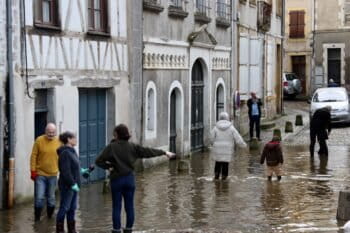
Storm aftermath leaves 2 dead in France; flood alerts to remain Saturday

Associated Press 13 Feb 2026

Forests don’t just store carbon. They keep people alive, scientists say

Rhett Ayers Butler 13 Feb 2026

Insects are moving pharmaceutical pollutants from rivers to land; risks unknown

Sean Mowbray 13 Feb 2026
Feature story

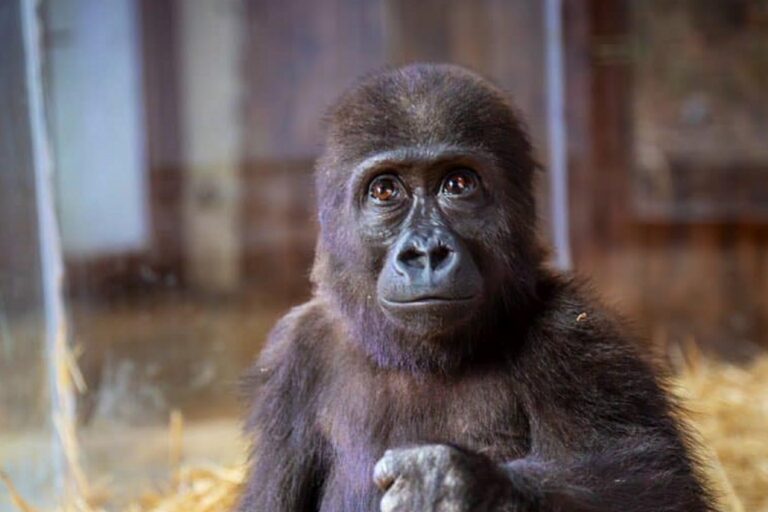
Baby gorilla seized from traffickers languishes in Turkish zoo

Spoorthy Raman 13 Feb 2026

From land acquisitions to local ownership: Alternatives for carbon offsetting (commentary)

Christoph Kubitza 13 Feb 2026
All news

Top stories

A photo of Zeytin posted by the Turkish Ministry of Agriculture and Forestry on Facebook in December 2024. No further updates have been provided since the country's announcement to not send Zeytin to Africa.

Baby gorilla seized from traffickers languishes in Turkish zoo

Fishers in Takeo province rely on the annual flooding of wetlands where they raise and catch a variety of crustaceans. Image by Gerald Flynn/Mongabay.

Farmers fear displacement, drought, flooding tied to Cambodia’s Funan Techo Canal

Gerald Flynn, Phoung Vantha 12 Feb 2026
Collage featuring Jeffrey Lendrum

The man who risked everything to steal bird eggs

Sandy Watt 11 Feb 2026
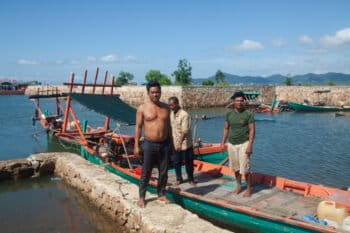
Across Kep province, fishing communities fear the Funan Techo Canal will see them lose their homes on land and their livelihoods at sea. Image by Gerald Flynn / Mongabay.

Cambodia’s canal mega-project threatens coastal communities and marine life

Gerald Flynn, Phoung Vantha 10 Feb 2026
Forester kangaroos at The Quoin. Photo credit Doug Gimesy

Financing biodiversity: Lisa Miller on investing in nature

Rhett Ayers Butler 9 Feb 2026

Subscribe

Stay informed with news and inspiration from nature’s frontline.
Newsletter

We’re a nonprofit

Help us tell impactful stories of biodiversity loss, climate change, and more
Donate

News and Inspiration from Nature's Frontline.

Collage featuring Jeffrey Lendrum
Videos
Rainforest in Brunei in 2025. Photo by Rhett Ayers Butler
Articles
Mangroves on Vanua Levu Island, Fiji. Image by Rhett A. Butler/Mongabay.
Podcasts

Special issues connect the dots between stories

Carving up the Cardamoms

Young activists risk all to defend Cambodia’s environment

Young activists risk all to defend Cambodia’s environment

Andy Ball, Marta Kasztelan 2 Jul 2025
Across the Southern Cardamom REDD+ project in southwest Cambodia, communities have alleged abuse at the hands of the project developer. Image by Gerald Flynn / Mongabay.

Indigenous community calls out Cambodian REDD+ project as tensions simmer in the Cardamoms

Gerald Flynn 10 Mar 2025
A Ministry of Environment ranger on patrol in the Cardamom Mountains. Image by Andyb3947 via Wikimedia Commons (CC BY-SA 4.0).

Cambodian carbon credit project hit by rights abuse claims is reinstated

Gerald Flynn 11 Sep 2024
The sprawling Stung Meteuk hydropower dam being developed in the Cardamom Mountains appears to be illegally logging within Phnom Samkos Wildlife Sanctuary. Image by Gerald Flynn / Mongabay.

History repeats as logging linked to Cambodian hydropower dam in Cardamoms

Gerald Flynn, Vutha Srey 27 Jun 2024

The Cardamom Mountains sprawl across southwestern Cambodia and are among the best-preserved rainforests in the country. Protected by rugged terrain, heavy rains and a low population density, the Cardamoms remain a biodiversity hotspot, providing habitat for threatened elephants, pangolins and the region’s last viable fishing cat population. This Special Issues documents the myriad threats facing […]

Carving up the Cardamoms series

More specials

9 stories

Can anyone save the Sumatran rhino?

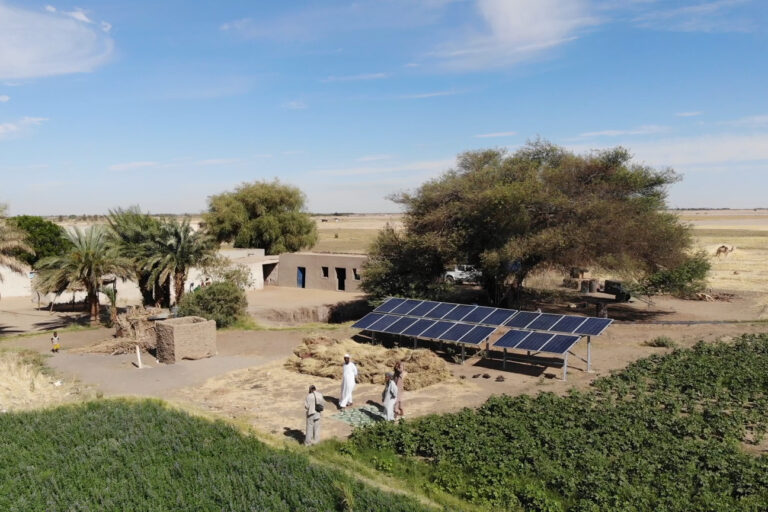
Solar panels in an arid part of Sudan.
9 stories

Negotiating Africa’s Energy Future

6 stories

Letters to the Future

Free and open access to credible information

Learn more

Listen to Nature with thought-provoking podcasts

Mangroves on Vanua Levu Island, Fiji. Image by Rhett A. Butler/Mongabay.

60 years of buried lessons on conservation projects from USAID have been saved

Mike DiGirolamo 10 Feb 2026

Watch unique videos that cut through the noise

Collage featuring Jeffrey Lendrum

The man who risked everything to steal bird eggs

Collage featuring a puma and Ida Isabel Auris Arango, shepherd and Quechua woman

Women secure a future with pumas in the Andes

Romi Castagnino 28 Jan 2026
Moo Deng meme collage

Small hippo, big dreams: Can Moo Deng, the viral pygmy hippo, save her species? 

Sam Lee 14 Jan 2026
Izzy Sasada and orangutan

Orangutans rescued undergo re-training to return to the wild

Izzy Sasada, Sam Lee 17 Dec 2025

South Greenlanders speak out on rare earths interests

Arina Kleist, Julia Rignot, Sandy Watt 11 Dec 2025

We’re a nonprofit

Help us tell impactful stories of biodiversity loss, climate change, and more
Donate

In-depth feature stories reveal context and insight

Redwood forest in Big Basin, California. Photo by Rhett Ayers Butler
Feature story

On Mongabay’s legacy

Rhett Ayers Butler 30 Jan 2026
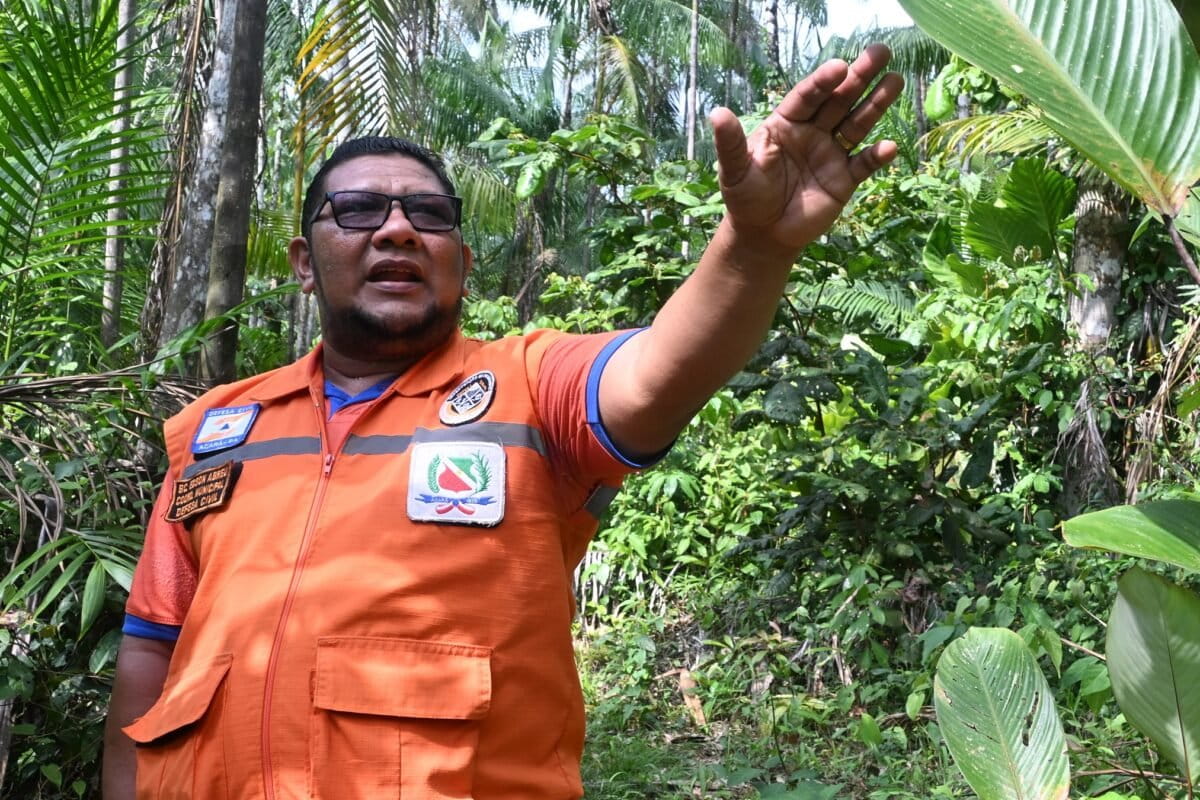
As COP30 unfolded in Belém this past November, civil defense coordinator Edson Abreu dos Santos decided to revisit the areas that had burned in Acará.
Feature story

Seminarian-turned-fire-agent preaches new tactics to fight Amazon’s burn crisis

Carla Ruas 28 Jan 2026
Feature story

Wildlife attacks and strange animal behavior — fake images spark conservation concerns

Sean Mowbray 28 Jan 2026
The government of Brazil’s Rio de Janeiro state has banned shark meat for meals in most of the schools it manages, after pressure from conservationists and school meal advisers raising health and environmental concerns.
Feature story

Rio de Janeiro state bans shark meat for school meals

Karla Mendes 27 Jan 2026

Quickly stay updated with our news shorts

When environmental reporting has to outlast the news cycle

Rhett Ayers Butler 13 Feb 2026

Founders briefs boxIn parts of Africa most affected by biodiversity loss and climate stress, the problem is not an absence of events worth reporting. It is the difficulty of translating slow-moving ecological change, fragmented governance and contested evidence into journalism that travels beyond borders. The signals are often local, technical and politically inconvenient. Yet they shape global outcomes all the same.

Over the past decade, international interest in the Congo Basin, the Sahel and Central Africa has waxed and waned. Attention spikes around summits or crises, then recedes. What remains is the steady work of reporters who stay with these regions long after headlines move on, tracing how land use, energy choices, wildlife trade and misinformation interact on the ground.

The entry point may be human, but the subject is systemic. Forest governance that looks sound on paper but frays in practice. Conservation policies that succeed in one district and fail in the next. Communities adapting to climate stress with tools that are promising but incomplete. The task is not to simplify these dynamics, but to make them clear and relatable to audiences.

Aimable Twahirwa, a senior science journalist based in Kigali, has spent much of his career doing precisely that. After two and a half decades reporting across Central, East and West Africa, he joined Mongabay in 2024 to focus on regions that are often described in the abstract, but shaped by local realities. His work has examined wildlife trafficking routes, Indigenous roles in forest governance and the uptake of renewable energy in rural economies, including solar-powered irrigation for smallholder farmers.

What distinguishes this reporting is its persistence. Stories are built from fieldwork, long networks of scientific and local sources and a willingness to follow outcomes after publication. A recent multimedia project on solar-powered irrigation in Rwanda traced how smallholder farmers adopt new technologies, where costs remain prohibitive and how public and private actors shape access. The response, Twahirwa noted, did not end with clicks. It prompted follow-up inquiries from agricultural groups across the continent.

Underlying this approach is a concern about the information environment itself.

“Countering misinformation and science denial is critical to bolster public trust and fortify the news ecosystem against manipulation,” he told Alejandro Prescott-Cornejo in a recent interview.

In regions where environmental reporting can be politically sensitive and technically dense, accuracy is not an abstraction. It is a prerequisite for credibility.

Such work is rarely celebrated in real time. It accrues value slowly, as sources return, stories compound and audiences learn to trust that coverage will not disappear when attention shifts. In that sense, the measure of impact is not virality, but continuity.

Read the full article here.

Banner image: Twahirwa posing at Kuwinka, the main entrance for visitors at Nyungwe rainforest in southwestern Rwanda for field coverage. Image courtesy of Viateur Nzeyimana.

Storm aftermath leaves 2 dead in France; flood alerts to remain Saturday

Associated Press 13 Feb 2026

PARIS (AP) — The aftermath of a deadly storm continued to disrupt parts of France on Friday, with flooding concerns persisting in the southwest even as wind alerts were lifted, according to weather service Météo-France.

Government spokesperson Maud Bregeon said on TF1 that France had recorded two deaths linked to Storm Nils: one on Thursday in the Landes department and a second “in the last hours” in Tarn-et-Garonne.

She said the second victim was a man who was found in his garden.

Network operator Enedis said the storm left up to 900,000 customers without power at its peak; by Friday morning it had restored service to about half of those affected and mobilized 3,000 personnel, including 2,100 technicians.

Flood vigilance remained high. Météo-France maintained red flood alerts for Gironde and Lot-et-Garonne — to remain in place Saturday — due to a significant Garonne river flood episode.

Météo-France said the storm had “uncommon strength” and swept in from France’s western seaboard overnight Wednesday into Thursday and has now moved on tracking east into Europe.

By Associated Press

Banner image: People walk in a flooded street of Confolens as severe flooding hits western France amid storm Nils, Thursday, Feb. 12, 2026. (AP Photo/Yohan Bonnet)

US cuts legal foundation for federal climate regulation

Bobby Bascomb 13 Feb 2026

On Feb. 12, the United States repealed the so-called endangerment finding, a 2009 cornerstone rule that enabled the federal government to regulate greenhouse gas emissions as a pollutant.

Established under former President Barack Obama, the rule codified the long-held scientific consensus that anthropogenic greenhouse gas emissions “threaten the public health and welfare of current and future generations.”

In repealing the endangerment finding, the EPA removed the legal and scientific foundation for regulating greenhouse gases, effectively clearing the path to do away with climate-related emissions limits for vehicles, industry and fossil fuel extraction.

“This decision betrays the American people,” California Governor Gavin Newsom wrote in a social media post. He said the decision will “lead to more deadly wildfires, more extreme heat deaths, more climate-driven floods and droughts … all while the EPA dismisses the overwhelming science that has protected public health for decades.”

The move comes as climate scientists warn that the last three years have been the warmest three years on record, and global emissions are set to push the Earth past 1.5° Celsius (2.7° Fahrenheit) of warming since the industrial revolution, passing the threshold set by the Paris climate agreement.

Although that limit has not yet been formally crossed, the world is already feeling widespread climate impacts. In 2025, more than 87 million people were affected by climate-related disasters. Meanwhile, conservationists warn that climate change is pushing vulnerable species toward extinction and threatening human health.

Philip Landrigan is director of the Global Observatory on Planetary Health with Boston College. In an email to Mongabay, Landrigan gave a laundry list of the many ways that “increased emissions will have serious negative consequences for human health.” Those include increased deaths from heat exhaustion, preterm birth, increased spread of diseases and waterborne illnesses, crop failures and subsequent hunger, heart disease, stroke and lung disease.

Despite the scientific consensus otherwise, U.S. President Donald Trump has dismissed climate change as “the greatest con job ever perpetrated on the world.”

In a press release, EPA administrator Lee Zeldin said, “The Endangerment Finding has been the source of 16 years of consumer choice restrictions and trillions of dollars in hidden costs for Americans.”

In a social media post, former President Obama said that without the rule, “we’ll be less safe, less healthy and less able to fight climate change — all so the fossil fuel industry can make even more money.”

The oil industry directly donated some $75 million to President Trump’s campaign for president.

Governor Newsom and the Environmental Defense Fund (EDF) have already announced plans to sue the administration over the decision.

“EDF will challenge this decision in court, where evidence matters, and keep working with everyone who wants to build a better, safer and more prosperous future,” EDF president Fred Krupp said in a statement.

Banner image: Smokestack pollution. Image courtesy of Robert S. Donovan via the National Security Archive.

Fishers denounce plummeting fish stocks following Amazon hydroelectric dam

Mongabay.com 12 Feb 2026

A hydroelectric dam impacting Brazil’s Amazonas and Rondônia states have slashed fished populations by as much as 90% in some locations, according to a new a study based on on-the-ground research in partnership with riverine communities.

The 2008 construction of the Santo Antônio hydroelectric dam dramatically reduced the natural flow of the Madeira River, which runs through the states in the northwestern Brazilian Amazon.

As a result, species including pirarucu (Arapaima gigas), tambaqui (Colossoma macropomum) and pirapitinga (Piaractus brachypomus) have largely disappeared from traditional fishing communities.

“Fish need currents to navigate. They don’t need still water, they need moving water. And the Madeira River stopped flowing,” fisher Raimundo Nonato dos Santos, from the Lago Puruzinho community in Amazonas state, told Mongabay reporter Karla Mendes. “The impact was huge for us: the decline in fish stocks, the [milky] water remaining for many months within [the lake in] the community. It affected us a lot.”

Dos Santos was one of more than a hundred fishers who collaborated with researchers from the Federal University of Amazonas on the 2023 study. They analyzed daily catch data between 2009 and 2010, before the dam was completed, and again between 2018 and 2019, after it was finished. They found a dramatic drop in the number of fish caught in the region following the dam.

“The results show that the installation of the hydropower plants negatively affected the capture dynamics of several fish species by changing the capture periods and spots previously recorded,” the study’s authors wrote.

Amazon communities see reduction in fish stocks after construction of hydro power plants

In the Sossego, Trapicho, Lago do Caiarí and Santa Júlia communities along the Madeira River, a reduction in fish stocks has forced fishers to travel longer distances, to more varied locations, to find fish.

“After the power plants, the fish disappeared,” smallholder Maria Delci Barros de Morais told Mongabay from the Paraíso Grande community in Rondônia. “My sons spend money on fishing nets, on Styrofoam, on ice, and sometimes they don’t even make enough for subsistence, let alone to sell and to cover their costs.”

Similar impacts are also reported from Indigenous territories farther away from the dam. Indigenous leader Adriano Karipuna told Mendes that 10 years ago, it was possible to catch half a metric ton of fish in half an hour. “Today, we spend six hours fishing, and if we catch four fish, that’s a lot. And it’s not the right size of fish,” he said.

Igor Lourenço, lead author of the study, told Mongabay the situation has likely changed since the data were collected between 2018 and 2019. He is setting up an ongoing data collection system to track fish stocks in the region in collaboration with local communities.

Read the full story by Karla Mendes here.

Banner image: Hydroelectric dams built in the Amazon caused up to a 90% reduction in fish stocks in some locations. Image by Kelvily Santos de Souza for Mongabay.

Dams limited the natural flow of the Madeira River, disrupting the currents that fish need and causing up to a 90% reduction in stocks in some locations. Image by Kelvily Santos de Souza for Mongabay.

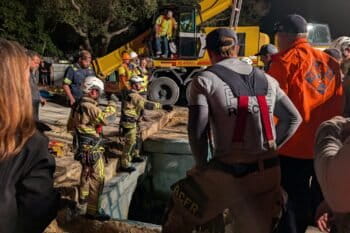
A 410-pound manatee rescued from a Florida storm drain is recovering at SeaWorld Orlando

Associated Press 12 Feb 2026

FORT LAUDERDALE, Fla. (AP) — A manatee that got stuck in a Florida storm drain while seeking warmer waters is on the mend at SeaWorld Orlando after a coordinated rescue effort.

Multiple fire rescue units and officials from the Florida Fish and Wildlife Conservation Commission, the University of Florida and even Jack’s Wrecker Service were brought in Tuesday to get the 410-pound (186-kilogram) sea cow out of the storm drain in Melbourne Beach.

The crews convened on the scene after a worker with Melbourne Beach spotted the manatee, the city’s Vice Mayor Terry Cronin told WESH-TV in Orlando.

“We’re in the process of improving the storm drain across Melbourne Beach. Our people were doing a survey. And one of the surveyors noticed a manatee in what is called a baffle box.” Cronin said.

The male manatee was taken to SeaWorld Orlando, where it is being cared for in one of the park’s medical pools, spokesperson Stephanie Bechara said.

“He’s breathing on his own, moving independently and showing interest in food. Our teams are adjusting water levels to support buoyancy and comfort as part of his care,” Bechara said.

She said they work to stabilize and rehabilitate rescued manatees so they can ultimately be returned to the wild.

The protected species is still recovering from a mass starvation event. In 2021, officials recorded more than 1,100 manatee deaths, mostly caused by starvation. The state’s fish and wildlife agency said deaths have gone down significantly, with 565 deaths recorded in 2024, and 555 deaths in 2023.

Last year, SeaWorld Orlando rescued 56 manatees and has already taken in seven this year.

By Freida Frisaro, Associated Press

Banner image: This photo provided by Brevard County Fire Rescue shows members of Brevard County Fire Rescue helping rescue a manatee that was stuck in a storm drain on Monday, Feb. 9, 2026 in Melbourne Beach, Fla. (Brevard County Fire Rescue via AP)

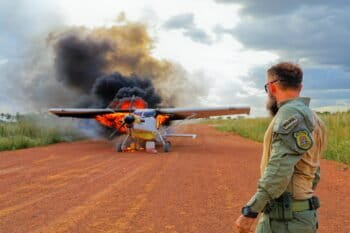
Brazil mining boss sentenced for illegal gold operation on Indigenous land

Shanna Hanbury 12 Feb 2026

A Brazilian federal court has sentenced a key financier to more than 22 years in prison. He was found guilty of leading an illegal mining operation in the Yanomami Indigenous Territory, a huge protected area in the Amazon Rainforest that has been devastated by pollution, disease and deforestation.

Rodrigo Martins de Mello, known as Rodrigo Cataratas, was convicted on charges of leading a criminal organization, money laundering, illegal mining on protected Indigenous land and other crimes. The mining severely degraded the Indigenous territory, causing disease and death for locals. The judge ordered Mello to pay more than 31.7 million reais ($6.1 million) in damages to the Yanomami people.

“Justice must hold people accountable for the impacts and for the deaths of the Yanomami people, because we did nothing wrong,” Waihiri Hekurari Yanomami, the president of the Urihi Yanomami Association, told Mongabay in an audio message. “They are the ones who came and poisoned the children and the rivers. And until today, we are still paying a very, very high price. ”

Illegal gold mining in the Yanomami territory surged more than 300% between 2018 and 2022, following the election of Brazil’s former President Jair Bolsonaro, who publicly supported mining on Indigenous land.

Thousands of miners invaded Yanomami land, and with them came a 330% increase in deaths from malnutrition, mostly among young Indigenous children. A 2023 health survey found that almost 70% of the Yanomami people had mercury in their bodies. Mercury is commonly used to amalgamate gold. Miners also repeatedly opened fire on Yanomami communities.

“I witnessed many of these deaths; I saw so much. Because of this, just saying his name brings me psychological problems, remembering all the deaths. He was one of those responsible for the death of my Yanomami people,” Hekurari Yanomami said, referring to Mello.

According to court documents seen by Mongabay, Mello managed a fleet of at least 23 aircrafts used to transport miners, fuel and other supplies into the Indigenous land and transport the minerals out.

Mello’s son, daughter and another accomplice were also charged for similar crimes. They received more than 10 years each in prison and together were ordered to pay another 2.6 million reais ($498,000) in damages.

Mello rejected the decision. “My actions have always been guided by work, legality and my commitment to those most in need. And that bothers people,” he wrote in a Facebook post, referring to his support of informal miners.

Lawyers for everyone involved in the case have appealed the decision.

Since 2023, the federal government under President Luiz Inácio Lula da Silva, Bolsonaro’s successor, has carried out large-scale operations to evict illegal miners from the Yanomami territory.

Banner image: A small airplane used for illegal mining set on fire by IBAMA inspectors in the Yanomami Indigenous Territory. Image courtesy of IBAMA.

A small airplane used for the illegal mining network is set on fire by IBAMA inspectors in the Yanomami Indigenous Territory.

Share Short Read Full Article

Share this short

If you liked this story, share it with other people.

Facebook Linkedin Threads Whatsapp Reddit Email

Subscribe

Stay informed with news and inspiration from nature’s frontline.
Newsletter

News formats

  • Videos
  • Podcasts
  • Articles
  • Specials
  • Shorts
  • Features
  • The Latest

About

  • About
  • Contact
  • Donate
  • Impacts
  • Newsletters
  • Submissions
  • Terms of Use

External links

  • Wild Madagascar
  • For Kids
  • Mongabay.org
  • Reforestation App
  • Planetary Health Check
  • Conservation Effectiveness
  • Mongabay Data Studio

Social media

  • LinkedIn
  • Instagram
  • Youtube
  • X
  • Facebook
  • Tiktok
  • Reddit
  • BlueSky
  • Mastodon
  • Android App
  • Apple News
  • RSS / XML

© 2026 Copyright Conservation news. Mongabay is a U.S.-based non-profit conservation and environmental science news platform. Our EIN or tax ID is 45-3714703.

you're currently offline