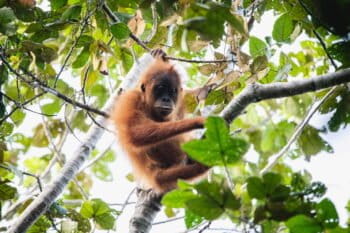
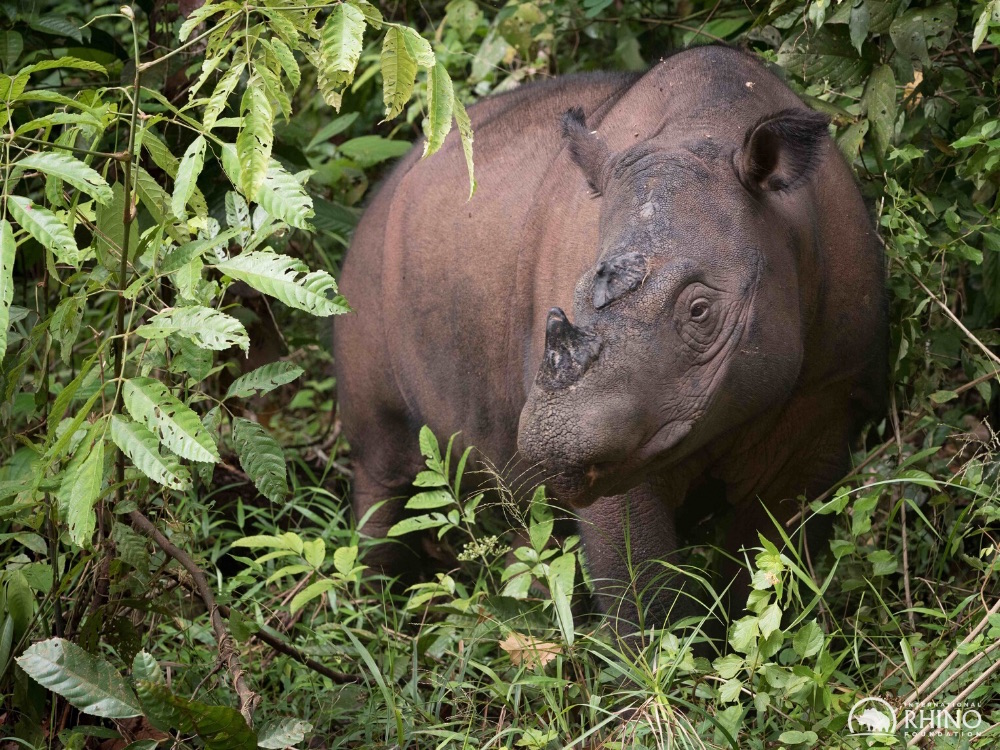
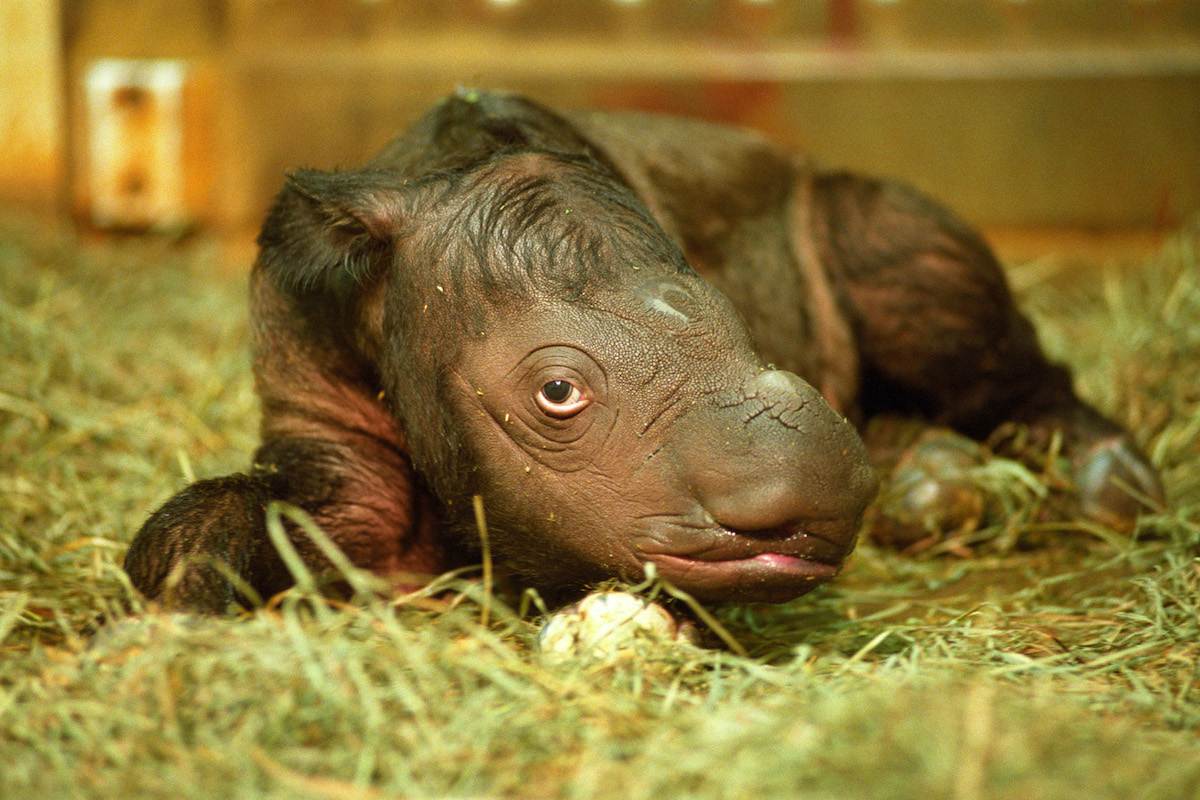
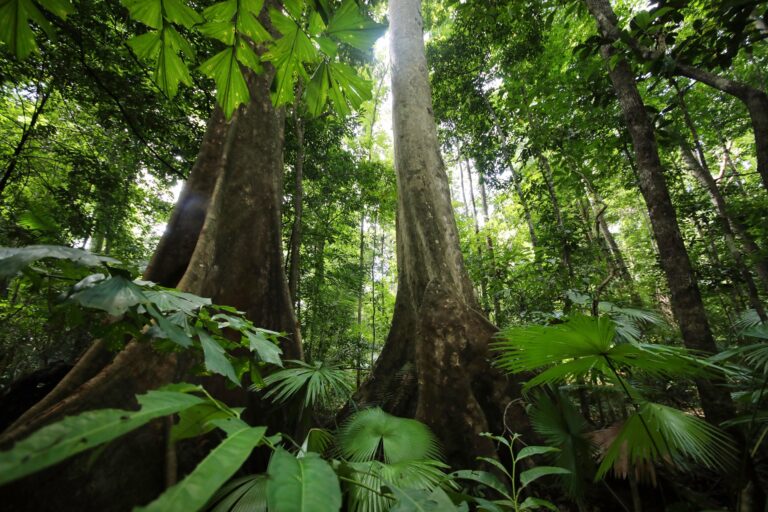
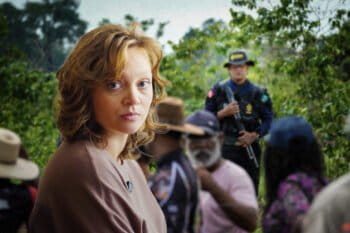
Long considered elusive and endangered, the Sumatran rhino is now estimated to have fewer than 50 individuals left in Indonesia’s fragmented forests. In 1984, conservationists captured 40 animals for a global captive-breeding program to stall an extinction that seemed imminent. Decades later, the effort stands as a case study on hope, loss and scientific persistence. […]
Daniel Ole Sambu, who helped lions and people coexist, died at age 51
Rhett Ayers Butler22 Dec 2025
In the rangelands beneath Kilimanjaro, coexistence between people and wildlife has never been a simple matter. Livestock wander into the paths of lions. Farmers lose cattle they can scarcely afford to lose. Retaliation follows, and with it the slow unraveling of ecosystems that depend on predators to stay whole. Local conservation groups have long understood that progress depends not on fences or warnings, but on trust. And trust depends on people who can speak across the fault lines of culture, history and daily survival.
One such figure held that space with unusual steadiness. Daniel Ole Sambu, who died earlier in December at age 51, spent years trying to keep the peace in a landscape where peace was fragile. As the program coordinator for the Predator Compensation Fund run by the Big Life Foundation, he helped design and manage a bargain that only works when everyone believes in it. If a family lost livestock to a predator, they would be compensated. In return, they would not kill the animal. It sounds simple. In practice, it required patient negotiation, long days in homesteads and constant reminders that the health of the ecosystem and the well-being of pastoralists were inseparable.
His influence came not from authority but from the confidence of someone rooted in the place he served. He grew up in the broad Amboseli ecosystem and never forgot what it meant to live with wildlife close at hand.
His work extended well beyond compensation forms and field visits. He spent years strengthening ranger welfare across Kenya, eventually becoming the interim chair of the Wildlife Conservancy Rangers Association. That role suited him. Rangers trusted him. He understood the risks they faced and pushed for better conditions without posturing. It mattered to him that rangers felt seen, supported and connected to one another. Conservation, he liked to say, was carried on human shoulders.
He had a way of explaining difficult ideas with clarity and without judgment, his friends said. On school visits abroad, children sometimes asked awkward questions. He answered them with humor and candor. When discussing changes within Maasai culture, he once remarked, “If the Maasai are able to change parts of their culture for a good cause, like protecting lions, then maybe it’s also possible for [others] to change parts of their culture.” That line captured something essential about him: a belief that change was possible, and that moral responsibility belonged to everyone.
His death has been felt deeply by the communities and institutions he served. Yet the approach he championed remains in place. Many of the practices he helped shape continue, as communities meet and work through difficult questions in their own ways. That persistence is its own kind of tribute. It suggests that the fragile balance he spent years tending may hold, not because he is gone, but because he convinced others it was worth protecting.
Banner image: of Daniel Ole Sambu courtesy of Big Life Foundation
Mongabay contributor Glòria Pallarès wins top anti-corruption reporting award
Mongabay.com22 Dec 2025
Journalist Glòria Pallarès wonthe Anti-Corruption Excellence (ACE) Award for her investigation into corrupt forest finance schemes published in collaboration with Mongabay. The award ceremony was held in Doha, Qatar, on Dec. 16.
The investigation, published in January 2024, exposed a scheme in which companies registered in Peru, Bolivia and Panama were using false claims of U.N. backing to win contracts with Indigenous communities, some lasting several decades. The contracts granted the companies economic rights to a total of more than 9.5 million hectares (23.5 million acres) of Indigenous forested land.
The agreements were signed without following the correct procedures to guarantee full community consent and were often based on murky promises of jobs and local development. In some cases, the agreements also promised a financial return from carbon credits and green bonds.
Referring to Pallarès’ investigations over a decade, the award wrote in a statement, “She has led major cross-continental investigations exposing corruption in forest and carbon governance across Central Africa and Latin America.”
It added, “Her reporting uncovered a fraudulent scheme targeting over 9.5 million hectares of Indigenous forest land in Peru, Bolivia, and Panama, empowering the Matsés Nation to reject it and prompting international action.”
Following Pallarès’ investigation, several Indigenous communities in Peru, Bolivia and Panama that were misled into handing over their rights to millions of hectares of forest were able to challenge or terminate their contracts.
Most notably, the Matsés people in Peru scrapped a contract that had granted a sketchy shell company, Get Life, economic rights over 500,000 hectares (1.2 million acres) of their land, including areas that border the territories of isolated peoples.
The ACE award, now in its ninth edition, goes through a three-tier independent selection process carried out in partnership with the U.N. Office on Drugs and Crime.
Pallarès was one of three journalists to win in the Innovation & Investigative Journalism category. The other two were Tatenda Chitagu and Andiswa Matikinca, who together exposed a cross-border illegal lithium smuggling network across Zimbabwe, Mozambique and South Africa.
”Environmental corruption is a vicious poison,” Pallarès said at the Doha awards event. “It divides the communities that act as environmental stewards. It saps countries from much-needed resources. It breeds distrust and resentment towards authorities and governance systems. It undermines trust in what could be real solutions for people and the planet.”
“But the reality is, individuals and entities engaged in corrupt practices do not fear the law; they fear exposure,” Pallarès added. “This is what drives my work and my contributions to Mongabay.”
In May 2025, Pallarès’ investigation also won an honorable mention at the 2025 Trace Prize for Investigative Reporting.
Read the full investigation, “False claims of U.N. backing see Indigenous groups cede forest rights for sketchy finance,” here.
Banner image: Mongabay contributor Glòria Pallarès won the ACE Award in Doha, Qatar. Image courtesy of the ACE Award.
Kenyan wildlife census reveals conservation wins and losses
Lynet Otieno19 Dec 2025
Kenya’s 2025 National Wildlife Census report has revealed a complex trend in wildlife: Populations of some iconic animal species are steadily growing, while other populations are declining or remain stagnant.
At the launch of the report, compiled by the Wildlife Research and Training Institute (WRTI), Kenya’s President William Ruto described the findings as “a mosaic of wins and urgent conservation emergencies.”
The Dec. 11 launch brought together more than a dozen stakeholders in research and conservation. In the report’s recommendation the authors said the findings should shape policy for parks and community conservancies, by integrating “the national wildlife corridor mapping initiative and wildlife census data into national and county spatial and land use plans.”
At the launch of the report the CEO of WRTI, Patrick Omondi said, “We also recommend acceleration of enactment and implementation of the Wildlife Conservation Bill (2025) and complementary amendments on the Wildlife Act, 2023.”
The report highlighted a 4% increase in the populations of elephants as well as black rhinos (Diceros bicornis) and white rhinos (Ceratotherium simum), since the last census in 2021. The report estimates that Kenya is home to more than 40,000 elephants in the wild and just over 2,100 rhinos.
Giraffe (Giraffa) species saw a 5.4% increase in their populations; at least 43,000 individuals were counted.
Authorities attribute the growth to decades of efforts to end poaching in the parks, targeted translocation of the mammals, stricter law enforcement, community-led conservation and ecological connectivity.
However, the census also revealed the vulnerability of some species and habitats that underpin Kenya’s rich biodiversity. For example, the populations of lions (Panthera leo), cheetahs (Acinonyx jubatus) and African wild dogs (Lycaon pictus) all declined. Cheetahs and wild dogs each lost roughly half their populations over the last four years.
Data collected from at least 11 key sites show the populations of some wetland waterbirds are plummeting by upward of 80%. The range-land buffalo (Syncerus caffer) population also fell by more than 8%. The report authors suggest the buffalo decline may partly be a function of the different seasons in which the surveys were conducted and methodological differences; however, they caution, that shouldn’t reduce efforts to better manage the species.
The report calls for more targeted interventions to increase the small, fragmented populations of Grévy’s zebra (Equus grevyi), mountain bongo (Tragelaphus eurycerus) and the critically endangered roan (Hippotragus equinus) and sable (Hippotragus niger) antelopes.
To assemble the data, researchers compiled some 1,500 hours of aerial surveys as well as ground counts and camera trapping. They also applied modeling to avoid counting the same animals twice and dedicated coastal and marine assessments to count species missed by aerial methods.
The report is expected to inform government policies and planning at both national and local levels, resulting in better wildlife management.
Banner image:Elephants in Kenya. Image courtesy of Nancy Butler.
Drug gangs in Ecuador and Peru also involved in shark fin trafficking: Report
Shanna Hanbury19 Dec 2025
Narcotrafficking gangs operating out of Manabí, a coastal province of Ecuador, are also involved in trafficking shark fins alongside their drug operations, according to a recent investigation by Ecuadorian news agency Código Vidrio.
Evidence from wiretaps, surveillance and raids seen by Código Vidrio reporters suggests that gangs are capturing and finning sharks and transporting the fins as a secondary income stream alongside cocaine and fuel.
According to Código Vidrio, Ecuadorian police say that shark fin shipments pass through the Galápagos Islands, where fins are preserved and stored, en route to Asia.
Carlos Ortega, the head of Ecuador’s antinarcotics police, told Código Vidrio that authorities seized two fishing vessels in 2024 and 2025 near the Galápagos carrying a combined 27 metric tons of shark fins. In both cases, the crews were on the same route that criminal groups use to deliver cocaine to Central America and the U.S., Ortega said.
Shark fishing is illegal in Ecuador, but a 2007 law allows for the sale of sharks caught as bycatch. This loophole has since made Ecuador a top exporter of shark fins, despite the ban on targeted fishing.
Código Vidrio’s findings follow an October 2025 Mongabay Latam investigation that revealed that Los Choneros and Los Lobos, two drug gangs, had teamed up with sea pirates to expand into fishing. Artisanal fishers in Ecuador and Peru told Mongabay the gangs had seized control of ports and forced fishers to pay them part of their earnings.
Other fishers are pushed into the high-risk activity of assisting the gangs in shipping drugs. The gangs make use of the small fishing boats, and the fishers’ expertise in navigating the Pacific, to transport drugs out to sea in several small boats. These shipments are then loaded onto larger vessels at sea.
After the drug delivery, the fishers begin casting hooked lines to catch sharks.
According to Código Vidrio, a fisher can make tens of thousands of euros for a successful drug shipment. Those who opt out remain at the mercy of the gangs in the open seas.
“Fishermen turn to these activities because of the insecurity at sea,” Freddy Sarzosa, a retired police general told Código Vidrio. “They are robbed by pirates, their outboard motors are stolen, and there are also critical factors like lack of job alternatives and precarious employment.”
The drug gangs’ expansion into illegal fishing has created a surge of violence. In 2024, 24 fishers were killed in Peru. Another 45 were killed in Ecuador, up from five in 2014.
“Friends of ours have died, several of them, shot in the head. They execute them. They [the pirates] carry rifles, good weapons,” a fisherman from Puerto Pizarro, a fishing town in northwestern Peru, told Mongabay Latam. “Why are they so heavily armed? Because of drugs. Drugs are gold.”
Banner image: Artisanal fishing boats. Image by Mongabay Latam.
EU votes to delay EUDR antideforestation law for second year in a row
Shanna Hanbury19 Dec 2025
The European Parliament voted on Dec. 17 to delay a key antideforestation regulation that was adopted in 2023 and originally supposed to be implemented at the end of 2024. The implementation was delayed a year to December 2025, and now the EU has voted to delay it yet again by another year.
The European Union Deforestation Regulation (EUDR) requires producers of seven of the key commodities that drive tropical deforestation — beef, cocoa, coffee, palm oil, rubber, soy and timber — to prove that their products are not sourced from land deforested after Dec. 31, 2020.
That requirement includes submitting geolocalized data. But in September, the European Commission cited concerns that its IT system wasn’t ready yet to meet that demand, as a reason for proposing a delay to implementation.
“This is the latest chapter in a farce that’s lasted more than two years, ever since the EUDR was passed with a huge democratic mandate,” Nicole Polsterer, sustainable consumption and production campaigner with the forests and rights nonprofit Fern, wrote Mongabay by email. “[This] decision puts forests on the chopping block and rule-abiding European businesses at a competitive disadvantage.”
The amendment confirms a blanket one-year delay, but small operators will have an additional six months after that, until June 30, 2027, to comply. The decision also introduces the opportunity for additional changes until April 2026 to “assess the law’s impact and administrative burden.”
European lawmakers voted 405 to 242 in favor of the change; eight abstained.
Polsterer criticized the decision to assess the law before it’s even been enacted, saying that without operational experience, there’s no real-world situation to assess. “Agreeing to review the law in April 2026 without this evidence enables anti-EUDR lobbyists to base proposals on what they think might happen rather than actual experience of the law,” she said.
The change also exempts paper used in books, newspapers and other products of the printing industry from the scope of the law — a development the UK Publishers Association celebrated. “It’s a common sense move given the legislation was never designed for our sector,” Dan Conway, the CEO of the Publishers Association, wrote in a statement.
Fern has criticized the pressure from lobbyists for the international pulp and paper industry, going as far back as July 2024, citing the American Forest and Paper Association’s claim that the companies they represent could not prove that their products were deforestation-free.
The recent vote confirms the final text of the amendment but it still needs to be confirmed by the Council of the European Union and published in the EU’s Official Journal before the end of 2025 to apply.
Banner image: Press conference following the vote to delay the EUDR, again. Image courtesy of Laurie Dieffembacq/European Union.
Tanzania’s tree-climbing hyraxes have adapted to life without trees
Ryan Truscott19 Dec 2025
Despite their name, tree hyraxes — small, furry, nocturnal African mammals — don’t always live in trees. In Tanzania’s Pare mountains, near the border with Kenya, they’ve adapted to life on steep rocky outcrops as forests disappeared over the centuries, a recent study has found.
Eastern tree hyraxes (Dendrohyrax validus) are known to inhabit the Eastern Arc mountains, which stretch from southern Kenya across eastern Tanzania, and the Zanzibar archipelago. They prefer old-growth evergreen forests, sheltering from the heat inside the cavities of large trees. But after centuries of agriculture, mining and logging, the Eastern Arc’s Pare mountains retain less than 3% of their original forest cover.
Hanna Rosti, a conservation biologist from the University of Helsinki, Finland, and colleagues observed hyraxes and recorded more than 700 hours of their calls at 18 sites across the Pare massif. Across all sites, the researchers heard tree hyraxes calling mostly from rocky outcrops and saw them seeking shelter in rock crevices.
A tree hyrax on a rock in the Pare Mountains. Image courtesy of Hanna Rosti.
The team also found that the songs of Pare hyraxes, including a distinctive “strangled thwack,” resemble those of eastern tree hyraxes on Mount Kilimanjaro and in Kenya’s Taita Hills. However, Pare hyrax calls differ markedly from populations elsewhere in Tanzania traditionally classified as the same species, including those on Zanzibar and other parts of the Eastern Arc.
This suggests the eastern tree hyrax populations in places like Pare and Kilimanjaro may represent a different taxonomic unit, though Rosti said not enough analysis has been done to formally split them into separate species or subspecies.
Trevor Jones, a conservation zoologist who works in the Udzungwa mountains, an Eastern Arc massif to the southwest of Pare, told Mongabay he’s familiar with the “ping pong” call of Udzungwa’s eastern tree hyraxes but not the “strangled thwack.”
“Clear acoustic differences can indeed be a strong indicator of divergence,” he said.
The Udzungwa hyraxes Jones is familiar with do inhabit trees, but he’s also seen them in cliffs and rocky crevices, even within undisturbed forest. This, Jones said, suggests that for eastern tree hyraxes, life in rocky crevices is an adaptation that pre-dates habitat loss, but is becoming increasingly useful now.
“These special beasts are in decline and so yes, we should also be protecting these rocky habitats, especially where they have lost their primary forest.”
The study’s authors say that Pare’s high number of inaccessible cliffs also offer tree hyraxes and other species in the area safety from hunters who kill them with spears. “There is statistical evidence that the height or slope of the crevice is important, because if it’s almost vertical the people won’t go to kill them that easily,” Rosti told Mongabay in an interview.
The closely related southern tree hyrax (Dendrohyrax arboreus) has also shown flexibility in its habitat: it’s been found sheltering in human-made structures, including at the Karen Blixen Museum’s old coffee factory in Nairobi, Rosti said.
Banner image: Eastern tree hyrax in Pare mountains. Image courtesy of Hanna Rosti.
Subscribe
Stay informed with news and inspiration from nature’s frontline.