• Features
  • Videos
  • Podcasts
  • Specials
  • Articles
  • Shorts
Donate
  • English
  • Español (Spanish)
  • Français (French)
  • Bahasa Indonesia (Indonesian)
  • Brasil (Portuguese)
  • India (English)
  • हिंदी (Hindi)
  • বাংলা (Bengali)
  • Swahili
  • Videos
  • Podcasts
  • Articles
  • Short News
  • Feature Stories
  • The Latest
  • Explore All
  • About
  • Team
  • Contact
  • Donate
  • Subscribe page
  • Submissions
  • Privacy Policy
  • Terms of Use
  • Advertising
  • Wild Madagascar
  • For Kids
  • Mongabay.org
  • Reforestation App
  • Planetary Health Check
  • Conservation Effectiveness
  • Mongabay Data Studio

Latest

Indonesia’s steel expansion risks a surge in greenhouse gas emissions

Hans Nicholas Jong 11 Feb 2026

Trump opens only US marine national monument in Atlantic to fishing — again

Edward Carver 10 Feb 2026

Mexico considers shrinking protected areas for endangered vaquita porpoise

Maxwell Radwin 10 Feb 2026

Scientists call for ethics rules as AI fuels animal communication research

Mongabay.com 10 Feb 2026

Biodiversity bonds can work, but their design flaws must be fixed (commentary)

Anna Comacchio 10 Feb 2026

Why a healthy information ecosystem matters

Rhett Ayers Butler 10 Feb 2026
All news

Top stories

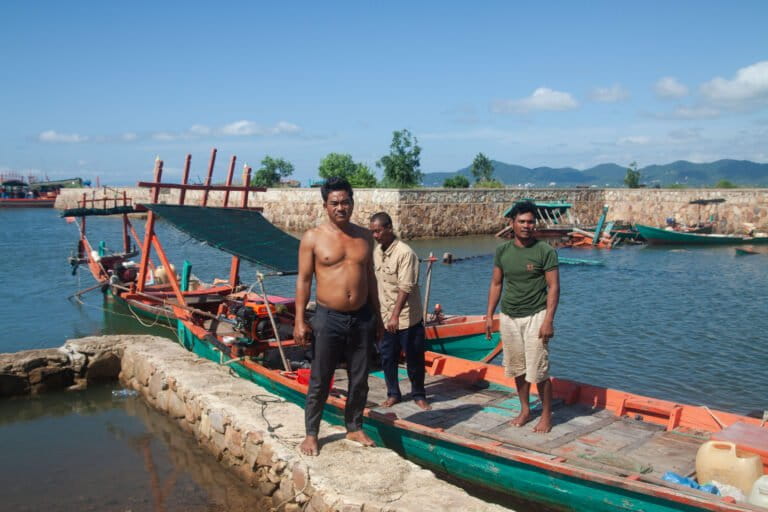
Across Kep province, fishing communities fear the Funan Techo Canal will see them lose their homes on land and their livelihoods at sea. Image by Gerald Flynn / Mongabay.

Cambodia’s canal mega-project threatens coastal communities and marine life

Forester kangaroos at The Quoin. Photo credit Doug Gimesy

Financing biodiversity: Lisa Miller on investing in nature

Rhett Ayers Butler 9 Feb 2026

Mines, dams move in as protection slips in a Cambodian wildlife sanctuary

Coby Hobbs, Eung Sea 6 Feb 2026
Redwood forest in Big Basin, California. Photo by Rhett Ayers Butler

On Mongabay’s legacy

Rhett Ayers Butler 30 Jan 2026
As COP30 unfolded in Belém this past November, civil defense coordinator Edson Abreu dos Santos decided to revisit the areas that had burned in Acará.

Seminarian-turned-fire-agent preaches new tactics to fight Amazon’s burn crisis

Carla Ruas 28 Jan 2026

Subscribe

Stay informed with news and inspiration from nature’s frontline.
Newsletter

We’re a nonprofit

Help us tell impactful stories of biodiversity loss, climate change, and more
Donate

News and Inspiration from Nature's Frontline.

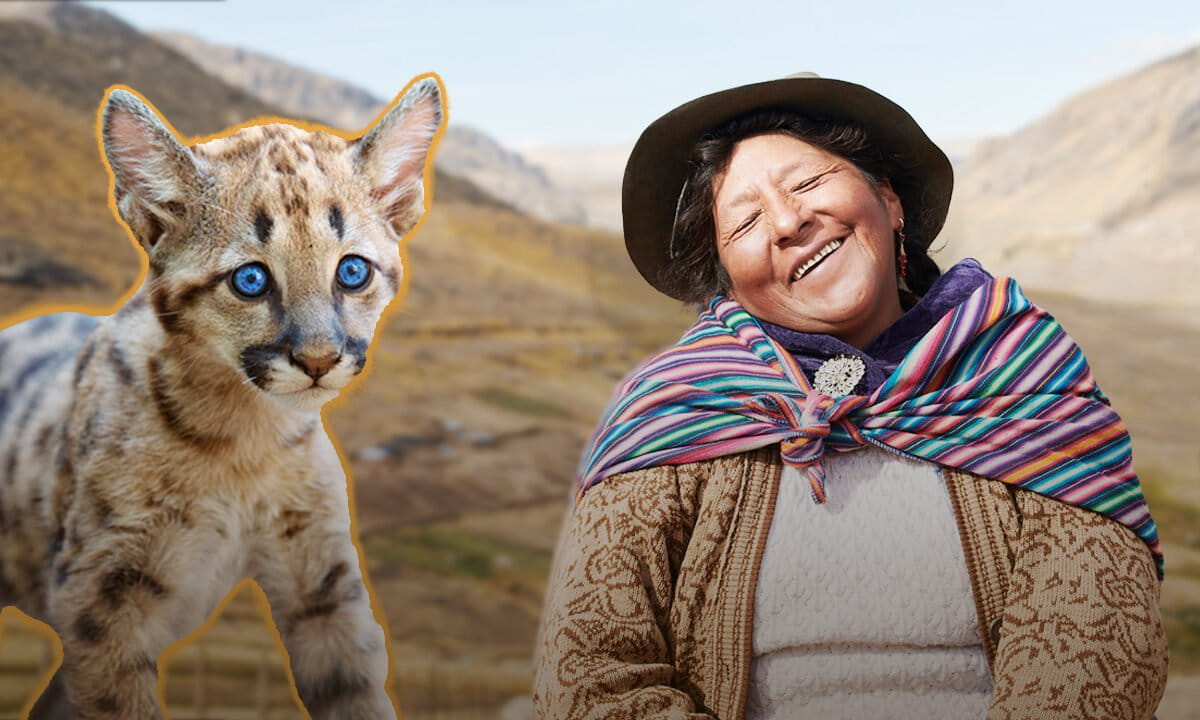
Collage featuring a puma and Ida Isabel Auris Arango, shepherd and Quechua woman
Videos
Articles
Mangroves on Vanua Levu Island, Fiji. Image by Rhett A. Butler/Mongabay.
Podcasts

Special issues connect the dots between stories

Carving up the Cardamoms

Young activists risk all to defend Cambodia’s environment

Young activists risk all to defend Cambodia’s environment

Andy Ball, Marta Kasztelan 2 Jul 2025
Across the Southern Cardamom REDD+ project in southwest Cambodia, communities have alleged abuse at the hands of the project developer. Image by Gerald Flynn / Mongabay.

Indigenous community calls out Cambodian REDD+ project as tensions simmer in the Cardamoms

Gerald Flynn 10 Mar 2025
A Ministry of Environment ranger on patrol in the Cardamom Mountains. Image by Andyb3947 via Wikimedia Commons (CC BY-SA 4.0).

Cambodian carbon credit project hit by rights abuse claims is reinstated

Gerald Flynn 11 Sep 2024
The sprawling Stung Meteuk hydropower dam being developed in the Cardamom Mountains appears to be illegally logging within Phnom Samkos Wildlife Sanctuary. Image by Gerald Flynn / Mongabay.

History repeats as logging linked to Cambodian hydropower dam in Cardamoms

Gerald Flynn, Vutha Srey 27 Jun 2024

The Cardamom Mountains sprawl across southwestern Cambodia and are among the best-preserved rainforests in the country. Protected by rugged terrain, heavy rains and a low population density, the Cardamoms remain a biodiversity hotspot, providing habitat for threatened elephants, pangolins and the region’s last viable fishing cat population. This Special Issues documents the myriad threats facing […]

Carving up the Cardamoms series

More specials

9 stories

Can anyone save the Sumatran rhino?

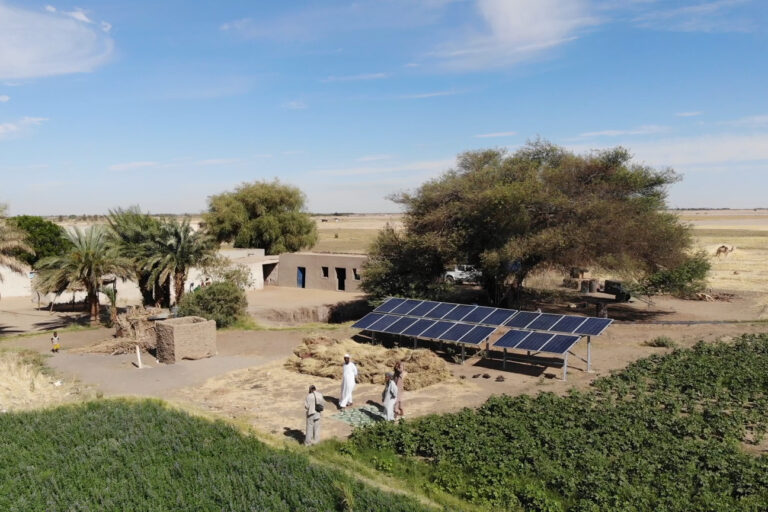
Solar panels in an arid part of Sudan.
9 stories

Negotiating Africa’s Energy Future

6 stories

Letters to the Future

Free and open access to credible information

Learn more

Listen to Nature with thought-provoking podcasts

Mangroves on Vanua Levu Island, Fiji. Image by Rhett A. Butler/Mongabay.

60 years of buried lessons on conservation projects from USAID have been saved

Mike DiGirolamo 10 Feb 2026

Watch unique videos that cut through the noise

Collage featuring a puma and Ida Isabel Auris Arango, shepherd and Quechua woman

Women secure a future with pumas in the Andes

Moo Deng meme collage

Small hippo, big dreams: Can Moo Deng, the viral pygmy hippo, save her species? 

Sam Lee 14 Jan 2026
Izzy Sasada and orangutan

Orangutans rescued undergo re-training to return to the wild

Izzy Sasada, Sam Lee 17 Dec 2025

South Greenlanders speak out on rare earths interests

Arina Kleist, Julia Rignot, Sandy Watt 11 Dec 2025
Collage: Elise Paietta, postdoctoral research scholar during fieldwork, with tropical forest

How do we stop the next pandemic?

Abhishyant Kidangoor 26 Nov 2025

We’re a nonprofit

Help us tell impactful stories of biodiversity loss, climate change, and more
Donate

In-depth feature stories reveal context and insight

Feature story

Wildlife attacks and strange animal behavior — fake images spark conservation concerns

Sean Mowbray 28 Jan 2026
The government of Brazil’s Rio de Janeiro state has banned shark meat for meals in most of the schools it manages, after pressure from conservationists and school meal advisers raising health and environmental concerns.
Feature story

Rio de Janeiro state bans shark meat for school meals

Karla Mendes 27 Jan 2026
Feature story

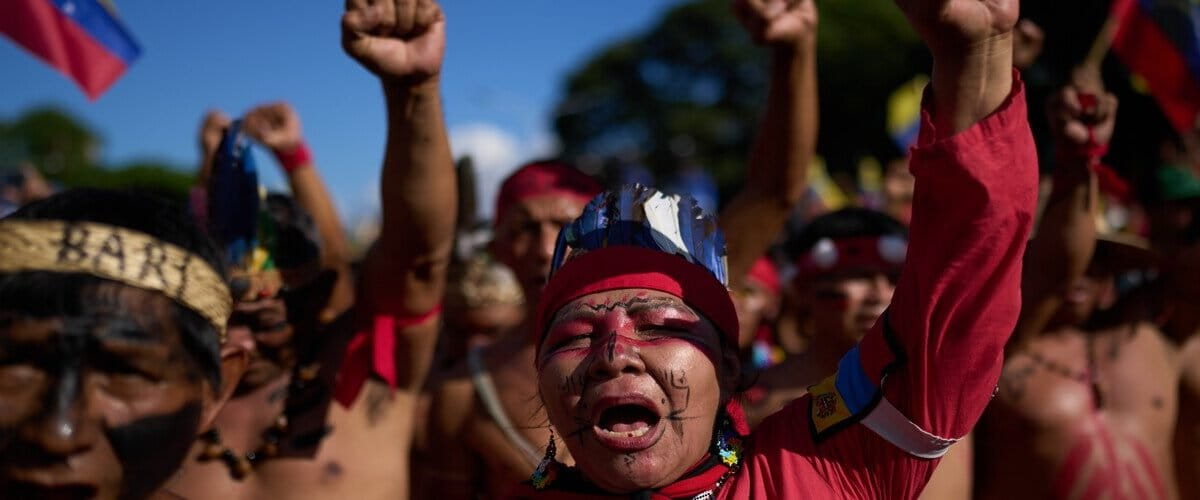
How US intervention could deepen Venezuela’s environmental crisis

Maxwell Radwin 20 Jan 2026
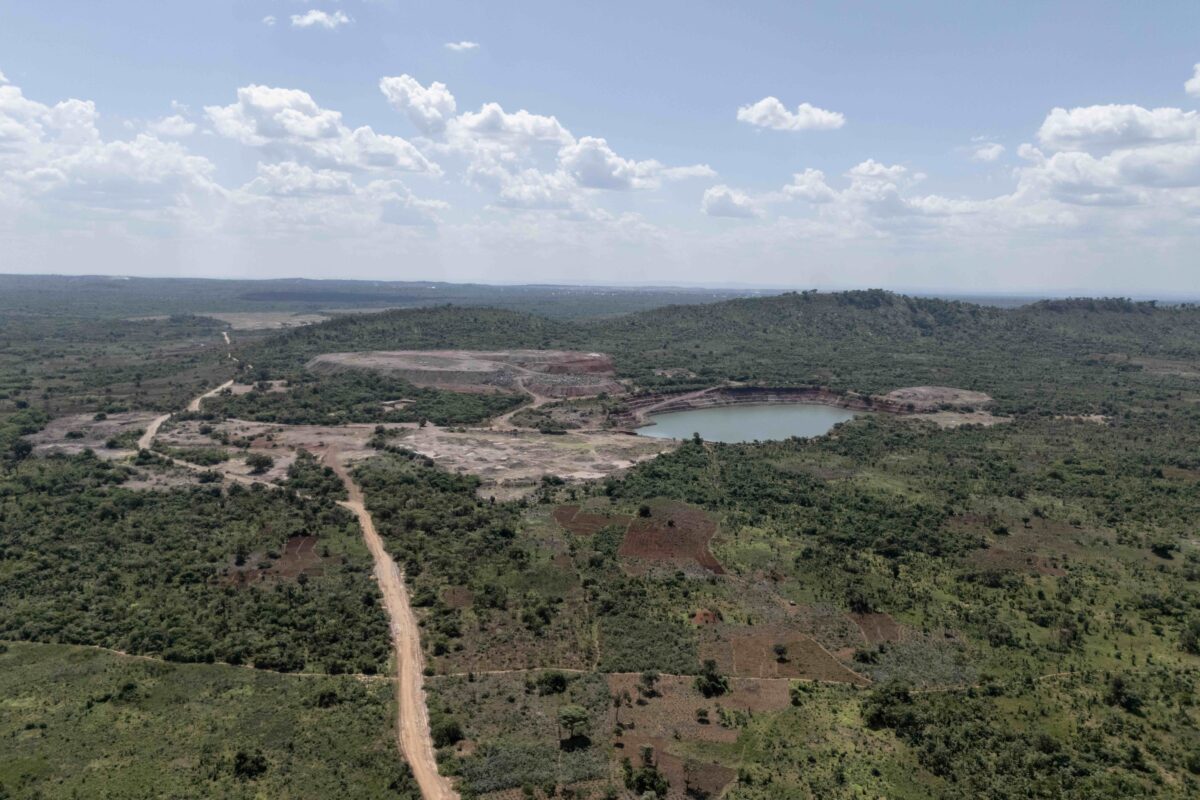
A mine in Likasi on November 26, 2025. Image by Glody MURHABAZI / AFP).
Feature story

In the race for DRC’s critical minerals, community forests stand on the frontline

Didier Makal, Latoya Abulu 16 Jan 2026

Quickly stay updated with our news shorts

Scientists call for ethics rules as AI fuels animal communication research

Mongabay.com 10 Feb 2026

Researchers have proposed a new ethical framework to regulate emerging technologies, such as artificial intelligence and machine learning, used to decode animal communication, Ana Cristina Alvarado reports for Mongabay Latam.

The proposed guidelines, known as the PEPP Framework, which stands for Prepare, Engage, Prevent and Protect, lay out the principles for studying animal communication responsibly. Scientists at the More than Human Life Program (MOTH) at New York University and the Cetacean Translation Initiative (CETI) warn that poorly regulated research can cause harm to animals.

“Even routine recording and playback can cause stress in animals,” CETI founder David Gruber told Alvarado by email.

In one documented case, researchers studying elephant communication played a recorded call from an individual that had already died, causing significant distress to the elephants that heard its call. The elephant family went wild calling and looking around for their dead relative. The dead elephant’s daughter called for days afterward.

Animal communication studies have also brought about conservation advances, Gruber added. For example, the 1970s discovery that humpback whales sing to communicate helped promote legal protections for the species.

In a separate report published by members of the MOTH and CETI teams, the authors invite readers to imagine what might happen if attempts to decipher and understand animal communication succeed.

“[R]ecent advancements in recording technology, artificial intelligence, and interdisciplinary collaborations have revealed that many species, from whales to honeybees, possess sophisticated communication systems,” the authors write. “The potential impact of bioacoustics and AI on environmental law and nonhuman animal law is difficult to overstate.”

The authors also highlight some of the risks that this technology could pose. For example, it could potentially be used by tourism or military programs to manipulate or control animals.

Instead, the researchers suggest that AI technology should be used in the best interest of the animals. For example, if it becomes possible to understand distress calls in whales brought on by shipping noise, such information should be used to advocate for further protections for the animals.

Adoption of the PEPP framework is voluntary, but its authors say many human and Indigenous rights standards began the same way — as nonbinding principles that later became enforceable international norms.

“If we can agree on shared standards now, formal international guidelines become feasible and enforceable,” Gruber said.

Read the full story by Ana Cristina Alvarado (in Spanish) here.

Banner image: Scientists Yanive Aluma and Odel Harve check on a subaquatic whale-recording device. Image courtesy of Project CETI.

Scientists Yanive Aluma and Odel Harve check on a subaquatic whale-recording device. Image courtesy of Project CETI.

Why a healthy information ecosystem matters

Rhett Ayers Butler 10 Feb 2026

Founders briefs box

When people think about change, they often look for a central actor. A donor whose gift unlocked progress. An organization whose strategy made the difference. An individual whose decision shifted events. These figures are easy to name and easier to photograph. They offer clarity in systems that are otherwise diffuse.

What shapes outcomes often sits elsewhere. It operates earlier and more subtly, in the conditions that allow people to see a situation clearly enough to respond at all. Shared facts. Continuity of attention. The ability to trace responsibility across institutions. When those conditions are weak, even genuine concern struggles to translate into action.

Information, when it is verifiable and placed in the public record, is one of those enabling conditions.

Under ordinary circumstances, information does its work invisibly. It helps people orient themselves, distinguish fact from rumor, and understand where responsibility plausibly lies. When it functions well, it does not feel like a force. It feels like a given. Its importance tends to become visible only as it degrades.

This is especially true in environmental contexts, where the most consequential decisions are often made far from the places where their effects are felt. Forests are cleared, fisheries depleted, and land converted through chains of choices spread across companies, regulators, financiers, and consumers. When those chains are poorly documented, accountability becomes diffuse. Harm can persist even where concern exists, simply because no one can quite see the whole picture.

Journalism, at its most basic level, is an attempt to make those connections intelligible. It places reliable information into the public record and leaves others to determine what follows. In this sense, it functions as a form of civic maintenance, helping keep a shared factual record from fragmenting entirely.

The Panama Papers offer a familiar example. The reporting did not demand a single outcome or advance a unified argument. It made ownership structures that had been deliberately opaque newly traceable. What followed unfolded unevenly and over time: investigations, court cases, regulatory changes. The reporting itself did not resolve those processes. It supplied documentation that others relied on, often long after public attention moved on.

A similar dynamic appears in reporting on illegal fishing. Reconstructing vessel movements or ownership does not enforce the law. But once those records are public, they can be taken up by port authorities, insurers, or regulators reviewing access agreements. The reporting supplies evidence; others carry out enforcement.

That role is easy to undervalue because it resists attribution. Journalism is rarely sufficient on its own. More often, it becomes one input among many, circulating through courts, agencies, boardrooms, and communities.

Seen this way, investments in information are best understood as investments in civic infrastructure. They do not guarantee better decisions. But they improve the odds that decisions are made with a clearer view of their consequences. Over time, that difference can shape outcomes.

Some forms of change respond poorly to direction. They require conditions to be established, then allowed to circulate on their own. Supporting the ability to see, understand, and act is a modest contribution. It is also one of the more durable ones.

Indigenous protests force Brazil to suspend Tapajós River dredging plan

Shanna Hanbury 10 Feb 2026

Brazil has suspended a decree on dredging and privatizing the Tapajós River, a major tributary of the Amazon, after protests shut down a grain terminal — but Indigenous groups are pressing for its full revocation.

Hundreds of Indigenous protesters have since Jan. 22 blockaded the Cargill grain facility in the Amazonian city of Santarém over the threats they say the decree poses to the 14 Indigenous territories and hundreds of riverine communities living along the Tapajós.

The decree was a part of an infrastructure project called the Tapajós waterway, which plans to allow private sector actors to expand sections of the Tapajós, Madeira and Tocantins rivers. The project would make the rivers navigable year-round for large barges carrying soy, corn and other grains from Brazil’s agricultural states in the Cerrado and the Amazon to ports on the Atlantic coast.

After almost three weeks of protests, the federal government suspended the decree on Feb. 6, but protesters continue to demand that the decree be revoked entirely.

“The suspension was announced but for us it is insufficient,” Indigenous leader Alessandra Munduruku told Mongabay in an audio message. “It doesn’t guarantee our rights, our lives or our river. This is what we want.”

According to Munduruku, as of Feb. 9 an estimated 800-900 protesters are still blocking access to the Cargill facility. The U.S.-based multinational would be one of the main beneficiaries of the proposed Tapajós waterway expansion, which would allow it to export more grain at a lower cost.

Protesters say affected communities were not consulted, despite Brazil’s Constitution requiring the free, prior and informed consent of affected Indigenous communities.

The affected Indigenous nations represented in the protest include the Arapiuns, Apiaká, Arara, Borari, Jaraqui, Cara Preta, Cumaru, Maytapu, Munduruku, Tapajós, Tapuia, Tupayú, Tupi and Sateré-Mawé.

Four local civil society organizations sent the government a joint letter in October 2025 criticizing the social and environmental impacts of the waterway project. In November, smaller protests were held in boats along the Tapajós River. 

Local communities say the 250-kilometer (155-mile) infrastructure project would increase dangerous river traffic for locals for whom the river is a lifeline. Already, waves caused by barges have made river navigation unsafe for smaller boats used by residents for daily activities like fishing and transporting children to and from schools.

“If there is already damage now, imagine the impact once the river is dredged to allow large ships to pass through all year round. How will these populations survive?” Haroldo Pinto, regional coordinator at the Indigenist Missionary Council, a Catholic organization that advocates for Indigenous rights, told Mongabay reporter André Schröder by phone in November 2025.

Local right-wing politician Malaquias Mottin nearly ran over an Indigenous protester on Feb. 5 while trying to drive through the blockade. Protesters filmed the incident, and a citizen’s report was lodged with Santarém City Hall demanding Mottin be removed from office.

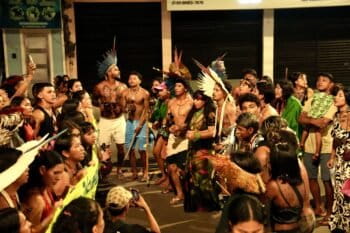
Banner image: Demonstrators on Feb. 8 in Santarém, Pará state, Brazil. Image courtesy of Movimento Tapajós Vivo.

Demonstrators on Feb. 8 in Santarém, Pará state, Brazil. Image courtesy of Movimento Tapajós Vivo.

Unidentified oil washes up on South African beaches

Victoria Schneider 10 Feb 2026

A mysterious oil spill is raising concern among South African conservationists and coastal communities.

On Jan. 22, reports started emerging of congealed oil washing up on South Africa’s southeast coast, stretching from George to Durban, some 1,200 kilometers (745 miles) away. Several beaches closed due to the pollution.

Citizen networks are monitoring more than 20 affected beaches and reporting that both tar balls and barrels filled with oil are washing ashore. The source and extent of the pollution remain unclear.

“There is a lot of concern as it continues to wash up,” Mike Denison from the nongovernment environmental organization Wildlife and Environment Society of South Africa told Mongabay via phone.

Denison said there are a couple likely explanations for the oil. One possibility is that barrels of oil were dumped offshore, “and some of those barrels might be breaking open and releasing oil,” he said. Another option is that a ship traveling the coast could be leaking.

Whether the washed-up oil and the barrels represent a single incident or two coinciding events remains unknown. Monitoring networks have called on local people to document and report any oil on their beaches or drums that turn up.

The Southern African Foundation for the Conservation of Coastal Birds in Gqeberha, Eastern Cape, asked the public to report any oiled seabirds. The area is home to a key colony of critically endangered African penguins (Spheniscus demersus).

In early February, marine biologists from Ezemvelo KZN Wildlife, a conservation organization in the country’s KwaZulu-Natal province, requested an aerial survey to look for a larger spill offshore that could explain the oil washing up on beaches. 

“Fortunately, there was no sign of any oil from above [in] the sky,” Welly Qwabe, one of the marine biologists who initiated the survey, told Mongabay. “It’s worrying us, because we don’t have answers to what is causing these dense tar balls. And it has an impact on the environment.”

He said the oil appears old and dense. “It is not a fresh, thin type of oil and it looks like it has reacted a lot until it got to the beach.”

Denison said that according to the descriptions he has received — small, very sticky blobs — it appears that the oil seen across the provinces shares the same characteristics. 

Nomxolisi Mashiyi, spokesperson at the South African Department of Forestry, Fisheries and the Environment (DFFE) confirmed to Mongabay in writing that reports of oil spills have been received. “The Department was notified of oil washing up at uMdloti beach on Thursday, 22 January and further reports of oil on other beaches have been received.”

Mashiyi added that the DFFE is in contact with the South African Maritime Safety Authority to investigate the oil. So far, there is no indication of a vessel grounding, sinking or collision.

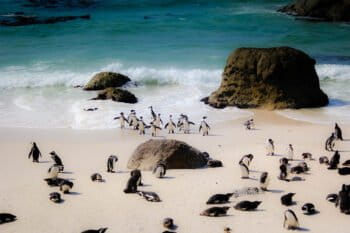
Banner image: African penguins at a beach in South Africa. Image by Casey Allen via Unsplash (Public domain).

African penguins at a beach in Simon's Town, Cape Town, South Africa.

Brazil’s Rio de Janeiro bans shark meat in most state schools

Mongabay.com 10 Feb 2026

The Brazilian state of Rio de Janeiro recently announced it has banned the purchase of shark meat for roughly 95% of its state-run schools, citing environmental and health concerns.

A July 2025  Mongabay investigation found shark meat was commonly purchased for use across Brazil in public institutions, including eldercare facilities and schools. The exposé found that more than a thousand public tenders had been issued since 2024, amounting to more than 5,400 metric tons of shark meat destined for public consumption.

In Brazil, shark meat is often generically labeled cação instead of the Portuguese word for shark, tubarão. As a result, people often don’t know exactly what they are eating. Conservationists warn that such a lack of transparency can result in endangered sharks or rays being illegally fished and sold to unwitting buyers.

Public-health experts also point to potential health risks. As apex predators, sharks bioaccumulate heavy metals in their tissue, including mercury, a neurotoxin. Scientists say there is no safe level of mercury exposure, but children and their growing bodies are especially vulnerable.

In an email to Mongabay, the Rio de Janeiro department of education acknowledged the risks. “The suspension was based on technical, scientific, health and environmental grounds … complying with the principle of precaution and comprehensive protection of children.”

However, the Brazilian Association for the Promotion of Fish pushed back on the ban.  In an email to Mongabay, a spokesperson said, “The consumption of cação is completely legal and safe.” Moreover, they expressed concern that removing shark meat from schools restricts “nutritious and affordable options for thousands of students.”

The ban took effect in October 2025, but it applies only to schools managed by the state’s educational department. An additional 10,400 other schools are managed by municipalities or private institutions and remain free to continue serving shark meat to their students.

The ban wasn’t announced through the state’s gazette, an official government publication; rather, it was communicated directly to schools. Bypassing such official channels makes the ban “fragile” and lacking in “transparency,” according to Cadu Villaça, head of the National Fisheries and Aquaculture Collective, an industry trade group.

A federal ban on shark meat was proposed in 2023, but it has languished in Brazil’s Congress since then.

Read the full story here.

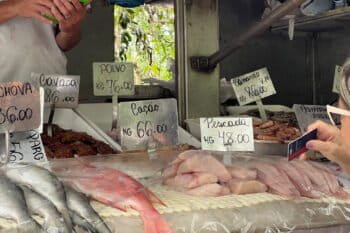
Banner image: Fresh shark meat is sold as cação at street markets in Rio de Janeiro. Image by Karla Mendes/Mongabay.


Fresh shark meat is sold as “cação” at streeet markets in the city of Rio de Janeiro.

Mongabay’s Rhett Butler on building a global newsroom for local impact

Rhett Ayers Butler 9 Feb 2026

Founders briefs box
When I launched Mongabay in 1999, I’d just finished college, armed mainly with a love of rainforests, a pile of musty field notes from Borneo to Madagascar and the uneasy realization that the forests I’d explored were vanishing faster than most people knew. I coded the first version of the site by hand in my apartment. There was no strategy — just a desire to share what I’d seen and to make credible information freely accessible.

Recently, I spoke with Alejandro Prescott-Cornejo, Mongabay’s senior marketing associate, about that journey and where we’re headed.

Looking back, the most meaningful recognition hasn’t come from awards, but from the moments when journalism made a tangible difference: an illegal concession halted in Gabon, an investigation in Peru that helped expose planned rainforest destruction, or the thanks we’ve received from Indigenous leaders who trust us to tell their stories accurately. The real reward has always been impact. Journalism doesn’t plant trees or prosecute illegal loggers, but it creates the conditions that make those things possible.

Those moments shaped the decision in 2012 to transition Mongabay from an advertising-driven website into a nonprofit. Advertising rewarded clicks; the nonprofit model let us reward impact. It allowed us to launch Mongabay Indonesia, then expand to Latin America, India and beyond. Today, we work with more than a thousand journalists in roughly 85 countries, many rooted in the communities they cover. Their local knowledge gives Mongabay a depth that’s unusual in the media space.

The biggest impacts, though, are the systems we’ve built — the capacity for frontline reporting that’s trusted at every level. Our paid fellowship program is a key part of that foundation, helping train and support journalists from biodiversity-rich regions so they can tell their own stories with autonomy and rigor. Leadership at Mongabay has never been about hierarchy; it’s about providing support that helps people succeed.

Our mission remains the same: to provide independent, evidence-based reporting that informs decisions and strengthens accountability. We show the crises, but also the solutions: the people and ideas proving that progress is possible.

As we look ahead, what excites me most is how much potential remains.

Banner image: Rhett Butler in the Singapore Botanic Gardens in 2023. Image courtesy of Alyson Blume. 

Rhett Butler in the Singapore Botanical Garden in 2023. Image by Alyson Blume.

Share Short Read Full Article

Share this short

If you liked this story, share it with other people.

Facebook Linkedin Threads Whatsapp Reddit Email

Subscribe

Stay informed with news and inspiration from nature’s frontline.
Newsletter

News formats

  • Videos
  • Podcasts
  • Articles
  • Specials
  • Shorts
  • Features
  • The Latest

About

  • About
  • Contact
  • Donate
  • Impacts
  • Newsletters
  • Submissions
  • Terms of Use

External links

  • Wild Madagascar
  • For Kids
  • Mongabay.org
  • Reforestation App
  • Planetary Health Check
  • Conservation Effectiveness
  • Mongabay Data Studio

Social media

  • LinkedIn
  • Instagram
  • Youtube
  • X
  • Facebook
  • Tiktok
  • Reddit
  • BlueSky
  • Mastodon
  • Android App
  • Apple News
  • RSS / XML

© 2026 Copyright Conservation news. Mongabay is a U.S.-based non-profit conservation and environmental science news platform. Our EIN or tax ID is 45-3714703.

you're currently offline