• Features
  • Videos
  • Podcasts
  • Specials
  • Articles
  • Shorts
Donate
  • English
  • Español (Spanish)
  • Français (French)
  • Bahasa Indonesia (Indonesian)
  • Brasil (Portuguese)
  • India (English)
  • हिंदी (Hindi)
  • বাংলা (Bengali)
  • Swahili
  • Videos
  • Podcasts
  • Articles
  • Short News
  • Feature Stories
  • The Latest
  • Explore All
  • About
  • Team
  • Contact
  • Donate
  • Subscribe page
  • Submissions
  • Privacy Policy
  • Terms of Use
  • Advertising
  • Wild Madagascar
  • For Kids
  • Mongabay.org
  • Reforestation App
  • Planetary Health Check
  • Conservation Effectiveness
  • Mongabay Data Studio

Latest

Brazil is the largest eucalyptus producer in the world. Eucalyptus production has been linked to several social and environmental violations such as land grabbing, human right abuses, and environmental harm from use of pesticides to biodiversity loss. Image © Markus Mauthe/Greenpeace.

Assessments reveal carbon offsets are a false & unjust climate solution (commentary)

GRAIN 5 Dec 2025

Brazil fast-tracks paving controversial highway in Amazon with new licensing rule

Shanna Hanbury 5 Dec 2025

Another threat to reefs: Microplastic chemicals may harm coral reproduction

Kari Goodbar 5 Dec 2025

From COP30 to Sri Lanka, indigenous voices shape climate & food sovereignty

Malaka Rodrigo 5 Dec 2025

For fossil fuel-dependent islands, ocean thermal energy offers a lifeline

Sean Mowbray 5 Dec 2025

How dropping ads set us free to focus on impact

Rhett Ayers Butler 5 Dec 2025
All news

Top stories

A child at work collecting e-waste in the Agbogbloshie dump in Ghana.

Can two Amazons survive? Invisible e-waste is poisoning the world

A Bornean orangutan.

Indigenous Dayak sound alarm as palm oil firm razes orangutan habitat in Borneo

Hans Nicholas Jong 2 Dec 2025
A gray wolf in Minnesota.

First state-authorized killings mark escalation in California’s management of wolves

Spoorthy Raman 29 Nov 2025
Collage: Elise Paietta, postdoctoral research scholar during fieldwork, with tropical forest

How do we stop the next pandemic?

Abhishyant Kidangoor 26 Nov 2025
A juvenile orange-fronted parakeet seized by the U.S. Fish and Wildlife Service Office of Law Enforcement at the Otay Mesa Port of Entry in California.

It’s ‘whack-a-mole’: Alarming rise in pet trade fuels wildlife trafficking into California

Spoorthy Raman 25 Nov 2025

Subscribe

Stay informed with news and inspiration from nature’s frontline.
Newsletter

We’re a nonprofit

Help us tell impactful stories of biodiversity loss, climate change, and more
Donate

News and Inspiration from Nature's Frontline.

Collage: Elise Paietta, postdoctoral research scholar during fieldwork, with tropical forest
Videos
Brazil is the largest eucalyptus producer in the world. Eucalyptus production has been linked to several social and environmental violations such as land grabbing, human right abuses, and environmental harm from use of pesticides to biodiversity loss. Image © Markus Mauthe/Greenpeace.
Articles
Where cars go to die: an auto graveyard.
Podcasts

Special issues connect the dots between stories

Negotiating Africa's Energy Future

Logging concession near Ndolou, Gabon

Norway’s multibillion-dollar bet on forests: An interview with Minister Eriksen

David Akana 25 Nov 2025
Pastoralists in Lesotho.

Lesotho communities allege greenwashing by project transferring water to South Africa

Malavika Vyawahare 21 Nov 2025
Farmers at Yangambi, Democratic Republic of Congo. Image by Axel Fassio/CIFOR via Flickr (CC BY-NC-ND 2.0)

Fighting for food sovereignty at COP30: Interview with GRAIN’s Ange-David Baïmey

Yannick Kenné 20 Nov 2025
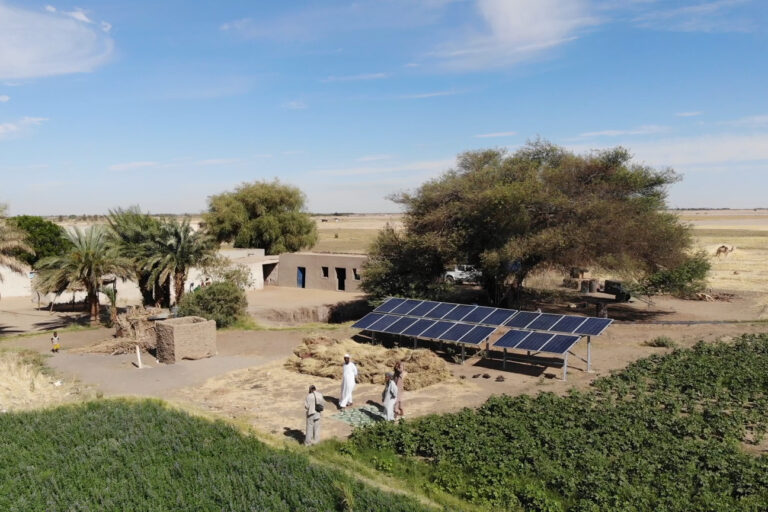
Solar panels in an arid part of Sudan.

‘The perfect ingredients’: WRI Africa deputy director shares vision for the continent’s energy transition

John Cannon 19 Nov 2025

A decade after countries agreed to the Paris climate agreement, Mongabay reports on an idea often invoked when discussing Africa’s path toward a low-carbon future: a just energy transition. Reporters from across the continent explore what “just” and “clean” energy mean for Africans.  These stories show African countries are pursuing their own journeys toward more […]

Negotiating Africa's Energy Future series

More specials

6 stories

Letters to the Future

Natural forests, like this one in Indonesia, contain hundreds of native species that all contribute to the ecosystem services they provide. Protecting standing forests is quicker and cheaper than replanting lost ones. Many forests can regenerate on their own with a little assistance, but where tree planting is needed, it must aim to restore natural diversity and support local communities. Image by Rhett A. Butler/Mongabay.
5 stories

Tech for the Trees

Trawlers docked outside Sihanoukville. Screenshot from ‘Illegal fishing and land grabs push Cambodian coastal communities to the brink’ by Andy Ball / Mongabay.
4 stories

Chaos on Cambodia’s Coast

Free and open access to credible information

Learn more

Listen to Nature with thought-provoking podcasts

Where cars go to die: an auto graveyard.

A ‘Life After Cars’ can provide huge human health and environmental benefits

Mike DiGirolamo 2 Dec 2025

Watch unique videos that cut through the noise

Collage: Elise Paietta, postdoctoral research scholar during fieldwork, with tropical forest

How do we stop the next pandemic?

Collage: A group of security guards preventing people from crossing a checkpoint and Fernanda Wenzel Mongabay reporter

On the frontline of the Amazon land war

Julia Lima, Fernanda Wenzel, Fernando Martinho 13 Nov 2025
Soldiers from the PROLANSATE Foundation on patrol

Why is protecting this Honduran lagoon so dangerous? 

Fritz Pinnow, Sam Lee 22 Oct 2025
Cassandra Garduño harvests kale in her chinampa.

Saving Mexico City’s ancient floating farms

Lucia Torres, Associated Press 8 Oct 2025
When art turns into a sustainable treasure

When art turns into a sustainable treasure

Julia Lima, Fellipe Abreu, Sibélia Zanon 1 Oct 2025

We’re a nonprofit

Help us tell impactful stories of biodiversity loss, climate change, and more
Donate

In-depth feature stories reveal context and insight

Feature story

Bearing witness to Indonesia’s environmental challenges: Sapariah Saturi

Rhett Ayers Butler 21 Nov 2025
Feature story

The land deal threatening a vital piece of Bolivia’s Chiquitano dry forest

Maxwell Radwin 20 Nov 2025
Youth activist Oliver Nyirenda in Kabwe. Image courtesy of Radio Workshop.
Feature story

As Zambia eyes green minerals, Kabwe’s poisoned past looms large

Chisapi Kumbutso 19 Nov 2025
Feature story

Offshore fossil fuel exploration jeopardizes Brazil’s climate leadership, study says

Lucas Berti 18 Nov 2025

Quickly stay updated with our news shorts

Brazil fast-tracks paving controversial highway in Amazon with new licensing rule

Shanna Hanbury 5 Dec 2025

Brazil’s Senate approved an environmental licensing bill that could expedite major infrastructure projects, including paving a highway that cuts through one of the most intact parts of the Amazon Rainforest in northwestern Brazil.

The BR-319 highway runs through 885 kilometers (550 miles) of rainforest, connecting Manaus, the capital of Amazonas state, with Rondônia state farther south. It was built in the 1970s but is currently in disrepair.

Local politicians say it will help integrate Brazil’s northern Amazonas state with the rest of Brazil, bringing economic benefits to the region. But environmentalists fear paving it will bring more deforestation, pushing the rainforest past its tipping point.

The new special environmental license bill, first introduced as a temporary decree in August by Brazilian President Luiz Inácio Lula da Silva, gives the executive branch power to speed up and simplify environmental regulations for projects they define as strategic.

On Dec. 2 and 3, the bill sped through both houses of Congress before the decree’s 180-day deadline, officially converting it into law. It is now pending the president’s final approval.

Supporters see the law as essential for development. “The special environmental license will unlock thousands of projects that are paralyzed in this country,” Senator Eduardo Braga, leader of the centrist MDB party, said during the Dec. 3 Senate session.

Others call it a setback for environmental and human rights protections.

“From now on, large projects with high potential for social impact and environmental damage will be able to bypass a rigorous licensing process, which includes consultations with affected communities,” the Climate Observatory, a Brazilian environmental watchdog organization, wrote in a statement.

“Large hydropower plants, railways, waterways, oil blocks, ports and roads, including in environmentally sensitive areas of the Amazon, will be able to be licensed in one year, merely requiring a political decision that classifies them as ‘strategic,’” it added.

The new bill, once law, mandates a 12-month deadline for licensing authorities to reach a final answer for strategic projects. Today, the timeline for environmental licensing is based on need, with no limitations on the duration of the process; some take several years.

“Repaving preexisting highways” is considered a special case, requiring a licensing window of just 90 days, and business owners can file recent secondary data instead of official studies carried out by technical staff if the timeline is exceeded.

“Why do people’s lives, which are at the mercy of increasingly intense socioenvironmental disasters, not seem to be considered when we discuss what a strategic project is? In what sense is it strategic?” Tarcísio Motta, a member of the Chamber of Deputies with the Socialism and Liberty Party, said during a Dec. 2 parliamentary session to discuss the bill.

“Seeing nature as an obstacle to be overcome … in a context where people are dying from heavy rains, drought, fires, is, in my view, misguided,” he added.

Banner image: BR-319 highway in Amazonas, Brazil. Image © Nilmar Lage/Greenpeace.

BR-319 highway in Amazonas, Brazil. Image © Nilmar Lage/Greenpeace.

How dropping ads set us free to focus on impact

Rhett Ayers Butler 5 Dec 2025

Founder’s Briefs: An occasional series where Mongabay founder Rhett Ayers Butler shares analysis, perspectives and story summaries.

Alejandro Prescott-Cornejo, Mongabay’s senior marketing associate, recently interviewed me about my journey with Mongabay. Here’s my response to his question about pivoting our business model.

The transition in 2012 was a turning point. At the time, the advertising model was still working, but I had ideas that went beyond what ads could support. Based on my experience reporting in Indonesia, I thought launching an Indonesian-language news service could have a real impact.

Much of the environmental degradation in Indonesia then was driven by corruption and mismanagement in the natural resources sector, and there was little environmental coverage that spanned the archipelago. I believed journalism itself could be an intervention — one that increased transparency and accountability. It reminded me of Brazil in the mid-2000s, when the country achieved major reductions in deforestation even as its economy grew, challenging the notion that protecting forests and improving livelihoods were incompatible.

Mongabay Indonesia took off, and I saw the potential for the rest of Mongabay to follow that model. But I wasn’t sure it would work. My only management experience at that point was overseeing a handful of employees at a tropical fish store (as pets, not to eat) as a teenager. I had no background in fundraising, no experience running a nonprofit, no philanthropic network, and no connections to wealth. So the decision wasn’t without risk. Still, advertising was strong enough that it didn’t feel reckless.

I fundamentally believed that credible, fact-based journalism was a public good, and that there were people and institutions willing to support it. That hunch proved right. Eventually, I donated all the news articles to the nonprofit and dropped advertising from the site entirely.

The nonprofit model required a different mindset. Advertising rewards traffic, not impact. It pushes you to chase clicks rather than dig into complex stories that might reach fewer readers but matter more.

The new model let Mongabay focus on impact over pageviews and collaboration over competition. We began releasing stories under Creative Commons so other outlets could republish them freely, which helped our journalism reach policymakers, community leaders and audiences we’d never have reached otherwise. It allowed Mongabay to scale globally while staying true to its values.

Read the full interview here.

Banner image of Butler in Ecuador in 2023 by Rhett A. Butler/Mongabay.

Wildfire burns climate-vulnerable Joshua trees in US national park

Bobby Bascomb 4 Dec 2025

A wildfire in California’s Joshua Tree National Park burned through some 29 hectares (72 acres) of land during the recent federal government shutdown in October and November. That’s a small fire by California standards, but firefighters estimate it scorched roughly 1,000 of the park’s iconic Joshua trees, according to The Los Angeles Times.

The burned area was considered one of the most climate-resilient refuges for the trees as the region grows hotter and drier amid climate change.

Joshua trees (Yucca brevifolia) provide critical food and shelter for wildlife species in the Mojave Desert ecosystem. The trees are listed as least concern on the IUCN Red List and currently have no federal protection outside the park. But they’re increasingly threatened by habitat loss and the effects of climate change.

Adult trees are relatively drought-tolerant but scientists are concerned about young trees, which are more sensitive to drought, heat and predation. Adding to their vulnerability, Joshua trees can take up to 70 years to reach sexual maturity and depend on a single pollinator, the yucca moth (Tegeticula synthetica), which is also stressed by climate change.

The recent fire took place near the park’s Black Rock Campground, “the location of some of the most robust and healthy Joshua tree forests in Joshua Tree National Park,” Mark Butler, a former superintendent of Joshua Tree National Park, told Mongabay in a video call. The area sits at a higher, cooler elevation and was considered the climate-resilient Joshua tree habitat in the park.

Since 1895, precipitation has fallen in the park by nearly 40% while temperatures have increased by an average of roughly 2° Celsius (3.6° Fahrenheit), according to the National Park Service.

“So, Joshua trees have got this double impact,” Butler said. “They’re being affected chronically by the long-term effects of a changing climate and then acutely by things like wildfire that can take out significant numbers of trees in a very short amount of time.”

Invasive grasses have also worsened wildfire risk. Historically, the arid landscape lacked fuel to spread fires, but grasses now sprawl across the land, often right to the base of trees, creating a pathway for flames to spread.

Experts estimate that as many as 30% of the Joshua trees damaged in the recent fire may survive and regrow from the roots. However, most trees won’t survive without active intervention, a growing challenge as National Park budgets and resources have been slashed in the second Trump administration, Butler said.

“Without some changes to how we manage and protect the Joshua tree, we can reasonably say that its days might be numbered. I think that we need to decide as a society if we are going to take the steps to preserve this tree for the enjoyment of future generations,” Butler said.

Banner image: A Joshua tree in California’s Joshua Tree National Park. Courtesy of Michael Faist, National Park Service.

Decades-old palm trees in Rio de Janeiro flower for the first — and only — time

Associated Press 4 Dec 2025

RIO DE JANEIRO (AP) — Towering talipot palms in a Rio de Janeiro park are flowering for the first and only time in their lives, decades after famed Brazilian landscape architect Roberto Burle Marx introduced them in the 1960s.

Towards the end of its life — which can span between 40 and 80 years — the palm tree sends up a central plume crowded with millions of small, creamy-white blossoms that rise high above its fan-shaped leaves.

The rare phenomenon that ties past to present has sparked the curiosity of passersby in Flamengo Park who stop, crane their necks to admire them and take photos.

Vinicius Vanni, a 42-year-old civil engineer, was even hoping to collect seedlings and plant them.

“I probably won’t see them flower, but they’ll be there for future generations,” he said from Flamengo Park, which hugs a nearby beach and offers a spectacular view of Sugarloaf Mountain.

Originating from southern India and Sri Lanka, the talipot palm can reach up to 30 meters (98 feet) in height and produce around 25 million flowers when it blossoms, using energy accumulated over decades.

If the flowers are pollinated, they produce fruits that can become seedlings.

In addition to Flamengo Park, the talipot palms can be found in Rio’s Botanical Garden, where they are also flowering.

That’s because they were brought across from southern Asia together, have the same metabolism and have been exposed to the same Brazilian rhythm of daylight, according to Aline Saavedra, a biologist at Rio de Janeiro State University.

Saavedra said that environmental laws strictly regulate transporting species native from another continent, although talipot palms are not invasive due to their slow development.

The interest the phenomenon has generated is positive and could encourage a sense of belonging for human beings to preserve rather than destroy the environment, according to Saavedra.

“This palm species gives us a reflection on temporality, because it has roughly the same lifespan as a human being,” said Saavedra. “Marx also wanted to convey a poetic perspective.”

By Eléonore Hughes and Lucas Dumphreys, Associated Press 

Banner image: The Talipot palm trees, native to India and Sri Lanka, is in bloom for the first and only time in their lives, in Aterro do Flamengo, Rio de Janeiro, Tuesday, Dec. 2, 2025. (AP Photo/Lucas Dumphreys)

Turning adventure into data

Rhett Ayers Butler 4 Dec 2025

Founder’s Briefs: An occasional series where Mongabay founder Rhett Ayers Butler shares analysis, perspectives and story summaries.

Gregg Treinish’s turning point came somewhere between mountain ranges and moral unease. Years of wandering through wilderness had left him restless.

“I was spending years in the wilderness, doing long expeditions, and I began to feel selfish for being out there without making a difference,” Treinish told Mongabay in an interview.

The result of that reckoning was Adventure Scientists, a nonprofit that turns outdoor enthusiasts into data collectors for conservation and research.

The idea was simple: hikers, divers and climbers already reach places scientists rarely can. Train them well enough, and they can gather data with professional rigor. A decade later, those volunteers have mapped microplastics in the ocean, traced illegal timber through supply chains, and helped catalog the genetic fabric of California’s biodiversity.

Treinish insists he is no genius. “I have no special skills as a scientist or as an adventurer,” he says.

Yet his humility conceals the insight that passion, when organized, can be an engine for discovery.

In an age of automation, Adventure Scientists bets on the power of human perception: the smell of soil before rain, a strange bird call, a bloom that shouldn’t be there. The science begins where curiosity meets discipline.

Read the full interview with Gregg Treinish here.

Banner image: Gregg Treinish in Botswana’s Okavango. Image courtesy of Shah Selbe.

Gregg Treinish in Botswana's Okavango. Photo by Shah Selbe

Brazilian Amazon’s most violent city tied to illegal gold mining on Indigenous land

Shanna Hanbury 3 Dec 2025

Violence has escalated in the small Brazilian town of Vila Bela da Santíssima Trindade as illegal gold mining on the nearby Sararé Indigenous Territory has exploded over the last two years, according to the 2025 Amazon Violence Atlas.

Located in Mato Grosso state near the Bolivian border, Vila Bela da Santíssima Trindade recorded the highest rate of intentional violent deaths in the entire Brazilian Amazon from 2022 to 2024: 136 deaths per 100,000 residents. That is the highest rate in the 772 municipalities of the Brazilian Amazon and more than six times Brazil’s average of 20.8.

“The worsening violence in the region appears to be strongly linked to the intensification of illegal mining in the Sararé Indigenous Territory,” authors of the report wrote. “It is notable that Vila Bela da Santíssima Trindade was not among the top 50 most violent cities in our last edition.”

Home to the Nambikwara people, the Sararé Indigenous Territory has suffered more than 70% of all deforestation on Indigenous land due to illegal gold mining in the Brazilian Amazon.  Roughly 2,000 illegal gold miners have invaded a territory home to roughly 200 Indigenous people.  

Gold mining advances on Sararé Indigenous land. Since the beginning of 2024, mroe than 3,00 hectares (7413 acres) have been razed for illegal gold mining within the Indigenous territory's borders.
Gold mining advances on Sararé Indigenous land. Since the beginning of 2024, more than 3,00 hectares (7413 acres) have been razed for illegal gold mining within the Indigenous territory’s borders. Map by Andrés Alegría/Mongabay.

In Vila Bela da Santíssima Trindade, there were 12 recorded intentional violent deaths in 2022 and 17 in 2023. By 2024 the number jumped to 42, an increase of 250% over three years.

Several reported deaths came from territory disputes within the illegal mining sites and armed confrontation between miners and environmental police forces.

In 2024, four people, including a 20-year-old woman, were allegedly killed following disputes over illegal gold mining areas.

In May 2024, five people associated with illegal mining were shot and killed during a police operation. Police seized a rifle, a submachine gun, a shotgun, two pistols and a revolver with the miners. In August and September 2025, another six people were shot and killed in two separate operations; police reported that the miners opened fire on their teams.

In 2023, a Pulitzer Center investigation followed the disappearance of a 12-year-old Indigenous girl, who was allegedly kidnapped from her family home and taken to a mining site in August 2023.

Mongabay confirmed with FUNAI, the federal agency that protects Indigenous people in Brazil, that the girl returned home between December 2023 and January 2024.

Banner image: Devastation left behind by illegal gold mining within the borders of the Sararé Indigenous territory in Mato Grosso, Brazil. Image courtesy of IBAMA.

Devastation left behind by illegal gold mining within the borders of the Sararé Indigenous territory in Mato Grosso, Brazil. Image courtesy of IBAMA.

Share Short Read Full Article

Share this short

If you liked this story, share it with other people.

Facebook Linkedin Threads Whatsapp Reddit Email

Subscribe

Stay informed with news and inspiration from nature’s frontline.
Newsletter

News formats

  • Videos
  • Podcasts
  • Articles
  • Specials
  • Shorts
  • Features
  • The Latest

About

  • About
  • Contact
  • Donate
  • Impacts
  • Newsletters
  • Submissions
  • Terms of Use

External links

  • Wild Madagascar
  • For Kids
  • Mongabay.org
  • Reforestation App
  • Planetary Health Check
  • Conservation Effectiveness
  • Mongabay Data Studio

Social media

  • LinkedIn
  • Instagram
  • Youtube
  • X
  • Facebook
  • Tiktok
  • Reddit
  • BlueSky
  • Mastodon
  • Android App
  • Apple News
  • RSS / XML

© 2025 Copyright Conservation news. Mongabay is a U.S.-based non-profit conservation and environmental science news platform. Our EIN or tax ID is 45-3714703.

you're currently offline