- A warmer climate triggers pest infestations across tropical tea estates in Bangladesh and India.
- Since traditional pesticides fail in pest control, the producers experience significant losses in terms of production as well as earning.
- Experts recommend comprehensive solutions with integrated pest management and improvement of soil health.
The extended summers, delayed monsoons and shorter winters — collectively featuring a warmer climate — are triggering pest infestations across tea estates in Bangladesh and India.
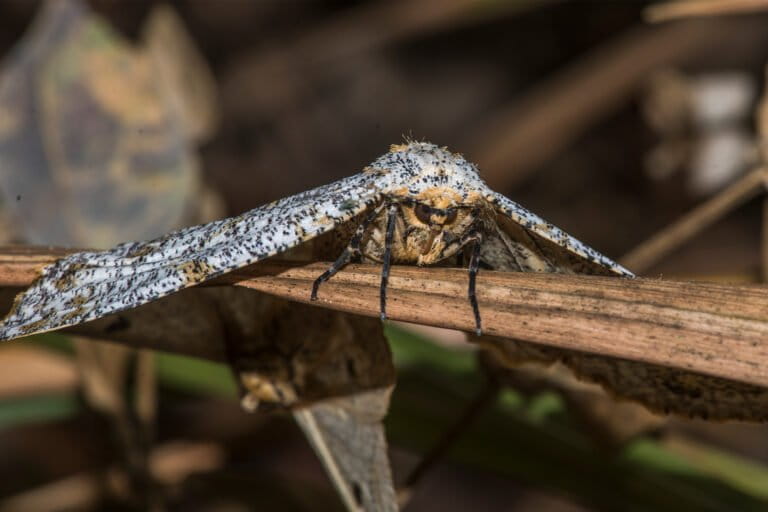
Entomologists have observed significant growth of several pests, including red spider mites (Oligonychus coffeae) and thrips (Scirtothrips dorsalis), which were minor in the tea gardens even a decade ago. Moreover, rising temperatures have contributed to the reemergence of the devastating looper caterpillars (Biston suppressaria) in many tea gardens.
Tea (Camellia sinensis) plants are known to be vulnerable to attack from insects, mites and nematode pests.
Tea plantation researchers in Bangladesh and India (the world’s second–largest tea producer) have rung the warning bell, stating that tea mosquito bugs (Helopeltis theivora), red coffee borers (Zeuzera coffeae), green weevils (Hypomeces pulviger) and red slug caterpillars (Eterusia aedea) are booming in tea estates, in addition to red spider mites, thrips and looper caterpillars.
Bangladesh Tea Research Institute’s principal scientific officer in the Entomology Division, Mohammad Shameem Al Mamun, tells Mongabay, “Due to rising temperatures, pest infestation is increasing as well as pest status is changing.”
Based on local meteorological data, the Bangladesh Tea Association estimates that the average maximum temperatures (daytime) slightly reduced from 33.9° Celsius (93° Fahrenheit) to 31.2°C (88.2°F), but the minimum temperatures (nighttime) rose from roughly 16°C (61°F) to 20.7°C (69.3°F) in the Sylhet region between 2011 and 2024.


In 2024, Bangladesh produced 93 million kilograms (205 million pounds) of processed tea in 10 valleys, mostly across the hilly eastern Sylhet and Chattogram regions. The previous year, the amount of tea produced was 102.9 million kg (226.9 million lbs).
According to a local news article published in July, pests like looper caterpillars cost India’s tea industry approximately 147 million kg (324 million lbs) of tea, worth about 28.65 billion rupees ($318 million) annually.
Joydeep Phukan, principal officer and secretary of the Tea Research Association of India (TRA), observes that tea plantation areas across India, especially in the valleys of Assam and West Bengal, are experiencing extended summers with rising temperatures.
He tells Mongabay that while temperatures around 25°C (77°F) are ideal for tea cultivation, plantations in India are now enduring 35-40°C (95-104°F) heat for days at a stretch during April and June.
“Given the temperature rise, pest infestations are increasing,” he adds.
In 2024, India produced 1.3 billion kg (2.9 billion lbs) of processed tea in the valleys located in Assam, West Bengal, North India and South India. In the previous year, 1.4 billion kg (3.1 billion lbs) of tea were produced in India.


A once-minor trouble becomes major now
According to research, 1,034 species of arthropods, meaning insects and mites, and 82 species of nematodes or worms are associated with tea plants globally. Among them, 25 species of insects, four species of mites and 10 species of nematodes were recorded from Bangladesh.
Many pests that were formerly “minor” even a few years ago are now becoming “major” problems in Bangladesh’s tea estates, entomologist Shameem says, citing that looper caterpillars and thrips are reemerging as dominating factors in some tea gardens.
Shameem adds that tea plants under stressed conditions become more vulnerable as insects and mites like red spider mites and thrips breed faster in warmer and drier conditions.
Besides the boom of looper caterpillars and thrips, new pests such as the red coffee borer, green weevil and red slug are emerging in tea gardens due to climate change and deforestation, Shameem says.
He and his team are researching the impacts of climate change on tea plantations in Bangladesh, with a paper scheduled to publish soon.
The July local news article reports that the Dooars valley, located north of West Bengal, has been hit by erratic rainfall, prolonged dry spells and unusually warm winters that lead to a 10-25% lower yield in gardens like Madarihat-Birpara, Kalchini and Kumargram.
The reported conditions allow looper populations to surge. The article cites a century-long weather study that confirms an increase of 1-1.2°C (1.8-2.2°F) in winter minimum temperatures and the shrinking forest cover further exacerbates these pest outbreaks.
In April 2023, the United Planters Association of Southern India sought urgent government intervention while reporting an expansion of the territory of tea mosquito bugs in the valleys of both low- and high-elevation plantations. The real cause was a warming climate.
According to the association, Helopeltis mosquito bugs are affecting tea production in the northern and southern states in South India.
A report published in August 2023 estimated that tea production from Tamil Nadu’s Valparai hills declined by 50% from 30 million kg (66.1 million lbs) in 2009-10 to 16.7 million kg (36.8 million lbs) in 2021-22 due to pest infestations.

Remedies
In a desperate bid to control the pests, tea garden managers are now rotating up to six or eight types of approved pesticides, targeting mites, termites, nematodes and tea mosquito bugs.
However, tea garden managers are struggling to contain the pest outbreaks, as pesticide applications have become largely ineffective due to rising resistance among many pest species.
A 2024 study reported that the extensive usage of neonicotinoids, carbamates and synthetic pyrethroids against sap-sucking pests has become “almost chemically unmanageable” as these insects have developed various defense mechanisms.
Given the changing conditions, Shameem suggests integrated pest management (IPM) measures such as cultural control with plucking and pruning of the tea bushes, shade regulation, field sanitation, proper fertilizer application, managing or removing alternate hosts and selecting pest-resistant or tolerant varieties to minimize pest infestations in the tea garden.
According to his research, mechanical methods, including manual removal, heat treatments, light traps and the use of biopesticides, biological control agents and sex pheromone traps, could play a more prominent role in pest management programs.
Besides IPM, TRA secretary Joydeep recommends improving soil health to strengthen the immunity of tea plants.
Saying the tea industry in South Asia is older than 200 years, Joydeep argues that soil quality in tea plantation areas, dominated by monoculture, has been depleted due to overuse.
According to him, TRA India has developed a biochar, a charcoal-like substance made from organic materials such as wood or plant waste, for use in the tea areas. The nutrient-rich biochar improves soil health.
“Minimum five years and onwards would be needed to improve soil health of a particular tea plantation plot. Once soil health is restored, more than 50% of the pest-related problems can be resolved,” Joydeep says.
He notes the importance of building a data hub on the use of pesticides and pest management across Bangladesh, India and Sri Lanka to help the tea industry adapt to and mitigate climate change impacts.
Offering cooperation, Roshan Rajadurai, a member of the Planters’ Association of Ceylon and managing director of Kelani Valley Plantations in Sri Lanka, tells Mongabay that the country’s tea industry has been facing short-term episodes of excess rainfall rather than rising temperatures.
According to him, the Sri Lankan tea industry is fortunate to have very few pests. Despite this advantage, Sri Lankan tea planters follow IPM and maintain good agricultural practices, including planting new trees, improving soil fertility and restoring water storage systems.
Only in areas with high humidity and heavy rainfall do they apply approved pesticides.
“That is why Sri Lanka is recognized as the source of the world’s cleanest tea, with the lowest pesticide residues,” Roshan says.
Banner image: A looper moth (Biston suppressaria) in Assam, India. Image by Vijay Anand Ismavel via Flickr (CC BY-NC-SA 2.0).
Citations:
Roy, C., Naskar, S., Ghosh, S., Rahaman, P., Mahanta, S., Sarkar, N., Kundu Chaudhuri, R., Babu, A., Roy, S., & Chakraborti, D. (2024). Sucking pest management in tea (Camellia sinensis (L.) Kuntze) cultivation: Integrating conventional methods with bio-control strategies. Crop Protection, 183, 106759. doi:10.1016/j.cropro.2024.106759
Mamun, M. S. A., & Ahmed, M. (2011). Integrated pest management in tea: Prospects and future strategies in Bangladesh. Journal of Plant Protection Sciences, 3(2), 1–13. doi:10.48165
Feedback: Use this form to send a message to the author of this post. If you want to post a public comment, you can do that at the bottom of the page.
Credits