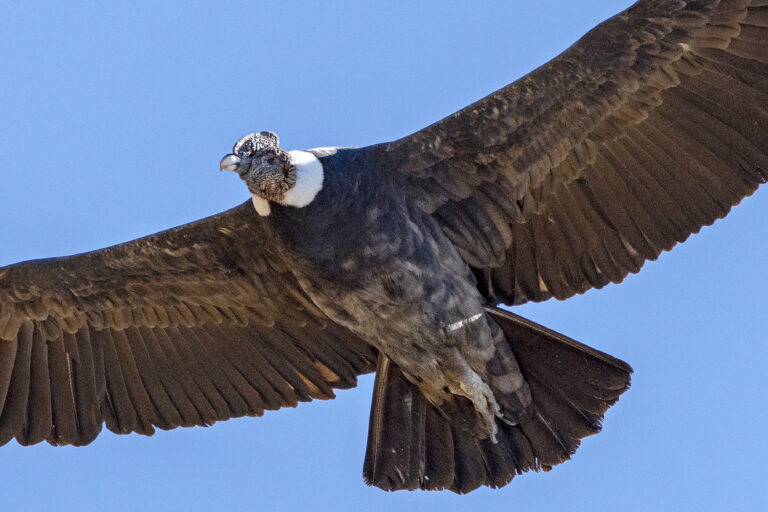
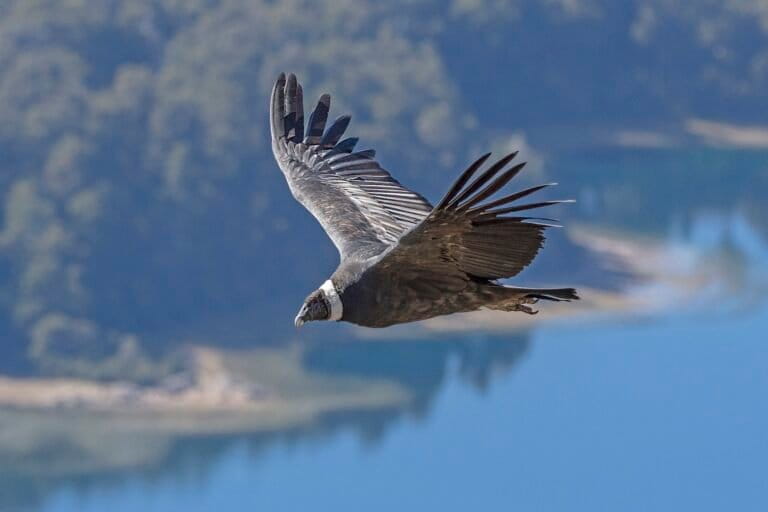
- A scavenger species, the Andean condor plays a vital role in ecosystems by preventing the spread of diseases found in carcasses.
- But human communities overlapping with their habitat have often mistakenly blamed the condors for livestock deaths and poisoned them, contributing to the species’ decline.
- About 6,700 Andean condors remain in the wild, with those in Colombia and Ecuador considered critically endangered.
- In Colombia, where an estimated 130 individuals remain, a captive-breeding program is working to save the species from extinction, and since 2024 has produced three chicks for eventual release into the wild.
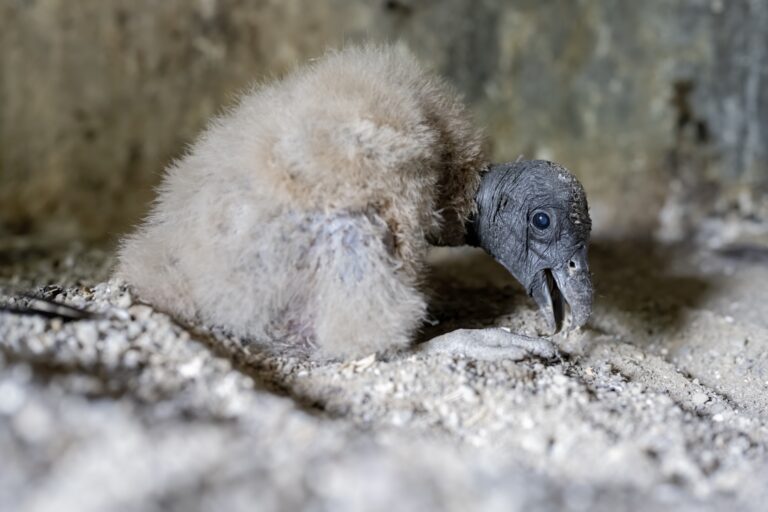
In an isolated backroom of a nature reserve near Bogotá, Colombia’s capital, Wayra, a recently hatched condor chick, is a symbol of hope for Fernando Castro, a wildlife specialist. Castro, 33, says he sees in the small fluff of gray down the future of the Andean condor (Vultur gryphus) in Colombia.
Wayra is the latest Andean condor chick hatched through an artificial incubation program run by the Jaime Duque Park Foundation, a Colombian nonprofit working to conserve the species. At Jaime Duque Park, a theme park a 30-minute drive from Bogotá, which includes two nature reserves, conservationists are working to breed the species at a faster pace than would happen naturally, in a bid to give the Americas’ largest flying bird a better chance at recovery.
Over the past two centuries, Andean condor populations have been steadily declining across the seven countries they inhabit: Argentina, Bolivia, Chile, Colombia, Ecuador, Peru and Venezuela. The population plunged in the 20th century as people settling in the Andean highlands killed the scavenging birds because of the mistaken belief that they were to blame for livestock deaths. Habitat loss and lead contamination from ammunition left in animal carcasses further devastated the species.
Today, the Andean condor is classified on the IUCN Red List as vulnerable to extinction. The IUCN assessment, carried out in 2020, estimates there are about 6,700 individual condors remaining across the species’ range. But their situation varies across countries. In Venezuela, the species is believed to have gone locally extinct, and in Colombia and Ecuador, Andean condors are listed as critically endangered, with estimates populations of just 130 and 150 individuals, respectively. As a scavenger, the condor acts as nature’s cleanup crew, feeding on carcasses and preventing the spread of diseases.
The use of artificial incubation and the birth of three chicks over the past year could help boost the Andean condor population in Colombia. “They are the salvation of the species,” says Castro, director of biodiversity at the Jaime Duque Park Foundation.
In 2015, Castro led efforts to create a captive-breeding program. That year, the park imported a pair of condors from Chile, where the local population is larger than in Colombia. The program saw its first breakthrough in July 2024, when the pair produced their first chick, which staff named Rafiki. Wayra followed in September 2025, and on Oct. 31 this year, a third chick, Ámbar, hatched.
The program builds on the success of similar efforts in the United States, Argentina and Chile. In the U.S., the California condor (Gymnogyps californianus) population bounced back from 22 individuals in the wild in 1982 to more than 300 today. (The California and Andean condors belong to the same family of New World vultures, Cathartidae.)
“ Conservation is always easier if you can do it in the field,” Ron Webb, lead wildlife care specialist at the California condor breeding facility at San Diego Safari Park, tells Mongabay by video call. “You preserve a habitat and it gives the birds the resources and support they already need. But the numbers dropped too far so they needed some support.”
In Argentina, where the Andean condor population was plummeting, a similar program was launched in 1991 and has since produced 78 chicks. In Chile, an Andean condor breeding initiative has resulted in 25 chicks since 1999.
Colombia’s strategy draws on lessons learned from these experiences. At the Jaime Duque Park, wildlife caretakers place each egg in an oven-like incubator that provides warmth and safety. First-time condor parents can struggle with anxiety and accidentally crack their eggs, Castro says. Artificial incubation not only protects the chick, but also accelerates the reproduction rate. Because condors are slow breeders, typically producing one chick every two to three years, removing the egg from their nest often stimulates them to lay again. Using this technique, the pairs can produce up to three eggs in a single year, Castro says.
Once the chick hatches, it never sees its caretakers, so that it doesn’t associate humans with food or safety. Instead, the chick is fed in its early months using a hand puppet resembling an adult condor, then is later kept in an enclosure with other condors. This helps the chick remain wary of humans, improving its chances of survival once released into the wild.
Reducing threats to the species
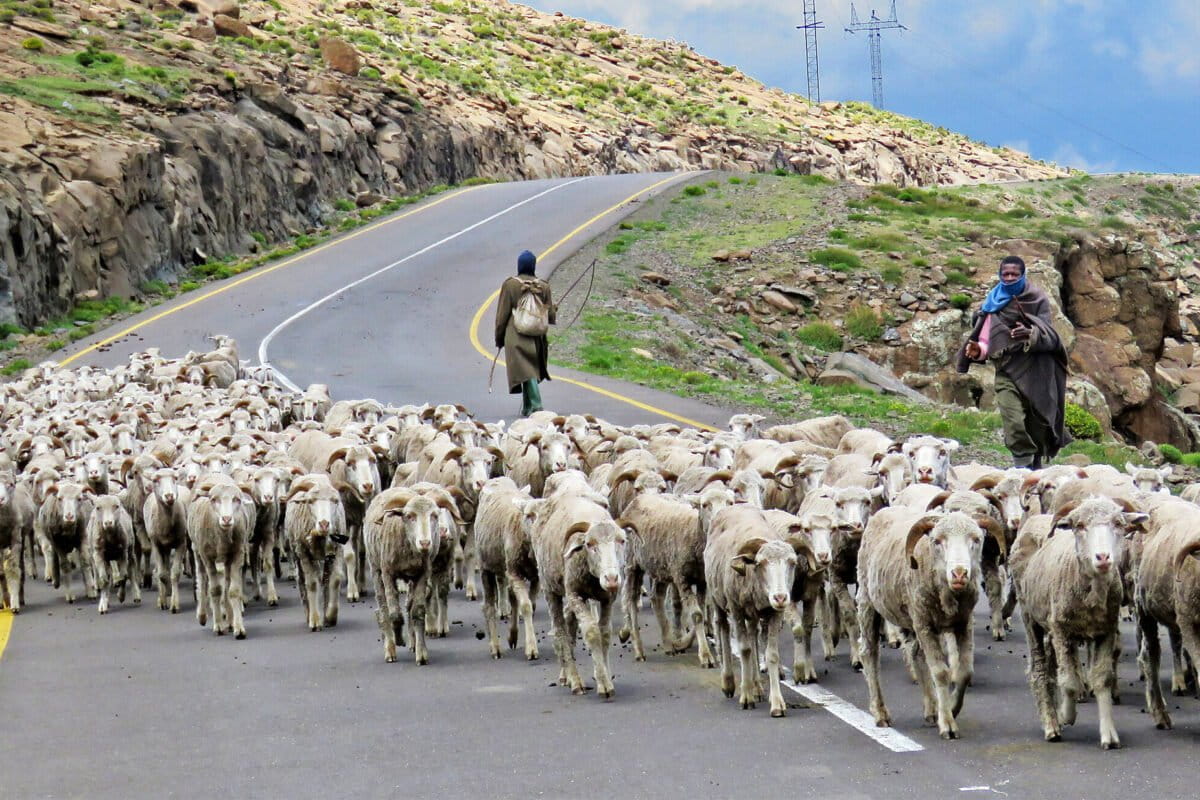
As important as breeding is, it’s equally crucial that the massive birds are welcomed wherever they are released. In the case of Rafiki and Wayra, the park has chosen Cerrito, a high-altitude town in northeastern Colombia that’s home to an estimated 60 condors, or nearly half of the country’s condor population. For the past seven years, the Jaime Duque Park Foundation has worked with local sheep-herding communities to make the town a safer place for condors.
Only two decades ago, condors there were treated as pests. As ranchers moved upslope, they came into conflict with the birds, according to Castro. They believed the birds preyed on their sheep, and so left poisoned carrion out in the open to kill the condors, says Doris Torres, a 47-year-old sheep herder. Many condors died, but Torres, who was aware of the species’ threatened status, looked for solutions, she tells Mongabay.
In 2018, the Jaime Duque Park Foundation stepped in. It backed awareness-raising campaigns to educate people about the condor’s ecological importance. Camera traps installed by the community also showed that their sheep were being killed by foxes and ocelots — and often even by their own sheepdogs.
But there was some truth to the community’s concerns, Castro says. As carrion grew scarce, condors were observed nipping at lambs, driving them off cliffs, and feeding on their carcasses. This unusual behavior, Castro says, was an adaptation to desperate conditions. Since then, the community has limited grazing areas and now leaves carcasses on elevated rocks for condors to eat.
As a result of the community’s efforts, Cerrito has become a haven for condors and, in recent years, a prime destination for condor watching, receiving nearly 1,000 visitors per year. Tourism has boosted the community’s income and helped sustain their conservation work.
“The condor has now gone from being an enemy to being a great ally in development,” Torres says. Today, 19 sheep-herding families are part of the Peasant Association Coexisting with Condors (ACAMCO), the collective Torres founded to protect the species.
Santiago Zuluaga, an Andean condor expert and researcher at Spain’s Superior Council for Scientific Research, says a countrywide assessment is needed to map out potential threats and determine the best release sites for captive-raised birds. While Cerrito may be a safe area for the birds, adult condors can travel hundreds of kilometers in a single day, which could expose them to dangers elsewhere. “Even if the condors are released in [Cerrito], it’s obvious that [they] won’t stay there,” Zuluaga says.

Ideally, such studies should be supported by the government, he adds, but Colombia hasn’t had a national condor conservation plan since 2016, when the last plan expired. Zuluaga says a new strategy is needed to support the condor population in the long term.
Castro says he hopes the government will begin supporting the program to ensure its future. For now, the initiative is financed entirely by the Jaime Duque Park Foundation.
Next year, Rafiki and Wayra will be released into the wind-swept mountains of Cerrito, equipped with GPS and radio tracking devices to track their movements. For the program to succeed, Castro says, the birds must mate and reproduce in the wild, a process that could take up to 10 years.
In the meantime, he says, he’s satisfied by the excitement the birth of Rafiki and Wayra has sparked on social media. In a country where the bird was once widely revered but has since been forgotten, Castro says he hopes the Andean condor will once again win people’s hearts and inspire interest in its conservation.
“In Colombia, we’re talking about condors again,” he says. “There’s real value in that.”
Citation:
Wallace, R. B., Reinaga, A., Piland, N., Piana, R., Hernán Vargas, F., Zegarra, R. E., … Zurita, L. (2022). Defining spatial conservation priorities for the Andean condor (Vultur gryphus). Journal of Raptor Research, 56(1), 1-16. doi:10.3356/JRR-20-59
Banner image: Andean condor. Image by Martin Brogger.
FEEDBACK: Use this form to send a message to the author of this post. If you want to post a public comment, you can do that at the bottom of the page.
Credits