- Communities in South Africa’s coal-mining towns say there’s little sign of a clean energy transition on the ground, where they complain of persistent pollution and violence toward activists.
- A metalworkers’ union leader who sits on South Africa’s climate commission says the transition is racing forward, outpacing new jobs promised to mine workers.
- A mine operator says coal is a critical element in producing renewable energy infrastructure.
In the coal towns of northern KwaZulu-Natal, the promise of South Africa’s “just transition” feels like a distant dream. While government plans speak of a fair shift to clean energy and justice for those harmed by coal, in places like Dannhauser and Mtubatuba, families are still choking on coal dust, activists say they’re being threatened for speaking out, and new mining applications keep arriving.
Communities say the country’s transition is happening everywhere except where coal is dug from the earth.
In a country where 74% of the electricity is made from burning coal, the transition to renewable energy has created a fraught environment where workers who rely on coal jobs are pitted against community members whose health and livelihoods have been damaged by coal dust, blasting and water contamination from mines and power stations.
In 2022, the South African government defined a just transition as one that would simultaneously address health impacts and local environmental harm caused by coal mining and generation, and the job losses and economic disruption that shutting down a vital industry would cause, with particular attention to how poor communities, women, youth and people with disabilities might be affected.
The framework explained how communities affected by mining were to benefit from compensation for health and land damage, and how both workers and residents would be involved in planning and decision-making.
In 2024, the government passed its first climate change law, setting out how the country should move away from fossil fuels. Earlier this year, it committed to cutting carbon dioxide emissions by a further 10% between 2030 and 2035.
Yet coal-fired power has decreased by just 9% since the 1980s, and the latest national energy plan shows coal will still dominate electricity production for the next 17 years, with stations running until 2042.
Mbulaheni Mbodi, a member of the Presidential Climate Commission and national secretary of the National Union of Metalworkers of South Africa (Numsa) at Eskom, the state electricity utility, says the transition is happening at “a breakneck pace,” but without preparation. “The future of coal looks bleak because job pathways are not clearly defined. It is happening without diversification of the economy or new skills for coal workers.”
He adds that fossil-fueled electricity generation is being phased out, but a socially owned renewable energy sector — where solar farms, wind turbines and hydro plants are set up on a large scale and owned and managed by the public instead of private companies — has not yet been set up. This is where new green jobs replacing coal tasks would be found. But “socially owned green energy hasn’t shown it can take the place of coal-fired energy yet,” Mbodi says.
Hundreds of workers who lost their jobs when the Komati power station closed in 2022 were not transferred to green jobs, the union leader says. “This was a disastrous transition. There are now people giving training in CV writing. How do you write a CV when there is no promise of a job?”
Mbodi says community members calling for mine closures will also be affected when the country’s 91,000-100,000 coal workers lose their jobs, because of the support their incomes provide to families and small businesses. “Nearly half the population of South Africa is living in abject poverty. The coal workers work to feed those people. But Komati is now a ghost town,” he says.
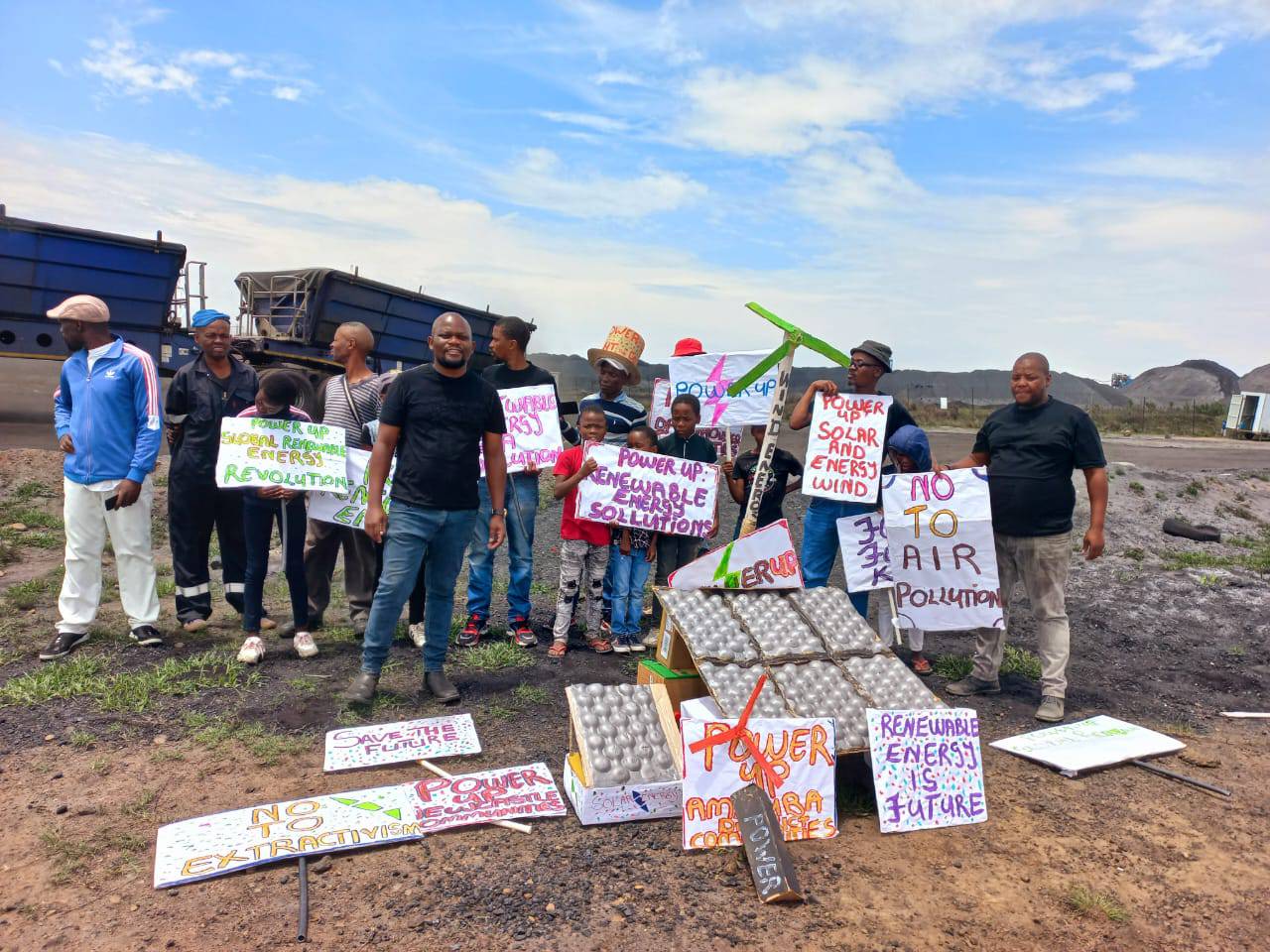
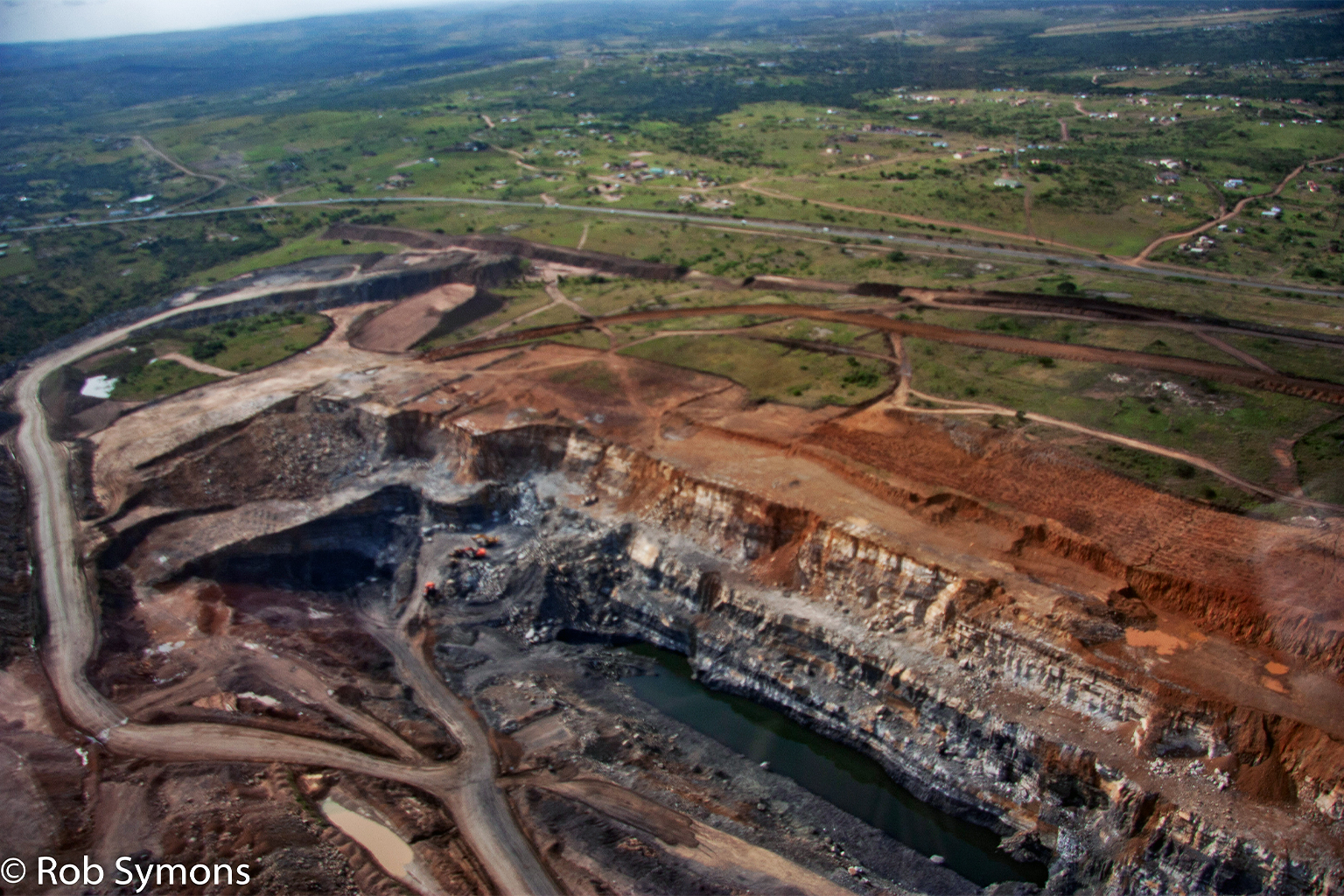
But activists in coal mining areas have a different perspective. Themba Khumalo, co-founder of Sukumani Environmental Justice (SEJ) in Dannhauser, KwaZulu-Natal province, says there’s little sign of an energy transition where he lives. SEJ was formed after the Ikwezi coal mine, which already has three open-cast pits aiming to extract 59 million metric tons of coal by 2048, announced plans to expand in 2021.
The Ikwezi mine’s operations have forced some families off their land, damaged the homes of others who were able to remain, overtaken grazing land, and polluted water sources for nearly 39,000 people in the surrounding area. In April 2025, police broke up a protest against damage to water pipes and the flooding of the only route to the local clinic and schools, shooting and injuring five people.
Khumalo points to new coal prospecting applications as proof that the promised transition is little more than talk. “The government has made promises to the rest of the world that they are getting rid of coal but they are not doing that,” he says.
In KwaZulu-Natal’s Mtubatuba, Israel Nkosi, co-founder of the Mfolozi Community Environmental Justice Organisation, says South Africa’s transition is “invisible,” with mining continuing unabated at the Tendele coal mine. “When the government tells you they are transitioning from coal to renewable energy, go to the ground and you will find there is proof that the transition is not happening,” he says.
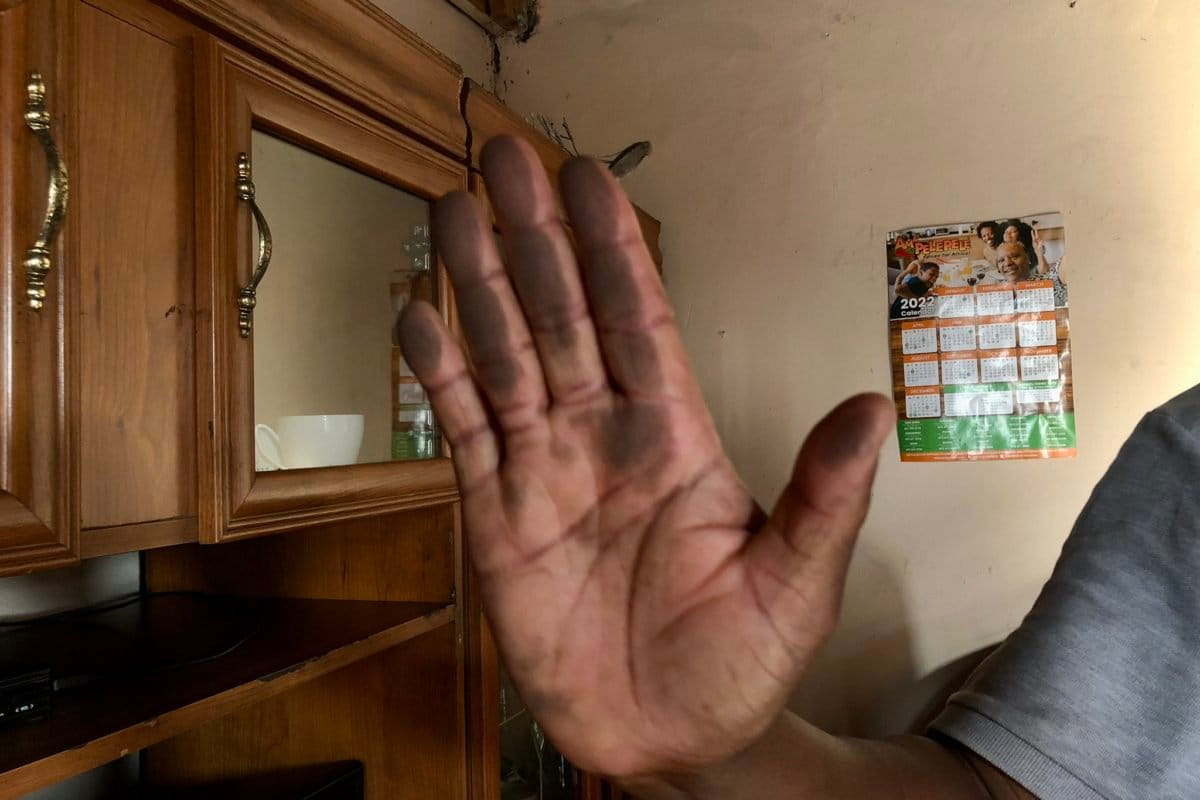
The Tendele mine lies just 500 meters (just over a quarter of a mile) from houses. Blasting disrupts schools and cracks walls. “When you slaughter a cow you can’t eat the intestines because they are full of coal dust,” Nkosi says. “People are coughing because they are inhaling contaminated air. The rainwater we harvest is full of coal dust.”
In defense of coal
Tendele Coal Mining spokesperson Nathi Kunene told Mongabay that over the past 19 years, the company has contributed more than 3 billion rand ($174 million) to its host community in the form of salaries and local procurement. An additional nearly 2 billion rand ($116 million) is expected to flow into Somkhele over the mine’s operating life, Kunene said.
“In addition to this, the company contributes R2.4 million [$139,500] each month into a rehabilitation investment fund to cover the life-of-mine closure costs. Rehabilitation is not an after-thought — it is fully funded through guarantees and cash contributions.”
Kunene also said that building new, renewable energy infrastructure itself requires coal. Anthracite coal mined at Somkhele is a critical element in producing the steel needed for wind turbine towers, solar panel support structures, battery casings, transmission steel and hydrogen electrolyzers.
“Mining, by its nature, alters land, economies and community paths. It creates opportunity and livelihoods on the one hand, and it also creates long-term environmental responsibilities on the other,” Kunene told Mongabay.
When the mine eventually shuts down, he said, Tendele intends to develop pit lakes and evaporation ponds “where appropriate” that the community can use as permanent water sources.
“Our approach is to make sure that when mining ends, the land and the people are in a better position than when mining began,” he added.
Nkosi says the government’s actions contradict South Africa’s Constitution, which guarantees a healthy environment. The new Climate Act hasn’t changed anything, and Mtubatuba’s local government has yet to set up the legally required climate forum. “South Africa creates good laws but they never practice those laws,” Nkosi says.
Both activists say neither new climate legislation nor the government’s policies moving away from fossil fuels have made any difference to repression aimed at people protesting extractive mining. “We are getting threats and being harassed by unknown people who tell us to leave these mines alone,” Khumalo says. Some SEJ activists have gone into hiding.
Nkosi has also spent time in hiding after would-be assassins attacked a fellow activist’s home in 2023. “We are trying whatever we can. Sometimes we mobilize a peaceful march. We do media and speak out publicly, but in South Africa it is a war of the poor against the ones who are rich,” he says.
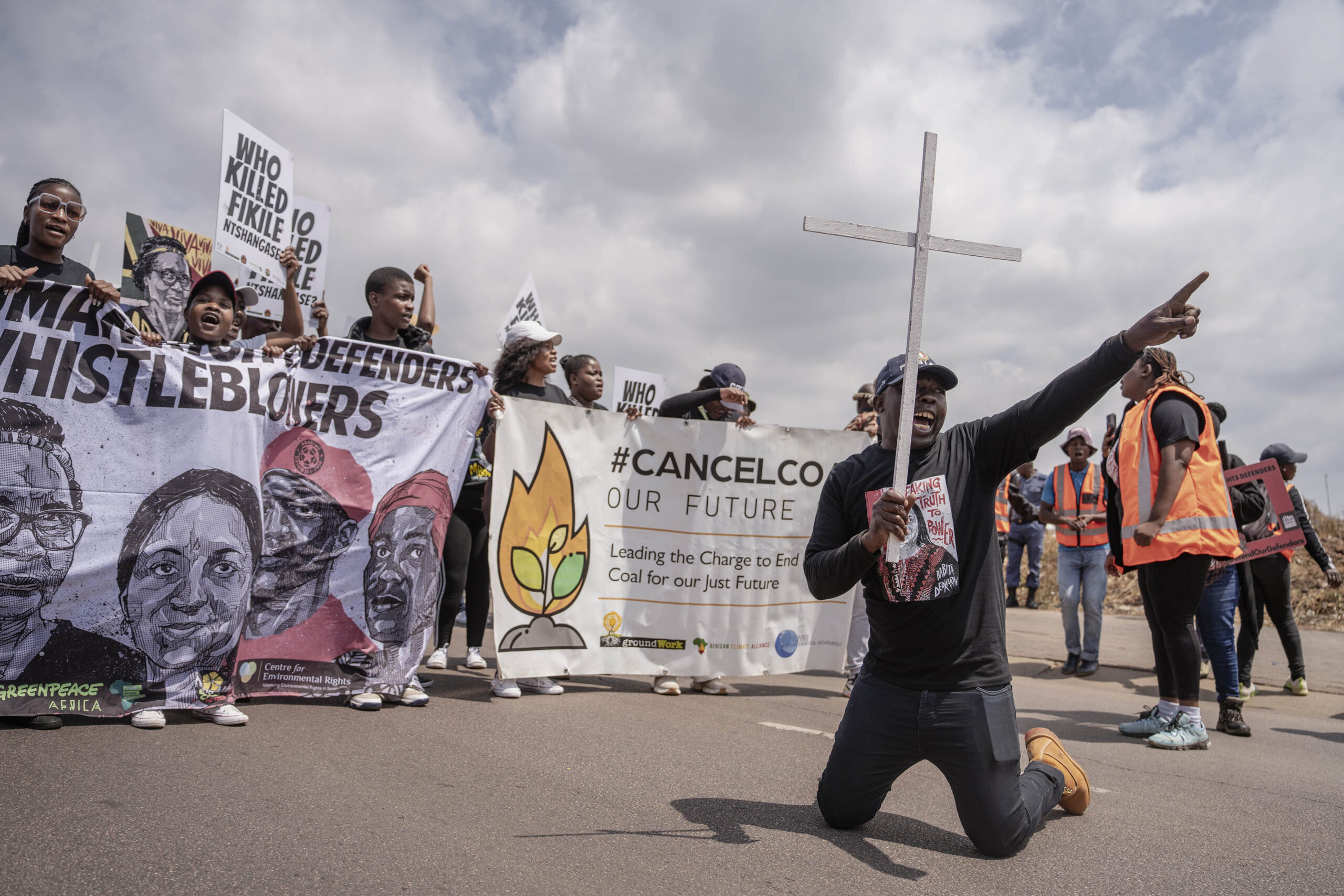
Khumalo says SEJ now focuses on creating awareness of coal mine problems in the 16 villages where Ikwezi has been granted permits to mine but hasn’t started. Traditional leaders have signed communal land away to mines without consulting communities, creating tension between residents who depend on the land and those who support the chiefs’ decisions, hoping for jobs. “We believe people need to take their own decisions to identify what kind of development they need,” Khumalo says.
SEJ is also pushing for green jobs, encouraging young people to attend renewable-energy training. Khumalo says the government must create work rehabilitating abandoned coal mines if it’s serious about a just transition. More than 50 closed mines in KwaZulu-Natal still pollute communities decades after mining ended.
“Mining has destroyed a huge area of land. In most cases the mines do not rehabilitate correctly and we cannot plant crops. Rehabilitation could make a difference and create jobs,” Khumalo says.
The solution, Mbodi says, is for negotiators at the COP30 climate summit that just got underway in Brazil to find a balance.
“We cannot stop mitigating and adapting, but the pace of the just transition should be sovereignly planned,” he says. “Workers must not be left out. Their struggles have to be married to community struggles, because when workers knock off at work, we go to the community. The struggles are intertwined.”
Banner image: October 2024 march against coal in Tshwane, South Africa. Image courtesy of Sukumani Environmental Justice.
South Africa community members decry traditional leaders’ power amid mine plans
In South Africa, a community says no after a coal miner said go
FEEDBACK: Use this form to send a message to the author of this post. If you want to post a public comment, you can do that at the bottom of the page.
Credits