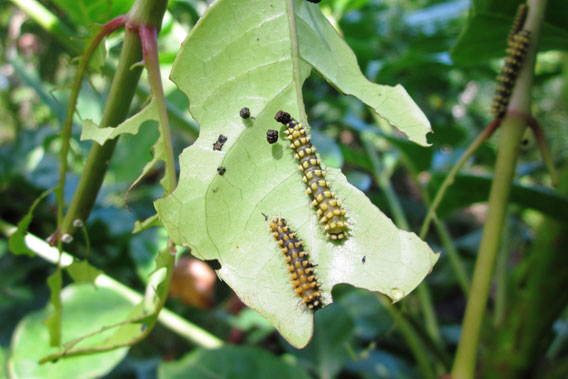
Moth larvae munching on a host plant. Photo by: Tom Corcoran.
Poaching is a major threat to endangered lemurs in some parts of Madagascar, but a group has come up with an innovative solution to the problem: replace lemur meat with silkworm pupae, a byproduct of silk production.
The Pupae for Protein (P4P) program, developed by the Madagascar Organization of Silk Workers (SEPALI), aims to address multiple problems for communities around Makira Protected Area in Northeastern Madagascar: poverty, environmental degradation, and lemur poaching. The concept is simple: generate sustainable livelihoods from silk production using native silkworms. Sell the byproduct — silkworm pupae — as a source of protein in communities that already have a tradition of eating insects. The result: incomes improve, less forest is cleared for slash-and-burn agriculture, and lemurs live to see another day.
SEPALI explains:
-
Insects are a traditional food in Madagascar and are particularly important in rural communities during the lean period. Farmers who produce 4000 cocoons (1 kilo) can provide about 4 kg of protein to their children, the equivalent of one red-ruffed lemur, a highly endangered species previously hunted in the Makira Protected Area from which farmers have been displaced. Edible pupae could provide additional income as well as food. For example, six species of sun-dried Saturniidae larvae sold in Zambian markets in 2003 yielded $52/11.5 kg thereby returning greater profits than other types of agriculture produce.
SEPALI is currently working in a dozen communities. It hopes to introduce the Pupae for Protein soon.
Related articles
Innovative conservation: wild silk, endangered species, and poverty in Madagascar

(02/20/2012) For anyone who works in conservation in Madagascar, confronting the complex difficulties of widespread poverty is a part of the job. But with the wealth of Madagascar’s wildlife rapidly diminishing— such as lemurs, miniature chameleons, and hedgehog-looking tenrecs found no-where else in the world—the island-nation has become a testing ground for innovative conservation programs that focus on tackling entrenched poverty to save dwindling species and degraded places. The local NGO, the Madagascar Organization of Silk Workers or SEPALI, along with its U.S. partner Conservation through Poverty Alleviation (CPALI), is one such innovative program. In order to alleviate local pressure on the newly-established Makira Protected Area, SEPALI is aiding local farmers in artisanal silk production from endemic moths. The program uses Madagascar’s famed wildlife to help create more economically stable communities.