default header images could go here wildlife trafficking blog
News articles on wildlife trafficking

Weekly Newsletter | Syndicate / XML feed / RSS | Other topics

News articles on wildlife trafficking

Mongabay.com news articles on wildlife trafficking in blog format. Updated regularly.


In midst of poaching crisis, illegal rhino horn tops gold

(11/25/2009) Rhino poaching has hit a fifteen-year high, and the rising price for black-market rhino horn is likely the reason why. For the first time in a decade rhino horn is worth more than gold: a kilo of rhino horn is worth approximately 60,000 US dollars while gold is a little over 40,600 US dollars.


Transmitters implanted in orangutans for tracking after release into the wild

(11/23/2009) For the first time transmitters have been implanted in orangutans to track their daily movements. The Sabah Wildlife Department (SWD) has implanted transmitters into three orangutans that have been released back into the wild from Sepilok Orangutan Rehabilitation Center in the Malaysian state of Sabah on the island of Borneo.


DNA uncovers nearly extinct Siamese crocodiles in captivity

(11/15/2009) The Critically Endangered Siamese crocodile, once believed to be extinct in the wild, received some uplifting news this week. DNA testing of 69 rescued crocodiles at Phnom Tama Wildlife Rescue Center (PTWRC) in Cambodia found 35 purebred Siamese crocodiles.


Hunting across Southeast Asia weakens forests' survival, An interview with Richard Corlett

(11/08/2009) A large flying fox eats a fruit ingesting its seeds. Flying over the tropical forests it eventually deposits the seeds at the base of another tree far from the first. One of these seeds takes root, sprouts, and in thirty years time a new tree waits for another flying fox to spread its speed. In the Southeast Asian tropics an astounding 80 percent of seeds are spread not by wind, but by animals: birds, bats, rodents, even elephants. But in a region where animals of all shapes and sizes are being wiped out by uncontrolled hunting and poaching—what will the forests of the future look like? This is the question that has long occupied Richard Corlett, professor of biological science at the National University of Singapore.


Kenya's pain, part two: decades of wildlife decline exacerbated by drought

(10/20/2009) Not many years ago if you were planning a trip to Africa to see wildlife, Kenya would be near the top of the list, if not number one. Then violent riots in late 2007 and early 2008 leaving a thousand dead tarnished the country's image abroad. When calm and stability returned, Kenya was again open for tourism, and it's true that most travelers were quick to forget: articles earlier this year announced that even with the global economic crisis Kenya was expecting tourism growth. However, a new disaster may not be so quickly overcome.


Illegal ivory demand could wipe out Africa's elephants by 2025

(10/20/2009) Nearly twenty years ago the ivory trade was banned by Convention on International Trade in Endangered Species (CITES). Many saw this as the most important step in preventing the continued loss of elephants at the hands of poachers, and for awhile poaching slowed down. But now elephants are in danger again: a report by the International Fund for Wildlife Welfare (IFWW) states that an astounding 38,000 elephants are killed for their tusks annually—over a hundred every day.


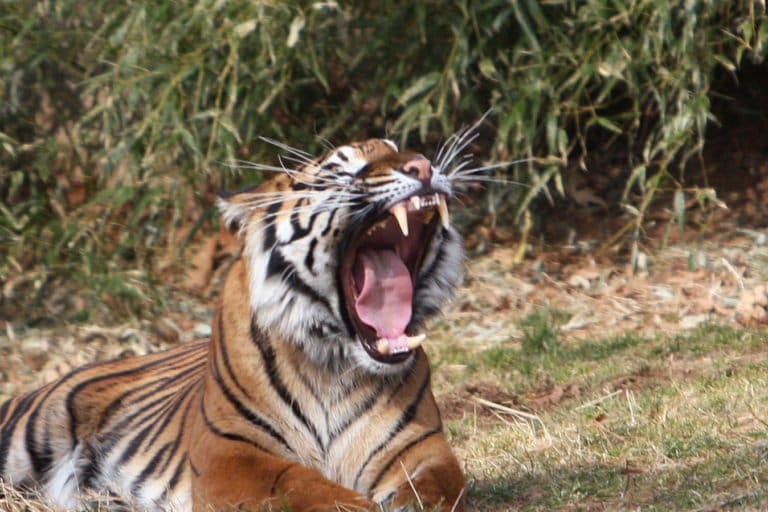
Tiger success story turns bleak: poachers decimating great cats in Siberia

(10/18/2009) There were two bright spots in tiger conservation, India and Russia, but both have dimmed. Last year India announced that a new survey found only 1,411 tigers, instead of the previous estimation of 3,508, and now Russian tigers may be suffering a similar decline. The Siberian Tiger Monitoring Program—a collaboration between the Wildlife Conservation Society (WCS) and several Russia government organizations—has found evidence that after a decade of stability the Siberian tiger's population may be falling. This year's annual survey, which covers only a portion of tiger habitat in Russia, found only 56 adult tigers: a forty percent decrease from the average of 95 tigers. While the cause of this year's decline may be weather-related, researchers fear something far more insidious is going on.


After declining 95% in 15 years, Saiga antelope begins to rebound with help from conservationists

(09/20/2009) In a decline on par with that suffered by the American bison in the Nineteenth Century, in the 1990s the saiga antelope of the Central Asian steppe plummeted from over one million individuals to 50,000, dropping a staggering 95 percent in a decade and a half. Since then new legislation and conservation measure have helped the species stabilize in some areas but in others the decline continues. Working for six years with the Saiga Conservation Alliance, Founding Member and Executive Secretary Elena Bykova has helped bring the species back from the very brink of extinction.


Saving the last megafauna of Malaysia, an interview with Reuben Clements

(09/15/2009) Reuben Clements has achieved one success after another since graduating from the National University of Singapore. Currently working in peninsular Malaysia, he manages conservation programs for the Endangered Malayan tiger and the Critically Endangered Sumatran Rhino with World Wildlife Fund. At the same time he has discovered three new species of microsnails, one of which was named in the top ten new species of 2008 (a BIG achievement for a snail) due to its peculiar shell which has four different coiling axes. ie7uhig


Oil road transforms indigenous nomadic hunters into commercial poachers in the Ecuadorian Amazon

(09/13/2009) The documentary Crude opened this weekend in New York, while the film shows the direct impact of the oil industry on indigenous groups a new study proves that the presence of oil companies can have subtler, but still major impacts, on indigenous groups and the ecosystems in which they live. In Ecuador's Yasuni National Park—comprising 982,000 hectares of what the researchers call "one of the most species diverse forests in the world"—the presence of an oil company has disrupted the lives of the Waorani and the Kichwa peoples, and the rich abundance of wildlife living within the forest.


World’s only Sumatran rhino to give birth in captivity dies at Cincinnati Zoo

(09/10/2009) Emi, the world’s only Sumatran rhino to give birth in captivity, died on Saturday at the Cincinnati zoo. She successfully gave birth to three offspring, one of which has been released back into the wild in Indonesia.


Could DNA barcodes help fight the commercial wildlife trade? [warning: graphic image]

(09/08/2009) Illegal wildlife traders around the world may have a new enemy: DNA barcodes. These short genetic sequences could aid police and customs officials around the world in tracking the origin of confiscated bushmeat and other wildlife products.


No killing yet as season begins for dolphin slaughter made famous by The Cove

(09/02/2009) Due to the new documentary The Cove, the town of Taiji, Japan is suddenly famous, or perhaps more aptly, infamous. Winner of the documentary award at the Sundance Film Festival, the film uncovers a cove in Taiji where over two thousand dolphins are slaughtered every year due to the billion dollar dolphin entertainment industry. Their dolphin's meat is then labeled as fish and given to children for school lunches, even though as top level predators the meat is heavily tainted with mercury.


Tiger brutally killed in zoo, body parts taken to sell for Chinese medicine

(08/25/2009) Poachers broke into the Jambi Zoo on Saturday morning in Indonesia. Using meat they drugged a female Sumatran tiger named Sheila and then skinned her in the cage. They left behind very little of the great cat: just her intestines and a few ribs. Authorities suspect that the tiger's body parts will be sold in the thriving black market for Chinese medicines where bones are used as pain killers and aphrodisiacs.


20,000 orangutans killed or poached in 10 years without a single prosecution

(08/24/2009) At least 20,000 orangutans have been killed or captured for the illegal pet trade in the past ten years in Indonesia without a single prosecution, according to a report published by Nature Alert and the Centre for Orangutan Protection, groups that campaign on behalf of orangutans.


Despite legal protection, Indian turtles are poached for restaurant trade

(08/10/2009) Despite being accorded the highest level of protection under Indian law, soft shell turtles are regularly trafficked in Kerala for the restaurant trade, report researchers writing in in the journal Tropical Conservation Science.


Photo: Scientists discover new species of Komodo dragon-like lizard

(07/21/2009) German researchers have discovered a new species of monitor lizard in Indonesia using DNA analysis and morphological characteristics. The species, Varanus lirungensis, is described in the Australian Journal of Zoology.


War and conservation in Cambodia

(06/21/2009) The decades-long conflict in Cambodia devastated not only the human population of the Southeast Asian country but its biodiversity as well. The conflict led to widespread declines of species in the once wildlife-rich nation while steering traditional society towards unsustainable hunting practices, resulting in a situation where wildlife is still in decline in Cambodia, according to a new study from researchers with the World Wildlife Fund (WWF).


World’s rarest tortoises stolen

(06/08/2009) Four of the world's rarest tortoises have been stolen from a captive breeding program in Madagascar. The critically endangered animals were part of a group of 44 due for release by the Durrell Wildlife Conservation Trust and were being held in pre-release enclosures at a secret location. The Trust fears the stolen ploughshare tortoises are destined for Europe, USA or Asia where collectors will pay thousands of dollars for individuals due to the rarity of the species. It is estimated that only 500 adults remain in the wild and they are only found in Baly Bay national park, where the tortoises were taken from. After extensive investigations in the area arrests have been made but the tortoises are yet to be recovered.


New rainforest reserve in Congo benefits bonobos and locals

(05/25/2009) A partnership between local villages and conservation groups, headed up by the Bonobo Conservation Initiative (BCI), has led to the creation of a new 1,847 square mile (4,875 square kilometer) reserve in the Democratic Republic of Congo (DRC). The reserve will save some of the region’s last pristine forests: ensuring the survival of the embattled bonobo—the least-known of the world’s four great ape species—and protecting a wide variety of biodiversity from the Congo peacock to the dwarf crocodile. However, the Kokolopori Bonobo Reserve is worth attention for another reason: every step of its creation—from biological surveys to reserve management—has been run by the local Congolese NGO and villages of Kokolopori.


Will the illegal trade of the critically endangered Philippine forest turtle lead to its extinction?

(05/04/2009) Endangered Species International (ESI) conducted ongoing monitoring at markets known to sell pets and wild animals in Manila, Philippines, to monitor the status of the trade of one of the most endangered turtle in the world: the Philippine forest turtle Siebenrockiella (Panayenemys) leytensis,. The critically endangered Philippine forest turtle is endemic to the Philippines, occurring only on one major island, Palawan, and its small satellite island, Dumaran.


Great Cats and Rare Canids Act and Crane Conservation Act pass the US House

(04/22/2009) The US House of Representatives passed today, the 39th Earth Day, two bills that would aid some of the world’s most embattled wildlife: the Great Cats and Rare Canids Act (H.R. 411) and the Crane Conservation Act (H.R. 388).


Deforestation blamed for tiger maulings in Sumatra

(02/27/2009) WWF has attributed six recent killings of villagers by tigers to deforestation in Sumatra. Habitat loss — together with prey depletion by hunting — is believed to be driving tiger-human conflict on the Indonesia island.


YouTube videos may be imperiling cuddly primate

(02/24/2009) Many “cute” and “cuddly” species have gained attention and funds from conservation groups, since the public gravitates toward such attractive species. In fact, cuteness can sometimes mean the difference between conservation attention and extinction. However, for slow lorises being cute may be their downfall. Despite the fact that owning a slow loris as a pet or trading it is illegal in all range countries and “all countries where primates as pets are illegal,” the species is still heavily trafficked, says Dr. Anna Nekaris, an anthropologist who specializes in slow-loris research at Oxford Brookes University. During the past few years videos of pet slow lorises have begun to appear on YouTube. Such videos often include comments from users who push misinformation about the slow loris’s legality and aptitude as pets, raising concerns among conservationists that the videos encourage people to actively pursue the slow loris as a pet.


Box turtles in Asia imperiled by massive trade

(02/23/2009) Massive international trade in Southeast Asian Box Turtles has driven the species to near-extinction in parts of Indonesia, according to a new report by TRAFFIC, the wildlife trade monitoring network.


One billion frogs harvested as food per year

(01/21/2009) The consumption of up to one billion frogs per year to satisfy human appetite for frog flesh is adding to the litany of pressures on global amphibian populations, write researchers in the upcoming issue of Conservation Biology.


Wildlife trade creating “empty forest syndrome” across the globe

(01/19/2009) For many endangered species it is not the lack of suitable habitat that has imperiled them, but hunting. In a talk at a Smithsonian Symposium on tropical forests, Elizabeth Bennett of the Wildlife Conservation Society (WCS) outlined the perils for many species of the booming and illegal wildlife trade. She described pristine forests, which although providing perfect habitat for species, stood empty and quiet, drained by hunting for bushmeat, traditional medicine, the pet trade, and trophies.


Malaysia seeks to reverse collapse of tiger population due to poaching, logging, palm oil

(12/23/2008) A new law seeks to double Malaysia's tiger population to 1,000 by 2020, reports BBC News.


Photos of new species discovered in the Greater Mekong

(12/15/2008) More than 1,000 previously unknown species have been discovered in the Greater Mekong, a region comprising Cambodia, Laos, Myanmar (Burma), Thailand, Vietnam and the Yunnan Province of China, in the past decade, according to a new report from WWF.


Chad's elephant population falls by two-thirds in two years

(12/11/2008) Civil strife of Chad — a consequence of the calamity in Darfur — is taking a toll on the country's elephant population, reports the Wildlife Conservation Society (WCS) which has launched an emergency appeal for funds to support conservation efforts in the country.


South Africa auctions last of 'legal' elephant ivory to China, Japan

(11/07/2008) South Africa sold 47 metric tons of elephant ivory to Chinese and Japanese buyers for $6.7 million in what was the final of four auctions sanctioned by CITES, an international agreement on the wildlife trade.


20 convicted for poaching Asiatic lions in their last refuge

(11/06/2008) Twenty people have been convicted for poaching Asiatic lions last year in India's Gir National Park. The twenty individuals will spend three years in prison and be fined 10,000 Rs each.


Endangered wildlife in Malaysia falls victim to rampant poaching due to 'outdated' laws

(11/04/2008) In the face of rampant poaching of endangered animals, conservationists are calling for Malaysia to reform its 36-year-old wildlife protection law.


Elephant ivory auction produces low prices, controversy

(10/30/2008) The first internally-sanctioned auction of elephant ivory since 1999 produced lower-than-expected prices, but plenty of controversy, reports Reuters.


How to Save Snow Leopards

(10/28/2008) The snow leopard (Panthera uncia) is one of the rarest and most elusive big cat species with a population of 4,500 to 7,500 spread across a range of 1.2 to 1.6 million kilometers in some of the world's harshest and most desolate landscapes. Found in arid environments and at elevations sometimes reaching 18,000 feet (5,500 meters), the species faces great threats despite its extreme habitat. These threats vary across its range, but in all countries where it is found — Afghanistan, Bhutan, China, India, Kyrgyzstan, Kazakhstan, Nepal, Mongolia, Pakistan, Russia, Tajikistan, Uzbekistan and possibly Myanmar — the species is at risk. In some countries snow leopard are directly hunted for their pelt, in others they are imperiled by depletion of prey, loss of habitat, and killing as a predator of livestock. These threats, combined with the cat's large habitat requirements, means conservation through the establishment of protected areas alone may not be enough save it from extinction in the wild in many of the countries in which it lives. Working to stave off this fate in half a dozen of its range countries is the Snow Leopard Conservancy. Founded by Dr. Rodney Jackson, a biologist who has been studying snow leopard in the wild for 30 years, the Conservancy seeks to conserve the species by "promoting innovative grassroots measures that lead local people to become better stewards of endangered snow leopards, their prey, and habitat."


Ebay bans the sale of elephant ivory

(10/21/2008) Ebay banned the sale of ivory products to help protect elephants from poaching, the company announced Monday.


Trafficking of tiger parts is rife in Myanmar

(10/15/2008) Trafficking of parts from endangered wild cats is rife in Myanmar (Burma) according to a new report from TRAFFIC, the wildlife trade monitoring network. Surveys conducted by TRAFFIC over the past 15 years have turned up 1,320 wild cat parts from at least 1,158 individual animals, including 107 tigers. The group says the toll in the country is far higher.


Illegal wildlife trade devastating Asia's pangolins

(10/15/2008) Last week the IUCN changed the status of the Malayan and the Chinese pangolins from near-threatened to endangered. These notoriously shy and scaly mammals, resembling anteaters with armored plates, have become the victim of a booming illegal wildlife trade in Southeast Asia.


Logging, wildlife trade drive sun bears toward extinction

(09/25/2008) Industrial logging, large-scale forest conversion for oil palm plantations, and the illegal wildlife trade have left sun bears the rarest species of bear on the planet. Recognizing their dire status, Siew Te Wong, a Ph.D. candidate at the University of Montana, is working in Malaysia to save the species from extinction. Known as "Sun Bear Man" in some circles, Siew Te Wong is setting up the Bornean Sun Bear Conservation Centre (BSBCC) in Sabah, a Malaysian state on the island of Borneo. The project aims to save sun bears, which have largely overlooked by conservationists, through research, education, rehabilitation, and habitat conservation.


Bushmeat trade "most significant" threat to Africa's wildlife says Richard Leakey

(09/24/2008) Maverick conservationist, Richard Leakey, writes that "commercial bushmeat hunting has become the most significant immediate threat to the future of wildlife in Africa and around the world" in an article on Wildlife Direct. Founded by Leakey, Wildlife Direct is a nonprofit allowing researchers and wildlife organizations in Africa and Asia to connect directly with supporters through blogs.


Commercial bushmeat trade is devastating wildlife

(09/15/2008) Commercial killing of rainforest wildlife is putting biodiversity at risk and reducing sources of protein for rural populations, warns a new report from the Center for International Forestry Research (CIFOR) and the Secretariat of the Convention on Biological Diversity (CDB).


Indonesian raids on tiger traffickers yielding arrests in Sumatra

(09/02/2008) A raid on illegal tiger traders in Indonesia resulted in four arrests in Sumatra, reports the Wildlife Conservation Society (WCS). The arrests come under a new crack-down by Indonesian authorities on the sales of tiger parts. 10 traffickers have been arrested in the past 3 months.


Aquarium fish trade linked to cocaine, timber smuggling in Brazil

(08/10/2008) Smugglers are using the ornamental fish trade to traffic cocaine and illegally logged timber according to a report from Sérgio Abranches of O Eco, a leading Brazilian environmental web site.


48% of primates threatened with extinction

(08/05/2008) 48 percent of the world's primate species are at risk of extinction, according to the first comprehensive review of the world's primates since 2003. The results were released as an update to the IUCN Red List at the 22nd International Primatological Society Congress in Edinburgh, Scotland.


African elephants being poached at record rate

(08/01/2008) African elephants are being killed for their ivory at a record pace, reports a University of Washington conservation biologist.


Nepal's tiger population plummets due to poaching

(07/02/2008) Nepal's tiger population have plummeted due to poaching and a booming trade in their parts, according to a government survey released Tuesday.


Chinese prefer tigers in the wild over tigers on their plates

(07/02/2008) A new survey shows that most Chinese would rather have tigers living in the wild than tiger products on their dinner plates. However the poll also revealed some notable contradictions in attitudes toward the trade in tiger parts.


Illegal wildlife trade worth $20B/yr

(03/19/2008) The illegal wildlife trade generates $5 to $20 billion annually, making it the largest illicit market after guns and drugs trafficking, reports a study released by the Congressional Research Service.


Predator of the world's largest macaw key to its survival

(03/13/2008) In a bizarre biological twist, a new study shows that the Hyacinth Macaw depends on its greatest predator, the Toco Toucan, for continued survival.


India has 1400 tigers -- not 3500

(03/13/2008) A census of India's reserves found 1,411 tigers rather than the 3,508 estimated previously, according to the State Ministry of Environment and Forests.


Page 1 | Page 2


home | archives | news | XML / RSS feeds


XML / RSS / Syndication options

mongabay.com features more than 250 RSS feeds to meet your specific area of interest


MONGABAY.COM
Mongabay.com seeks to raise interest in and appreciation of wild lands and wildlife, while examining the impact of emerging trends in climate, technology, economics, and finance on conservation and development (more)

CONTENTS
Rainforests
Tropical Fish
News
Madagascar
Pictures
Kids' Site
Languages
Topics | RSS
Newsletter
TCS Journal
About
Contact
Archives
Interns
Help


WEEKLY NEWSLETTER
Email:


SOCIAL MEDIA
Facebook
Twitter
Zenfoio


SUPPORT
Help support mongabay.com when you buy from Amazon.com


RELATED TOPICS

default related topics content


BLOGROLL/LINKS

default blogroll links content


POPULAR PAGES
Rainforests
Rain forests
Amazon deforestation
Deforestation
Deforestation stats
Why rainforests matter
Saving rainforests
Deforestation stats
Rainforest canopy

News
Most popular articles
Worth saving?
Forest conservation
Earth Day
Poverty alleviation
Cell phones in Africa
Seniors helping Africa
Saving orangutans in Borneo
Palm oil
Amazon palm oil
Future of the Amazon
Cane toads
Dubai environment
Investing to save rainforests
Visiting the rainforest
Defaunation
Blue lizard
Amazon fires
Extinction debate
Extinction crisis
Malaysian palm oil
Borneo

News topics
Amazon
Biofuels
Brazil
Carbon Finance
Climate Change
Deforestation
Energy
Happy-upbeat
Interviews
Oceans
Palm oil
Rainforests
Solutions
Wildlife
MORE TOPICS


T-SHIRTS

  • Madagascar Wildlife
  • Dancing lemurs
  • Don't fall asleep the sloths will eat you
  • Sucking on this frog may make you insane


    CALENDARS

  • Mount Kenya
  • East Africa Safari Wildlife
  • Kenya's Turkana People
  • Peru
  • African Wildlife
  • Alaska
  • China
  • Madagascar Chameleons


    CANVAS BAGS

  • Hallucinogenic frog bag
  • Madagascar wildlife bag


  • Copyright mongabay 2009