mongabay.com logo
biodiversity blog News articles on biodiversity

Weekly Newsletter | Syndicate / XML feed / RSS | Other topics

News articles on biodiversity

Mongabay.com news articles on biodiversity in blog format. Updated regularly.


New extinction hotspots identified

(03/07/2006) Scientists have identified 20 potential extinction hotspots where hunting and human-caused habitat destruction are set to suffer significant declines in animal populations in coming years. In developing their map of future extinction hotspots, the researchers analyzed current and predicted IUCN Red List data on the extinction risk to almost 4,000 species of land mammals. Their roster includes areas not typically found on lists of the world's most imperiled habitats, including Greenland, the Patagonian coast of South America, and Siberian tundra.


Polar bear may be listed as endangered species

(02/09/2006) The U.S. Fish and Wildlife Service today announced that it is considering a petition to list the polar bear (Ursus maritimus) as threatened under the Endangered Species Act. Scientists believe polar bear populations are increasingly in danger due to the effects of climate change, specifically receding ice and warming temperatures.


Pictures of new species discovered in New Guinea

(02/07/2006) A team of scientists led by conservation International (CI) found dozens of new species in a survey of New Guinea's Foja Mountains. The December 2005 trip by a team of U.S., Indonesian, and Australian scientists discovered new species of frogs, butterflies, plants, and an orange-faced honeyeater, the first new bird from the island of New Guinea in more than 60 years.


Scientists discover dozens of new species in New Guinea

(02/06/2006) A team of scientists led by conservation International (CI) found dozens of new species in a survey of New Guinea's Foja Mountains. The discoveries were made under CI's Rapid Assessment Program (RAP) which deploys expert scientists to poorly understood regions in order to quickly assess the biological diversity of an area. The conservation organization makes RAP results immediately available to local and international decision makers to help support conservation action and biodiversity protection.


African carnivores under threat -- top 20 at risk listed

(02/01/2006) It may still be king of the beasts, but the African lion's kingdom is dwindling, according to a new report released by the New York-based Wildlife conservation Society (WCS) that says these emblematic big cats have disappeared from 82 percent of their historic distribution over the past several decades. The 200-page report looked at the conservation status of the 20 largest species of African carnivores and examined priorities to help ensure that they persist on the continent.


In search of Bigfoot, scientists may uncover unknown biodiversity in Malaysia

(02/01/2006) Malaysian scientists are scouring the rainforests of Johor state in search of the legendary ape-man Bigfoot, supposedly sighted late last year. But they are more likely to encounter some less fantastic but unique creatures that dwell in these still unexplored ecosystems.


World's smallest fish title in dispute

(01/30/2006) Researchers dispute last week's claim of world's smallest fish in Sumatra. Evidence of an even smaller fish--a species of marine anglerfish 20 percent smaller than the carp found in southeast Asia--is presented by a University of Washington professor of aquatic and fisheries sciences. In a release from the University of Washington, professor Pietsch describes the tiny anglerfish, Photocorynus spiniceps, found in the Philippines.


Picture of the world's smallest fish

(01/26/2006) Scientists have found the smallest known fish in the peat swamps of Sumatra, an island in Indonesia, according to new research.


Mother nature encourages diversity in rainforest trees

(01/26/2006) Older forests have a greater diversity of trees than younger forests according to research published in Friday's issue of the journal Science. The study -- conducted by 33 ecologists from 12 countries -- found that nature encourages diversity by selecting for less common trees as the trees mature, indicating that diversity has ecological importance to tropical forests.


Study finds deforestation has pushed orangutans to brink of extinction

(01/24/2006) A three year genetic study by wildlife geneticists from Cardiff School of Biosciences has shown a population collapse in the Bornean orang-utan.


Extinctions linked to climate change

(01/11/2006) A new report that links global warming to the recent extinction of dozens of amphibian species in tropical America is more evidence of a large phenomena that may affect broad regions, many animal species and ultimately humans, according to researchers at Oregon State University.


Pantanal, the world's largest wetland, disappearing finds new report

(01/10/2006) Deforestation has destroyed 17 percent of the Pantanal, the world's largest wetland, according to a new report from conservation International. The Pantanal, an area of flooded grassland and savanna covering 200,000 square kilometers during the rainy season, includes parts of Brazil, Paraguay, and Bolivia and is fed by the Rio Paraguay. The wetland is home to some 3500 species of plant and 650 species of birds. About 125 types of mammals, 180 kinds of reptiles, 41 types of amphibians, and 325 species of fish have been found in the region. The Pantanal in an important source of freshwater to neighboring farming areas and downstream urban areas.


1 million ha protected in Madagascar

(01/06/2006) The government of Madagascar has scored a significant victory for conservation by bringing one million hectares (more than 3,800 square miles) of wild landscapes and seascapes under protection to conserve the island nation's unique fauna and flora, according to the Wildlife conservation Society (WCS).


Pollination networks may play key role in extinction

(01/04/2006) As animal extinctions continue at the rate of one every 16 years, it's unclear how declining biodiversity will disturb ecosystem dynamics. Of special concern are the pollinators, essential players in the reproductive biology of plants, the earth's primary producers.


Afghanistan developing environmental protection with UN help

(01/02/2006) Laws aimed at protecting Afghanistan's wildlife, waterways and forests, believed to be the first legal conservation tools in the country, have been developed by the Government with assistance from the United Nations Environment Programme (UNEP), the agency announced today.


Male lizard color may result from female preference

(12/27/2005) The anole lizard's dewlap -- a flap of skin that hangs beneath its chin -- plays an important role in species recognition, territorial defense and courtship. According to the Smithsonian Tropical Research Institute (STRI), a leading research institution in Panama, male slender anoles (Norops limifrons) exhibit variation in dewlap color ranging from orange dewlaps in Gamboa populations, white with an orange spot on Barro Colorado Island, and mixed populations in Soberania.


Last wild horse species returns from brink of extinction

(12/20/2005) An international working group coordinated by ZSL's Institute of Zoology (IoZ) has made the recommendation to reclassify the Przewalski's horses from extinct to endangered on the IUCN red list of threatened species.


Mysterious pygmy elephants being tracked across Borneo by WWF

(12/16/2005) The same satellite system used by the U.S. military to track vehicle convoys in Iraq is helping World Wildlife Fund shed light on the little-known world of pygmy elephants in Borneo.


Marine life diverse but declining, finds survey

(12/14/2005) A comprehensive census of all the marine life in the world's oceans is halfway complete. The 10-year international project that began in 2000 and now involves some 1700 researchers from 73 countries has uncovered new evidence of rich biodiversity in the world's oceans along with an alarming decline of many marine species.


Is Global Warming Killing Polar Bears? -- WSJ

(12/14/2005) Today The Wall Street Journal ran an article asking "Is Global Warming Killing the Polar Bears?" The article cited several recent studies that suggest polar bears are increasingly under threat from receding ice and warming temperatures.


794 species on brink of extinction find study

(12/12/2005) Protecting 595 sites around the world would help address an imminent global extinction crisis, according to a study published today in the Proceedings of the National Academy of Sciences. Conducted by scientists working with the 52 member organizations of the Alliance for Zero Extinction (AZE), the study identifies 794 species threatened with imminent extinction by virtual of existing at only a single remaining site on Earth. The study found that just one-third of the sites are known to have legal protection, and most are surrounded by human population densities that are approximately three times the global average. Safeguarding these sites is key to saving these species from extinction say the authors of the study.


Dancing monkeys could be a risk to your health

(12/08/2005) Some urban performing monkeys in Indonesia are carrying several retroviruses that are capable of infecting people, according to a new study led by University of Washington researchers. The results indicate that contact with performing monkeys, which is common in many Asian countries, could represent a little-known path for viruses to jump the species barrier from monkeys to humans and eventually cause human disease. Performing monkeys are animals that are trained to produce tricks in public.


Pandas threatened by roads and forest fragmentation in China

(12/05/2005) China's endangered giant panda is threatened by the rapid expansion of the national highway network, which causing fragmentation of its natural habitat, according to Chinese state media.


Amazon rainforest biodiversity due to biology not climate change says study

(12/05/2005) The biodiversity of the Amazon rainforest results from biological factors, not climate change as widely thought, says new research published in the journal Proceedings of the Royal Society B. Scientists have long argued that the species richness of tropical forests could be due to climate change-induced fragmentation, known as the "forest refuge: theory, and other external factors that caused geographic isolation. Now, researchers from University College London say that biological influences play a greater role in driving species evolution.


Mysterious carnivore found in Borneo rain forest

(12/05/2005) WWF researchers may have discovered a new, mysterious carnivore species in the dense, central forests of Borneo.


Study uncovers how thousands of tree species coexist in rain forest

(11/30/2005) A group of scientists have a developed a new theory to explain why the biodiversity of tropical rain forests is so high and how species are assembled in an ecological community. According to their research presented in Nature, the answer can be found in 'neutral theory' whereby community membership is determined by just five fundamental processes. The scientists say that species will regulate themselves to make room for each other if they follow the 'membership rules.' The new theory undermines the conventional 'niche theory' which has been traditionally used to explain community assemblages.


Britain is largest importer of illegal timber in EU says WWF

(11/21/2005) Britain is the biggest importer of illegally-logged timber in Europe, responsible for the destruction of 1.4 million acres of forest a year according to a new report by the World Wildlife Fund for Nature (WWF).


Underwater sound pollution threat to marine life says new report

(11/21/2005) New evidence shows that the rising level of intense underwater sound produced by oil and gas exploration, military sonar and other manmade sources poses a significant long-term threat to whales, dolphins, fish and other marine species, according to a report published today by the Natural Resources Defense Council (NRDC).


Salamanders feed on bat guano in cave system

(11/21/2005) A species of blind, cave-dwelling salamander in Oklahoma feeds on bat guano according to research published in Proceedings of the Royal Society and presented on the online version of Nature.


Genetic defenders protect crops from fungal disease

(11/17/2005) Like waves of soldiers guarding a castle gate, multiple genetic defenders cooperate to protect plant cells against powdery mildew disease, according to a new study. Powdery mildew is a common fungal infection in plants that attacks more than 9,000 species, including many crops such as barley and wheat, and horticultural plants such as roses and cucumbers. The researchers, including Shauna Somerville and Monica Stein of the Carnegie Institution's Department of Plant Biology, are the first to document how these defense genes team up in plants. The discovery could help combat fungal parasites that devastate crops and cost growers billions of dollars in pesticides every year.


Massive climate change rocked ecosystems, animals 55 million years ago

(11/14/2005) Continued increases in greenhouse gas concentrations in the atmosphere from the combustion of fossil fuels could trigger large-scale changes in global biodiversity and require thousands of years of recovery according to recent research on an extreme global warming episode 55 million years ago.


Demise of passenger pigeon linked to Lyme disease

(11/14/2005) Traditionally, the passenger pigeon has been held as one of the more beloved animal species to fall prey to humankind's often relentless expansion into and disregard for the natural world and its creatures. Once abundant, the bird experienced a rapid decline in the late 1800s, due almost entirely to rampant hunting, and the last passenger pigeon died in 1914. In light of new findings however, this image of a naturally plentiful species laid to waste by man is now being tested. Evidence collected over the past few years from a significant number of Native American archeological sites is beginning to upset long-accepted beliefs about one of the most famous extinct species in modern history.


Lemur species named after British comedian

(11/12/2005) Researchers from the University of Zurich have named a newly discovered species of lemur after British comedian John Cleese in honor of his work with the primates from Madagascar.


conservation groups sue Bush administration over endangered species delays

(11/09/2005) A coalition of conservation groups filed a complaint late yesterday against the Bush Administration for delaying protection of hundreds of wildlife species as endangered under the Endangered Species Act, leaving 283 plants and animals on a perpetual candidate waiting list. Since passage of the Act, at least 24 candidate species have gone extinct waiting for protection.


Avian flu vaccine under development with help of WCS

(11/03/2005) Avian influenza virus samples collected from wild birds in Mongolia by field veterinarians from the New York City-based Wildlife conservation Society (WCS) have been selected by the World Health Organization to be part of a new human pandemic influenza vaccine currently in development. The samples, collected in the midst of an outbreak in August killing wild ducks, geese and swans in northern Mongolia have unique genetic characteristics which make them a valuable addition to a human vaccine based on a variety of strains of influenza.


Rainforest conservation worth the cost shows new study

(11/02/2005) The economic benefits of protecting a rainforest reserve outweigh the costs of preserving it, says University of Alberta research--the first of its kind to have conducted a cost-benefit analysis on the conservation of species diversity. "The traditional moral and aesthetic arguments have been made about why we should conserve the biodiversity in rainforests, but little has been done that looks at whether it makes pure economic sense to do so," said Dr. Robin Naidoo, who did his PhD at the U of A in biological sciences and rural economy. "We provide some good evidence from a strict economic side, that yes, it does."


ASEAN nations agree to combat the illegal trade in wildlife, plants

(11/01/2005) In a strategic move to address the persistent criminal activity targeting South-east Asia's unique biological diversity, representatives from the 10 Member Countries of the Association of South-East Asian Nations (ASEAN) agreed last week to form a regional law enforcement network to combat the illegal trade in animals and plants.


Logging impact worse than thought in the Amazon

(11/01/2005) Research released earlier this month in Science found that Brazil's Amazon rain forest is being degraded twice as fast as deforestation figures suggest. Selective logging, where only one or two valuable tree species are harvested from an area, is driving the forest degradation. The findings have important implications for "sustainable harvesting" schemes that have been promoted as ecologically-sound alternatives to traditional harvesting techniques.


Invasive species date back thousands of years

(10/13/2005) Much has been made of the economic impacts of recent biological invasions, but what are the implications of invasions in deep time? Luiz Rocha leads geneticists who time travel through ocean environments. The results of their travels, published online in Molecular Ecology, tell us that during warm, interglacial periods, reef-associated fish (goby genus Gnatholepis), leapt around the horn of Africa into the Atlantic, where their range expanded as the world warmed.


Invasive species may increase with global warming

(10/13/2005) New research published in Molecular Ecology suggests that climate change could trigger the expansion of invasive species into wider ranges. The study looked at the genetic history of a goby species in the Eastern Atlantic which appears to have expanded its range dramatically when the world warmed about 150,000 years ago


Wildlife conservation can be a 'win win' choice of land use -- new book

(10/12/2005) Experts from East and Southern Africa have some grass roots ideas for tackling the immense challenges Africa faces at the wildlife / domestic animal / human health interface-- and they hope the West is listening.


NASA Discovers Life's Building Blocks Are Common In Space

(10/11/2005) A team of NASA exobiology researchers revealed today organic chemicals that play a crucial role in the chemistry of life are common in space.


Link between ecosystems uncovered as fish in ponds help flowering plants

(10/06/2005) Fish and flowering plants would seem to have as much in common as pigs and beauty soap. But ecologists at Washington University in St. Louis and the University of Florida have found an amazing relationship between the different species that provides a new direction for understanding how ecosystems "hook up."


Great White Shark swims 12,400 miles, shocks scientists

(10/06/2005) A female great white shark tagged in waters off South Africa has completed the first known transoceanic trip for an individual shark, traveling farther than any other shark known, more than 12,400 miles (more than 20,000 kilometers) to the coast of Australia and back again, according to the Bronx Zoo-based Wildlife conservation Society (WCS) and other organizations in the most recent edition of the journal Science.


Climate change to affect migratory birds and animals

(10/06/2005) Climate change could affect and disrupt breeding, hamper migrations, and increase disease transmission in migratory birds and animals, a new report has warned. The report, Climate Change and Migratory Species, was commissioned by Defra and prepared by a group led by the British Trust for Ornithology, and draws together broad research on the effects of climate change migratory wildlife.


Gorillas use tools - photo documentation

(09/29/2005) For the first time ever, scientists have observed and photographed wild gorillas using tools, in one instance employing a stick to test the depth of a pool before wading into it, according to a study by the Bronx Zoo-based Wildlife conservation Society (WCS) and other organizations. Up to this point, all other species of great apes, including chimpanzees and orangutans, have been observed using tools in the wild, but never gorillas.


First picture of live giant squid

(09/28/2005) For the first time ever, scientists have observed a giant squid in the wild.


China may reopen trade in tiger parts

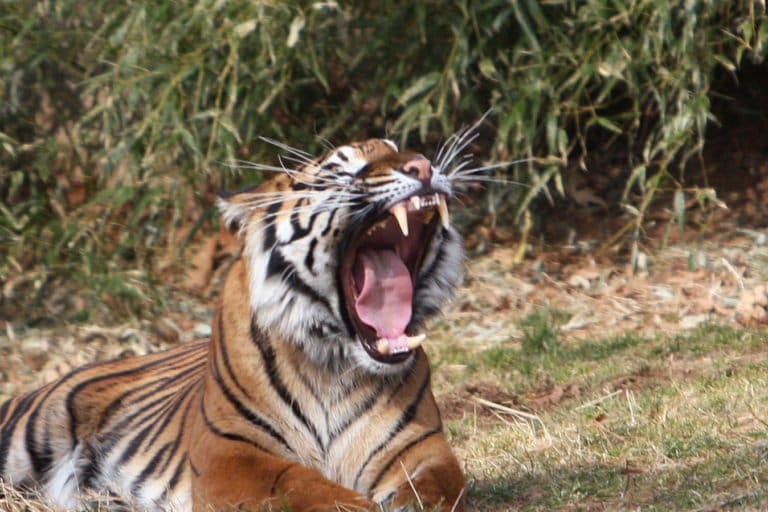
(09/27/2005) China is considering reopening the domestic trade in tigers and tiger parts, banned there since 1993, a move that would spell disaster for the already endangered species, according to World Wildlife Fund (WWF) and TRAFFIC.


20,000 new species of animals discovered in 2005

(09/26/2005) The International Commission on Zoological Nomenclature expects that more than 20,000 species will be described by zoologists in 2005.


What to pack for your visit to the rainforest

(09/26/2005) Visiting a tropical rainforest promises to be a memorable experience. Rainforests house around half the world's plant and animal species and are home to indigenous people who live in ways quite unlike those in the western world.


Page 1 | Page 2 | Page 3 | Page 4 | Page 5 | Page 6 | Page 7 | Page 8 | Page 9 | Page 10 | Page 11 | Page 12 | Page 13 | Page 14 | Page 15 | Page 16 | Page 17 | Page 18 | Page 19 | Page 20 | Page 21 | Page 22 | Page 23 | Page 24 | Page 25 | Page 26 | Page 27 | Page 28 | Page 29 | Page 30 | Page 31


home | archives | news | XML / RSS feeds


XML / RSS / Syndication options

mongabay.com features more than 250 RSS feeds to meet your specific area of interest


WEEKLY NEWSLETTER
Email:


SUPPORT
Mongabay.com seeks to raise interest in and appreciation of wild lands and wildlife, while examining the impact of emerging trends in climate, technology, economics, and finance on conservation and development (more)

Help support mongabay.com when you buy from Amazon.com. Or donate to Mongabay directly


ABOUT
Mongabay provides conservation and environmental science news, information, and analysis.


About Mongabay
Founder: Rhett Butler
Copyright & Use
Contact
Contribute
Internships
Nature Blog Network


POPULAR PAGES
Rainforests
Rain forests
Amazon deforestation
Deforestation
Deforestation stats
Why rainforests matter
Saving rainforests
Amazon rainforest
Congo rainforest
Deforestation data
Rainforest canopy
For kids

Special sections
New Guinea
Finding new species
Sulawesi
Madagascar
Rainforests
Borneo
REDD
News
Most popular articles
Africa
Amazon
Animals
Brazil
Conservation
Climate Change
Deforestation
Energy
Featured
Happy-upbeat
Indonesia
Interviews
Madagascar
New species
Oceans
Palm oil
Rainforests
Strange
Wildlife
MORE TOPICS


PHOTOS
Indonesia photos
Brazil

Costa Rica photos
Costa Rica

Colombia photos
Colombia

Indonesia photos
Indonesia

Madagascar photos
Madagascar

Malaysia photos
Malaysia

Monkey photos
Monkeys

Peru photos
Peru

Colombia photos
Rainforests


All galleries


RELATED TOPICS
  • Birds
  • Botany
  • Bushmeat
  • Cetaceans
  • Coral Reefs
  • Elephants
  • Endangered Species
  • Extinction And Climate Change
  • Extinction
  • Fish
  • Frogs
  • Gorillas
  • Herps
  • Hunting
  • Insects
  • Invasive Species
  • Lemurs
  • Mammals
  • Monkeys
  • Mutualism
  • Orangutans
  • Penguins
  • Plants
  • Polar Bears
  • Primates
  • Reptiles
  • Rhinos
  • Rodents
  • Sea Turtles
  • Sharks
  • Snakes
  • Species Discovery
  • Squid
  • Symbiotic Relationships
  • Tigers
  • Whales
  • Wildlife

    BLOGROLL/LINKS

  • GlobalIssues.org
  • The Loom"


  • Copyright mongabay1999-2013


    Carbon dioxide (CO2) emissions generated from mongabay.com operations (server, data transfer, travel) are mitigated through an association with Anthrotect,
    an organization working with Afro-indigenous and Embera communities to protect forests in Colombia's Darien region.
    Anthrotect is protecting the habitat of mongabay's mascot: the scale-crested pygmy tyrant.