mongabay.com logo
biodiversity blog News articles on biodiversity

Weekly Newsletter | Syndicate / XML feed / RSS | Other topics

News articles on biodiversity

Mongabay.com news articles on biodiversity in blog format. Updated regularly.


How falling a gecko lands on its feet

(03/17/2008) According to new research the gecko may have the most dynamic tail in the natural world. Two researchers from UC Berkley have discovered that the gecko uses its tail to keep itself from falling off slippery vertical surfaces and when falling to rapidly right itself. So, like a cat, it always lands on four feet.


Do parks worsen deforestation through 'leakage'?

(03/17/2008) The creation of protected reserves may be pushing development to neighboring areas, confounding overall conservation efforts in regions where development pressures are high. Such "leakage" -- as the displacement is called -- makes it difficult to assess the effectiveness of protected areas strategies.


New bird species discovered in Indonesia

(03/14/2008) A previously unknown species of bird has been discovered near a remote archipelago in Indonesia, reported a taxonomist writing in the March edition of The Wilson Journal of Ornithology.


Predator of the world's largest macaw key to its survival

(03/13/2008) In a bizarre biological twist, a new study shows that the Hyacinth Macaw depends on its greatest predator, the Toco Toucan, for continued survival.


Rare jewel-colored frog rediscovered in Colombia

(03/13/2008) A brilliantly-colored frog has been rediscovered 14 years after its last sighting in a remote mountainous region in Colombia.


Fast-growing coral may help reefs survive global warming

(03/13/2008) Two fast-growing coral species may hold the key to Caribbean reefs surviving global warming, report researchers writing in the journal Science.


Photos of rare pygmy hippo in Liberia

(03/12/2008) It's almost as though this normally shy mammal were posing for the camera. The black-and-white image of a pygmy hippopotamus half-facing the camera is the first ever of a pygmy hippopotamus in Liberia. Perhaps even more astonishing EDGE, the organization that accomplished the photo, believes the image to be only the second photographic evidence of the animal in the wild (the first was taken in 2006 in Sierra Leone). This incredibly secretive animal is usually known through its prints and dung.


Half of Madagascar's amphibians may still await discovery

(03/11/2008) Madagascar is one of the most unique places on Earth for wildlife. When the public thinks of Madagascar's fauna most likely they think of one of the fifty species of lemur. Yet, Madagascar possesses a wealth of endemic wildlife outside of these unique prosimians. For example, to frog-lovers Madagascar is a paradise. The only amphibians living on Madagascar are frogs; the island is devoid of toads, salamanders, or newts. But what it lacks in other amphibians it makes up for in the number and beauty of its frogs. Currently, 240 frogs have been catalogued in Madagascar, 99 percent of which are endemic. Yet, amphibian expert Dr. Franco Andreone believes that, according to recent field studies, this may only be half of the frogs that actually live in Madagascar. Dr. Andreone believes the final tally could reach 500 species!


Humans are appropriating 20% more resources than Earth can provide

(03/10/2008) Mankind is appropriating 20 percent more resources each year than Earth can produce, according to a report from environmental group WWF.


Rare frog breeds in captivity for the first time

(03/03/2008) A rare species of frog has been found breeding in captivity in New Zealand, reports the Associated Press. The finding offers hope that the species' vulnerability to extinction can be reduced.


Fewer wolves may mean fewer pronghorn in Yellowstone

(03/03/2008) As western states debate removing the gray wolf from protection under the Endangered Species Act, a new study by the Wildlife conservation Society cautions that doing so may result in an unintended decline in another species: the pronghorn, a uniquely North American animal that resembles an African antelope.


New 'red list' seeks to stave off global seafood collapse

(03/03/2008) Over-fishing and destructive fishing practices have had a considerable effect on oceanic ecosystems. In 2006 a highly-reported study found that without drastic measures all wild seafood will disappear from the oceans in 50 years. Greenpeace, working against such a crash, has started a campaign that highlights 'red fish'. The twenty-two 'red' species are seafood that consumers and suppliers (including supermarkets) should avoid due to their plummeting populations and/or the damage caused by harvesting them.


Screaming elephant-cousin threatened by logging

(03/03/2008) A small screaming mammal that may be the closest living relative of the elephant is threatened by logging and bushmeat hunting in East Africa, according to a study published in the inaugural issue of the open access e-journal Tropical conservation Science.


Belize's world famous coral reefs and rainforests at risk

(03/03/2008) Belize's world famous coral reefs and tropical forests are increasingly vulnerable to environmental problems which could impact its tourism-dependent economy, argues a Belizean ecologist writing in the inaugural issue of the open access e-journal Tropical conservation Science.


Fragmentation puts Mexican howlers at risk

(03/03/2008) Forest fragmentation is putting mantled howler monkeys in southern Mexico at risk, reports a new study, published in the inaugural issue of the open access e-journal Tropical conservation Science.


China's tropical rainforests decline 67% in 30 years

(03/03/2008) Tropical rainforest cover in southern Yunnan decreased 67 percent in the past 30 years, mostly due to the establishment of rubber plantations, according to a new assessment of tropical forests in southwestern China.


Human impacts on primate conservation in central Amazonia

(03/03/2008) Deforestation in the Amazon is a serious concern. In the Brazilian Amazon, forests are cleared for cattle ranches, soybean cultivation, and selective logging practices. A new plan to settle approximately 180 families north of Manaus, the capital city of the state of Amazonas, has created widespread controversy. The land plots would be located within the study site of the longest-running study of forest fragmentation, the Biological Dynamics of Forest Fragments Project (BDFFP). Therefore, the plan would threaten scientific research at the BDFFP and other nearby research sites operated by the Instituto Nacional da Pesquisas de Amazônia (INPA) and Large Scale Biosphere-Atmosphere Experiment in Amazonia (LBA), as well as the future of the Central Amazonian conservation Corridor.


'CAT scan' shows Hawaiian forests invaded by alien species

(03/03/2008) Invasive plant species are altering the ecology of Hawaiian rain forests, reports a study published in the Proceedings of the National Academy of Sciences (PNAS).


Mapping the future of conservation

(02/28/2008) A new series of maps projecting habitat loss and the impact of climate change show that the world's most biodiverse regions are in most of need of conservation investments. The authors say the study, published online today in the journal Proceedings of the Royal Society B, will help drive future conservation decisions.


Saving forgotten species: An interview with Carly Waterman, Program Coordinator of EDGE

(02/28/2008) In January 2007 a new conservation initiative arrived with an unusual level of media attention. The attention was due to the fact that the organization was doing things differently—very differently. Instead of focusing their efforts on the usual conservation-mascots like the panda or tiger, they introduced the public to long-ignored animals: photos of the impossibly unique aye-aye and a baby slender loris wrapped around a finger appeared in newsprint worldwide. The new initiative EDGE (Evolutionary Distinct and Globally Endangered), launched by the Zoological Society of London, was not concerned with an animal's perceived popularity, rather the chose their focal species on a combined measurement of a species' biological uniqueness and its vulnerability to extinction. Consequently, they hoped to make celebrities out of animals (big and small) most people had never heard of: the hairy-eared dwarf lemur, anyone?


$100 billion worth of carbon released from deforestation in Riau, Sumatra

(02/27/2008) A WWF study found that deforestation of nearly 10.5 million acres of tropical forests and peat swamp in central Sumatra's Riau Province over the past 25 years has generated 3.7 gigatons of carbon dioxide. Based on today's $32 closing price for a ton of carbon dioxide for European Union Allowances, the emissions had a theoretical trading value of $118 billion, assuming they could have been traded at the full E.U. carbon price at the time (voluntary offsets would have been worth about $13 billion).


A Doomsday Vault for Frogs?

(02/27/2008) The Amphibian Ark, a doomsday vault for amphibians, will highlight Leap Day, February 29th, to recognize 2008 as the Year of the Frog. The campaign seeks to raise awareness of the global plight of frogs and other amphibians threatened by habitat loss, climate change, pollution and an emergent disease. Joining in the effort is the Wildlife conservation Society?s (WCS) Bronx Zoo and New York Aquarium, facilities that house some of the world's most threatened amphibians.


Small fires a big threat to Amazon rainforest biodiversity

(02/27/2008) Small fires have a big impact in the Amazon rainforest, report researchers writing in Philosophical Transactions of the Royal Society B. The findings suggest a dire future for Earth's largest rainforest.


Web site offers homepage for every one of Earth's species

(02/27/2008) Monumental may be the only way to properly describe the Internet's Encyclopedia of Life. Its creators have set themselves the task of gathering accurate and detailed information on the earth's known 1.8 million species until every tree, arachnid, rodent, and even virus will have its own in-depth webpage.


Expedition finds inverted pyramid where sharks dominate marine ecology

(02/25/2008) A survey of a remote Pacific archipelago turned up pristine coral reefs that could offer a "baseline" for measuring the human impact on reefs worldwide, report researchers from the Scripps Institution of Oceanography (SIO) at the University of California at San Diego.


Aye-aye diverged from other lemurs 66M years ago

(02/25/2008) The aye-aye -- a bizarre, nocturnal lemur that taps on trees with its fingers to find its insect prey -- was the first of its family to branch off from the rest of the lemur line some 66 million years ago, report Duke researchers writing in the March 1 issue of Genome Research.


Widespread butterflyfish may go extinct due to global warming, pollution

(02/24/2008) The Chevroned Butterflyfish, a colorful fish found in tropical oceans around the world, faces extinction due to overexploitation, pollution and climate change, report researchers writing in the journal Behavioural Ecology and Sociobiology. Despite its widespread distribution, the species could be doomed by its specialized feeding habitats: the Chevroned Butterflyfish (Chaetodon trifascialis) feeds on only one type of coral.


Rainforest fragmentation affects reptiles and amphibians

(02/20/2008) Deforestation of tropical ecosystems is one of the major threats to biological diversity. Anthropogenic activities transform tropical environments into semi-natural landscapes generating a great amount of forest edge that limits with pastures and agricultural lands.


Amazon riparian zones need to be expanded to protect wildlife finds study

(02/19/2008) Strips of forest mandated by Brazilian law along rivers and streams in the Amazon rainforest are too narrow to effectively safeguard biodiversity, reports new research published in the journal conservation Biology.


Photos of bizarre creatures discovered in Antarctica

(02/19/2008) Researchers aboard the Aurora Australis, an Australian vessel, have discovered a trove of strange creatures on the sea floor near East Antarctica.


conservation strategies can mitigate the impact of global warming in the Amazon

(02/19/2008) Careful design of protected areas to safeguard key "refugia" and allow for migration can increase the resilience of Amazon biodiversity to climate change, report researchers writing in Philosophical Transactions of the Royal Society B.


5,000 mile-long tiger corridor proposed

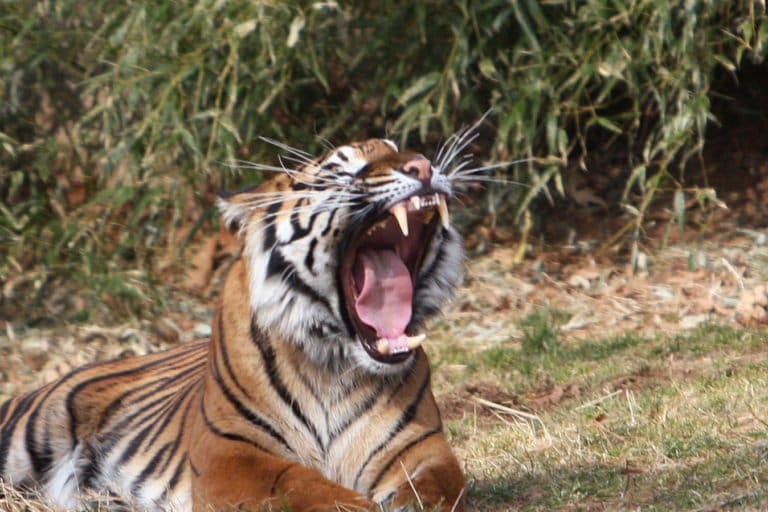
(02/13/2008) The Wildlife conservation Society and the Panthera Foundation announced plans to establish a 5,000 mile-long "genetic corridor" from Bhutan to Burma that would span eight countries and allow tiger populations to roam freely across the largest remaining block of tiger habitat. The plan has been endorsed by leading conservationists and the new King of Bhutan, his Majesty Jigme Khesar Namgyel Wangchuck.


Sumatran tiger faces extinction due to wildlife trade

(02/12/2008) The critically endangered Sumatran Tiger faces extinction due to the tiger parts trade in Indonesia, reports a new report from TRAFFIC, the wildlife trade monitoring network run by IUCN and WWF.


First photos of face-to-face mating by gorillas in the wild

(02/12/2008) Scientists have taken the first photos of face-to-face copulation by wild gorillas. The images were captured in Nouabalé-Ndoki National Park in the Republic of Congo.


Global warming puts penguins at risk of extinction

(02/11/2008) Climate change could put the long-term survival of sub-Antarctic King Penguins at risk by reducing the availability of prey, reports a new study published in Proceedings of the National Academy of Sciences.


Overfishing may hurt Amazon forest trees

(02/05/2008) Overfishing is reducing the effectiveness of seed dispersal by fish in the Brazilian Pantanal, reports Nature. The research suggests that fishing practices can affect forest health.


New research refutes global warming's influence on amphibians' worst enemy

(01/30/2008) There is no doubt that global warming is having a negative effect on amphibians, but it is yet unclear whether or not a direct causal relationship exists between global warming and the spread of a specific fungal epidemic wreaking havoc on amphibian populations worldwide.


Photos: Top 100 most threatened amphibians named

(01/21/2008) Due to numerous factors--including habitat destruction, pollution, climate change, and chytrid fungus--amphibians are probably the most threatened taxon of species in the world. Dr Jonathan Baillie, head of the EDGE organization which has just established an amphibian program, stated that "tragically, amphibians tend to be the overlooked members of the animal kingdom, even though one in every three amphibian species is currently threatened with extinction, a far higher proportion than that of bird or mammal species." To help save these species on the brink, EDGE, apart of the Zoological Society of London, has compiled a list of the hundred most threatened and evolutionary distinct amphibians.


Two-thirds of carnivores die when reintroduced into the wild

(01/20/2008) Carnivores reintroduced to the wild as part of conservation programs fare poorly, reports a new study published online in the journal Biological conservation.


Giant exploding palm tree discovered in Madagascar

(01/17/2008) A gigantic palm that flowers itself to death and exists as part of an entirely unique genus has been discovered in Madagascar; its name will be published in the Botanical Journal of the Linnean Society on 17 January 2008. The mystery palm has a huge trunk which towers over 18m high and fan leaves which are 5m in diameter - among the largest known in flowering plants. This is the most massive palm ever to be found in Madagascar.


Tropical islanders win battle against palm-oil

(01/16/2008) Mongabay has confirmed that the Milne Bay government has pulled plans to allow Vitroplant to log 70% of Woodlark Island for palm oil plantations. The Minister for Agriculture and Livestock, Hon John Hickey, stated in a press release that "Vitroplant did do a feasibility study and were keen to invest on the island. However due to landowner objections on the development of the oil palm industry on the island, the company has decided to pull out." Vitroplant has yet to comment.


Climate change causes shift in American bird ranges

(01/16/2008) Breeding ranges of North American birds have shifted northward coinciding with a period of increasing global temperatures, report researchers writing in the April issue of conservation Biology.


Global warming will diminish fish catch in the Bering sea

(01/16/2008) One half of the fish caught in the U.S. annually--and almost a third worldwide--come from the Bering Sea. Yet, this vast resource is increasingly threatened by climate change. A recent study, published in Marine Ecology Progress Series, showed that global warming will greatly affect the Bering Sea's phytoplankton, the cornerstone of the sea's rich ecosystem.


Photos: rare aye-aye lemur born at Bristol Zoo Gardens

(01/16/2008) Born on November 23rd, 2007 at Bristol Zoo Gardens this baby Aye-aye was given the name Raz. According to the EDGE (Evolutionary Distinct and Globally Endangered) organization this is only the second Aye-aye to be hand raised in the UK.


E.U. may ban palm oil biodiesel

(01/15/2008) The E.U. may ban imports of certain biofuel feedstocks that damage the environment, reports The New York Times. Environmentalists say some biofuels like palm oil are driving the destruction of biologically-rich rainforests and may produce more emissions than conventional fossil fuels.


Palm oil developer abandons plan to log 70% of Woodlark Island

(01/14/2008) Vitro Plant, a developer that planned to log 70 percent of Papua New Guinea's Woodlark Island for oil palm plantations, has pulled out of the project reports The National, a Papuan newspaper.


Twenty million dollars to protect endangered hotspots

(01/14/2008) conservation International and the World Bank have signed an agreement for 20 million dollars of funding to protect bio-diverse hotspots. Ten new conservation projects will be funded, including programs in Micronesia, Polynesia, the Caribbean, the Mediterranean Basin, and temperate forests in South Africa. The funds are being provided by the Global Environmental Facility, which brings together 178 governments to support global environmental initiatives.


Scientists discover four species of anole lizards in 24 hours in Panama

(01/13/2008) In January of 2006 a biological expedition uncovered four anole species in a single day. Dr. Gunther Koehler, a member of the expedition, described the discoveries as "a once in a life time experience; during expeditions before, we had found new species, one at a time--but four species within 24 hours, that was incredible!"


Disappearance of elephants, giraffes causes ecological chain reaction

(01/10/2008) The disappearance of elephants, giraffes and other grazing animals from the eastern African savanna could send ecological ripple effects all the way to the savanna's ants and the acacia trees they inhabit, warns a new study published in the journal Science.


An interview with primate researcher Dr. Karen Strier: America's largest monkey recovering after brush with extinction

(01/10/2008) The Atlantic forest of Brazil boasts South America's largest primates, the Southern and Northern Muriqui. The muriqui are unique among all primates, because they are not territorial and do not display aggressive behvaior. The IUCN has classified the Southern Muriqui as endangered, while the Nothern Muriqui is critically endangered. Dr. Karen Strier has studied the Northern Muriqui in the field for twenty-five years. A professor of zoology and anthropology at the University of Madison Wisconsin, she is the author of Faces in the Forest: the Endangered Muriqui Monkeys of Brazil and a new textbook entitled Primate behvaioral Ecology.


Page 1 | Page 2 | Page 3 | Page 4 | Page 5 | Page 6 | Page 7 | Page 8 | Page 9 | Page 10 | Page 11 | Page 12 | Page 13 | Page 14 | Page 15 | Page 16 | Page 17 | Page 18 | Page 19 | Page 20 | Page 21 | Page 22 | Page 23 | Page 24 | Page 25 | Page 26 | Page 27 | Page 28 | Page 29 | Page 30 | Page 31


home | archives | news | XML / RSS feeds


XML / RSS / Syndication options

mongabay.com features more than 250 RSS feeds to meet your specific area of interest


WEEKLY NEWSLETTER
Email:


SUPPORT
Mongabay.com seeks to raise interest in and appreciation of wild lands and wildlife, while examining the impact of emerging trends in climate, technology, economics, and finance on conservation and development (more)

Help support mongabay.com when you buy from Amazon.com. Or donate to Mongabay directly


ABOUT
Mongabay provides conservation and environmental science news, information, and analysis.


About Mongabay
Founder: Rhett Butler
Copyright & Use
Contact
Contribute
Internships
Nature Blog Network


POPULAR PAGES
Rainforests
Rain forests
Amazon deforestation
Deforestation
Deforestation stats
Why rainforests matter
Saving rainforests
Amazon rainforest
Congo rainforest
Deforestation data
Rainforest canopy
For kids

Special sections
New Guinea
Finding new species
Sulawesi
Madagascar
Rainforests
Borneo
REDD
News
Most popular articles
Africa
Amazon
Animals
Brazil
Conservation
Climate Change
Deforestation
Energy
Featured
Happy-upbeat
Indonesia
Interviews
Madagascar
New species
Oceans
Palm oil
Rainforests
Strange
Wildlife
MORE TOPICS


PHOTOS
Indonesia photos
Brazil

Costa Rica photos
Costa Rica

Colombia photos
Colombia

Indonesia photos
Indonesia

Madagascar photos
Madagascar

Malaysia photos
Malaysia

Monkey photos
Monkeys

Peru photos
Peru

Colombia photos
Rainforests


All galleries


RELATED TOPICS
  • Birds
  • Botany
  • Bushmeat
  • Cetaceans
  • Coral Reefs
  • Elephants
  • Endangered Species
  • Extinction And Climate Change
  • Extinction
  • Fish
  • Frogs
  • Gorillas
  • Herps
  • Hunting
  • Insects
  • Invasive Species
  • Lemurs
  • Mammals
  • Monkeys
  • Mutualism
  • Orangutans
  • Penguins
  • Plants
  • Polar Bears
  • Primates
  • Reptiles
  • Rhinos
  • Rodents
  • Sea Turtles
  • Sharks
  • Snakes
  • Species Discovery
  • Squid
  • Symbiotic Relationships
  • Tigers
  • Whales
  • Wildlife

    BLOGROLL/LINKS

  • GlobalIssues.org
  • The Loom"


  • Copyright mongabay1999-2013


    Carbon dioxide (CO2) emissions generated from mongabay.com operations (server, data transfer, travel) are mitigated through an association with Anthrotect,
    an organization working with Afro-indigenous and Embera communities to protect forests in Colombia's Darien region.
    Anthrotect is protecting the habitat of mongabay's mascot: the scale-crested pygmy tyrant.