
 Biopact is moving to a new server this weekend, so at times the site may be difficult to access or temporarily offline. We should be up and running again on Monday.
Biopact - October 27, 2007. Biopact is moving to a new server this weekend, so at times the site may be difficult to access or temporarily offline. We should be up and running again on Monday.
Biopact - October 27, 2007.
U.S. oil prices and Brent crude rocketed to all-time highs again on a record-low dollar, tensions in the Middle East and worries over energy supply shortages ahead of the northern hemisphere's winter. Now even wealthy countries like South Korea are warning that the record prices will damage economic growth. In the developing world, the situation is outright catastrophic.
Korea Times - October 26, 2007.
Ethablog's Henrique Oliveira, a young Brazilian biofuels business expert, is back online. From April to September 2007, he traveled around Brazil comparing the Brazilian and American biofuels markets. In August he was joined by Tom MacDonald, senior alcohol fuels specialist with the California Energy Commission. Henrique reports about his trip with a series of photo essays.
EthaBlog - October 24, 2007.
Italy's Enel is to invest around €400 mln in carbon capture and storage and is looking now for a suitable site to store CO2 underground. Enel's vision of coal's future is one in which coal is used to produce power, to produce ash and gypsum as a by-product for cement, hydrogen as a by-product of coal gasification and CO2 which is stored underground. Carbon capture and storage techniques can be applied to biomass and biofuels, resulting in carbon-negative energy.
Reuters - October 22, 2007.
Gate Petroleum Co. is planning to build a 55 million-gallon liquid biofuels terminal in Jacksonville, Florida. The terminal is expected to cost $90 million and will be the first in the state designed primarily for biofuels. It will receive and ship ethanol and biodiesel via rail, ship and truck and provide storage for Gate and for third parties. The biofuels terminal is set to open in 2010.
Florida Times-Union - October 19, 2007.
China Holdings Inc., through its controlled subsidiary China Power Inc., signed a development contract with the HeBei Province local government for the rights to develop and construct 50 MW of biomass renewable energy projects utilizing straw. The projects have a total expected annual power generating capacity of 400 million kWh and expected annual revenues of approximately US$33.3 million. Total investment in the projects is approximately US$77.2 million, 35 percent in cash and 65 percent from China-based bank loans with preferred interest rates with government policy protection for the biomass renewable energy projects. Full production is expected in about two years.
China Holdings - October 18, 2007.
Canadian Bionenergy Corporation, supplier of biodiesel in Canada, has announced an agreement with Renewable Energy Group, Inc. to partner in the construction of a biodiesel production facility near Edmonton, Alberta. The company broke ground yesterday on the construction of the facility with an expected capacity of 225 million litres (60 million gallons) per year of biodiesel. Together, the companies also intend to forge a strategic marketing alliance to better serve the North American marketplace by supplying biodiesel blends and industrial methyl esters.
Canadian Bioenergy - October 17, 2007.
Leading experts in organic solar cells say the field is being damaged by questionable reports about ever bigger efficiency claims, leading the community into an endless and dangerous tendency to outbid the last report. In reality these solar cells still show low efficiencies that will need to improve significantly before they become a success. To counter the hype, scientists call on the community to press for independent verification of claimed efficiencies. Biopact sees a similar trend in the field of biofuels from algae, in which press releases containing unrealistic yield projections and 'breakthroughs' are released almost monthly.
Eurekalert - October 16, 2007.
The Colorado Wood Utilization and Marketing Program at Colorado State University received a $65,000 grant from the U.S. Forest Service to expand the use of woody biomass throughout Colorado. The purpose of the U.S. Department of Agriculture grant program is to provide financial assistance to state foresters to accelerate the adoption of woody biomass as an alternative energy source.
Colorado State University - October 12, 2007.
Indian company Naturol Bioenergy Limited announced that it will soon start production from its biodiesel facility at Kakinada, in the state of Andhra Pradesh. The facility has an annual production capacity of 100,000 tons of biodiesel and 10,000 tons of pharmaceutical grade glycerin. The primary feedstock is crude palm oil, but the facility was designed to accomodate a variety of vegetable oil feedstocks.
Biofuel Review - October 11, 2007.
Brazil's state energy company Petrobras says it will ship 9 million liters of ethanol to European clients next month in its first shipment via the northeastern port of Suape. Petrobras buys the biofuel from a pool of sugar cane processing plants in the state of Pernambuco, where the port is also located.
Reuters - October 11, 2007.
Dynamotive Energy Systems Corporation, a leader in biomass-to-biofuel technology, announces that it has completed a $10.5 million equity financing with Quercus Trust, an environmentally oriented fund, and several other private investors. Ardour Capital Inc. of New York served as financial advisor in the transaction.
Business Wire - October 10, 2007.
Cuban livestock farmers are buying distillers dried grains (DDG), the main byproduct of corn based ethanol, from biofuel producers in the U.S. During a trade mission of Iowan officials to Cuba, trade officials there said the communist state will double its purchases of the dried grains this year.
DesMoines Register - October 9, 2007.
Brasil Ecodiesel, the leading Brazilian biodiesel producer company, recorded an increase of 57.7% in sales in the third quarter of the current year, in comparison with the previous three months. Sales volume stood at 53,000 cubic metres from August until September, against 34,000 cubic metres of the biofuel between April and June. The company is also concluding negotiations to export between 1,000 to 2,000 tonnes of glycerine per month to the Asian market.
ANBA - October 4, 2007.
PolyOne Corporation, the US supplier of specialised polymer materials, has opened a new colour concentrates manufacturing plant in Kutno, Poland. Located in central Poland, the new plant will produce colour products in the first instance, although the company says the facility can be expanded to handle other products. In March, the Ohio-based firm launched a range of of liquid colourants for use in bioplastics in biodegradable applications. The concentrates are European food contact compliant and can be used in polylactic acid (PLA) or starch-based blends.
Plastics & Rubber Weekly - October 2, 2007.
A turbo-charged, spray-guided direct-injection engine running on pure ethanol (E100) can achieve very high specific output, and shows “significant potential for aggressive engine downsizing for a dedicated or dual-fuel solution”, according to engineers at Orbital Corporation.
GreenCarCongress - October 2, 2007.
UK-based NiTech Solutions receives £800,000 in private funding to commercialize a cost-saving industrial mixing system, dubbed the Continuous Oscillatory Baffled Reactor (COBR), which can lower costs by 50 per cent and reduce process time by as much as 90 per cent during the manufacture of a range of commodities including chemicals, drugs and biofuels.
Scotsman - October 2, 2007.
A group of Spanish investors is building a new bioethanol plant in the western region of Extremadura that should be producing fuel from maize in 2009. Alcoholes Biocarburantes de Extremadura (Albiex) has already started work on the site near Badajoz and expects to spend €42/$59 million on the plant in the next two years. It will produce 110 million litres a year of bioethanol and 87 million kg of grain byproduct that can be used for animal feed.
Europapress - September 28, 2007.
Portuguese fuel company Prio SA and UK based FCL Biofuels have joined forces to launch the Portuguese consumer biodiesel brand, PrioBio, in the UK. PrioBio is scheduled to be available in the UK from 1st November. By the end of this year (2007), says FCL Biofuel, the partnership’s two biodiesel refineries will have a total capacity of 200,000 tonnes which will is set to grow to 400,000 tonnes by the end of 2010.
Biofuel Review - September 27, 2007.
According to Tarja Halonen, the Finnish president, one third of the value of all of Finland's exports consists of environmentally friendly technologies. Finland has invested in climate and energy technologies, particularly in combined heat and power production from biomass, bioenergy and wind power, the president said at the UN secretary-general's high-level event on climate change.
Newroom Finland - September 25, 2007.
Spanish engineering and energy company Abengoa says it had suspended bioethanol production at the biggest of its three Spanish plants because it was unprofitable. It cited high grain prices and uncertainty about the national market for ethanol. Earlier this year, the plant, located in Salamanca, ceased production for similar reasons. To Biopact this is yet another indication that biofuel production in the EU/US does not make sense and must be relocated to the Global South, where the biofuel can be produced competitively and sustainably, without relying on food crops.
Reuters - September 24, 2007.
The Midlands Consortium, comprised of the universities of Birmingham, Loughborough and Nottingham, is chosen to host Britain's new Energy Technologies Institute, a £1 billion national organisation which will aim to develop cleaner energies.
University of Nottingham - September 21, 2007.
The EGGER group, one of the leading European manufacturers of chipboard, MDF and OSB boards has begun work on installing a 50MW biomass boiler for its production site in Rion. The new furnace will recycle 60,000 tonnes of offcuts to be used in the new combined heat and power (CHP) station as an ecological fuel. The facility will reduce consumption of natural gas by 75%.
IHB Network - September 21, 2007.

|
|
|
|
|

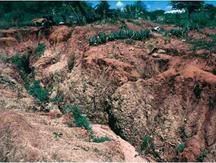 A great number of human activities is being scrutinized to find out whether they contribute to climate change. From damming rivers to deforestation, the quest is on to study the impacts of these interactions with nature through the spectrum of global warming. Luckily not all of man's actions contribute to the problem. A major process that is bad enough as it is - soil erosion caused by agriculture - is not a source of carbon dioxide to the atmosphere. On the contrary, it acts like a mild 'carbon sink'. This is the (surprising) finding of research published today in the journal Science. The study was carried out by an international team of researchers from the University of California Davis, the Catholic University of Leuven in Belgium, and the University of Exeter in the U.K.
 energy :: sustainability :: biomass :: bioenergy :: biofuels :: agriculture :: soil erosion :: carbon cycle :: carbon sink ::







0 Comments:
Post a Comment
Links to this post:
Create a Link
<< Home