About  |   Contact  |  Mongabay on Facebook  |  Mongabay on Twitter  |  Subscribe
Rainforests | Tropical fish | Environmental news | For kids | Madagascar | Photos | Non-English languages | Tropical Conservation Science
SHARE:
submit to reddit
print


Guyana bans gold mining in the 'Land of the Giants'
Jeremy Hance
mongabay.com
March 01, 2010


Guyana has banned gold dredging in the Rewa Head region of the South American country after pressure from Amerindian communities. A recent expedition to Rewa Head turned up unspoiled wilderness and mind-boggling biodiversity. The researchers, in just six weeks, stumbled on the world's largest snake (anaconda), spider (the aptly named goliath bird-eating spider), armadillo (the giant armadillo), anteater (the giant anteater), and otter (the giant otter), leading them to dub the area 'the Land of the Giants'.

"During our brief survey we had encounters with wildlife that tropical biologists can spend years in the field waiting for. On a single day we had two tapirs paddle alongside our boat, we were swooped on by a crested eagle and then later charged by a group of giant otters. I think that about sums the place up. There is little human disturbance in the Rewa Head and wildlife flourishes," one of the expedition members, Rob Pickles, said in a press release.


The photo shows an "inquisitive adult male giant otter approaching the boat. While some individuals are remarkably fearless and will approach to within several yards of the boat, the mood of the group is determined by the breeding female. If she feels threatened the group will normally 'periscope' and disappear," according to Biodiversity Report on Rewa Head. Photo by Robert Pickles.
Pickles, a PhD student studying giant river otters, teamed up with another PhD student, tapir-expert Niall McCann, to explore the area with the aid of the Zoological Society of London (ZSL). Astonishingly the team encountered six anacondas during their expedition, four of which were over 16 feet long.

But it wasn't just big species that the team recorded, but rare ones as well. Pickles and McCann recorded the presence of half of Guyana's listed threatened species during their expedition, including crested and harpy eagles, as well as the little-seen bush dog.

"Visiting the Rewa Head felt like we were walking in the footsteps of Wallace and Bates, seeing South America with its natural density of wild animals as it would have appeared 150 years ago," Pickles told mongabay.com in a recent interview regarding their expedition.

The ban on gold mining has been entirely due to efforts by the local Amerindian communities. Pickles says that gold mining was a "major, imminent threat" to the pristine area. However, despite the good news that Guyana has banned gold mining in the area, the Rewa Head remains threatened.

"[The area] currently lies in a logging concession. Unless Guyana is given alternative financial incentives, its government will be forced to lease its land to oil drillers, miners and loggers. One of the world’s last Edens is on the brink of destruction," explains Niall McCann.

Currently, the US-owned company, Simon and Shock International, has a license to extract timber from 400,000 hectares, while oil drilling concessions cover 78 million hectares.

McCann and Pickles are working with ZSL conservationists to gain international support for the government of Guyana's plan to conserve its vast forests as a carbon sink for financial returns. According to the conservationists, the area is a perfect testing ground for projects like REDD+ (Reducing Emissions through Deforestation and Forest Degradation).

"Guyana is in an incredibly fortunate position in that it still retains 76 percent of its forest cover which constitutes some of the most carbon-rich forests of South America. As such, and with a president keen to offer his nation’s forests as part of the world’s carbon sink, Guyana should be embraced by the international community," Pickles told mongabay.com in the interview.

In all Pickles and McCann recorded 251 bird species and 33 large mammal species in Rewa Head.

"In the wake of Copenhagen and the build up to the Convention on Biological Diversity, reducing biodiversity loss and greenhouse gas emissions are high on the political agenda. Protecting areas such as the Rewa Head through sustainable management is a positive strategy for addressing these key issues," said Professor Jonathan Baillie, Director of Conservation at ZSL, adding that "global leaders need to recognize that real economic benefits are to be gained through the conservation, not destruction, of our world’s living things."


To read the interview with Robert Pickles: Guyana expedition finds biodiversity trove in area slated for oil and gas development, an interview with Robert Pickles


Anaconda found in Rewa Head. Photo by Ashley Holland.


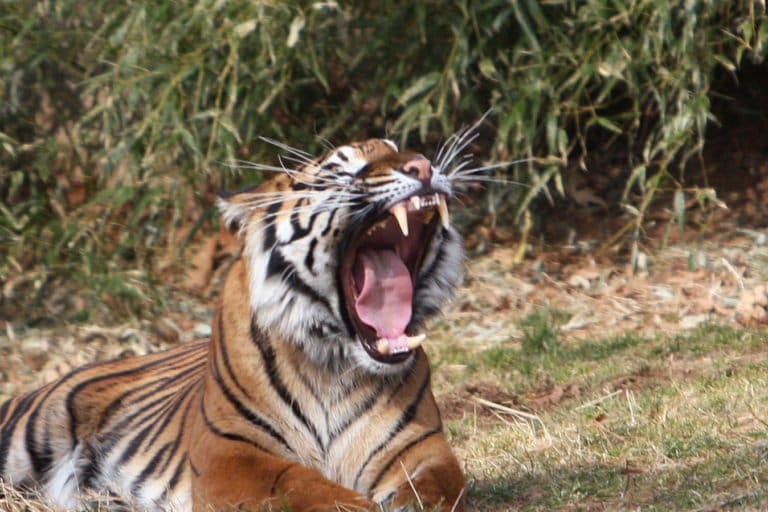
The jaguar Panthera onca is classified as Near Threatened: a previous six-week expedition to Rewa Head observed ten jaguars. Photo by: Ashley Holland and Gordon Duncan.


World's largest spider, the goliath bird-eating spider Theraphosa blondii, from Guyana’s interior. Photo by: Gordon Duncan.


According to biodiversity report: "In the dry season huge sandy beaches are exposed in the Lower Rewa, providing a nesting ground for giant South American river turtles (Podocnemis expansa). The superabundance of eggs laid in these sand banks is a boon which many forest species time their breeding cycle to coincide with." Photo by Ashley Holland.


Brazilian tapir Tapirus terrestrisi photographed 10ft from the expedition boat. The Brazilian tapir is classified as Vulnerable. Photo by: Robert Pickles.


Schneider’s dwarf caiman Paleosuchus trigonatus. Photo by: Niall McCann.


"Hand-axe sharpening grooves and geometric designs below Corona Falls on the River Rewa testify to the fact that there were once indigenous people inhabiting this area," according to Biodiversity report. Photo by: Rob Pickles.


Logging and oil concession in Rewa Head. Map courtesy of Mike Robert Pickles.


Related articles

Guyana expedition finds biodiversity trove in area slated for oil and gas development, an interview with Robert Pickles

(11/29/2009) An expedition deep into Guyana's rainforest interior to find the endangered giant river otter—and collect their scat for genetic analysis—uncovered much more than even this endangered charismatic species. "Visiting the Rewa Head felt like we were walking in the footsteps of Wallace and Bates, seeing South America with its natural density of wild animals as it would have appeared 150 years ago," expedition member Robert Pickles said to Mongabay.com.


Guyana to increase oversight of gold mining under deal to save forests with Norway

(12/21/2009) As apart of a deal with Norway to preserve its rainforests, Guyana will step up oversight of its gold mining industry, which has been accused of causing significant environmental damage including deforestation and mercury and cyanide pollution.


Norway to give Guyana up to $250M for rainforest conservation

(11/09/2009) Norway will provide up to $250 million to Guyana as part of the South American country's effort to avoid emissions from deforestation.


Roads are enablers of rainforest destruction

(09/24/2009) Chainsaws, bulldozers, and fires are tools of rainforest destruction, but roads are enablers. Roads link resources to markets, enabling loggers, farmers, ranchers, miners, and land speculators to convert remote forests into economic opportunities. But the ecological cost is high: 95 percent of deforestation in the Brazilian Amazon occurs within 50-kilometers of a road; in Africa, where logging roads are rapidly expanding across the Congo basin, the bulk of bushmeat hunting occurs near roads. In Laos and Sumatra, roads are opening last remnants of intact forests to logging, poaching, and plantation development. But roads also cause subtler impacts, fragmenting habitats, altering microclimates, creating highways for invasive species, blocking movement of wildlife, and claiming animals as roadkill. A new paper, published in Trends in Evolution and Ecology, reviews these and other impacts of roads on rainforests. Its conclusions don't bode well for the future of forests.


REDD readiness plans for Panama, Guyana approved but rejected for Indonesia

(07/02/2009) The World Bank's Forest Carbon Partnership Facility (FCPF) has approved REDD readiness plans (R-Plans) for Panama and Guyana, and rejected a plan for Indonesia, reports the U.N. and the Bank Information Center, an advocacy group.


Norway to pay Guyana to save its rainforests

(02/05/2009) Norway will provide financial support for Guyana's ambitious plan to conserve its rainforests, reports the Guyana Chronicle. Meeting in Oslo, Norway on Tuesday, Guyana President Bharrat Jagdeo and Norwegian Prime Minister Jens Stoltenberg signed a Memorandum of Understanding agreeing to establish a partnership to reduce greenhouse gas emissions from deforestation and forest degradation (REDD). The leaders will push for the incorporation of a REDD mechanism that includes low deforestation countries like Guyana in a post-2012 climate change agreement.


14 countries win REDD funding to protect tropical forests

(07/24/2008) Fourteen countries have been selected by the World Bank to receive funds for conserving their tropical forests under an innovative carbon finance scheme.


600 species of mushrooms discovered in Guyana

(07/21/2008) In six plots of Guyanese rainforest, measuring only a hundred square meters each, scientists have discovered an astounding 1200 species of macrofungi, commonly known as mushrooms. Even more surprising: they believe over 600 of these are new to science — that's equivalent to a new species every square meter.


Implementing a butterfly farm: Iwokrama reserve's latest sustainable initiative

(07/20/2008) Iwokrama, which lies in the heart of Guyana's rainforest, is known worldwide for its innovative approach to preserving tropical rainforests and creating livelihoods for local communities. Their focus has been to create programs that utilize the forest sustainably, allowing for a mutual benefit between the people and the forest itself. Currently, Iwokrama has a number of initiatives under its umbrella, including eco-tourism, sustainable forestry, on-going research projects, and training programs. Amid these bustling projects, a new one has emerged: butterfly farming.


Geology, climate links make Guiana Shield region particularly sensitive to change

(06/14/2008) Soil and climate patterns in the Guiana Shield make the region particularly sensitive to environmental change, said a scientist speaking at a biology conference in Paramaribo, Suriname.


Private equity firm buys rights to ecosystem services of Guyana rainforest

(03/27/2008) A private equity firm has purchased the rights to environmental services generated by 371,000 hectare rainforest reserve in Guyana. Terms of the deal were not disclosed, but the agreement is precedent-setting in that a financial firm is betting that the services generated by a living rainforest — including rainfall generation, climate regulation, biodiversity maintenance and water storage — will eventually see compensation in international markets.


Guyana grants 1 million acres of Amazon rainforest to U.S. logging firm

(01/09/2008) Guyana has awarded a 988,4000-acre logging concession to a U.S. forestry company, reports the Associated Press.


Guyana's forests offered as massive carbon offset

(11/26/2007) Guyana has offered up the entirity of its remaining forest cover as a giant carbon offset, reports The Independent.


Low deforestation countries to see least benefit from carbon trading

(08/13/2007) Countries that have done the best job protecting their tropical forests stand to gain the least from proposed incentives to combat global warming through carbon offsets, warns a new study published in Tuesday in the journal Public Library of Science Biology (PLoS). The authors say that "high forest cover with low rates of deforestation" (HFLD) nations "could become the most vulnerable targets for deforestation if the Kyoto Protocol and upcoming negotiations on carbon trading fail to include intact standing forest."


Gold mining in Guyana damages environment, threatens Amerindians

(03/06/2007) Informal gold mining is causing environmental harm and human rights abuses in Guyana says a new report from the International Human Rights Clinic (IHRC) of Harvard Law School's Human Rights Program. Wildcat gold mining has been a serious problem in the Guiana shield countries of Brazil, Venezuela, Guyana, Suriname and French Guiana. Rising gold prices in recent years have only worsened the problem, as illegal miners have flooded the region clearing forest, polluting rivers, and making threats against indigenous people.


Share | Email | | | | |


CITATION:
Jeremy Hance
mongabay.com (March 01, 2010). Guyana bans gold mining in the 'Land of the Giants'. http://news.mongabay.com/2010/0228-hance_giants.html


Tags:
happy-upbeat environmental Guyana south america big cats great cats cats predators carnivores biodiversity gold mining mining rivers conservation green environment mammals birds jeremy hance Rainforest deforestation Photos activism animals carbon conservation carbon sequestration carbon trading carbon offsets conservation finance corporate role in conservation deforestation ecological beauty ecological services ecology ecosystem services endangered species environmental activism environmental politics forests governance herps in-situ conservation rainforest rainforest animals rainforest destruction rainforest conservation rainforest logging rainforests redd reptiles saving rainforests saving species from extinction threats to rainforests threats to the rainforest tropical forests united states wildlife Amazon Deforestation Amazon biodiversity Amazon mining Amazon rainforest amazon amazon conservation amazon destruction amazon logging saving the amazon

print


News index | RSS | News Feed | Twitter | Home


Advertisements:


Organic Apparel from Patagonia | Insect-repelling clothing


Mongabay Store
Wildlife of Madagascar T-shirt
Bold and Dangerous - Pygmy tyrant t-shirts
Bold and Dangerous - Pygmy tyrant
Love me before I'm gone - Gladiator frog t-shirts
Love me before I'm gone - Gladiator frog
Licking this frog may make you crazy t-shirts
Licking this frog may make you crazy


WEEKLY NEWSLETTER
Email:


SUPPORT
Mongabay.com seeks to raise interest in and appreciation of wild lands and wildlife, while examining the impact of emerging trends in climate, technology, economics, and finance on conservation and development (more)

Help support mongabay.com when you buy from Amazon.com


POPULAR PAGES
Rainforests
Rain forests
Amazon deforestation
Deforestation
Deforestation stats
Why rainforests matter
Saving rainforests
Deforestation stats
Rainforest canopy

News
Most popular articles
Worth saving?
Forest conservation
Earth Day
Poverty alleviation
Cell phones in Africa
Seniors helping Africa
Saving orangutans in Borneo
Palm oil
Amazon palm oil
Future of the Amazon
Cane toads
Dubai environment
Investing to save rainforests
Visiting the rainforest
Biomimicry
Defaunation
Blue lizard
Amazon fires
Extinction debate
Extinction crisis
Blackwashing
Industrial deforestation
Save the Amazon
Rainforests & REDD
Brazil's Amazon plan
Malaysian palm oil
Avatar story
New Guinea
Sulawesi
Amazon ranching
Madagascar
Borneo

News topics
Amazon
Biofuels
Brazil
Carbon Finance
Conservation
Climate Change
Deforestation
Energy
Happy-upbeat
Indonesia
Interviews
Oceans
Palm oil
Rainforests
REDD
Solutions
Wildlife
MORE TOPICS


Non-English Sites
Chinese
French
German
Greek
Indonesian
Italian
Portuguese
Spanish
Other languages

Search

GA_googleFillSlot("news_160x600_btf_right");


Photos
Alaska photos
Alaska

Argentina photos
Argentina

Australia photos
Australia

Belize photos
Belize

Brazil photos
Brazil

Cambodia photos
Cambodia

China photos
China

Colombia photos
Colombia

Costa Rica photos
Costa Rica

Deforestation photos
Deforestation

Frog photos
Frog

Gabon photos
Gabon

Grand Canyon photos
Grand Canyon

Honduras photos
Honduras

India photos
India

Indonesia photos
Indonesia

Kenya photos
Kenya

Laos photos
Laos

Lemur photos
Lemur

Madagascar photos
Madagascar

Malaysia photos
Malaysia

Monkey photos
Monkey

New Zealand photos
New Zealand

Panama photos
Panama

Peru photos
Peru

Peru photos
Rainforest


Sunset

Suriname photos
Suriname

Tanzania photos
Tanzania

Thailand photos
Thailand

Uganda photos
Uganda

United States photos
United States

Venezuela photos
Venezuela


HIGH RESOLUTION PHOTOS / PRINTS


CALENDARS
  • Mount Kenya
  • East Africa Safari Wildlife
  • Kenya's Turkana People
  • Peru
  • African Wildlife
  • Alaska
  • China
  • Madagascar Chameleons


    CANVAS BAGS

  • Hallucinogenic frog bag
  • Madagascar wildlife bag


  • Copyright mongabay 2010

    Carbon dioxide gas emissions generated from mongabay.com operations (server, data transfer, travel) are mitigated through an association with Anthrotect,
    an organization working with Afro-indigenous and Embera communities to protect forests in Colombia's Darien region.
    Anthrotect is protecting the habitat of mongabay's mascot: the scale-crested pygmy tyrant.