|
About | Contact | Mongabay on Facebook | Mongabay on Twitter | Free newsletter |
|
|
Saving the last megafauna of Malaysia, an interview with Reuben Clements Jeremy Hance mongabay.com September 15, 2009 Reuben Clements is the species conservation manager for WWF-Malaysia's Malayan tiger and Sumatran rhino projects. Mongabay.com's fifth in a series of interviews with 'Young Scientists'. And second in a series of interviews with participants at the 2009 Association of Tropical Biology and Conservation (ATBC) conference.
It was these microsnails, and not the tigers and rhinos as one might expect, that piqued Clement's interest in wildlife and conservation. Clements says that after starting a seashell collection the Philippines at the age of twelve, he developed a deeper interest in conservation during a trip to Malaysia—just as he was about to study engineering at the age of twenty. "My friends brought me to limestone karsts in the jungles of Northern Peninsular Malaysia where we spent days searching for micro-landsnails. Not only was I awe-struck standing under towering karsts, I was also amazed by the bizarre and minute snail species that I found on the rocks, some of which were probably found in one place and nowhere else on Earth. On the way back, however, I witnessed several limestone hills being blasted away for cement, and with it, probably lots of endemic snails," Clements says. "I think that’s when my conservation ethic first grew."
"Working for WWF-Malaysia has given me an invaluable perspective on real-world conservation," Clements says. "That’s something I could never get if I stayed on in the university." While Clements has yet to see a tiger in the wild, he says that isn't unusual as his team has spent years tracking them without seeing one. "Tigers face an uncertain future in Malaysia," he says of their conservation. "The population may be less than 500. But this is just an estimate." Clements adds that the country needs more tiger surveys "to assess the true conservation status of the Malayan tiger."
However to achieve this goal, a lot more needs to be done. "Government and private companies that are driving infrastructure development (e.g., construction of roads) and the clear-felling of natural forests for timber and agriculture plantations need to be engaged by conservationists, who can try and transform business practices in order to mitigate or prevent potentially disastrous impacts on tiger habitats," Clements explains. "With increased political will and improvement in public attitudes towards wildlife conservation, I think there’s a fighting chance to prevent the tiger from going extinct." The outlook for the Sumatran rhino is even more alarming: "poaching continues to be the main threat and habitat loss is exacerbating their decline. Fifteen years ago, Alan Rabinowitz highlighted the plight of the Sumatran rhino in an article entitled 'Helping a species go extinct: the Sumatran Rhino in Borneo'. Strong political will was required to arrest the rhino horn trade and to ensure that ex-situ breeding programmes were successful, but saving this species was not one of the priorities then." Clements adds that he supports an initiative in Malaysian Borneo that plans to bring the few remaining rhinos there together in a large enclosure to breed naturally. Looking generally at biodiversity across the region, Clements says that "the extinction crisis in Southeast Asia is real." He points to a number of sources to prove this: "A study in 2003 predicted that around 21-48% of mammals in Southeast Asia will be extinct by 2100 and there’s been plenty of supporting evidence since then. For example, a study claimed that tigers, elephants, rhinos and tapirs are expected to vanish from many protected areas in Sumatra when its lowland forests are completely destroyed by 2036. On the same island, scientists also predict that the Sumatran orang-utan will be the first great ape to go extinct in the coming decades. In fact, based on the latest 2009 IUCN Red List, more mammals in Southeast Asia appear closer to extinction than ever." What can be done to turn this around? Aside from attempting to save dwindling species and pockets of habitat on the ground, Clements spends a lot of his time on programs to instill a conservation ethic in others. "At one of our project sites where we conducted a series of [conservation] awareness talks, we got several villagers to form a Wildlife Protection Unit (WPU) to chase away elephants and conduct anti-poaching patrols. Now they’re spreading the conservation message themselves in other villages through ‘Dikir Barat’, which is a cultural musical performance that involves singing in groups with some simple instruments," Clements says, adding that there are many ways to reach people about the importance of conservation. "Recently, we adopted a novel approach to raise conservation awareness through Islamic sermons. Soon, we will be conducting education talks with indigenous communities at our project site to highlight the plight of threatened mammals around their villages and perhaps even get them to form more WPUs. At the end of the day, we may not be able to turn poachers around. What we hope is that poachers may eventually succumb to peer pressure from a community that is increasingly exposed to the importance of conservation." In a September 2009 interview Mongabay spoke with Clements about discovering new microsnails, the conservation of Malayan tigers and Sumatran rhinos, the bushmeat and palm oil threats, as well as his advice for future conservationists. PERSONAL Mongabay: How did you become interested in wildlife? What is your background?
Mongabay: How did your education at the National University of Singapore prepare you to succeed in conservation biology?
Mongabay: What is it like to work with World Wide Fund for Nature (WWF)-Malaysia, the world’s largest conservation organization? Reuben Clements: It’s been a blast! Working for WWF-Malaysia has given me an invaluable perspective on real-world conservation. That’s something I could never get if I stayed on in the university. I have been really fortunate to work with a team of like-minded and passionate individuals. Trekking into remote forests in search of tigers, elephants and other large mammals, coming face to face with nomadic indigenous communities and armed poachers, meeting passionate field staff throughout our project sites in Peninsular Malaysia and Borneo, travelling to offices such as Thailand and Indonesia to develop tiger and rhino conservation strategies with experts from the WWF network – all these moments have made it an amazing and thoroughly fulfilling adventure. THE MALAYAN TIGER AND THE SUMATRAN RHINO
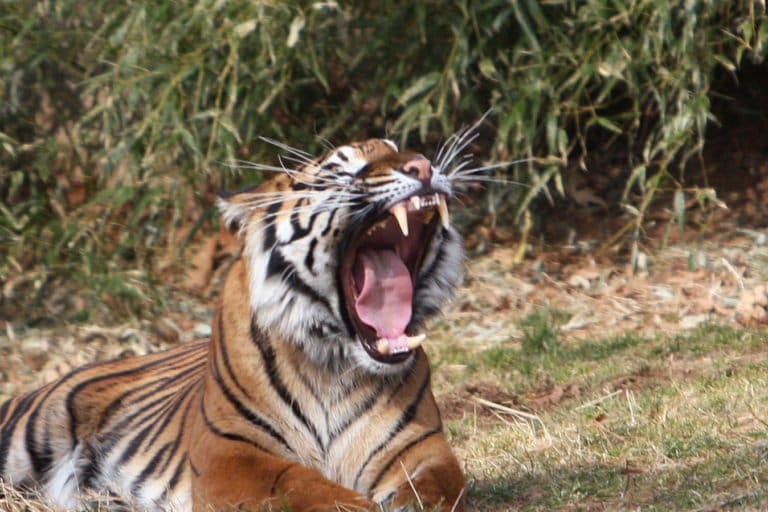
Reuben Clements: Tigers face an uncertain future in Malaysia. The population may be less than 500. But this is just an estimate. So far, there have only been a couple of scientifically defensible camera-trapping surveys; these have yielded reasonable population densities of around 2-3 tigers/100km2. Nevertheless, more of these surveys need to be conducted, particularly across the entire the landscape to assess the true conservation status of the Malayan tiger. In contrast, the next tiger subspecies to go extinct would probably be the Sumatran tiger. Mongabay: What needs to be done to save the species? Reuben Clements: That can really be answered in a 10-page essay, but I’ll be brief! Scientists have already identified poaching to be the most immediate threat to the survival of wild tigers. For a start, governments in tiger range states need to recognize this threat and commit to the deployment of more anti-poaching and intelligence units in and around protected areas and selectively-logged forests to reduce poaching rates of tigers and tiger prey. Transboundary enforcement efforts need to be stepped up to reduce the rampant trade of tigers and their body parts flowing through porous borders. Governments and NGOs need to form alliances and develop conservation strategies that are implemented and regularly monitored. A model to follow would be the Malaysian Conservation Alliance for Tigers (MYCAT), which is a coalition made up of four NGOs with support from the government (www.malayantiger.net). The government with support from MYCAT has also come up with the National Tiger Action Plan for Malaysia, which details 80 activities to be implemented by government agencies and MYCAT partners in order to double wild populations by 2020. Government and private companies that are driving infrastructure development (e.g., construction of roads) and the clear-felling of natural forests for timber and agriculture plantations need to be engaged by conservationists, who can try and transform business practices in order to mitigate or prevent potentially disastrous impacts on tiger habitats. With increased political will and improvement in public attitudes towards wildlife conservation, I think there’s a fighting chance to prevent the tiger from going extinct. Mongabay: Is it difficult to track tigers? Have you ever had any close encounters with the great cat?
Mongabay: There are less than 300 Sumatra Rhinos in the world and only 30 or so Bornean Rhinoceroses left. How did things get so bad? Reuben Clements: Well if rhino horns for traditional Chinese medicine didn’t fetch as much as it does in the black market, I think there would be more Sumatran rhinos (pic9) around. Poaching continues to be the main threat and habitat loss is exacerbating their decline. Fifteen years ago, Alan Rabinowitz highlighted the plight of the Sumatran rhino in an article entitled "Helping a species go extinct: the Sumatran Rhino in Borneo". Strong political will was required to arrest the rhino horn trade and to ensure that ex-situ breeding programmes were successful, but saving this species was not one of the priorities then.
Reuben Clements: We will never know for sure if the Borneo Rhino sanctuary (BRS) will save the species. But it’s better to do something than leave things as they are. The sanctuary’s plan is to get all the isolated rhinos in Sabah trans-located into a fenced-up protected area in order to maximize the chances of rhinos mating. I feel that this in-situ breeding programme has a better shot at saving the rhinos than leaving them cut off from one another in fragmented forests – this will almost certainly doom them to extinction. Mongabay: How are conservation efforts proceeding on mainland Malaysia with the Western Sumatran Rhino? Reuben Clements: Other than government rangers patrolling in search for rhinos in Peninsular Malaysia, there are no similar initiatives on the scale of the BRS. We need to find the rhinos first before we can start something like that. CONSERVATION AND THREATS IN SOUTHEAST ASIA Mongabay: How on track is Southeast Asia for the 2010 biodiversity target of conserving 10 percent of their ecological regions? Reuben Clements: Based on feedback from the 23rd annual meeting of the Society for Conservation Biology held in Beijing last July, most scientists felt that we are not going to reach this target. I don’t know of anyone who has sat down to do the math, so I can’t comment. But it is highly likely that other targets such as Target 2.1 (Restore, maintain, or reduce the decline of populations of species of selected taxonomic groups) or Target 2.2 (Status of threatened species improved) will probably not be met because you seldom come across reports or scientific papers documenting the population recovery of threatened species, especially mammals. Mongabay: What role has the explosion of palm oil in Malaysia had on the country’s biodiversity? Has it affected the species you work with directly?
Mongabay: How has bushmeat hunting or poaching for medicines affected species across Southeast Asia? Reuben Clements: It really depends on the species. In Thailand, for example, surveys among local communities found that commercial hunting was responsible for declines across most mammal species, while subsistence hunting affected smaller mammals such as deer and primates. Felids such as tigers, in particular, are more affected by commercial hunting. A TRAFFIC survey showed that parts of the Sumatran tiger were increasingly found on sale in local markets in Indonesia between 2002 and 2006 due to demands as far as South Korea! In Malaysia, surveys by researchers are also encountering fewer signs of the sambar deer, which is an important prey for tigers but continues to be hunted legally and illegally. But poaching is not just for medicine. In Sumatra, around 1000 orang utans are estimated to be removed from the wild annually particularly for the pet trade, while around 200-500 Bornean orang utans and hundreds of gibbons suffer similar fates in Kalimantan every year. In Myanmar, the decline of wild elephant and bear populations has been attributed primarily to the illegal trade as evidenced by numerous parts on sale in local border markets. Depressing isn’t it? Mongabay: How do you reach people in the region about the importance of biodiversity and forests?
Mongabay: What role do you think Islam can play in creating a conservation ethic in Malaysia? Reuben Clements: Islam is the predominant religion in Malaysia and can be a powerful medium to nurture a conservation ethic among Muslims. Because it is mandatory for male Muslims to attend Friday prayers, Islamic sermons can function as an effective conduit to raise conservation awareness and concern. In Islam the teachings of the Qur’an and Hadiths actually contain numerous texts encouraging Muslims to protect the natural world. For example, the Prophet said, "A good deed done to a beast is as good as doing good to a human being." Similar messages are found in other religions as well, so conservation practitioners should explore the role of religion in their outreach programmes. Mongabay: Given the magnitude of threats and the increasingly small populations of species, do you think Southeast Asia as a region is in the midst of an extinction crisis?
Mongabay: What do you need to turn the situation around—more media coverage, more public awareness, more research, more on-the-ground efforts, more money? Reuben Clements: I think that’s an appropriate wish-list. Just to be greedier, I would also like to see more young graduates leave their comfort zones and join the conservation cause. We need all the help we can get! MICROSNAILS
Reuben Clements: Yes it’s been a pleasant surprise! It just goes to show that even the tiniest of creatures can have their day in the sun. Mongabay: What makes the species so special? Reuben Clements: The puzzling shell coiling strategy underscores how little we know about the relationship between form and function in gastropods. Most gastropod shells tightly coil according to a logarithmic spiral and have an upper limit of three coiling axes. When shells do uncoil, such as those in marine vermitids, they usually do not reattach to preceding whorls. The shell of O. vermiculum (pic13), however, possesses four different coiling axes - the most for any known gastropod! In addition, the whorls thrice detach and twice reattach to preceding whorls in a fairly consistent manner, which suggests that the coiling strategy is under some form of strict developmental-gene control. Mongabay:What are some of the theories as to why the snail has a four-axle shell? Reuben Clements: We have a list of wild conjectures, but the adaptive significance of such a bizarre coiling strategy could not be determined. In our paper, we discussed why hybridization and evolutionary responses to sessility, gerontic conditions and predator evasion are unlikely explanations. Environmentally-induced mutations could have played a role in shaping the phenotype, but this hypothesis can only be investigated once missing fossil intermediates are found at the same site. Evolutionary biologists have been making great strides in improving our understanding of the relationship between form and function, but this bizarre shell really brings some of us back to the drawing board! Mongabay: You’ve found three new species of snail (so far). Are you lucky or just persistent? Reuben Clements: Luck has every bit to do with it! THE PRESENT AND THE FUTURE Mongabay: What is a normal day for you (or is there such a thing) at WWF-Malaysia?
Mongabay: Given that you have had a very successful career so far, what advice would you give to a student in Southeast Asia interested in pursuing conservation?
Mongabay: What’s next for you? Any special projects we should be aware of? Reuben Clements: I would like to embark on my Ph.D. soon. It’s always good to upgrade one’s skills and return as a more all-rounded conservation scientist. Other than developing new projects with indigenous communities and government agencies to tackle wildlife crime, there are no special projects in the pipeline, but watch this space! Related articles World’s only Sumatran rhino to give birth in captivity dies at Cincinnati Zoo (09/10/2009) Emi, the world’s only Sumatran rhino to give birth in captivity, died on Saturday at the Cincinnati zoo. She successfully gave birth to three offspring, one of which has been released back into the wild in Indonesia. Malaysia's rainforests being insidiously replaced with plantations of clones
(07/20/2009) Rainforests once managed for selective logging in Malaysia are now being are clear-felled and replaced with latex-timber clones, rubber trees that yield latex and can be harvested for timber, reports the Malaysian Star. Up to 80 percent of Malaysia's remaining forest cover could be at risk. Journalist Tan Cheng Li reports that permanent forest reserves in Selandor and Johor have already been cleared for rubber plantations, while other reserves are now being targeted. Permanent forest reserves are forest areas that have been set aside for selective logging under sustainable forest management. They account for 82 percent of Malaysia's remaining forest cover.
Malaysian government says forest reserve 'plundered' for oil palm development (02/03/2009) Responding to allegations by the Human Rights Commission of Malaysia (Suhakam) that indigenous people have been forced from their lands (a charge it denied), the Sabah Forestry Department said that more than 30 percent of Mt. Pock And Tanjong Nagos Forest Reserves were "plundered" by "people with means to plant illegal oil palm including companies" up until 2001. The statement is noteworthy in that leaders of the Malaysian Palm Oil Council, the marketing and lobbying arm of the Malaysian palm oil industry, have maintained that oil expansion has not taken place at the expense of natural forest in Malaysia. Malaysia seeks to reverse collapse of tiger population due to poaching, logging, palm oil (12/23/2008) A new law seeks to double Malaysia's tiger population to 1,000 by 2020, reports BBC News. Limestone karsts - islands of biodiversity in Asia - under threat from mining (11/10/2008) Researchers have devised a scientific methodology for prioritizing conservation of limestone karsts, biologically-rich outcroppings found in Southeast Asia and other parts of the world. The findings are significant because karsts — formed millions of years ago by sea life — are increasingly threatened by mining and other development Endangered wildlife in Malaysia falls victim to rampant poaching due to 'outdated' laws (11/04/2008) In the face of rampant poaching of endangered animals, conservationists are calling for Malaysia to reform its 36-year-old wildlife protection law. From "kampung boy" to conservation force in the rainforest of Borneo (05/27/2008) Waidi Sinun oversees three extraordinarily diverse conservation areas in the Malaysian rainforest, a career shaped by a love for the environment stemming from childhood memories, as well as the foundation that fostered his education.
Tags: interviews interviews with young scientists jeremy hance green environment malaysia singapore southeast asia asia mammals animals wildlife wildlife trafficking wildlife trade conservation in-situ conservation ex-situ conservation endangered species great cats big cats cats atbc Philippines Rainforest deforestation china's demand for resources deforestation forests indigenous people new species plantations poaching hunting protected areas rainforest rainforest animals rainforest conservation rainforest destruction rainforest logging rainforests saving rainforests saving species from extinction species discovery threats to the rainforest threats to rainforests tropical forests Tigers Environmental news index | RSS | News Feed | Twitter | Home Advertisements:
|
|
|
DON'T LIKE ADS? Become a mongabay supporter WEEKLY NEWSLETTER RECENT FEATURES
POPULAR PAGES Photos
CALENDARS
BOOKS BY MONGABAY AUTHORS
FREE WEEKLY NEWSLETTER
HIGH RESOLUTION PHOTOS / PRINTS
|
| | ||||||||||||||||||||||||||||||||||||||||||||||||||||||||||||||||||||||||||||||||
|
Copyright mongabay 2010 Carbon dioxide (CO2) emissions generated from mongabay.com operations (server, data transfer, travel) are mitigated through an association with Anthrotect, an organization working with Afro-indigenous and Embera communities to protect forests in Colombia's Darien region. Anthrotect is protecting the habitat of mongabay's mascot: the scale-crested pygmy tyrant. |